On 12 April 1961, Soviet cosmonaut Senior Lieutenant Yuri Gagarin made the world's first flight into space. What now seems almost routine, back then appeared as a daring leap into the unknown. The triumph of the first cosmonaut was a victory for the entire Soviet Union, including the BSSR. We spoke with the cosmonaut's niece, Natalya Gagarina, to find out what Yuri Gagarin was like in life and what connects him to Belarus.
‘Hope ran out’
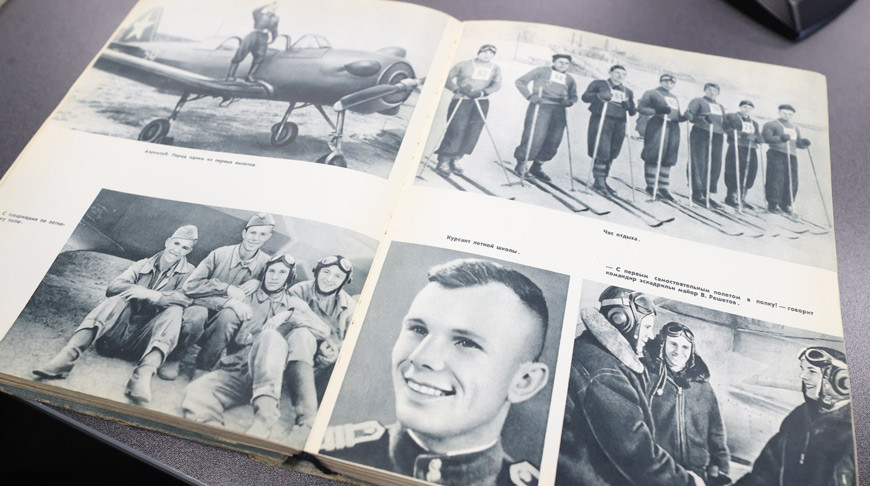
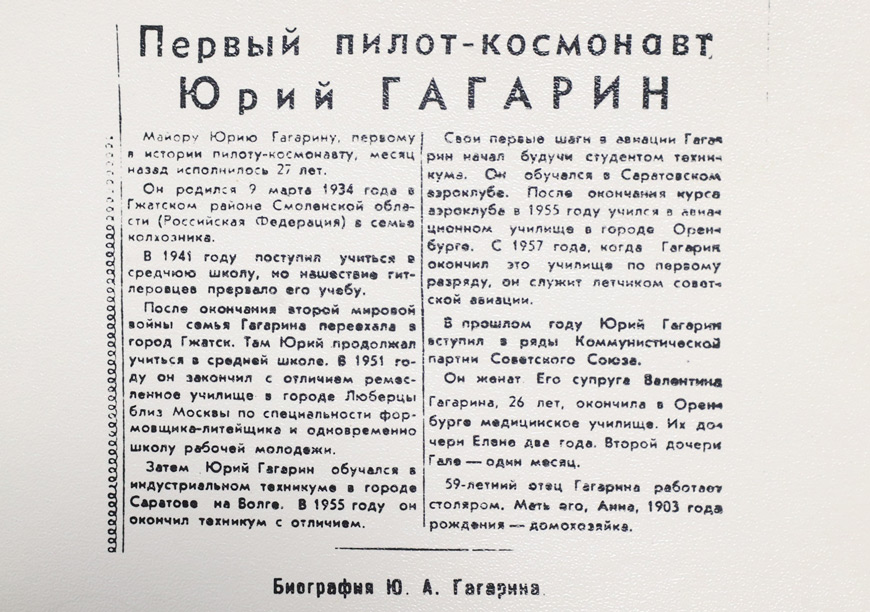
During his fourth year at the Saratov Industrial Technical School, future foundry worker Yuri Gagarin tried to join the local flying club. But he couldn't. A directive from the leadership of DOSAAF was in effect: students in upper years of technical schools and universities were not accepted into flight divisions. The country needed workers to restore the national economy after the war.
“The head of the flying club in Saratov was Hero of the Soviet Union and fighter pilot Grigory Denisenko, who served under the legendary Nikolai Kamanin during the war. Kamanin had received his own Hero star back in 1934 for rescuing the Chelyuskin expedition,” Natalya Gagarina recalled. “In those years, Kamanin worked in the DOSAAF USSR, and it was thanked to him that Denisenko told about the guy with burning eyes who wanted to fly. Kamanin replied: 'You can't break through a wall with your forehead, but you can go around it. If you see a person whose eyes are burning, you have to take him.'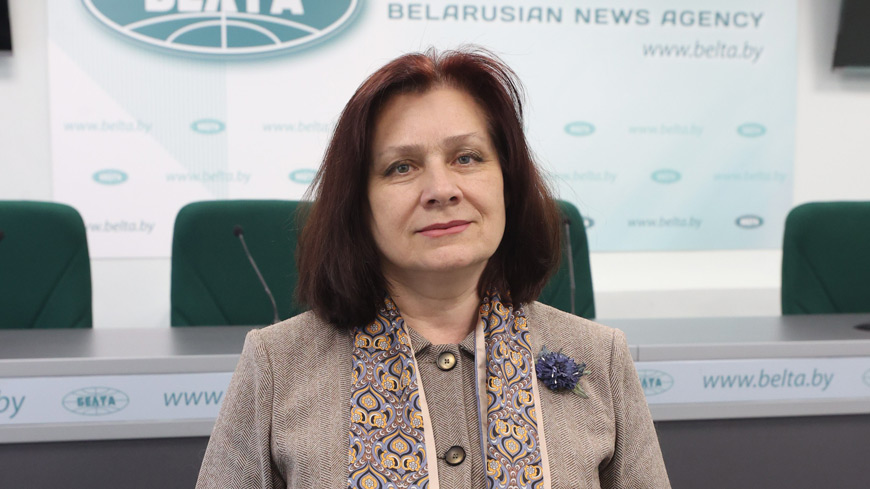
By a twist of fate, on 10 April 1961, it was Nikolai Kamanin who announced the decision of the State Commission as to which of the two candidates - Yuri Gagarin or German Titov - would fly into space. Grigory Denisenko later moved to Gomel where he lived for 55 years.
“During his time studying at the Saratov Flying Club, Yuri Gagarin made four model airplanes of the Yak-18 for Grigory Denisenko. They were used during theory classes. Today, one of the models is held in the museum of Star City, and another is in the Yuri Gagarin Museum-Reserve in his homeland,” Natalya Borisovna noted. “When we opened the Cosmos pavilion at the Minsk Flying Club, I asked the Denisenko family to donate one of the planes. And they gave it to us.”
In 1959, the USSR began recruiting military personnel for space flights. At first, they couldn't decide who would be suitable: submariners, tank crews, pilots. In the end, designer Sergei Korolev said that fighter pilots, who fly at high speeds and can make split-second decisions, would be best suited. 3,461 people were selected across the country. Personal files and medical records were examined. Then each candidate was interviewed and told that the tests could be incompatible with life. Next came medical examinations, after which the candidates were sent back to their units. Yuri Gagarin returned to his duty station in the village of Luostari Novoye (Korzunovo since 1967) located beyond the Arctic Circle. Six months of night, frost, and wind.
“When Yuri Gagarin had no hope left, the summons came. On 7 March 1960, he was sent to Moscow, where training for future cosmonauts began, though that word didn't even exist yet,” Natalya Gagarina emphasized. “During the training, 20 people were selected for the first squad. They were all equally well prepared physically, psychologically, and technically. But a team of doctors continuously monitored which of the candidates was best suited for the risky experiment - the first flight into space. The choice fell on my uncle Yuri."
Earthly overloads are stronger than space ones
“He had no trace of self-admiration,” Natalya Gagarina said. “He was very humble. Yet, he had backbone. 'When they told me that I would be the one to fly,' the first cosmonaut later recounted, 'my entire life appeared to me as one beautiful moment. Everything I had lived through and done up to that point had been lived and done for that minute. And right then, I understood the responsibility that fell on my shoulders before all of humanity.' He was fully aware of how many people stood behind his flight.
‘Hope ran out’
During his fourth year at the Saratov Industrial Technical School, future foundry worker Yuri Gagarin tried to join the local flying club. But he couldn't. A directive from the leadership of DOSAAF was in effect: students in upper years of technical schools and universities were not accepted into flight divisions. The country needed workers to restore the national economy after the war.
“The head of the flying club in Saratov was Hero of the Soviet Union and fighter pilot Grigory Denisenko, who served under the legendary Nikolai Kamanin during the war. Kamanin had received his own Hero star back in 1934 for rescuing the Chelyuskin expedition,” Natalya Gagarina recalled. “In those years, Kamanin worked in the DOSAAF USSR, and it was thanked to him that Denisenko told about the guy with burning eyes who wanted to fly. Kamanin replied: 'You can't break through a wall with your forehead, but you can go around it. If you see a person whose eyes are burning, you have to take him.'
By a twist of fate, on 10 April 1961, it was Nikolai Kamanin who announced the decision of the State Commission as to which of the two candidates - Yuri Gagarin or German Titov - would fly into space. Grigory Denisenko later moved to Gomel where he lived for 55 years.
“During his time studying at the Saratov Flying Club, Yuri Gagarin made four model airplanes of the Yak-18 for Grigory Denisenko. They were used during theory classes. Today, one of the models is held in the museum of Star City, and another is in the Yuri Gagarin Museum-Reserve in his homeland,” Natalya Borisovna noted. “When we opened the Cosmos pavilion at the Minsk Flying Club, I asked the Denisenko family to donate one of the planes. And they gave it to us.”
In 1959, the USSR began recruiting military personnel for space flights. At first, they couldn't decide who would be suitable: submariners, tank crews, pilots. In the end, designer Sergei Korolev said that fighter pilots, who fly at high speeds and can make split-second decisions, would be best suited. 3,461 people were selected across the country. Personal files and medical records were examined. Then each candidate was interviewed and told that the tests could be incompatible with life. Next came medical examinations, after which the candidates were sent back to their units. Yuri Gagarin returned to his duty station in the village of Luostari Novoye (Korzunovo since 1967) located beyond the Arctic Circle. Six months of night, frost, and wind.
“When Yuri Gagarin had no hope left, the summons came. On 7 March 1960, he was sent to Moscow, where training for future cosmonauts began, though that word didn't even exist yet,” Natalya Gagarina emphasized. “During the training, 20 people were selected for the first squad. They were all equally well prepared physically, psychologically, and technically. But a team of doctors continuously monitored which of the candidates was best suited for the risky experiment - the first flight into space. The choice fell on my uncle Yuri."
Earthly overloads are stronger than space ones
After his flight into space, Senior Lieutenant Yuri Gagarin was immediately promoted to the rank of Major, skipping one rank. He liked to joke about this: “I dreamed all my life of becoming a captain, but I never got the honor.”
“He had no trace of self-admiration,” Natalya Gagarina said. “He was very humble. Yet, he had backbone. 'When they told me that I would be the one to fly,' the first cosmonaut later recounted, 'my entire life appeared to me as one beautiful moment. Everything I had lived through and done up to that point had been lived and done for that minute. And right then, I understood the responsibility that fell on my shoulders before all of humanity.' He was fully aware of how many people stood behind his flight.
During one of his trips abroad, foreign journalists asked: “Isn’t it hard for you to bask in the rays of your own glory?” Gagarin replied: “This is not my personal glory. It is the glory of our entire Soviet people and the vast army of scientists, designers, and engineers who worked to create space technology and prepared me for the flight.”
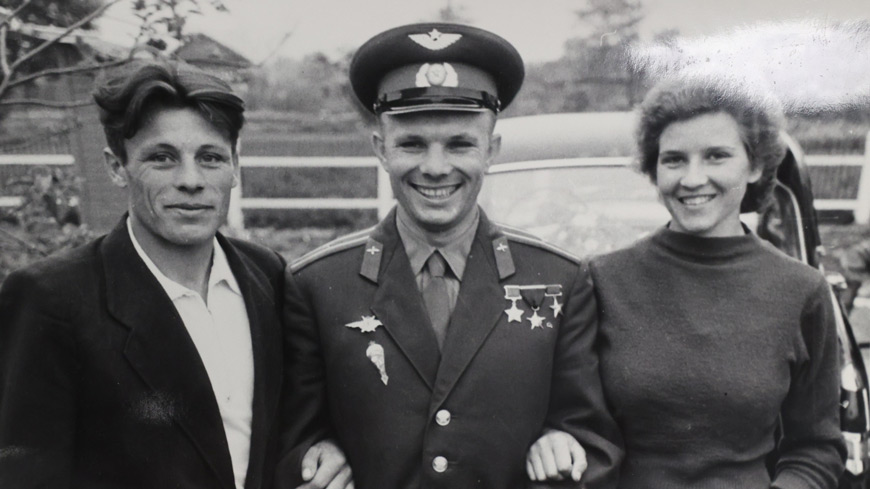
“When you speak with a person, the first thing you notice is their eyes and their smile. That’s where the soul is reflected,” Natalya Gagarina said. “Yuri Gagarin was very smiley from childhood. His grandmother recalled that he didn’t like quarrels or arguments. He would make peace between everyone. His smile was a natural expression of inner spirituality. Sergei Korolev wrote in his memoirs that before the launch at Baikonur, everyone was tense and pensive. Only Gagarin was smiling and beaming like a little sun. Korolev asked: “Yura, why are you always smiling?" To which he received the reply: “Sergei Pavlovich [Korolev], I suppose I’m just that kind of frivolous person”. And Korolev thought at that moment: “If only there were more such ‘frivolous’ people on Earth”.
After the flight, the truly difficult part began - the test of fame.
“Gagarin himself said that earthly pressures turned out to be stronger than space pressures. They hadn’t prepared him for that. He was constantly expected to live up to his heroic deed,” Natalya Gagarina said.
After his space flight, Yuri Gagarin effectively became an ambassador for the USSR. He traveled to nearly 30 countries, some of them several times. It was extremely grueling work - endless meetings with foreign officials. For instance, during a trip to the UK, a meeting between Gagarin and the Queen of England had not been planned. Relations between the countries were very tense. But Elizabeth II also decided to meet the first cosmonaut. And then something happened that had never occurred before. According to protocol, the Queen of England is not supposed to be photographed with an ordinary person, but Elizabeth II found a way around it: “He is not an earthly person, he is a heavenly one.”
“Journalists would ask him: ‘You must get tired from all these trips?’ Yuri Gagarin would reply: ‘Of course I get tired. But it’s necessary’. And the endless visits, meetings, and speeches continued,” Natalya Gagarina said. “For example, the USSR had no diplomatic relations with Brazil, but after Gagarin’s trip there, the relevant agreements between the two countries were signed. The same story repeated itself with Ceylon and Afghanistan. The first cosmonaut was, in the truest sense of the word, a missionary and a diplomat. Every door opened for him. Gagarin is still working for peace today, doing what he did during his lifetime.”
The artist Rockwell Kent once said: “Your Yuri is not only yours. He belongs to all of humanity.”
During his trips abroad, people often tried to put him in an awkward position. His innate sense of humor saved the day. One Western journalist asked Yuri Gagarin how much he had been paid for his space flight. Gagarin replied: “May I ask you a question in return: how much would you want to be paid for the first flight into space?”
‘I love you, life’
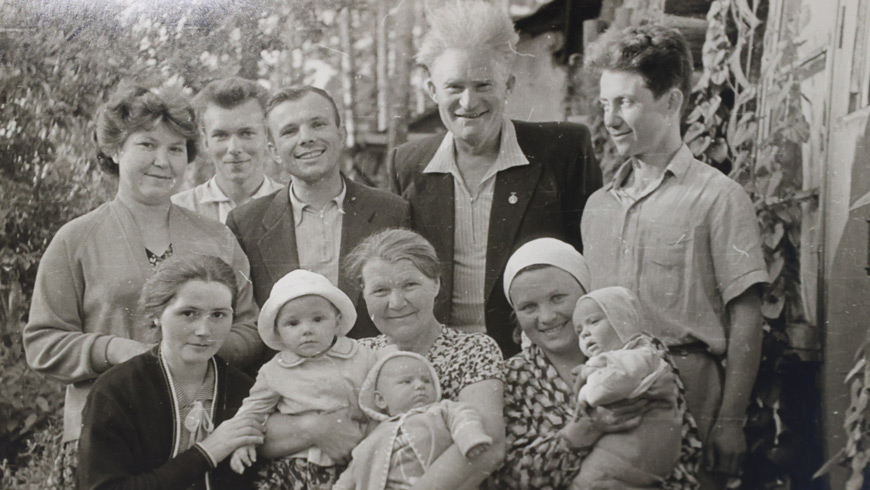
“Yuri Gagarin always had a very good attitude toward people. He understood that anyone could stumble or make a mistake, but he could speak frankly and offer a shoulder to lean on. He also had his own hobbies. He loved fishing, hunting, and playing sports. He was passionate about photography. He always trained in order to fly farther. He dreamed of flying to the Moon,” the cosmonaut’s niece recalled.
Despite his short stature, Yuri Gagarin was an excellent basketball player. He was the team captain. Eyewitnesses later recalled how he would smile and sink shots from half-court. Yuri Gagarin loved Smolensk Oblast deeply and would visit his hometown with friends.
“All the Gagarins had a good ear for music and sang a lot,” said Natalya Gagarina. “I remember when Yuri Gagarin came to visit his grandparents for the last time, he stood in the doorway and listened to his favorite song I Love You, Life.”
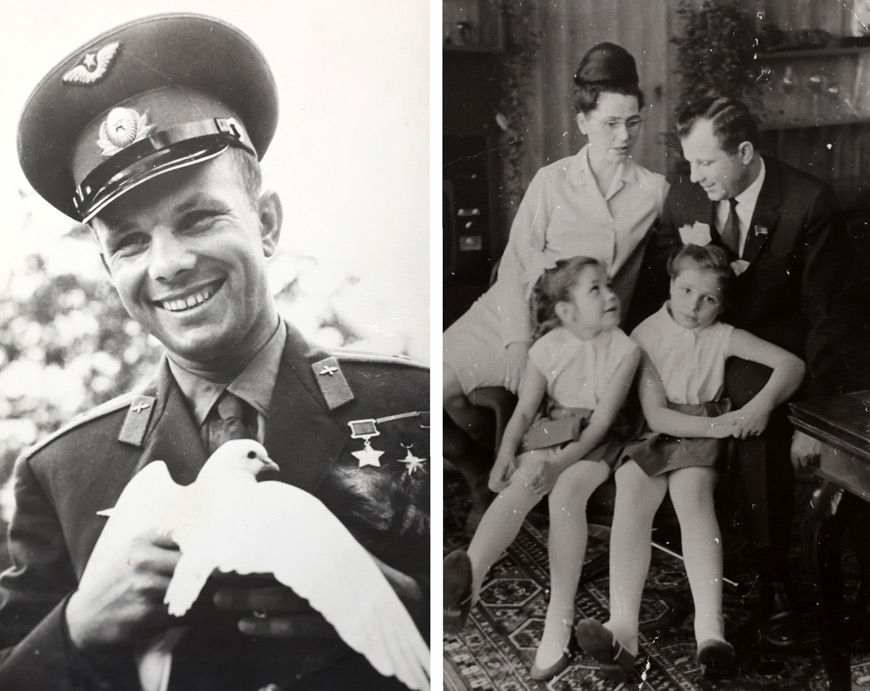
Gagarin’s daughters recalled that every morning, waking up at 7:00, their father would run down the stairs of the apartment building in Zvyozdny Gorodok, where cosmonauts had lived since 1966, and ring every doorbell, calling his colleagues to come do their morning exercises. The workout lasted 40 minutes. Yuri Gagarin was elected deputy, spoke frequently to young people, and studied at the Zhukovsky Air Force Engineering Academy, from which he graduated with honors on 17 February 1968. He was recommended for admission to postgraduate studies.
“Yuri Gagarin dreamed of making another space flight,” Natalya recalls. “In August 1966, he was appointed backup for Vladimir Komarov, who was making his second space flight aboard the new Soyuz 1 spacecraft. During re-entry in March 1967, the parachute system failed, and Komarov died.”
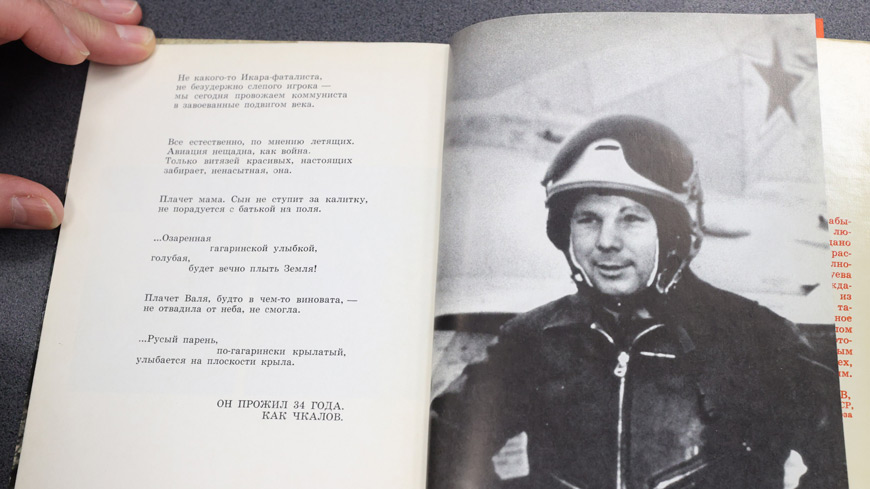
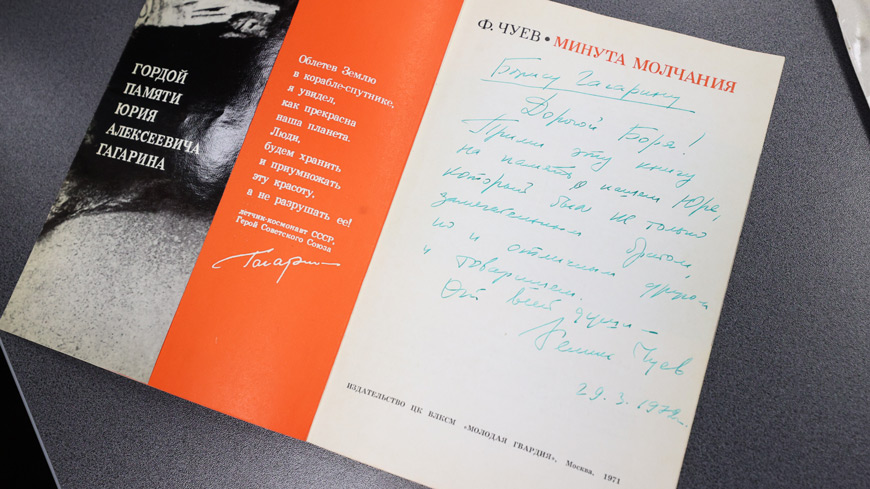
Gagarin himself would die on 27 March 1968 during a training flight. After his death, poet Felix Chuyev, who knew the first cosmonaut well, wrote a poem titled as Minute of Silence within a few days, which includes these lines:
Ice crystals melt and disappear.
March is like March – but something’s wrong in here.
Someone walks in.
I hear the words: “Crashed... ...arin... ...garin...”
Who crashed? Who?!
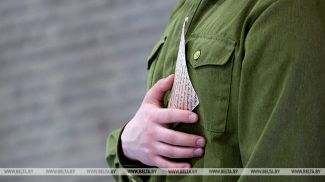
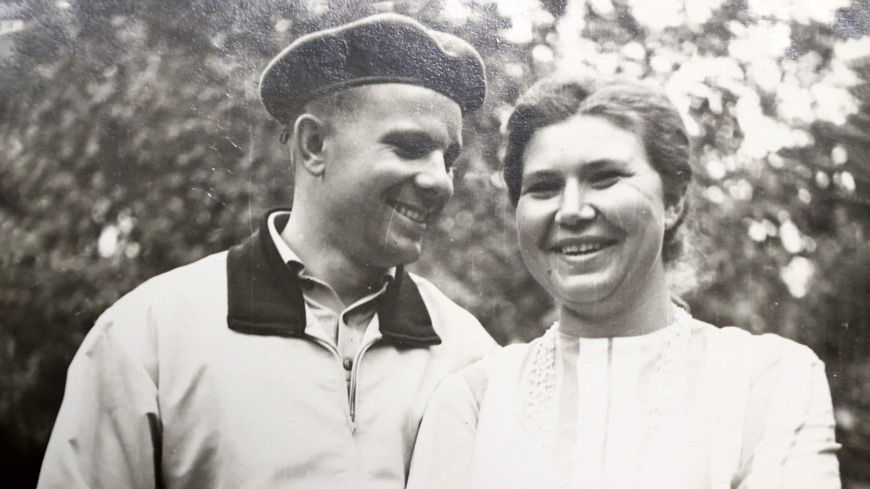
Before his space flight, Yuri Gagarin wrote a farewell letter to his wife Valentina. It was only given to the widow in 1968.
“The lines are very moving,” Natalya notes. “He remained a young man forever, although he fulfilled his mission completely. The sky received him, but the earth did not reject him.”
‘Space is not my history’?
Natalya Gagarina was born in the town of Gzhatsk (renamed Gagarin in 1968), then moved to Minsk, where she graduated from the Minsk State Pedagogical Institute of Foreign Languages and later worked there. The capital of Belarus became her second home.
“Teachers at the university would ask me point-blank: ‘Tell us, are you by any chance related to Gagarin?’ I would say: ‘No.’ In my childhood and youth, I felt it would be awkward to use my kinship with the first cosmonaut,” Natalya recounts. “What if people found out and thought I was trading on the surname. That is how we were brought up. In the 1970s and 1980s, I was asked this question often. The special reverence for Gagarin was projected onto people who shared his last name. My father always used to say: ‘They won’t say about someone else that they didn’t accomplish something, but they will say it about you. Because you share his last name – and you must live up to it.’ So, we never took any advantage from that surname. Only 20 years after graduating from university, my classmates asked me: ‘So, are you really Yuri Gagarin’s niece?’ And I admitted that I am. Now I work at the Minsk Aero Club, handling international cooperation and media relations. Articles, exhibitions, communication. Now I use my surname to work with young people. I am implementing an international cultural and educational project called Space is My History.”
“A young worker who was installing batteries in the Cosmos pavilion looked at the display cases and said: ‘Beautiful.’ However, when asked whether this topic interested him, he replied: ‘Space is not my thing.’ Those words burned me. I thought: ‘No! Space is not just not just my thing. It’s my history. Ours and that of our youth, of the generations that will come after us. It is something we can be proud of!’ The people who stood at the origins of the space industry were not thinking about awards or money. They wanted to be first.”
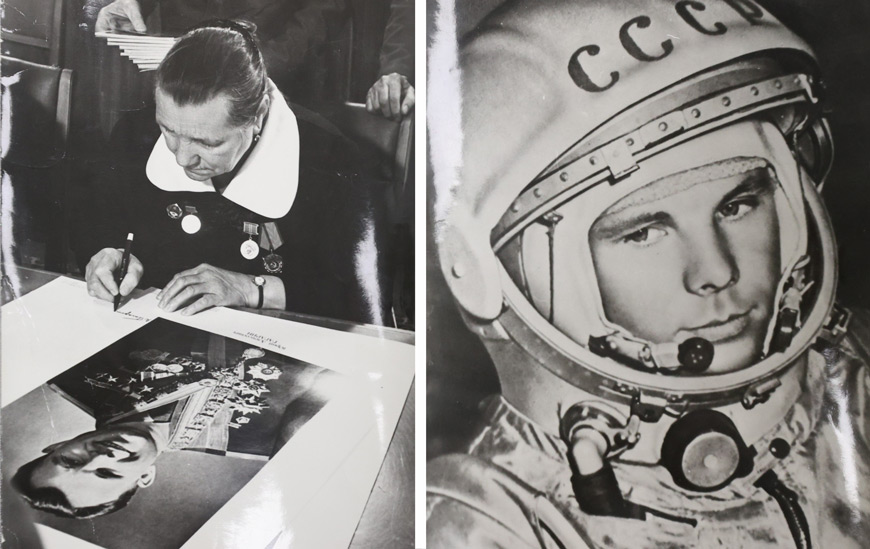
In the year Yuri Gagarin died, his mother Anna turned 65. On the eve of her birthday, cosmonauts Alexei Leonov and Andriyan Nikolayev called and asked whether she would celebrate the anniversary. The woman replied: “No. We will only gather with family.” Then Alexei Leonov asked: “If Andrian and I come to you, will we pass for family?” Anna answered: “Of course.”
After this episode, the idea of the Gagarin Readings was born, which are held annually on 9 March, the birthday of Yuri Gagarin.
“This year they took place for the 53rd time. Cosmonauts, scientists, engineers, and young people come to them. Including from Slutsk, Zhodino, Cherven, Smolevichi. They give presentations on cosmonautics and its history. Slutsk is generally considered the space capital of Belarus. In that city were born Semyon Kosberg, the designer of the third stage of the Vostok spacecraft launch vehicle, as well as Konstantin Gerchik and Yuri Zhukov, heads of the Baikonur Cosmodrome”
“I dream that Yuri Gagarin’s photograph will be in the new National Historical Museum of Belarus,” Natalya says. “Natives of our country made an invaluable contribution to the flight of the first man into space. I think all Belarusian cosmonauts will agree with that. They are one family, and they share one blood. That of pioneers.”
Background information
The preparation for the first human space flight took place under strictest secrecy. Scientists, engineers and designers worked under pseudonyms. Specialists from 123 enterprises and 36 factories across the entire USSR, including Belarus, worked on the creation of the first spacecraft.
On 18 April, the presentation of the Space is My History exhibition will take place at the Moscow House in Minsk. Cosmonauts Oleg Novitsky, Marina Vasilevskaya and Anton Shkaplerov will attend.
12 April marks the 65th anniversary of the first human space flight. Soviet cosmonaut Yuri Gagarin orbited the Earth and successfully landed in Saratov Oblast on 12 April 1961.
Alexei Gorbunov, photos by Kristina Aksenova and from the personal archive of Natalya Gagarina