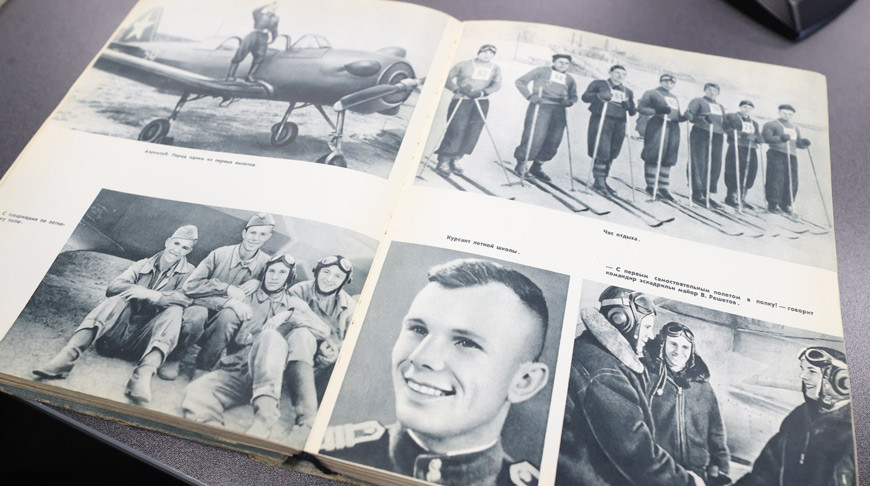
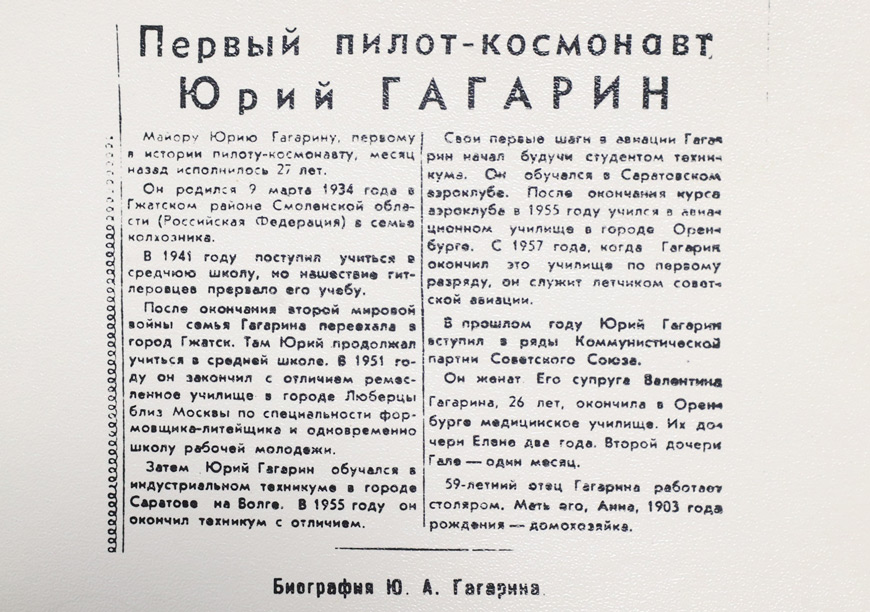
“Yuri Gagarin dreamed of making another space flight,” Natalya recalls. “In August 1966, he was appointed backup for Vladimir Komarov, who was making his second space flight aboard the new Soyuz 1 spacecraft. During re-entry in March 1967, the parachute system failed, and Komarov died.”
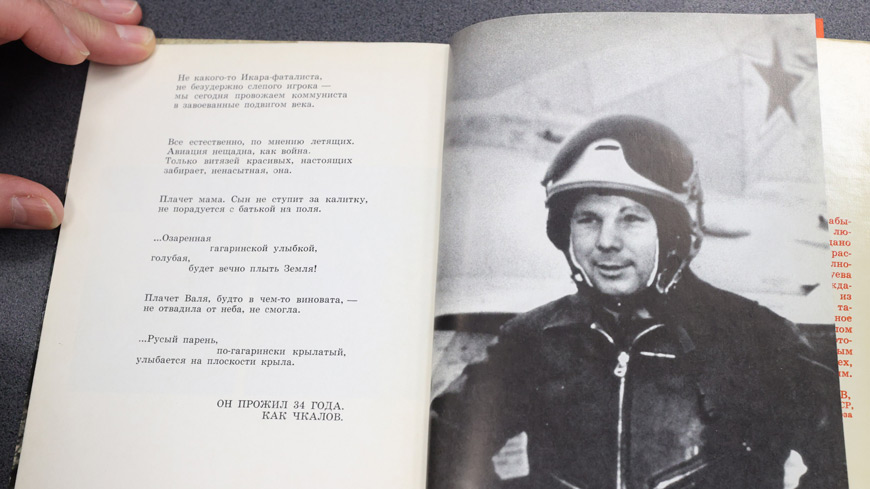
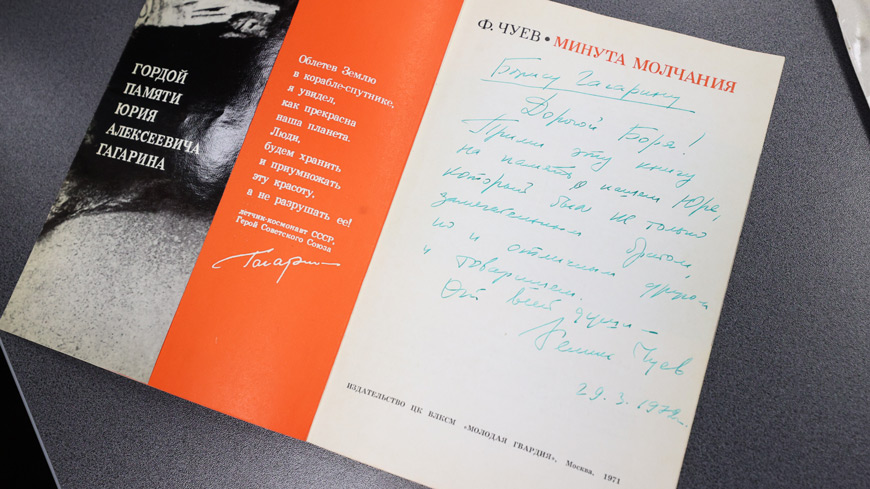
Gagarin himself would die on 27 March 1968 during a training flight. After his death, poet Felix Chuyev, who knew the first cosmonaut well, wrote a poem titled as Minute of Silence within a few days, which includes these lines:
Ice crystals melt and disappear.
March is like March – but something’s wrong in here.
Someone walks in.
I hear the words: “Crashed... ...arin... ...garin...”
Who crashed? Who?!
Before his space flight, Yuri Gagarin wrote a farewell letter to his wife Valentina. It was only given to the widow in 1968.
“The lines are very moving,” Natalya notes. “He remained a young man forever, although he fulfilled his mission completely. The sky received him, but the earth did not reject him.”
‘Space is not my history’?
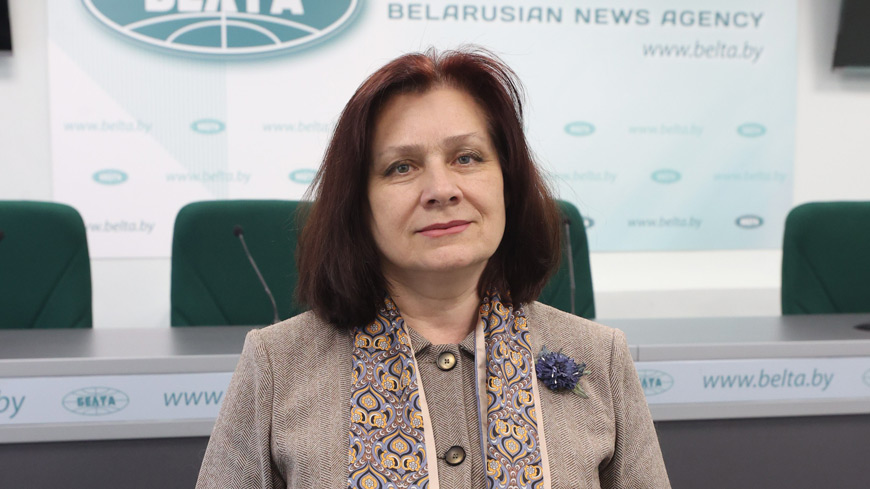
Natalya Gagarina was born in the town of Gzhatsk (renamed Gagarin in 1968), then moved to Minsk, where she graduated from the Minsk State Pedagogical Institute of Foreign Languages and later worked there. The capital of Belarus became her second home.
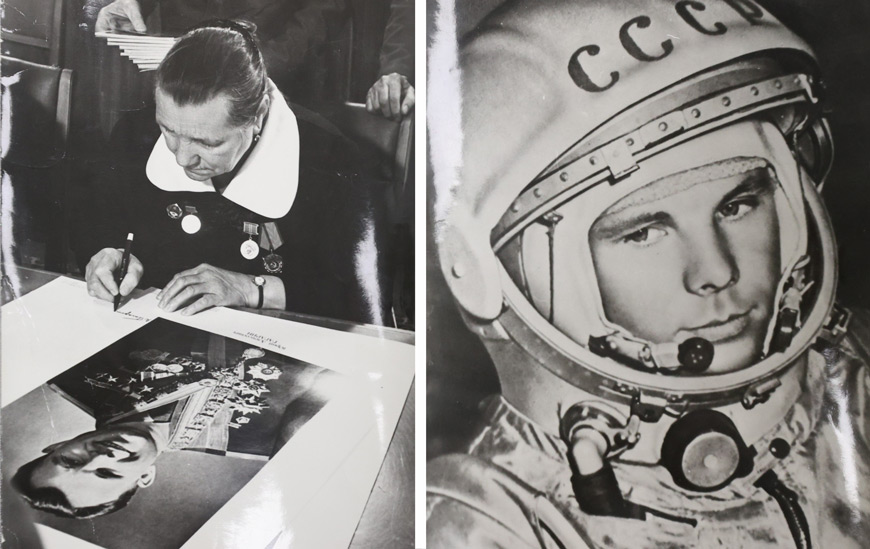
“Teachers at the university would ask me point-blank: ‘Tell us, are you by any chance related to Gagarin?’ I would say: ‘No.’ In my childhood and youth, I felt it would be awkward to use my kinship with the first cosmonaut,” Natalya recounts. “What if people found out and thought I was trading on the surname. That is how we were brought up. In the 1970s and 1980s, I was asked this question often. The special reverence for Gagarin was projected onto people who shared his last name. My father always used to say: ‘They won’t say about someone else that they didn’t accomplish something, but they will say it about you. Because you share his last name – and you must live up to it.’ So, we never took any advantage from that surname. Only 20 years after graduating from university, my classmates asked me: ‘So, are you really Yuri Gagarin’s niece?’ And I admitted that I am. Now I work at the Minsk Aero Club, handling international cooperation and media relations. Articles, exhibitions, communication. Now I use my surname to work with young people. I am implementing an international cultural and educational project called Space is My History.”
“A young worker who was installing batteries in the Cosmos pavilion looked at the display cases and said: ‘Beautiful.’ However, when asked whether this topic interested him, he replied: ‘Space is not my thing.’ Those words burned me. I thought: ‘No! Space is not just not just my thing. It’s my history. Ours and that of our youth, of the generations that will come after us. It is something we can be proud of!’ The people who stood at the origins of the space industry were not thinking about awards or money. They wanted to be first.”
In the year Yuri Gagarin died, his mother Anna turned 65. On the eve of her birthday, cosmonauts Alexei Leonov and Andriyan Nikolayev called and asked whether she would celebrate the anniversary. The woman replied: “No. We will only gather with family.” Then Alexei Leonov asked: “If Andrian and I come to you, will we pass for family?” Anna answered: “Of course.”
After this episode, the idea of the Gagarin Readings was born, which are held annually on 9 March, the birthday of Yuri Gagarin.
“This year they took place for the 53rd time. Cosmonauts, scientists, engineers, and young people come to them. Including from Slutsk, Zhodino, Cherven, Smolevichi. They give presentations on cosmonautics and its history. Slutsk is generally considered the space capital of Belarus. In that city were born Semyon Kosberg, the designer of the third stage of the Vostok spacecraft launch vehicle, as well as Konstantin Gerchik and Yuri Zhukov, heads of the Baikonur Cosmodrome”
“I dream that Yuri Gagarin’s photograph will be in the new National Historical Museum of Belarus,” Natalya says. “Natives of our country made an invaluable contribution to the flight of the first man into space. I think all Belarusian cosmonauts will agree with that. They are one family, and they share one blood. That of pioneers.”
Background information
The preparation for the first human space flight took place under strictest secrecy. Scientists, engineers and designers worked under pseudonyms. Specialists from 123 enterprises and 36 factories across the entire USSR, including Belarus, worked on the creation of the first spacecraft.
On 18 April, the presentation of the Space is My History exhibition will take place at the Moscow House in Minsk. Cosmonauts Oleg Novitsky, Marina Vasilevskaya and Anton Shkaplerov will attend.
12 April marks the 65th anniversary of the first human space flight. Soviet cosmonaut Yuri Gagarin orbited the Earth and successfully landed in Saratov Oblast on 12 April 1961.
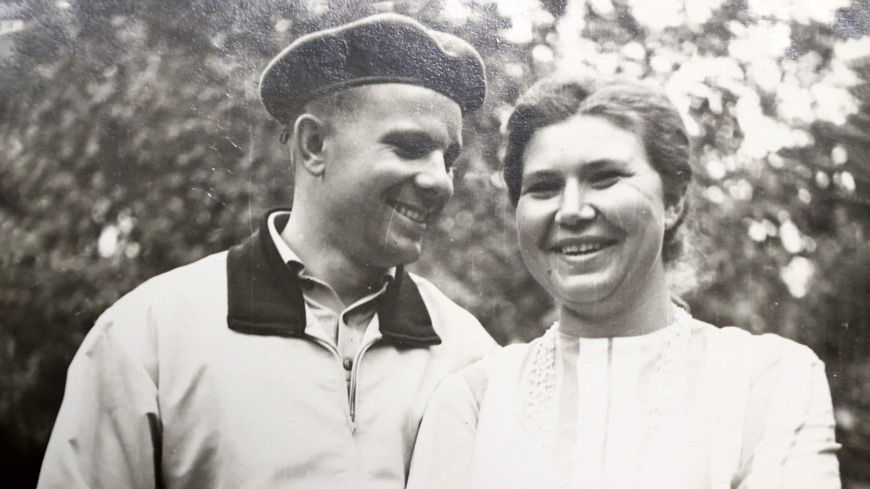
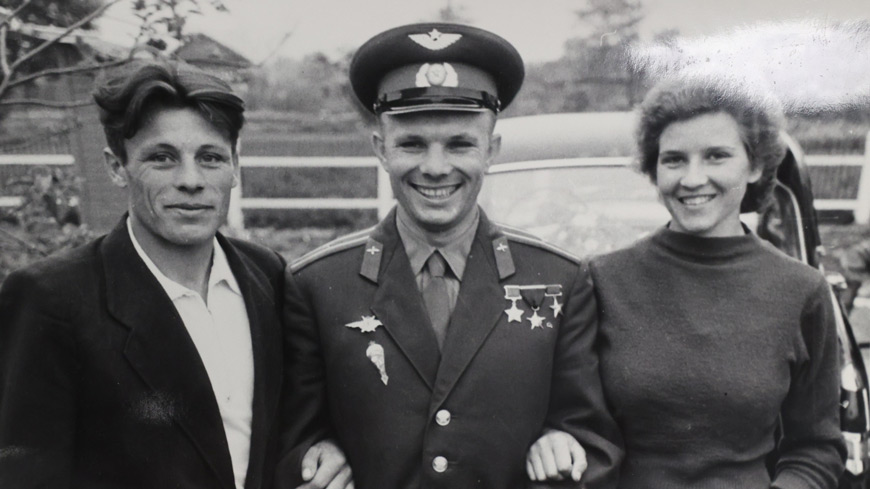
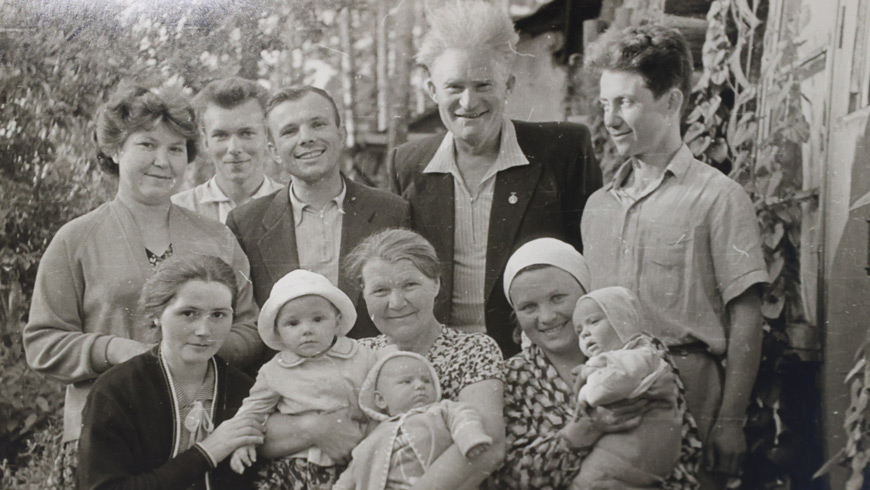
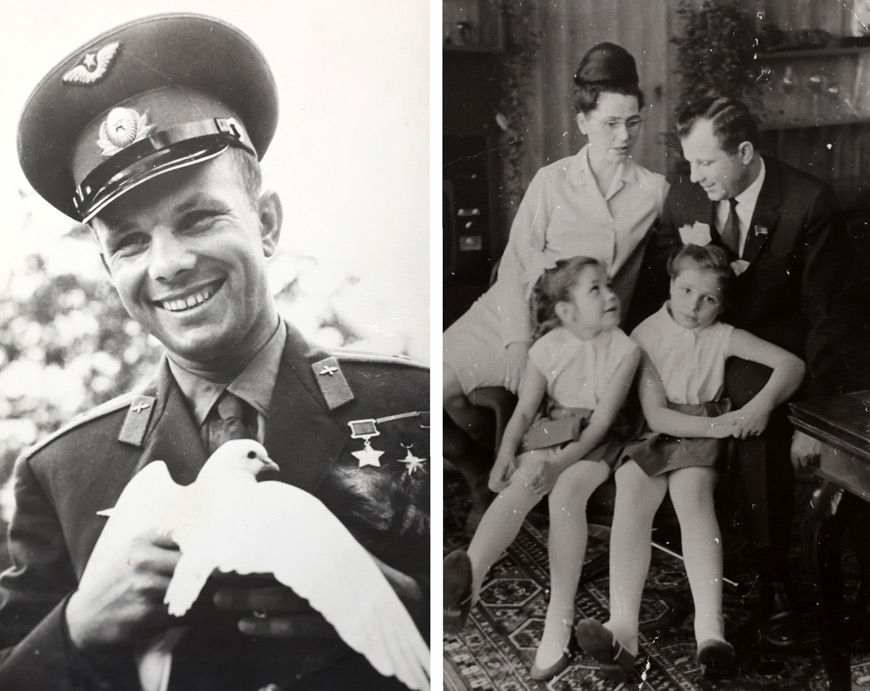
Alexei Gorbunov, photos by Kristina Aksenova and from the personal archive of Natalya Gagarina