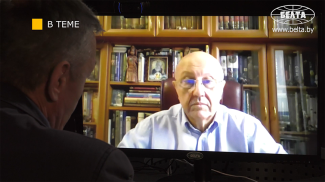
MINSK, 8 April (BelTA) – The CIS is Belarus’ most valuable inbound tourism source market accounting for about 85% of Belarus’ tourism exports, Director of the National Tourism Agency of Belarus Kirill Masharsky said at the plenary session of the 4th Belarusian-Russian Tourism Congress and the international tourism forum Travel Hub Commonwealth in Minsk, BelTA has learned.
Kirill Masharsky noted that the CIS countries are working to align their tourism strategies. “Our changes and reforms is the race of best practices. By adopting them, we build on our neighbors’ experiences, spark a wave of positive changes in tourism across the CIS and create a shared map of victories where one country’s experience becomes a launch pad for another,” he said.
He emphasized that major changes are currently underway in tourism management systems across the CIS. The key trend is moving away from scattered departments to independent agencies and committees typically reporting directly to governments. This essentially recognizes tourism as a priority for the social and economic development of the CIS member states.
In 2026 the National Tourism Agency was named the regulatory authority in Belarus.
“Our main task is to create conditions for the sustainable development of tourism in Belarus and to increase its contribution to economic growth,” Kirill Masharsky said.
He noted that a common tourism space is taking shape within the CIS. “Our work is yielding results: the CIS accounts for 85% of Belarus’ export of tourism services. Belarusians, in turn, are enthusiastically exploring Russian regions such as Dagestan, Karelia, the magnificent Lake Baikal and Krasnodar Territory. Tours to Azerbaijan are gaining popularity. Belarusians are captivated by Baku and the mud volcanoes of Qobustan. The wonderful Uzbekistan creates the feeling of a thousand and one nights. Tourists go there to see the gems of the Great Silk Road and to taste fragrant pilaf, oriental samsa and other gastronomic delights. Belarusians are also gradually discovering the natural beauty of the mountains of Kazakhstan and Kyrgyzstan,” Kirill Masharsky noted.
The full potential of mutual tourism within the CIS has not been realized yet.
“Despite the favorable conditions: visa-free regime, cultural similarities, the absence of language barrier. The opportunities in this sector are only partially harnessed. It is very important that through cooperation we see the potential and build new interstate mechanisms for developing the industry, put forward initiatives to set priorities, and stimulate the development of various regions and their tourism infrastructure,” the director of the National Tourism Agency said.
Last year, Belarus proposed the CIS Tourism Capitals program, the main goal of which is to unlock the potential of non-metropolitan cities.
“Tourism in the CIS is not just economy. It is bridges between people who speak the same language, share the history, and build a common future. Let us make travel within the CIS not a fallback option, but the main discovery for millions of our citizens,” Kirill Masharsky said.
The Big Tourism Week in Minsk offers a series of key events for the hospitality industry. The main events are the 4th Belarusian-Russian Tourism Congress, the international forum Travel Hub Commonwealth, and the 28th International Exhibition of Tourism Services Holidays 2026. The Big Tourism Week program also includes the Expo HORECA Minsk, the Taste of Belarus project, and other events.
Kirill Masharsky noted that the CIS countries are working to align their tourism strategies. “Our changes and reforms is the race of best practices. By adopting them, we build on our neighbors’ experiences, spark a wave of positive changes in tourism across the CIS and create a shared map of victories where one country’s experience becomes a launch pad for another,” he said.
He emphasized that major changes are currently underway in tourism management systems across the CIS. The key trend is moving away from scattered departments to independent agencies and committees typically reporting directly to governments. This essentially recognizes tourism as a priority for the social and economic development of the CIS member states.
In 2026 the National Tourism Agency was named the regulatory authority in Belarus.
“Our main task is to create conditions for the sustainable development of tourism in Belarus and to increase its contribution to economic growth,” Kirill Masharsky said.
He noted that a common tourism space is taking shape within the CIS. “Our work is yielding results: the CIS accounts for 85% of Belarus’ export of tourism services. Belarusians, in turn, are enthusiastically exploring Russian regions such as Dagestan, Karelia, the magnificent Lake Baikal and Krasnodar Territory. Tours to Azerbaijan are gaining popularity. Belarusians are captivated by Baku and the mud volcanoes of Qobustan. The wonderful Uzbekistan creates the feeling of a thousand and one nights. Tourists go there to see the gems of the Great Silk Road and to taste fragrant pilaf, oriental samsa and other gastronomic delights. Belarusians are also gradually discovering the natural beauty of the mountains of Kazakhstan and Kyrgyzstan,” Kirill Masharsky noted.
The full potential of mutual tourism within the CIS has not been realized yet.
“Despite the favorable conditions: visa-free regime, cultural similarities, the absence of language barrier. The opportunities in this sector are only partially harnessed. It is very important that through cooperation we see the potential and build new interstate mechanisms for developing the industry, put forward initiatives to set priorities, and stimulate the development of various regions and their tourism infrastructure,” the director of the National Tourism Agency said.
Last year, Belarus proposed the CIS Tourism Capitals program, the main goal of which is to unlock the potential of non-metropolitan cities.
“Tourism in the CIS is not just economy. It is bridges between people who speak the same language, share the history, and build a common future. Let us make travel within the CIS not a fallback option, but the main discovery for millions of our citizens,” Kirill Masharsky said.
The Big Tourism Week in Minsk offers a series of key events for the hospitality industry. The main events are the 4th Belarusian-Russian Tourism Congress, the international forum Travel Hub Commonwealth, and the 28th International Exhibition of Tourism Services Holidays 2026. The Big Tourism Week program also includes the Expo HORECA Minsk, the Taste of Belarus project, and other events.