BEIJING, 30 April (BelTA - China Daily) - China released on Wednesday a
list of its top 10 archaeological discoveries of 2025, highlighting how
these findings allow a better understanding of the people, traditions
and innovations that shaped both the nation's past and the profound
history of humanity.
The annual list, which is considered one of the highest honors in the field of archaeology in China, was prepared by top-notch scholars from across the country and jointly released by the Chinese Society of Cultural Relics and China Cultural Relics News.
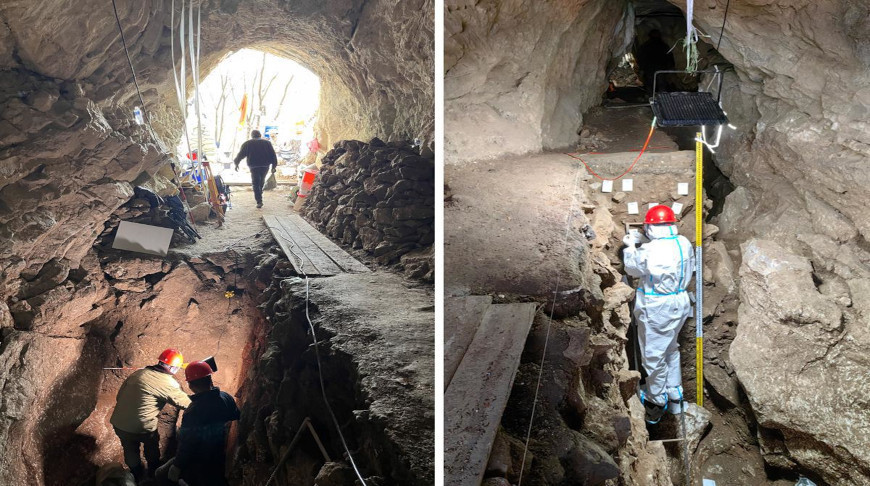
Among the top 10 is the Changbai Mountain Paleolithic site group in eastern Jilin province, which covers 100,000 square kilometers and boasts more than 1,000 locations from where stone tools have been unearthed.
The discovery alters the impression that only small nomadic groups passed through the region in the Paleolithic period, said Xu Ting, an archaeology professor at Liaoning University and secretary of the project in Jilin. Unearthed evidence points to sustained and widespread human presence from 220,000 to 13,000 years ago, he added.
Some projects among the selected top 10, like the Zhengjiagou site in Zhangjiakou, Hebei province, offer new insights into the origins Chinese civilization.
Archaeologists discovered more than 270 stone-piled tombs in this area, a number higher than the findings at the Niuheliang site in Liaoning province, which is commonly believed to be the nucleus of Hongshan culture.
Also on the top 10 list is the Nanzuo site in Qingyang, Gansu province, where archaeologists have unearthed a stunning settlement dating back 5,100 to 4,700 years and covering 6 million square meters, about eight times the size of the Palace Museum in Beijing.
The site boasts an architectural complex of 4,000 square meters and has a central axis, indicating that it was a high-level community that may have functioned as a capital settlement in ancient China.
This year, the Zhongcun site in Xiyang county, Shanxi province, has yielded five high-level aristocratic tombs from the late Xia period, including the largest Xia tomb discovered to date, demonstrating a high level of civilizational development.
At the Zhengzhou Shang city site in Henan province, which has been identified as the largest and highest-known early Shang capital, archaeologists focused on the southern area of the inner city and discovered large-scale storage facility foundations, a huge urban water network, and evidence of bronze casting and bone toolmaking industries.
The Changchun site in Fuping county, Shaanxi province, offers clues of a large fief settlement of the Western Zhou Dynasty (c. 11th century to 771 BC) within its royal domain, including a large and well-organized cemetery, a settlement with a water network and a handicraft area. These findings have allowed experts to better understand the style of Western Zhou governance.
Some historical records have been vindicated by archaeological discoveries for the first time. For example, records show Shaoxing in Zhejiang province has 2,500 years of history since King Goujian of the Yue state from the Eastern Zhou Dynasty (770-256 BC) built a new capital in Shaoxing in 490 BC. To corroborate this, archaeological work yielded a layout of the capital, including city walls, palace complex and sacrificial places.
According to records, the site also housed the Kuaiji prefecture during the Han (206 BC-AD 220) and Six (222-589) dynasties, which has been confirmed following the discovery of government office building foundations and many inscribed wooden and bamboo slips, or jiandu. These reveal many facets of ancient societies, said Huo Wei, an archaeology professor at Sichuan University.
Last year, the Xixia Imperial Tombs in the Ningxia Hui autonomous region were inscribed on the World Heritage List. Archaeological research continues to deepen the understanding of Western Xia - a regime established in northwestern China by the Tangut people and inhabited by various ethnic groups from 1038 to 1227.
The Suyukou kiln site along the Helan Mountains in the region, which has been listed among the top 10 discoveries of 2025, made fine white porcelain for imperial use from 1080 to the end of the Xixia period.
It also features the earliest and most complete coal-fired kilns in northern China.
The annual list, which is considered one of the highest honors in the field of archaeology in China, was prepared by top-notch scholars from across the country and jointly released by the Chinese Society of Cultural Relics and China Cultural Relics News.
Among the top 10 is the Changbai Mountain Paleolithic site group in eastern Jilin province, which covers 100,000 square kilometers and boasts more than 1,000 locations from where stone tools have been unearthed.
The discovery alters the impression that only small nomadic groups passed through the region in the Paleolithic period, said Xu Ting, an archaeology professor at Liaoning University and secretary of the project in Jilin. Unearthed evidence points to sustained and widespread human presence from 220,000 to 13,000 years ago, he added.
Some projects among the selected top 10, like the Zhengjiagou site in Zhangjiakou, Hebei province, offer new insights into the origins Chinese civilization.
Archaeologists discovered more than 270 stone-piled tombs in this area, a number higher than the findings at the Niuheliang site in Liaoning province, which is commonly believed to be the nucleus of Hongshan culture.
Also on the top 10 list is the Nanzuo site in Qingyang, Gansu province, where archaeologists have unearthed a stunning settlement dating back 5,100 to 4,700 years and covering 6 million square meters, about eight times the size of the Palace Museum in Beijing.
The site boasts an architectural complex of 4,000 square meters and has a central axis, indicating that it was a high-level community that may have functioned as a capital settlement in ancient China.
This year, the Zhongcun site in Xiyang county, Shanxi province, has yielded five high-level aristocratic tombs from the late Xia period, including the largest Xia tomb discovered to date, demonstrating a high level of civilizational development.
At the Zhengzhou Shang city site in Henan province, which has been identified as the largest and highest-known early Shang capital, archaeologists focused on the southern area of the inner city and discovered large-scale storage facility foundations, a huge urban water network, and evidence of bronze casting and bone toolmaking industries.
The Changchun site in Fuping county, Shaanxi province, offers clues of a large fief settlement of the Western Zhou Dynasty (c. 11th century to 771 BC) within its royal domain, including a large and well-organized cemetery, a settlement with a water network and a handicraft area. These findings have allowed experts to better understand the style of Western Zhou governance.
Some historical records have been vindicated by archaeological discoveries for the first time. For example, records show Shaoxing in Zhejiang province has 2,500 years of history since King Goujian of the Yue state from the Eastern Zhou Dynasty (770-256 BC) built a new capital in Shaoxing in 490 BC. To corroborate this, archaeological work yielded a layout of the capital, including city walls, palace complex and sacrificial places.
According to records, the site also housed the Kuaiji prefecture during the Han (206 BC-AD 220) and Six (222-589) dynasties, which has been confirmed following the discovery of government office building foundations and many inscribed wooden and bamboo slips, or jiandu. These reveal many facets of ancient societies, said Huo Wei, an archaeology professor at Sichuan University.
Last year, the Xixia Imperial Tombs in the Ningxia Hui autonomous region were inscribed on the World Heritage List. Archaeological research continues to deepen the understanding of Western Xia - a regime established in northwestern China by the Tangut people and inhabited by various ethnic groups from 1038 to 1227.
The Suyukou kiln site along the Helan Mountains in the region, which has been listed among the top 10 discoveries of 2025, made fine white porcelain for imperial use from 1080 to the end of the Xixia period.
It also features the earliest and most complete coal-fired kilns in northern China.