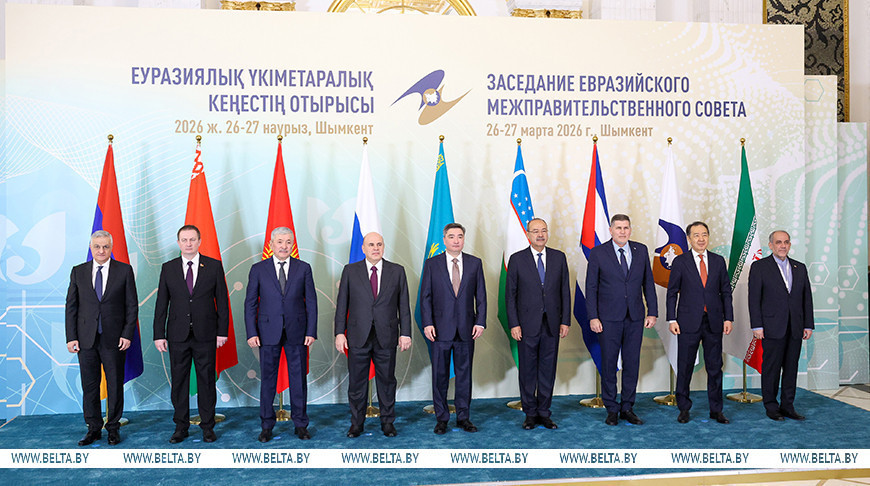
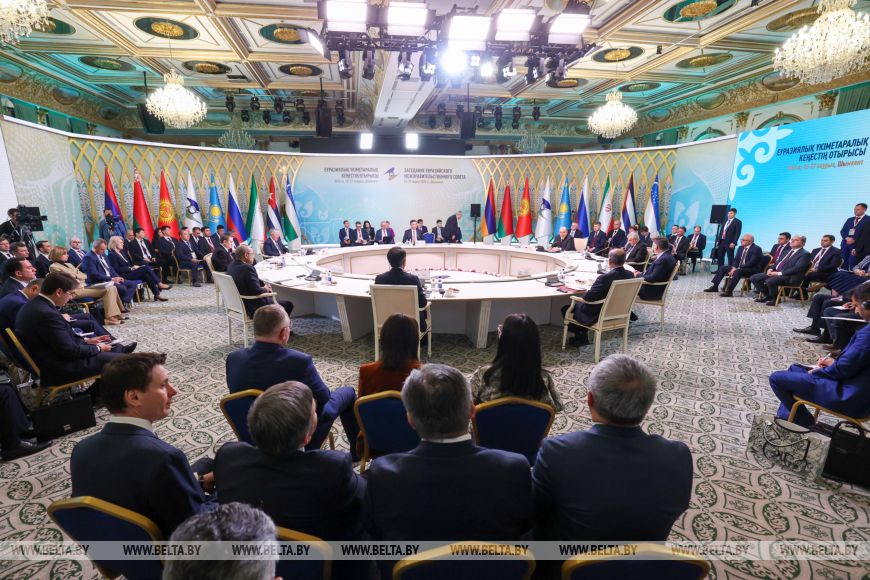
MOSCOW, 27 March (BelTA) - The Eurasian Intergovernmental Council that convened for a meeting in Shymkent, Kazakhstan on 26-27 March with the participation of Belarusian Prime Minister Aleksandr Turchin, reviewed the report of the Eurasian Economic Commission (EEC) “On the macroeconomic situation in the member states of the Eurasian Economic Union and proposals for ensuring sustainable economic development”, BelTA learned from the EEC press service.
"In 2025, the union's total GDP grew by 1.7%. At the same time, growth rates in Kyrgyzstan, Armenia and Kazakhstan significantly outpaced global averages, reaching 11.1%, 7.2% and 6.5% respectively. The major drivers were the services sector, construction and active domestic consumption against the backdrop of record-low unemployment,” the EEC noted.
The report states that systemic measures by national banks and the EEC helped contain inflationary pressure in the EAEU. By the end of the year, the average inflation rate in the union decreased from 9% to 6.5%. “This was facilitated by the monetary policy implemented in individual countries of the union and the introduction of tariff preferences at the EAEU level for the import of food and energy resources,” the press service noted.
“The intra-union trade in 2025 amounted to $95.1 billion, with its growth reaching 5.9% in the fourth quarter, laying the foundation for positive momentum in 2026. The intra-union trade is expected to increase by 6.3% to $101.1 billion. To develop intra-union trade, systemic efforts are underway to eliminate barriers to access to the internal market, harmonize non-tariff regulation and administrative procedures, and the EAEU's integrated information system. Additionally, unified rules for cross-border e-commerce are being established within the EAEU," the EEC emphasized.
“The growth rate of the total GDP of the EAEU states in 2026-2027 is projected at approximately 2.5% on average per year. To ensure long-term sustainability, the Eurasian Economic Commission is actively working, focused on increasing production potential, supporting labor mobility, and strengthening internal financial and trade ties within the union," the press service added.
The report “On the macroeconomic situation in the member states of the Eurasian Economic Union and recommendations for ensuring sustainable economic development” is prepared annually in accordance with the directive of the Eurasian Intergovernmental Council.
"In 2025, the union's total GDP grew by 1.7%. At the same time, growth rates in Kyrgyzstan, Armenia and Kazakhstan significantly outpaced global averages, reaching 11.1%, 7.2% and 6.5% respectively. The major drivers were the services sector, construction and active domestic consumption against the backdrop of record-low unemployment,” the EEC noted.
The report states that systemic measures by national banks and the EEC helped contain inflationary pressure in the EAEU. By the end of the year, the average inflation rate in the union decreased from 9% to 6.5%. “This was facilitated by the monetary policy implemented in individual countries of the union and the introduction of tariff preferences at the EAEU level for the import of food and energy resources,” the press service noted.
“The intra-union trade in 2025 amounted to $95.1 billion, with its growth reaching 5.9% in the fourth quarter, laying the foundation for positive momentum in 2026. The intra-union trade is expected to increase by 6.3% to $101.1 billion. To develop intra-union trade, systemic efforts are underway to eliminate barriers to access to the internal market, harmonize non-tariff regulation and administrative procedures, and the EAEU's integrated information system. Additionally, unified rules for cross-border e-commerce are being established within the EAEU," the EEC emphasized.
“The growth rate of the total GDP of the EAEU states in 2026-2027 is projected at approximately 2.5% on average per year. To ensure long-term sustainability, the Eurasian Economic Commission is actively working, focused on increasing production potential, supporting labor mobility, and strengthening internal financial and trade ties within the union," the press service added.
The report “On the macroeconomic situation in the member states of the Eurasian Economic Union and recommendations for ensuring sustainable economic development” is prepared annually in accordance with the directive of the Eurasian Intergovernmental Council.