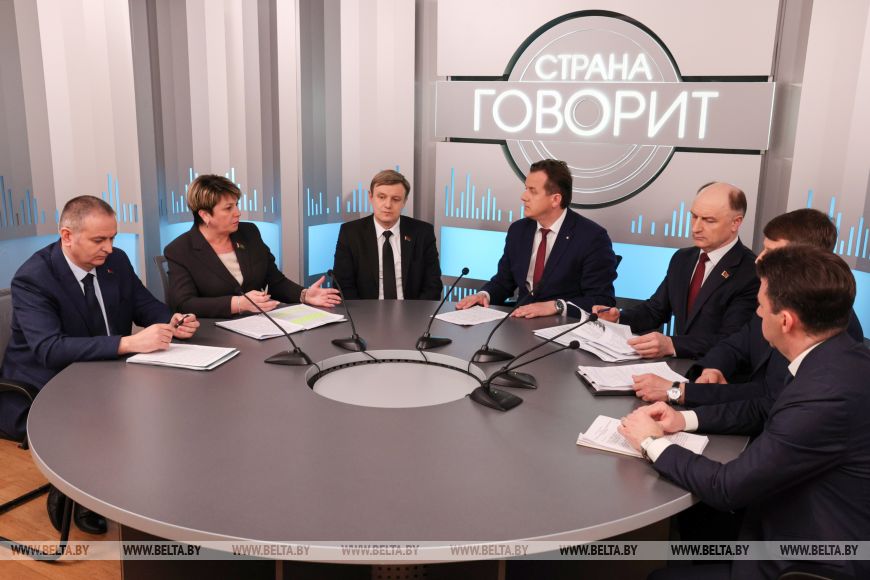
MINSK, 3 May (BelTA) - Maksim Kudin, Deputy Director for Scientific Research of the Polesie State Radioecological Reserve, outlined the key tasks that the reserve addresses in a recent episode of BelTA’s Nation Speaks project.
Specialized enterprises were set up in Belarus to deal with the aftermath of the Chernobyl nuclear power plant accident. One of such enterprise is the Polesie State Radioecological Reserve. Its key tasks can be divided into three blocks. The first is to implement a set of measures aimed at minimizing the transfer of radionuclides beyond the territory's borders. The second is the scientific component. The third is the testing of methods and techniques, the results of which can also be used in conventionally clean areas.
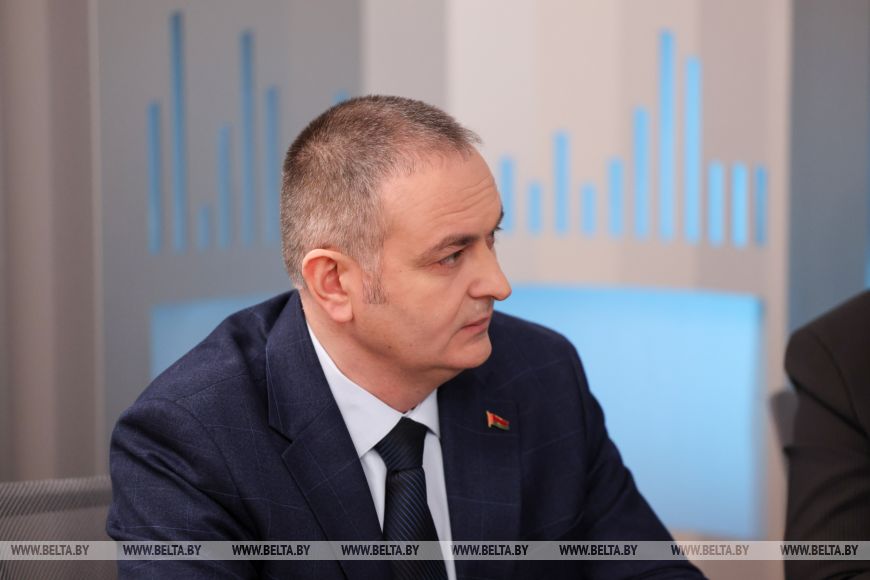
“Since 1992, we have been testing various scenarios for the use of the territory, from conservative to practical. We considered four main options: complete conservation, isolation with minimal infrastructure maintenance for emergency response, the return of people, and the creation of a cluster for the disposal of decontamination waste. Expert assessments, taking into account geology, soils and other factors, showed that the optimal scenario is complete isolation with minimal infrastructure maintenance,” Maksim Kudin said.
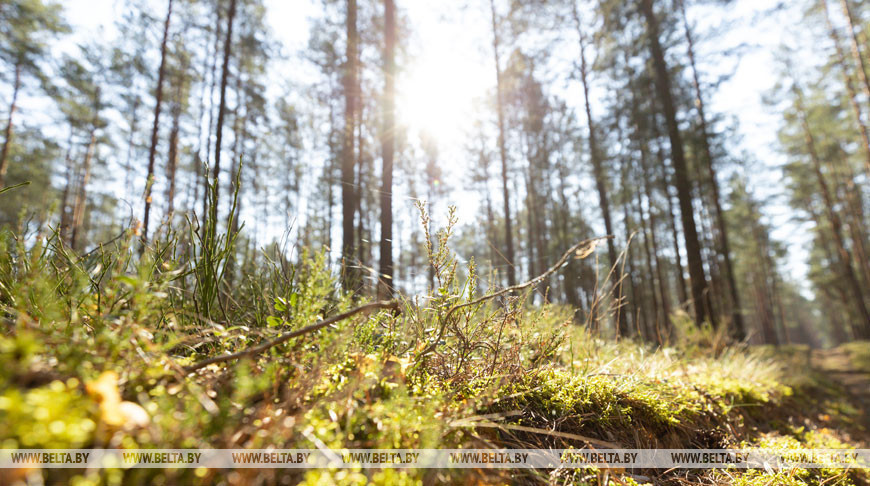
Thanks to state support, systems of specialized measures have been established that make it possible to maintain the site in a safe condition. The higher the degree of grassing of open areas, the forest cover and waterlogging of territories where secondary rehabilitation is possible, the more effectively the transfer of radionuclides to adjacent lands is minimized, he emphasized. “This phased approach creates a framework that allows maintaining the zone at a modern level. This is perhaps the main experience that can be promoted both in the country and at the international level,” Maksim Kudin said.
There are few nuclear legacy sites in the world: the Semipalatinsk Test Site, the East Ural Radioactive Trace, the Chernobyl and Polesie State Radioecological Reserves. “The radiation aspect is the locomotive of development for every country: nuclear energy, the maintenance of infrastructure, the development of competencies. The industry emerged thanks to military developments that led to the creation of reactors for peaceful purposes,” he said.
But it is important to act responsibly: the key rule of international nuclear law says that the current generation must not pass problems on to the next one. “Within our generation, the maintenance of such sites also has benefits such as research potential, biodiversity conservation, the testing of methods for conventionally clean areas. Over time, this will stimulate the development of more intensive rehabilitation methods. Unfortunately, given the half-lives, it is impossible to bring the reserve to a completely safe state over the long term. But studying these processes is not only possible but necessary,” Maksim Kudin emphasized.
Specialized enterprises were set up in Belarus to deal with the aftermath of the Chernobyl nuclear power plant accident. One of such enterprise is the Polesie State Radioecological Reserve. Its key tasks can be divided into three blocks. The first is to implement a set of measures aimed at minimizing the transfer of radionuclides beyond the territory's borders. The second is the scientific component. The third is the testing of methods and techniques, the results of which can also be used in conventionally clean areas.
“Since 1992, we have been testing various scenarios for the use of the territory, from conservative to practical. We considered four main options: complete conservation, isolation with minimal infrastructure maintenance for emergency response, the return of people, and the creation of a cluster for the disposal of decontamination waste. Expert assessments, taking into account geology, soils and other factors, showed that the optimal scenario is complete isolation with minimal infrastructure maintenance,” Maksim Kudin said.
Thanks to state support, systems of specialized measures have been established that make it possible to maintain the site in a safe condition. The higher the degree of grassing of open areas, the forest cover and waterlogging of territories where secondary rehabilitation is possible, the more effectively the transfer of radionuclides to adjacent lands is minimized, he emphasized. “This phased approach creates a framework that allows maintaining the zone at a modern level. This is perhaps the main experience that can be promoted both in the country and at the international level,” Maksim Kudin said.
There are few nuclear legacy sites in the world: the Semipalatinsk Test Site, the East Ural Radioactive Trace, the Chernobyl and Polesie State Radioecological Reserves. “The radiation aspect is the locomotive of development for every country: nuclear energy, the maintenance of infrastructure, the development of competencies. The industry emerged thanks to military developments that led to the creation of reactors for peaceful purposes,” he said.
But it is important to act responsibly: the key rule of international nuclear law says that the current generation must not pass problems on to the next one. “Within our generation, the maintenance of such sites also has benefits such as research potential, biodiversity conservation, the testing of methods for conventionally clean areas. Over time, this will stimulate the development of more intensive rehabilitation methods. Unfortunately, given the half-lives, it is impossible to bring the reserve to a completely safe state over the long term. But studying these processes is not only possible but necessary,” Maksim Kudin emphasized.