Pavel Abramchuk
GOMEL, 11 April (BelTA) - On the International Day of the Liberation of Nazi Concentration Camps, hundreds of Gomel residents honored the memory of those whose lives were cut short by war, BelTA has learned.
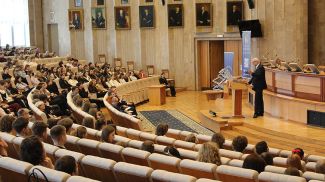
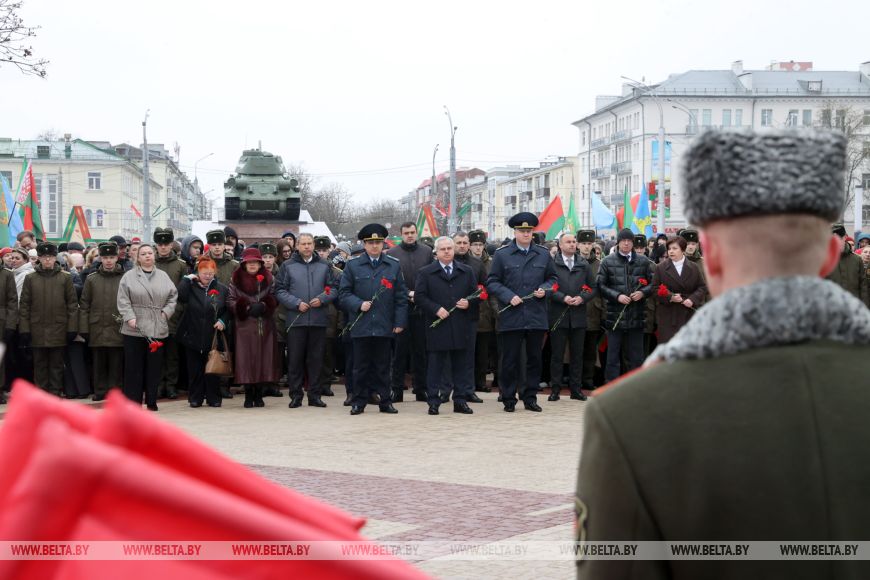
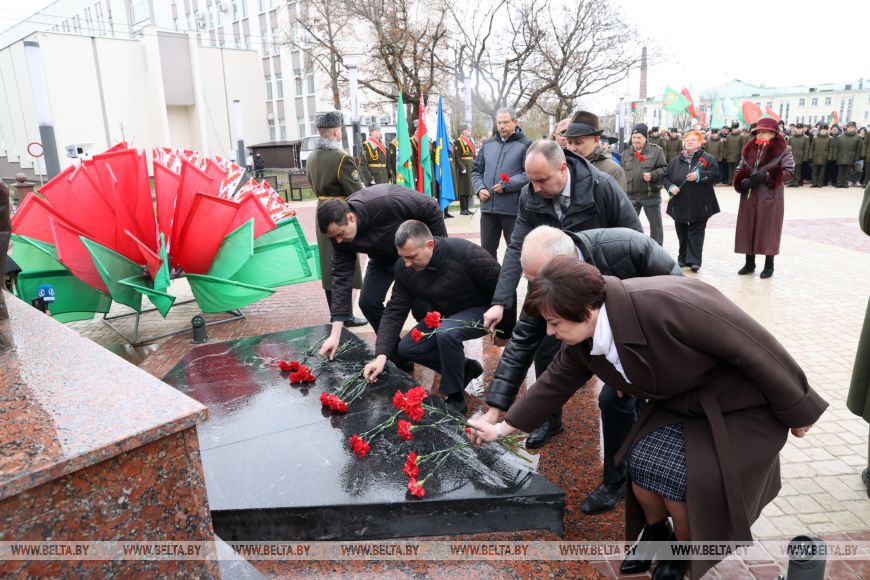
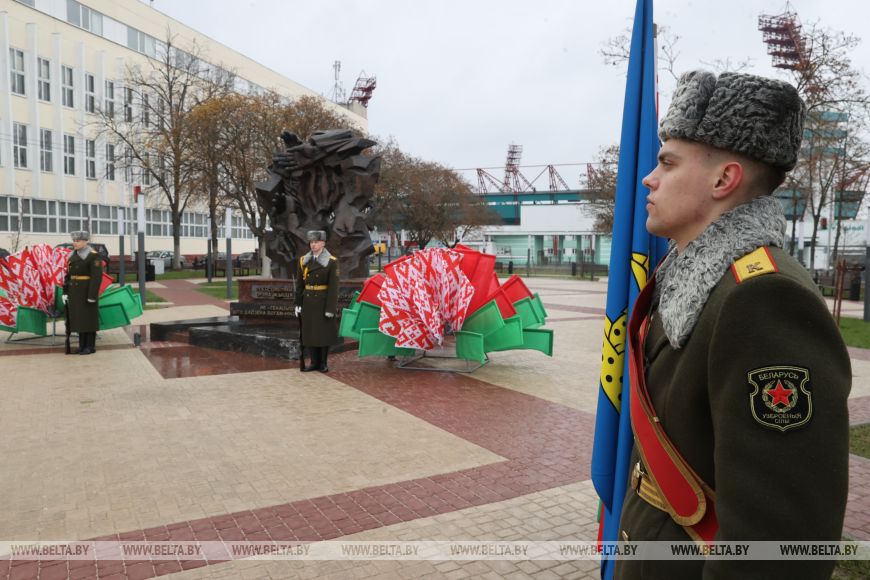
At the memorial marker dedicated to the victims of the genocide of the Belarusian people during the Great Patriotic War on Vosstanie Square, former concentration camp prisoners, city executives, representatives of the prosecutor's office, members of the public paid tribute to the courage and resilience of those who walked through the hell of the camps, those who survived and brought the truth about those terrible events to light.
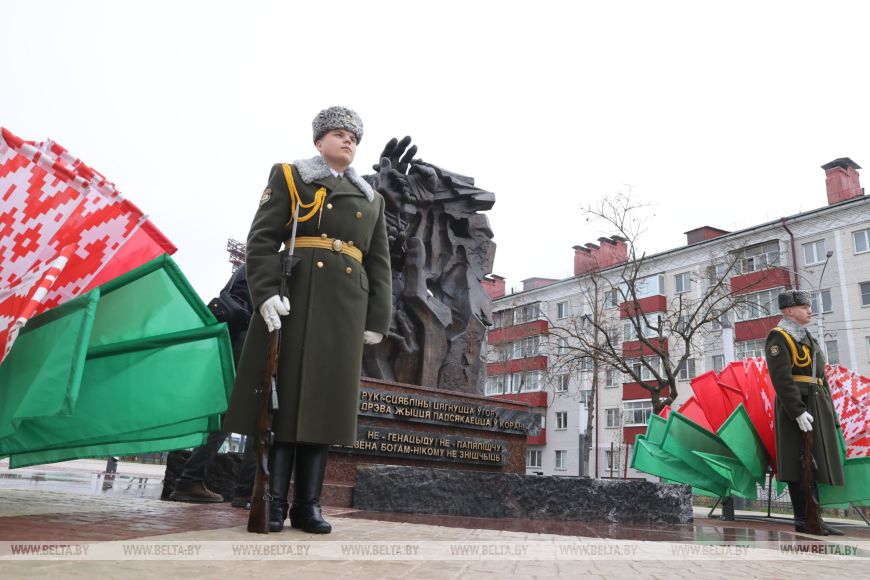
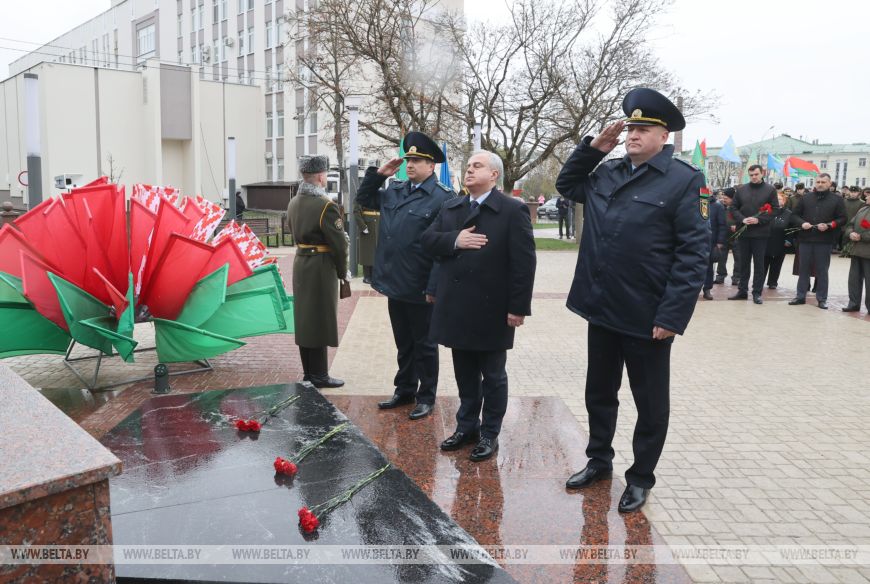 The rally participants were united in their belief that words are difficult to find to describe what people behind barbed wire endured. Hunger, freezing cold, backbreaking labor, medical experiments, gas chambers, crematoria. Yet the ovens could not burn away the truth, and torture could not kill hope.
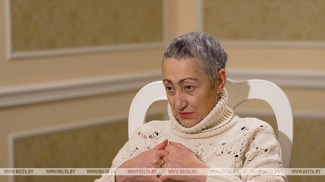
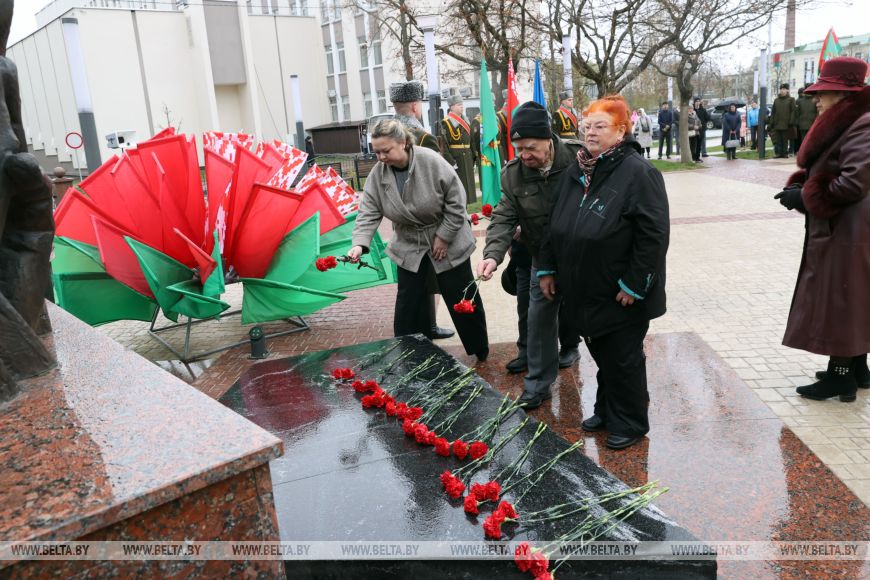 "I was born in a concentration camp. Stuttgart, West Germany,” Inaida Savchits said, struggling to hold back tears on this day. “Incidentally, that name was given to me in Germany.”
"And then, on the second day, my mother was sent to another job in the morning. Her newborn baby was left unattended in the concentration camp. At great personal risk, she appealed to the camp commandant not to be separated from her infant and to be given work inside the camp. So she became a cleaner there," the woman added.
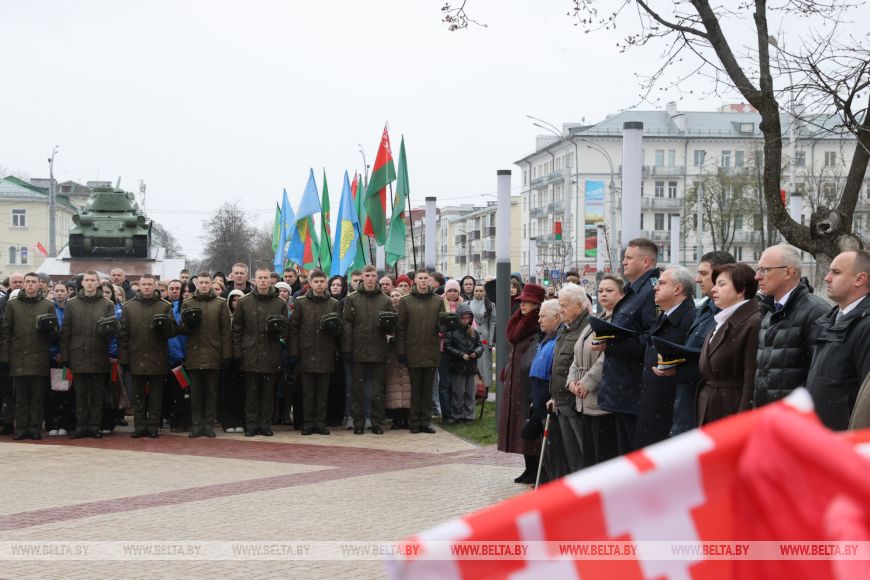
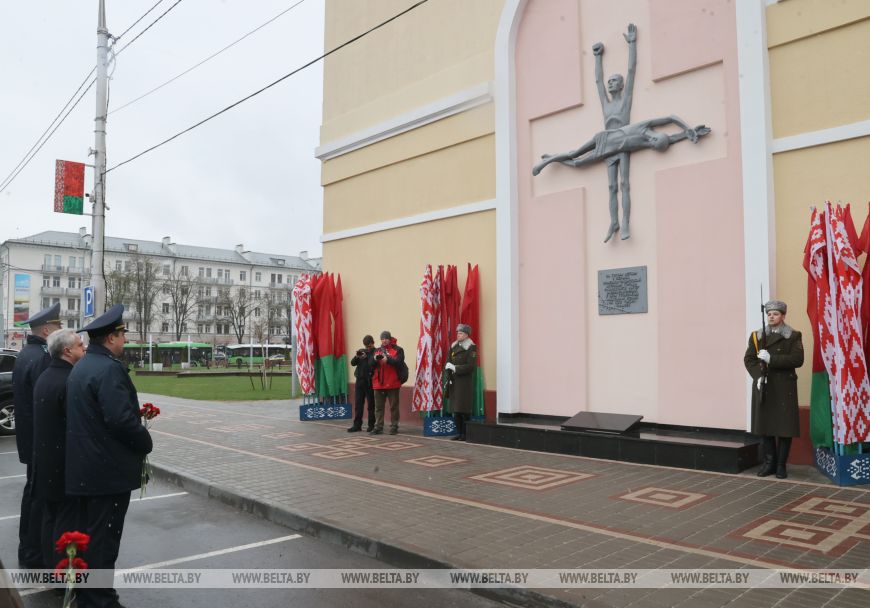
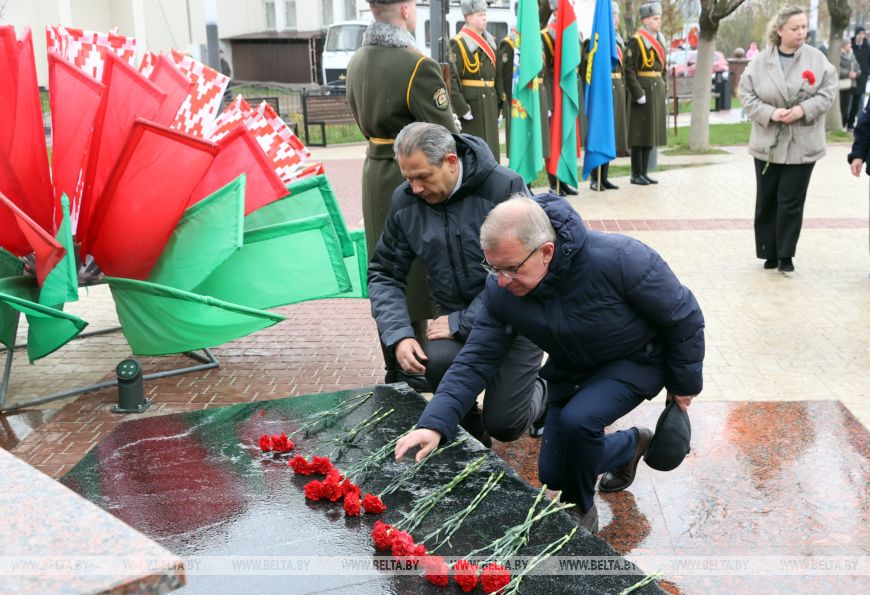
At the memorial marker dedicated to the victims of the genocide of the Belarusian people during the Great Patriotic War on Vosstanie Square, former concentration camp prisoners, city executives, representatives of the prosecutor's office, members of the public paid tribute to the courage and resilience of those who walked through the hell of the camps, those who survived and brought the truth about those terrible events to light.
The rally participants were united in their belief that words are difficult to find to describe what people behind barbed wire endured. Hunger, freezing cold, backbreaking labor, medical experiments, gas chambers, crematoria. Yet the ovens could not burn away the truth, and torture could not kill hope.
As a sign of memory and sorrow, flowers were laid at the foot of the memorial marker.
"I was born in a concentration camp. Stuttgart, West Germany,” Inaida Savchits said, struggling to hold back tears on this day. “Incidentally, that name was given to me in Germany.”
"My relatives - my grandmother, her three daughters (and my mother was pregnant at the time) - were rounded up and sent to Germany from Zhitkovichi. It was 20 June 1944. The Germans already felt they were losing the war. That only made them more brutal. They herded everyone together. Anyone who resisted was shot on the spot," the Gomel resident recalled, returning to those tragic events.
“The camp where my relatives were brought was made up of barracks. In each barrack, there were 45 to 50 people. They were stripped and given work uniforms, and everyone was assigned a number. They were marched several kilometers to work each day. They labored from morning until night. There were private houses around the camp, and the owners would come and choose prisoners to work in their gardens or do household chores. They took them on a signed receipt and brought them back in the evening, again with a receipt. One woman chose my mother. People told her, 'What kind of worker is a pregnant woman going to be? She already has a baby bump.' But the woman insisted. My mother worked for her for two or three days doing housework. That homeowner turned out to be a gynecologist. She actually delivered my mother's baby. And I was named after the gynecologist's daughter," Inaida Savchits recounted.
After liberation, the family returned to their village. "To literally nothing but ashes. In 1942, the village had been burned down for its ties with the partisans. So we had no choice; we built a dugout and lived there for eight long years. My mother went to work on the collective farm, and her sisters moved to the city. I started first grade when I was not quite seven. I did very well in school. The school was seven kilometers away. One time, my mother found some old shoes without laces and said, 'Enough walking barefoot.' But I wasn't used to it. I went into the woods, hid the shoes, and ran to school barefoot. Then I looked out the window and saw little snowflakes swirling. It was late autumn. Then the snow started falling harder, and so much piled up that I got afraid I wouldn't find the shoes I'd hidden in the woods. I dashed barefoot through that snow, found the shoes, put them on, and went back home. I never told anyone, and surprisingly, I didn't even get sick," Inaida Savchits said recounting an episode from her postwar childhood.
“I want to say to the young people that we deeply care about what will come after us. We would like our growing generation to never allow a repeat of what we endured. We want peace to always reign on earth and for good to prevail. I believe we have intelligent, wonderful children, and they will do everything to ensure that tragedy never comes to our land,” she emphasized.
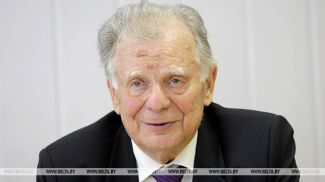
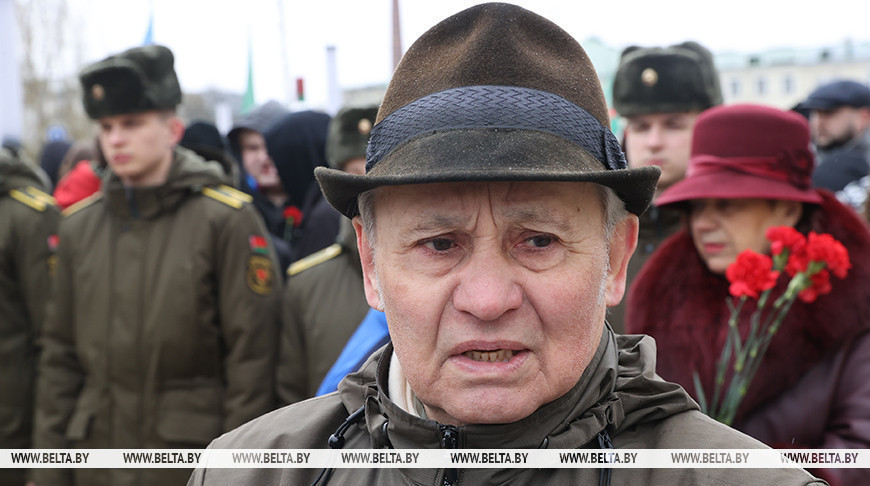
The childhood of Pavel Abramchuk, chairman of the board of the Gomel city public association Children of War, was also full of hardships and deprivation. “I was born at the end of the war in Germany. My parents had been taken there into forced labor in 1943. Life was hard. They didn't consider us human beings. The homeowners where my parents were assigned gave them a corner above the pigsty. My father somehow cobbled together a small stove to keep warm. That's how we lived. They worked from dawn until dark. The food was terrible, never enough. In short, the conditions were extremely harsh," Pavel Abramchuk said painting a grim picture.
“We returned home only in September 1945. We arrived to find our village in Brest Oblast half-burned. We had no house of our own. We lived with neighbors. My mother worked as a farmhand. But we made it through. We built a house. I graduated from both technical college and university, and before retiring, I was the director of a design institute for 24 years," he continued.
"Today, our message to the younger generations is this: cherish peace, make every effort so that our homeland prospers, so that its future is the best and brightest. Value and protect what we have achieved, and build upon it," Pavel Abramchuk said.
Photos by Sergei Kholodilín/BelTA