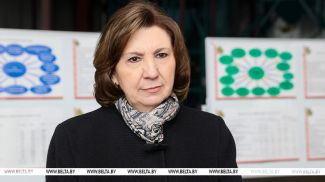
MINSK, 9 April (BelTA) - Model lawmaking is the engine of the harmonization and unification of regulatory acts of the CIS countries, Vitaly Rakovets, a member of the Standing Commission on Ecology and Nature Management of the House of Representatives of the National Assembly, told the media on the sidelines of a web-based meeting of the Standing Commission on Agrarian Policy, Natural Resources and Ecology of the CIS Inter-Parliamentary Assembly (CIS IPA), BelTA has learned
The meeting participants will discuss the development of Belarus’ legislation in the field of ecology and natural resources, and the use of model legislative acts adopted by the CIS IPA on the initiative of the commission; the draft Model Land Code for the CIS member states (new edition); the feasibility of developing a model document defining concerted approaches for coordinating the actions of CIS countries to eliminate radiation and environmental threats associated with nuclear heritage sites; and the ethical problems of the activities of experts and competent persons in the field of reserve management, resources, and mineral extraction in the CIS.
"The CIS Inter-Parliamentary Assembly ensures parliamentary interaction in the economic, social, political, defense, and many other areas. Its main mission is the development of model laws. Model lawmaking ensures the harmonization and unification of all regulatory acts of the CIS countries and has been developing very successfully recently. Although model legislative acts are advisory in nature, any CIS country can refer to a model law when studying or developing its own legislative act,” Vitaly Rakovets noted.
The MP emphasized that several important issues will be considered at today's meeting. “One of them is the development of a model land code for the CIS countries. It will be presented in a new edition. The second item on the agenda will be examining the feasibility of developing a model document regarding the nuclear heritage of the CIS countries and all associated radiation and environmental threats. Economic support and incentives for the operation of enterprises processing ash and slag waste will also be examined,” he said. “Separately, the commission will consider the development of Belarus’ legislation in the field of ecology and natural resources with the application of CIS model laws.”
“Belarus has recently approved a bill on subsoil use. It was also refined taking into account the model legislative act of the CIS IPA. A draft Water Code is currently in the works. These legislative acts are being processed by the House of Representatives with the participation of the CIS Inter-Parliamentary Assembly,” Vitaly Rakovets added. "Furthermore, work is actively underway on a new document, namely the Environmental Code. In the CIS only Kazakhstan has the Environmental Code. Therefore, we are exploring the enforcement practices and regulatory acts for the unification and refinement of this document.”
The meeting participants will discuss the development of Belarus’ legislation in the field of ecology and natural resources, and the use of model legislative acts adopted by the CIS IPA on the initiative of the commission; the draft Model Land Code for the CIS member states (new edition); the feasibility of developing a model document defining concerted approaches for coordinating the actions of CIS countries to eliminate radiation and environmental threats associated with nuclear heritage sites; and the ethical problems of the activities of experts and competent persons in the field of reserve management, resources, and mineral extraction in the CIS.
"The CIS Inter-Parliamentary Assembly ensures parliamentary interaction in the economic, social, political, defense, and many other areas. Its main mission is the development of model laws. Model lawmaking ensures the harmonization and unification of all regulatory acts of the CIS countries and has been developing very successfully recently. Although model legislative acts are advisory in nature, any CIS country can refer to a model law when studying or developing its own legislative act,” Vitaly Rakovets noted.
The MP emphasized that several important issues will be considered at today's meeting. “One of them is the development of a model land code for the CIS countries. It will be presented in a new edition. The second item on the agenda will be examining the feasibility of developing a model document regarding the nuclear heritage of the CIS countries and all associated radiation and environmental threats. Economic support and incentives for the operation of enterprises processing ash and slag waste will also be examined,” he said. “Separately, the commission will consider the development of Belarus’ legislation in the field of ecology and natural resources with the application of CIS model laws.”
“Belarus has recently approved a bill on subsoil use. It was also refined taking into account the model legislative act of the CIS IPA. A draft Water Code is currently in the works. These legislative acts are being processed by the House of Representatives with the participation of the CIS Inter-Parliamentary Assembly,” Vitaly Rakovets added. "Furthermore, work is actively underway on a new document, namely the Environmental Code. In the CIS only Kazakhstan has the Environmental Code. Therefore, we are exploring the enforcement practices and regulatory acts for the unification and refinement of this document.”