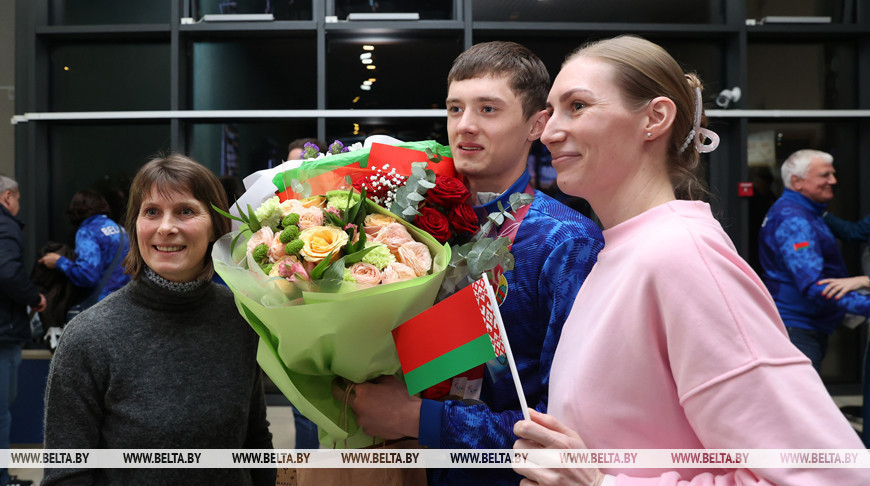
Now the champion of the XIV Winter Paralympic Games in Italy, Raman Svirydzenka, is in high demand. In his hometown of Novopolotsk, they couldn't wait for him - to chat, to take a historic photo: 'I'll show this to my grandchildren!' His every day is scheduled by the hour: meetings with work teams, interviews… The Paralympian turns no one down. Because he wants to become a role model for children with disabilities, to help them stop feeling sorry for themselves and find an activity they love and are capable of, something that will fill their lives with joy and meaning. To do that, you just need to find support - a teacher, a coach, a mentor. For Raman, the life-changing decision was to take up skiing at Children's and Youth Sports School of the Olympic Reserve No. 2 in Novopolotsk. We know that history doesn't do 'what ifs’. But if Raman hadn't met his coach there, what would he have become in adulthood? Our project Destiny Brought Them Together is exactly about such amazing encounters that change lives for the better.
‘Failing and getting back’
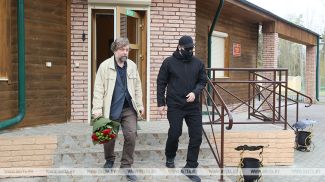
Anastasia Kokhanchik hugs Raman tightly. She is overwhelmed with emotions: “What a fine young man he's grown into!’ He, smiling shyly, greets the one who was the first to believe in him.
They decided to hold the meeting in the place where the hero of the 2026 Winter Paralympics first took up skiing. It's a different sports school now. Raman hasn't been here for five or seven years and he immediately noticed that “Nothing has changed!” adding that this is where it all began.
Back then, everything fell into place: a doctor advised his mother to put her 8-year-old son into skiing, and coach Anastasia Kokhanchik came to his secondary school No. 10 to look for new talent. She gave an engaging talk about cross-country skiing and handed out business cards.
“By that time, my friend was already training with Anastasia Kokhanchik,” Raman recalled. “I got interested. Several classmates and other kids from the school also joined. We’re still friends to this day.”
The first training session for the beginners took place on a hill near the school, a hill that seemed quite high to the elementary school students at the time. They were given a task: ski down the hill and then ski back up. They were shown the herringbone technique. Of course, the kids enjoyed the downhill part the most. Almost everyone fell while going back up.
“Raman conquered the uphill on his own. He didn't need any help from the coach,” Anastasia Kokhanchik recalled.
Training at Children's and Youth
Sports School of the Olympic Reserve No. 2 took place year-round. In
winter, they trained on skis and they
didn't wait for snow: instead, the coaches would spread spruce and pine needles
on the ground, and the kids would glide over them. During the warm season, they
did running and other physical exercises. 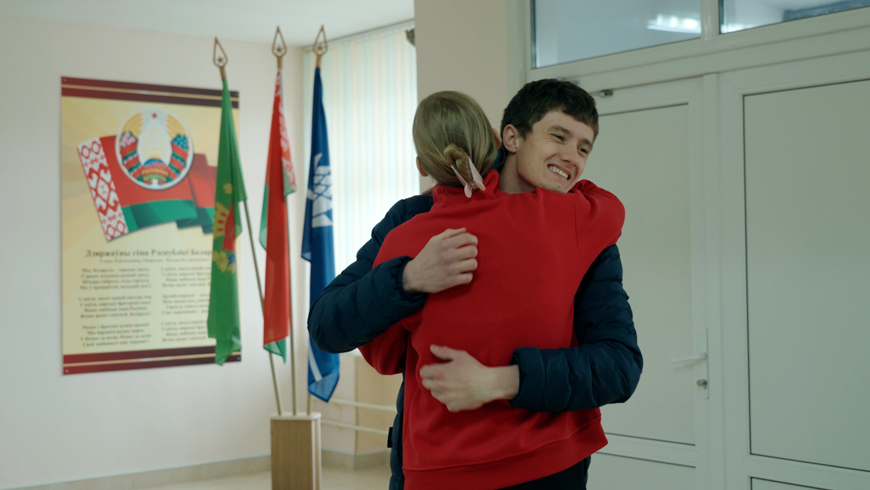 One of the brightest summer events
for Raman was the Lyzhnik [Skiier] camp, where students from various sports
schools would gather.
One of the brightest summer events
for Raman was the Lyzhnik [Skiier] camp, where students from various sports
schools would gather.
“Our trump card is the Lyzhnik [Skiier] children's summer camp in the village of Azino, Polotsk District, on the shore of the crystal-clear Lake Beloye,” Anastasia Kokhanchik said. "It seems that children often sign up for sports sections because of it."
It was at this camp that Raman Svirydzenka first became aware of his own strength and abilities.
“We had many test training sessions at the camp,” he recalled. “During one of them, we had to run a loop through the forest. I was showing pretty good results. I will never forget that, they praised me. That's when I understood: I could achieve decent results even compared to guys who are three years older than me.”
Anastasia Kokhanchik noted that it was comfortable to work with hardworking Raman:
“He fulfilled all our requirements, never objected, no matter what task he received. If he fell, he got up and completed tasks 100%. Ski training started at 15:00 and lasted for an hour or an hour and a half. I remember how he combined it with another favorite activity: after our sessions he would run off to play football. As a child, Raman was passionate about it and remains fond of it to this day.”
“I may have a talent for skiing,” the Paralympic champion said. “And, without a doubt, my first coaches, Anastasia Kokhanchik and Boris Vorobyov, deserve great credit for my success. They gave me a good sport foundation and taught me to endure.”
Raman Svirydzenka was born with left-sided tendon muscular clubfoot. As a child, he underwent three operations, but they did not produce the desired result, which led to a disability.
However, looking at this outstanding athlete, you would never say that he has a physical peculiarity. He confirms that everyone notes this and he admitted:
“I never felt like a sick child for whom something was inaccessible.”
And from the very first sessions the coaches did not give him any free pass:
“We saw no reason for Raman to receive less workload than others. If he handles it fine, succeeds at everything, and there are medical recommendations for this kind of sport, then why restrict the child?” Anastasia Kokhanchik wondered.
It is well known that parents most often enroll their children in sport classes for the sake of their general physical development. Few go on to high-performance sport.
“We saw Raman’s predisposition to cross-country skiing,” the coach said. “This is why we worked with him a little differently. And he ended up in a group of stronger kids.”
As he grew older, Raman Svirydzenka went
to another coach Olga Pronicheva.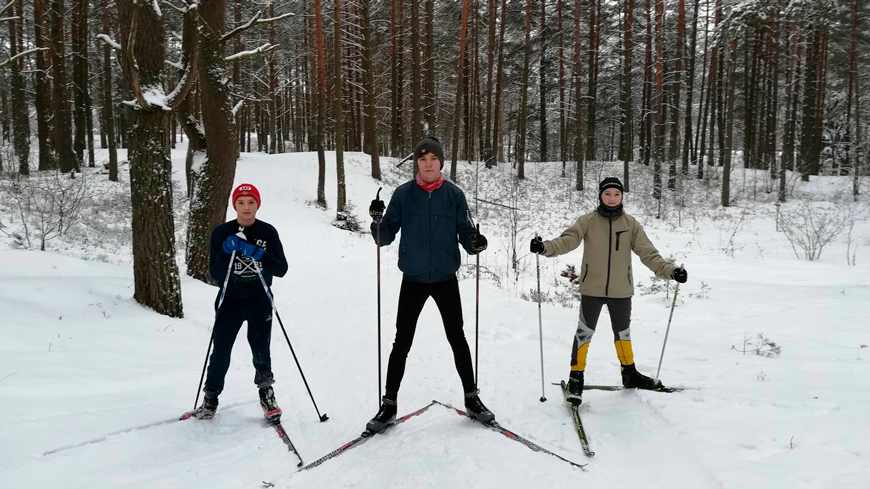 'It’s hard to describe that feeling
of delight'
'It’s hard to describe that feeling
of delight'
Now the Paralympic champion feels that he did nothing special to become an athlete. Everything worked out on its own. In the 10th grade he competed in his first Republican Paralympic competitions: he won one race and came second in another. Back then he was included in the team for a World Cup. He went with the Paralympic team to Finland, then competed at the European Cup (placing 3rd and 5th), and he finished 7th and 9th at the World Championships. In 2022, Raman received a personal license to participate in the Paralympic Games. As an 11th grader, he went to his first Paralympics in Beijing, but in China the International Olympic Committee barred Belarusian athletes from participation in the main event of the four-year period.
“To be honest, I wasn’t very upset then,” Raman Svirydzenka admits. “At the age of 17, I understood that I had everything ahead of me. That is, I had another four years to prepare and perform.”
For the first two years Raman competed mainly with Russian Paralympians, which did not allow him to fully assess his level. But a year before the Winter Games Belarusians were allowed to compete at the World Cup in Germany where the Novopolotsk resident came in first in the classic sprint and second in the skate race.
“So, when I went to the Paralympics in Italy this time, I already knew I was going to fight for a medal,” the athlete said. “But I didn’t make any predictions. I always have just one goal – to give it my all.”
In the sprint qualifying race, he barely made it into the semifinals: after a fall, he ended up in last place – 12th, which was exactly the number of athletes who advanced.
“A fall is no reason to get upset. You have to keep fighting to the end,” Raman said.
In the end, he finished first in the classic sprint final. The next day, he took silver in the 10km interval start classic race.
Winning the gold medal brought Raman Svirydzenka immense joy:
“It’s very hard to describe that feeling of joy, but it’s one of the brightest moments of my life.”
The young athlete’s success was celebrated not only by his fellow countrymen but by the entire nation. The head of state immediately congratulated him on his victory.
Anastasia Kokhanchik, unable to watch the competition live because of work, stayed in constant touch with Raman’s mother Irina and his coaches.
“They told me about the fall in the
qualifying,” Anastasia recalled. “I was upset, but I didn’t feel it was a
failure. We expected Raman to win a medal, but hearing that it was gold sent a
wave of emotion through me. Just thinking about it gives me goosebumps. I
cried, because I remember him as a little boy, from way back... That’s just how
fate brought us together. When I got another job, I grew closer to his mother.
It’s to describe the feeling, it felt like a member of my own family had become
a Paralympic champion. It’s unforgettable.”Among the entire Belarusian team,
Raman Svirydzenka was the only one to win medals at the XIV Winter Paralympic
Games. What lies behind these results?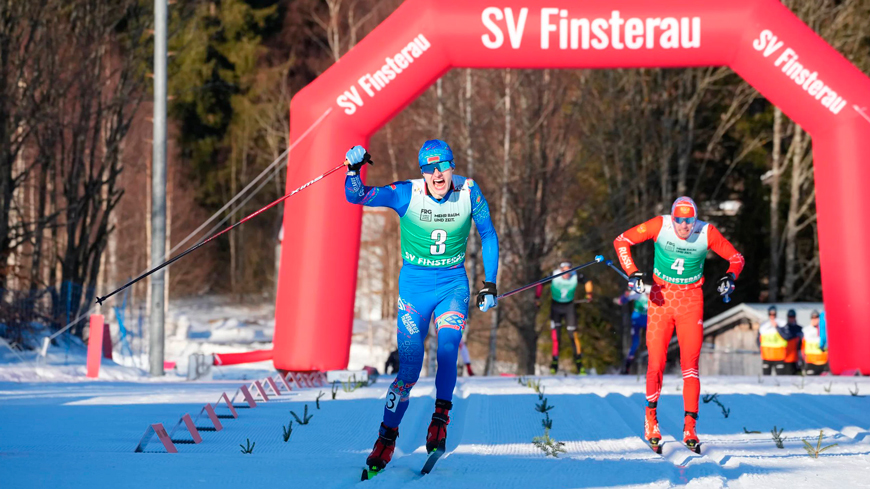 “Years of training,” the champion replied. “I
truly love sport, and no matter how hard it got, I never thought about
quitting.”
“Years of training,” the champion replied. “I
truly love sport, and no matter how hard it got, I never thought about
quitting.”
Raman emphasizes that above all, an athlete must want to train, improve, and work hard – even when no one is watching. Do it for yourself, and be satisfied with the results. And, of course, it’s crucial to find a good coach – someone who will support and motivate you.
Raman gratefully told about everyone who accompanied him from his first steps on skis to the Paralympic podium: Anastasia Kokhanchik, Boris Vorobyov, Olga Pronicheva, and now – Inessa Kozlova, the head coach of the national cross-country skiing team.
‘Don’t feel sorry for yourself – do sports’
For the past four years, Raman has been training alongside able-bodied athletes – with an intense schedule of two workouts a day, lasting from 1.5 to 4 hours each. He uses regular skis, just like all the other athletes.
“Of course, there’s a huge difference between a gold medal at the Paralympics and a gold medal at the Olympics,” the champion noted. “At the Paralympics, you have people with serious health conditions: some missing an arm, some missing legs, others blind. One of my legs is shorter and weaker than the other, so I have trouble keeping my balance. But I’ve learned to live with the pain – it’s just part of my life.”
The 2026 Paralympic champion admitted that he agreed to interviews so that parents and children with health issues, those who believe that illness puts an end to any normal life, can see him.
“Everything was completely different for me,” he emphasized. “I always considered myself absolutely healthy and never felt sorry for myself. My advice is: don't feel sorry for yourself, do sports, do things you enjoy. I want to be an example for people with disabilities. Maybe, looking at me, they will understand that nothing is as difficult or unattainable as it seems. Then their lives could change for the better.”
Anastasia Kokhanchik recalled that Raman Svirydzenka is not the only Paralympian from Novopolotsk to achieve such high results in sports. The first was Sviatlana Sakhanenka, a three time champion at the 2018 Winter Paralympics, an athlete with a visual impairment.
“Belarus has a sufficiently developed level of Paralympic sport. The success of Belarusians at the Games and other competitions proves that. Of course, there are some issues: so far, quite few people are involved in this area, but that can be fixed. Mentors play an important role here. My first coaches accepted the responsibility of training me despite my illness and the risks. They trusted me, and clearly that trust was justified. I likely went further or performed better than some abled athletes,” Raman Svirydzenka concluded.
Today, Raman Svirydzenka is a
fourth-year student at the Belarusian State University of Physical Culture,
preparing for his state exams.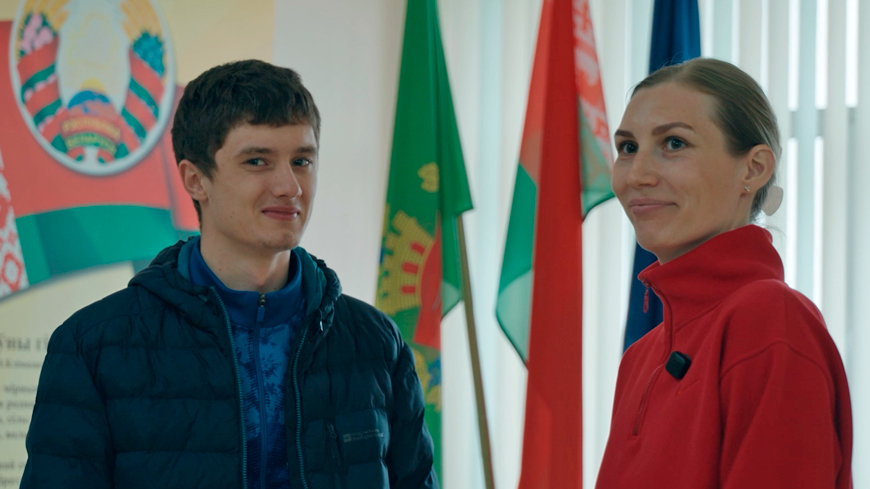 Necessary infrastructure and
comfortable conditions are in place
Necessary infrastructure and
comfortable conditions are in place
On 28 March 2026, the Paralympic Committee of the Republic of Belarus celebrated its 30th anniversary. As Secretary General of the Paralympic Committee of Belarus Nikolai Shudeiko noted, over this time not only athletes with disabilities but also society as a whole have come a long way.
Through their own example, Paralympians prove that regardless of a person's health, they can lead a full life, realize themselves, receive state awards and serve to the country.
“Today, thanks to the care of the state and the President, we have all the necessary infrastructure and comfortable conditions for people with disabilities to do sports and bring glory to their country by achieving high results,” Nikolai Shudeikoemphasizes.
At every Paralympic Games, Belarusian athletes show commendable results. Traditionally, the leading disciplines of the Belarusian Paralympic movement are swimming, athletics and cross‑country skiing – the most accessible sports with rich traditions. Wheelchair fencing and tennis have also gained a strong foothold in Belarusian Paralympic sport.
Under Belarusian law, sports schools can set up combined groups. For certain conditions, a child with a disability can train side by side with abled children. The training methods are much the same – what matters is the coach's ability to adjust the load. Often, coaches are retired Paralympic athletes themselves.
“Skiing became my mission, responsible and difficult,” Raman said. 'Football for me is emotional release, a safety valve. I still play in the amateur league. Of course, I am a fan of the Naftan team, my childhood friends play there.”
By Svetlana Kirsanova,
7 Days newspaper
Photos by BelTA, Kirill Pasmurtsev and from Raman Svirydzenka's personal archive