![Viktor Shevaldin [Screengrab/BelTA]](https://eng.belta.by/images/storage/news/with_archive/2026/000022_1777280130_179578_big.jpg "Viktor Shevaldin [Screengrab/BelTA]")
Viktor Shevaldin [Screengrab/BelTA]
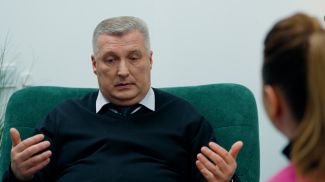
Was it politics or safety that truly lay behind the decision to shut down the Ignalina Nuclear Power Plant? What socio-political consequences did it lead to, and at what stage is the equipment dismantling today? The former director of the Ignalina NPP, Viktor Shevaldin, answered these questions in an exclusive interview with BelTA.
What were the reasons for closing the Ignalina NPP? Why did the European Union insist on its closure despite the plant’s modernization?
Back in the day, more than 20 years ago, when the decision was being made to admit Lithuania to the European Union, an ultimatum was issued: either Vilnius closes the Ignalina NPP, or consideration of Lithuania’s EU membership would be postponed. The government and leadership of Lithuania made their choice in favor of joining the EU.
To what extent was the decision to shut down the Ignalina NPP driven by real safety risks?
In my view, it was driven exclusively by political motives. By that time, the plant had carried out a lot of work to improve reliability and safety. It involved equipment, the design basis, administrative, regulatory, technical and operational documentation, as well as rules and standards in nuclear physics. A great deal had been done, but nevertheless the decision to shut down the Ignalina NPP earlier than its planned design life was implemented.
What were the socio-economic consequences of the plant’s closure for Lithuania? How did it affect people’s lives and well-being?
Of course, if not for this harsh condition, the people of Lithuania and the country’s leadership would never have agreed to prematurely close a nuclear plant that reliably supplied the country with low-cost electricity. And not only Lithuania, but also its neighbors – Belarus, Latvia, and Leningrad Oblast. So the first consequence was a forced increase in electricity prices. Secondly, a tempting arrangement was made: the European Union and donor countries committed to financing the decommissioning of the Ignalina Nuclear Power Plant. That was a substantial sum of money, which Lithuania needed at the time, as it had not managed to accumulate its own resources by the moment it joined the EU. Funding from European funds began in 2002 and continues to this day.
Were the Ignalina NPP’s reactors as reliable as European ones, and what issues did the EU have with the plant?
Work to improve the safety of the RBMK channel-type reactors began nearly 40 years ago, with the involvement primarily of the RBMK design developers, Russian companies, and the Russian leadership. The Ignalina NPP was already an independent power plant. Nevertheless, cooperation continued on all fronts – with [counterparts from] Russia, Ukraine, and Lithuania. There were more than 20 major projects alone. It is difficult to list them all. Essentially, everything that was planned was implemented. Of course, not all projects proved necessary for ensuring safety, because certain situations never arose at the plant. Nonetheless, the additional measures provided significant improvements in the level of safety and reliability of the NPP.
Mr. Shevaldin, what is happening there today?
When the decision to close the plant was made, no decommissioning plan for the Ignalina Nuclear Power Plant existed. It had to be developed. In addition, more than 20 technical projects were created, specifically for removing spent nuclear fuel from the reactors and cooling ponds to a temporary long-term storage facility in special metal-concrete containers. That work was completed in 2022. In other words, all spent fuel from the Ignalina NPP has been removed to temporary long-term storage. Projects have been implemented for processing and reburying the temporary radioactive waste storage units that were in operation when the Ignalina NPP first started up. That waste has also all been processed and properly packaged according to the latest safety requirements.
A project is currently being implemented for the storage of intermediate-level waste. It should be noted that no radioactive waste or spent fuel from the entire operating history of the Ignalina Nuclear Power Plant has ever been shipped away. All storage facilities are located on the Ignalina NPP site, within about a kilometer and a half of the plant’s foundation.
A great deal of equipment has been dismantled, starting with the turbine hall. They began with the cleanest, non-radioactive equipment. All dismantled equipment from the turbine hall and other systems was decontaminated, processed, and 80% of the waste was sold as clean scrap metal. Ahead, of course, lies a great deal of work to dismantle the reactor itself. That is the most complex task. Tenders are underway to attract companies to carry out these projects. In other words, at least another 20 years of work remain.