
Photo courtesy of Reuters
News of the story
"On Point"
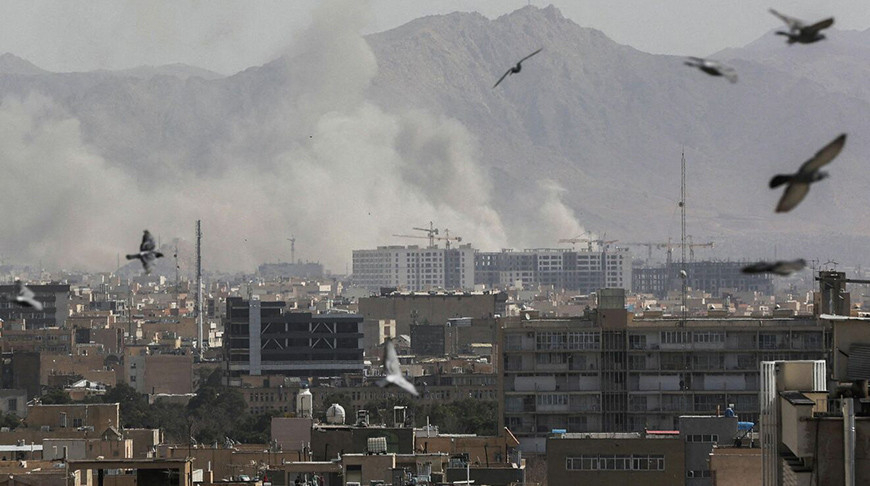
MINSK, 7 March (BelTA) – Even countries that do not openly oppose the U.S. and Israeli attack on Iran will not be able to stay on the sidelines, their economies will also be affected, political scientist and orientalist Karine Gevorgyan said in the latest episode of the V Teme [On Point] project on BelTA’s YouTube channel.
According to her, U.S. experts who truly understand the situation in the Middle East and could inform their fellow citizens are being sidelined, silenced from speaking the truth. This prompted Iran’s Supreme National Security Council Secretary Ali Ardeshir Larijani to recently express sympathy for the U.S. citizens, asking: what are they dragging the American people into?
“The U.S. goal is simple. If you want to dominate, keep all communications under control. Russia, China, Iran, Afghanistan, India want to develop continental communications, here is the chaos,” Karine Gevorgyan said.
The expert also noted that the USA is active in Africa as well, creating destabilization. “Things are also unsettled in Africa,” the political scientist said, adding that attempts are being made to co-opt the Polisario Front, a military-political organization operating in Western Sahara that originally fought for the territory’s independence from Spain. “I’m not even mentioning Libya.”
Karine Gevorgyan also spoke about which African countries maintain relative neutrality. “Egypt is holding on; there are no U.S. bases there, and they still have an army. Egypt seemingly doesn’t even condemn the United States. They are sitting and waiting. But no one will sit this out. It’s clear that this hits both our economy and China’s,” the political scientist emphasized.
The USA has another interest in controlling sea communications. “There are more nuances to consider. The insurance for these routes is mainly provided by firms in the City of London, but they have now halted coverage because there is nothing left to insure. On top of that, Donald Trump is destroying Britain’s insurance sector,” the expert explained. “His aim is to boost U.S. insurance companies, which previously had fewer opportunities since the market was already dominated.”