GRODNO, 6 April (BelTA) - Scientists are researching a burial ground discovered in the downtown of Grodno believed to date back to the late 16th - early 17th centuries, BelTA has learned.
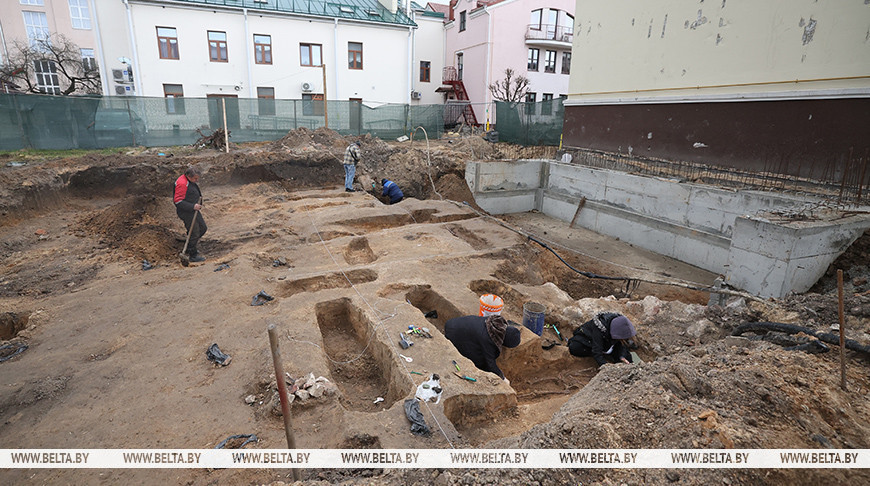
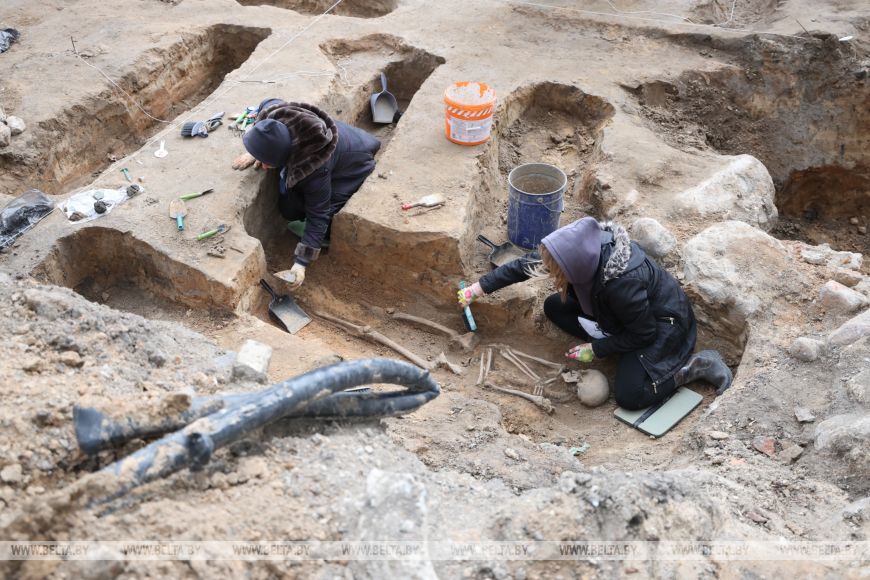
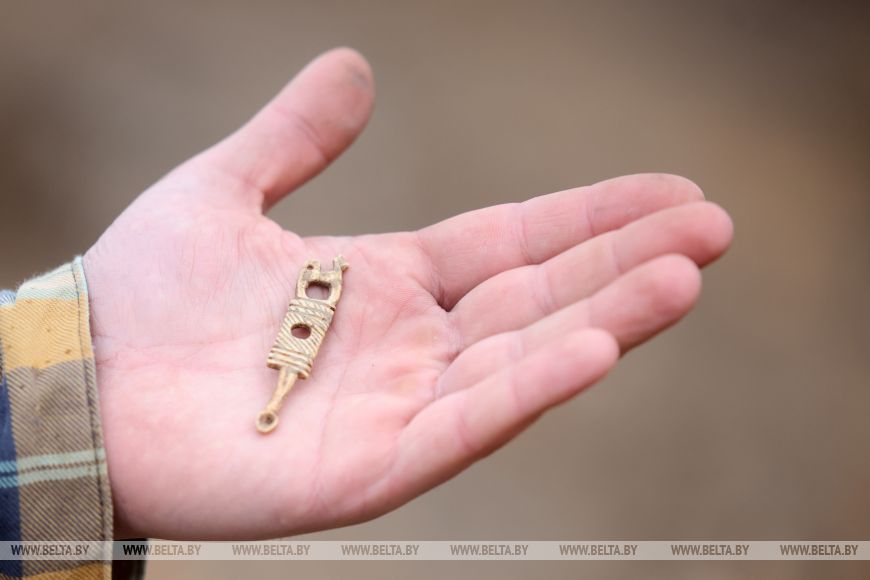
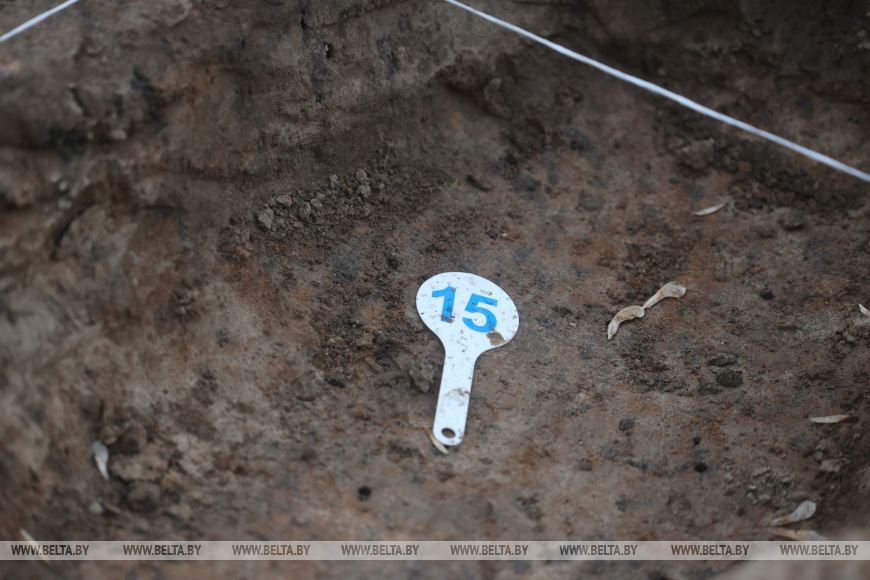
A cemetery was uncovered during the archaeological monitoring of a site in central Grodno, on Malaya Troitskaya Street, where an administrative building is planned to be constructed. According to Aleksandr Vashanov, a researcher at the Department of Primitive Society Archaeology of the Institute of History of the National Academy of Sciences of Belarus, more than 20 skeletons have already been studied to date. The skeletons were lying in a fairly orderly arrangement, in a structured way, which clearly indicates that this is a cemetery,” Aleksandr Vashanov emphasized. “Based on the findings made in one of the graves, we can say that this dates to the late 16th century - first half of the 17th century. In particular, we found a Nuremberg trade token dated between 1585 and 1636. The available Grodno cartographic maps did not indicate this cemetery. So it was previously unknown.”
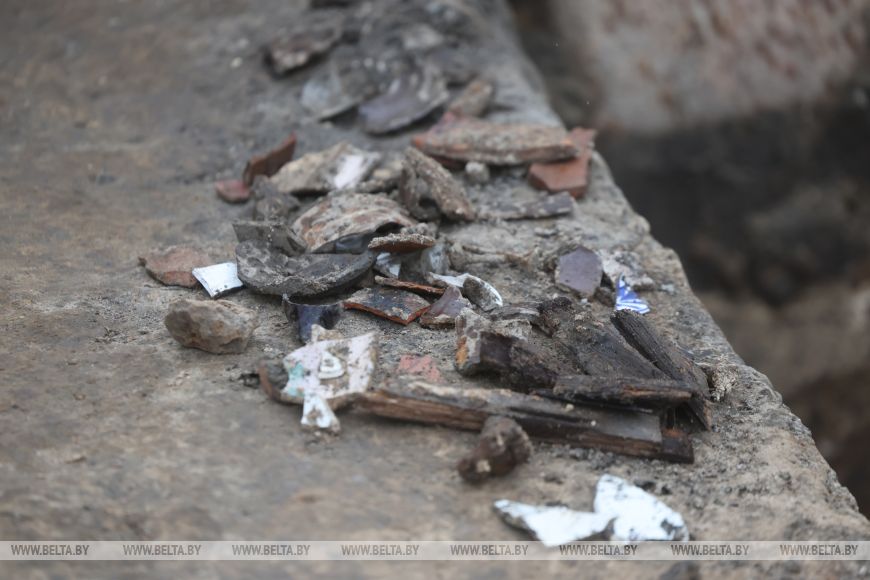
According to the scientists, a fairly thick cultural layer, more than one meter deep, has formed above the cemetery layer. “This site contains materials from various time periods, but the bulk of them date to the late 19th - early 20th centuries. In the cultural layer, we found garbage pits and a significant number of porcelain items, coins, as well as glass and various ceramic objects,” Aleksandr Vashanov stated.
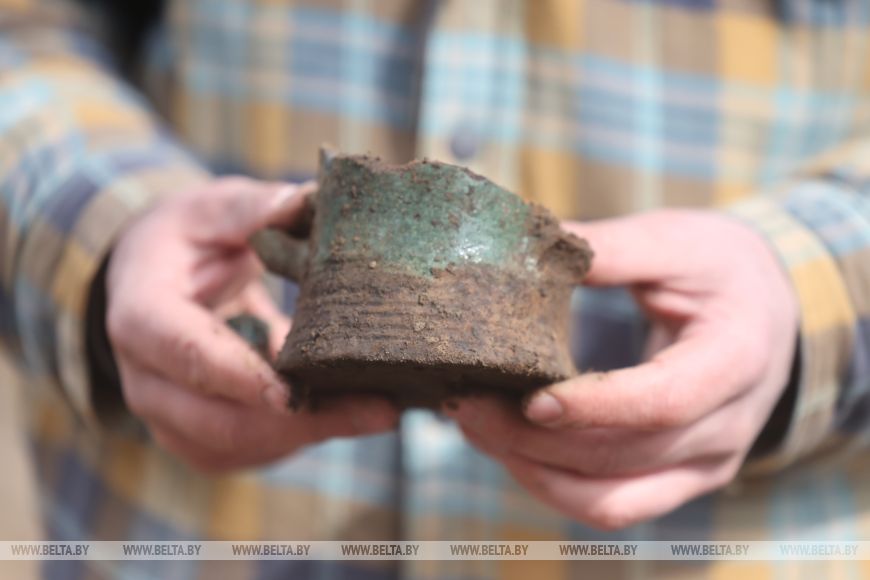
Another important discovery at this site is a foundation that most likely was a religious structure that also dates back to the 16th or first half of the 17th centuries. "Unfortunately, only a small fragment of the foundation has survived. It was heavily damaged by various construction works, including those in the 19th and 20th centuries, and at present the most important thing is to document this foundation and establish the age of this structure,” Aleksandr Vashanov noted.
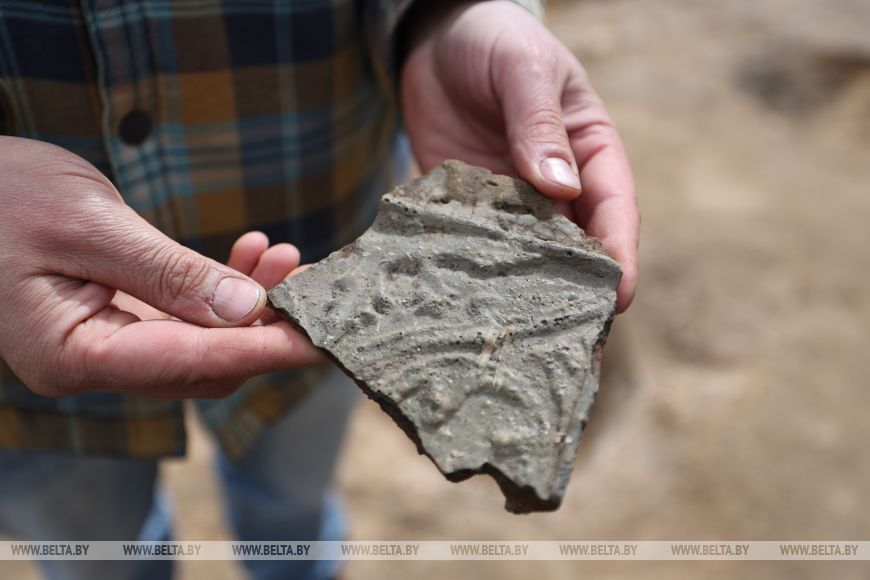
Among the important finds is also a glazed tile dating to the 17th century. According to experts, there is a high probability that it may be connected to the religious structure.
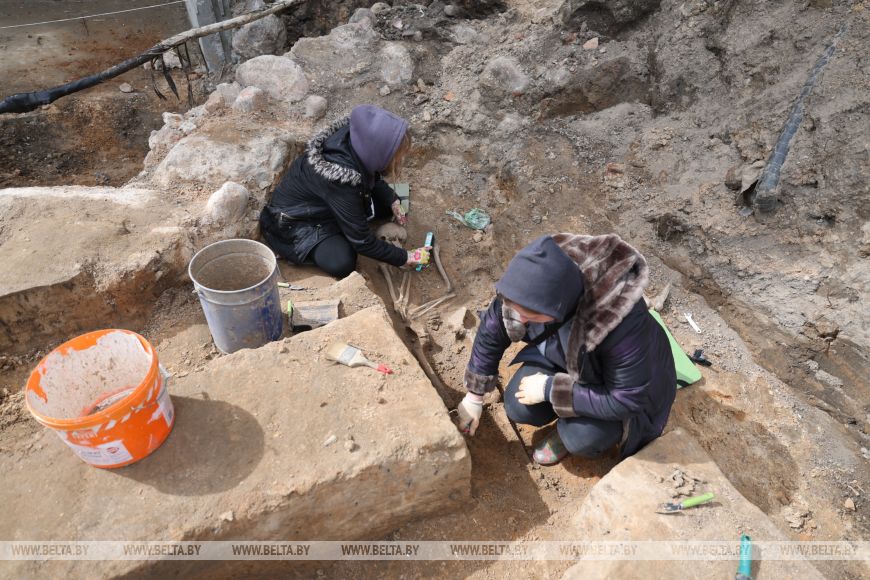
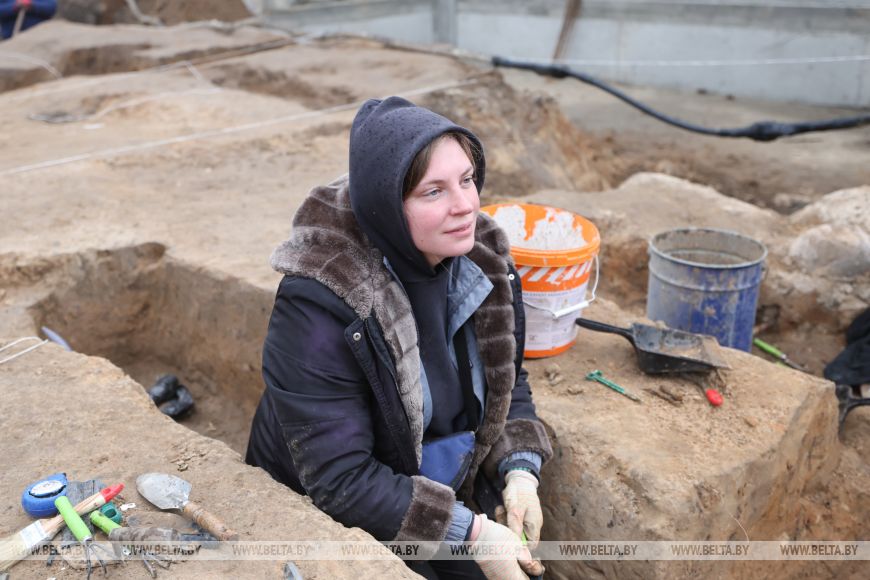
The scientists began their work at the end of last year, when construction work started on the site. The first skeletal remains were documented in late 2025. Due to the harsh winter, the research was temporarily halted. Work resumed two weeks ago. “During the first week of work, we excavated an area of about 40 square meters, where more than 20 graves were uncovered. The work will continue for another two weeks. In this time, we need to clear the entire site and examine all the grave pits that were unearthed. The whole process requires a fairly meticulous approach. Our anthropologists need to study the material, determine the sex and age, and also examine any pathologies. We won’t reveal all the secrets just yet, but there are some very interesting pathologies related to 17th-century medicine,” Aleksandr Vashanov added.
Valentina Vinnikova, a junior researcher at the Department of Anthropology of the Institute of History of the National Academy of Sciences of Belarus, spoke about her work. “My task, together with the archaeologists, is to clean the skeletons, after which we extract them. They are sent to the Department of Anthropology at the Institute of History. We conduct laboratory examination, determine sex and age, and examine the bones for various injuries and pathologies. After that, as a rule, we proceed directly to the anthropological study of the bones, meaning measurements that allow us to reconstruct living body length, shoulder width, pelvis width, in other words, physical characteristics,” she noted.
Valentina Vinnikova noted: "In Grodno and Grodno Oblast in general we have not uncovered many skeletal remains. This territory hasn’t been studied very thoroughly in that regard. This is an opportunity to add a significant piece of information to what we know, in general, about the population that lived on the territory of Belarus, about possible migration routes, and about how close they were and how they interacted with neighboring territories and with each other.”
According to Maria Tkacheva, a researcher at the Department of Primitive Society Archaeology of the Institute of History of the National Academy of Sciences of Belarus, when working with urban burial grounds that contain many interments, careful documentation during the excavation process is especially important. “Therefore, we need suitable weather so that we can properly clean the skeletons and take good photographs, because this material will later be actively used in writing monographs and in joint analysis. This is very important to make our research as informative as possible. Since these are human remains, we must treat them with the utmost respect,” Maria Tkacheva said.
According to the scientists, this discovery is primarily of interest to Grodno, as it reveals new secrets related first and foremost to the city's topography.
Photos by Leonid Shcheglov/BelTA
A cemetery was uncovered during the archaeological monitoring of a site in central Grodno, on Malaya Troitskaya Street, where an administrative building is planned to be constructed. According to Aleksandr Vashanov, a researcher at the Department of Primitive Society Archaeology of the Institute of History of the National Academy of Sciences of Belarus, more than 20 skeletons have already been studied to date. The skeletons were lying in a fairly orderly arrangement, in a structured way, which clearly indicates that this is a cemetery,” Aleksandr Vashanov emphasized. “Based on the findings made in one of the graves, we can say that this dates to the late 16th century - first half of the 17th century. In particular, we found a Nuremberg trade token dated between 1585 and 1636. The available Grodno cartographic maps did not indicate this cemetery. So it was previously unknown.”
According to the scientists, a fairly thick cultural layer, more than one meter deep, has formed above the cemetery layer. “This site contains materials from various time periods, but the bulk of them date to the late 19th - early 20th centuries. In the cultural layer, we found garbage pits and a significant number of porcelain items, coins, as well as glass and various ceramic objects,” Aleksandr Vashanov stated.
Another important discovery at this site is a foundation that most likely was a religious structure that also dates back to the 16th or first half of the 17th centuries. "Unfortunately, only a small fragment of the foundation has survived. It was heavily damaged by various construction works, including those in the 19th and 20th centuries, and at present the most important thing is to document this foundation and establish the age of this structure,” Aleksandr Vashanov noted.
Among the important finds is also a glazed tile dating to the 17th century. According to experts, there is a high probability that it may be connected to the religious structure.
The scientists began their work at the end of last year, when construction work started on the site. The first skeletal remains were documented in late 2025. Due to the harsh winter, the research was temporarily halted. Work resumed two weeks ago. “During the first week of work, we excavated an area of about 40 square meters, where more than 20 graves were uncovered. The work will continue for another two weeks. In this time, we need to clear the entire site and examine all the grave pits that were unearthed. The whole process requires a fairly meticulous approach. Our anthropologists need to study the material, determine the sex and age, and also examine any pathologies. We won’t reveal all the secrets just yet, but there are some very interesting pathologies related to 17th-century medicine,” Aleksandr Vashanov added.
Valentina Vinnikova, a junior researcher at the Department of Anthropology of the Institute of History of the National Academy of Sciences of Belarus, spoke about her work. “My task, together with the archaeologists, is to clean the skeletons, after which we extract them. They are sent to the Department of Anthropology at the Institute of History. We conduct laboratory examination, determine sex and age, and examine the bones for various injuries and pathologies. After that, as a rule, we proceed directly to the anthropological study of the bones, meaning measurements that allow us to reconstruct living body length, shoulder width, pelvis width, in other words, physical characteristics,” she noted.
Valentina Vinnikova noted: "In Grodno and Grodno Oblast in general we have not uncovered many skeletal remains. This territory hasn’t been studied very thoroughly in that regard. This is an opportunity to add a significant piece of information to what we know, in general, about the population that lived on the territory of Belarus, about possible migration routes, and about how close they were and how they interacted with neighboring territories and with each other.”
According to Maria Tkacheva, a researcher at the Department of Primitive Society Archaeology of the Institute of History of the National Academy of Sciences of Belarus, when working with urban burial grounds that contain many interments, careful documentation during the excavation process is especially important. “Therefore, we need suitable weather so that we can properly clean the skeletons and take good photographs, because this material will later be actively used in writing monographs and in joint analysis. This is very important to make our research as informative as possible. Since these are human remains, we must treat them with the utmost respect,” Maria Tkacheva said.
According to the scientists, this discovery is primarily of interest to Grodno, as it reveals new secrets related first and foremost to the city's topography.
Photos by Leonid Shcheglov/BelTA