
MINSK, 11 February (BelTA) - An interdisciplinary roundtable titled “Belarusian Women in Science and Education: Contemporary Challenges and Opportunities" was held in Minsk, BelTA has learned.
The event, timed to coincide with the International Day of Women and Girls in Science and the Year of the Belarusian Women, brought together representatives from the country's leading scientific, educational, and state institutions.
According to Aleksandr Postalovsky, Deputy Director for Science at the Institute of Sociology of the National Academy of Sciences of Belarus, the event is significant. "The International Day of Women and Girls in Science has been observed since 2016. With this event, we aim not only to highlight the role of women in ensuring the national interests of the country and strengthening the human resources potential of science, but also to draw attention to the role models of women scientists who help overcome gender stereotypes in science,” he emphasized.
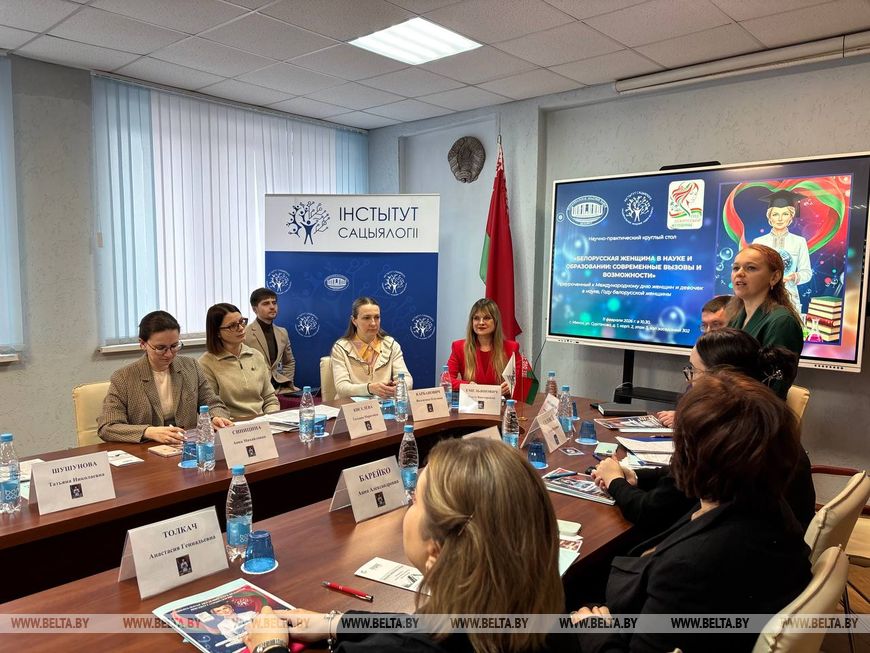
Alesia Solovey, a research fellow at the Institute of Sociology of the National Academy of Sciences of Belarus, outlined the key issues discussed during the roundtable. “The double burden, career, the role of women in society and how to balance it all. Also, female and male solidarity in science, scientific mentorship, and those elements of corporate culture that should exist not only in scientific organizations but also in the workplace,” she added.
One of the topics was the popularization of science and STEAM disciplines (science, technology, engineering, and mathematics). Anna Bareiko, a research fellow at the Institute of Microbiology of the National Academy of Sciences of Belarus, pointed out the importance of creating role models. “Our task is to bring these role models to the forefront, to show that women in science are interesting personalities,” she noted. According to her, special projects are being implemented at the Academy of Sciences to achieve this, such as the School of Science Popularization.
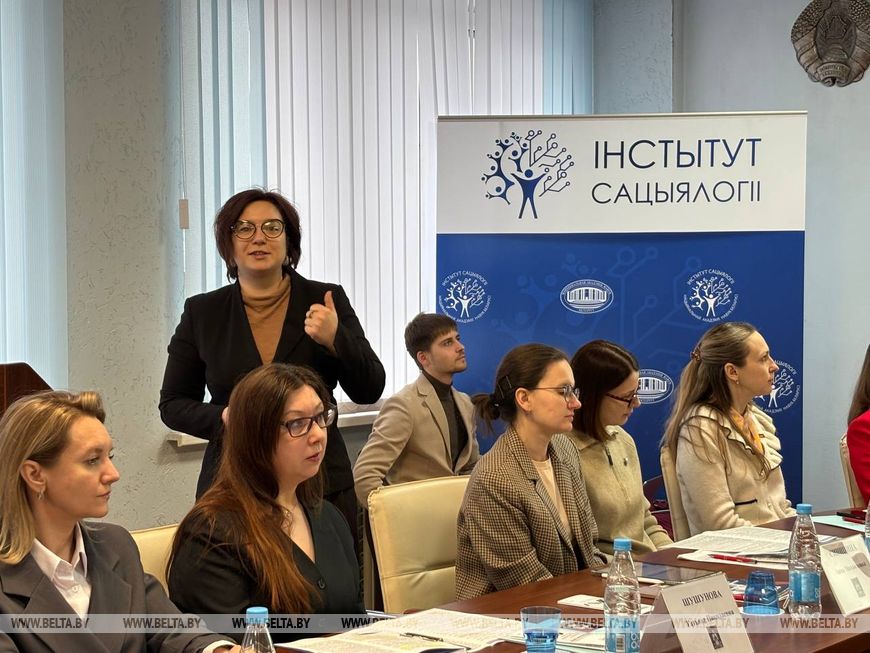
Special attention was given to women in public service. Tatiana Shushunova, a senior researcher at the Research Institute of Theory and Practice of Public Administration of the Academy of Public Administration, presented statistical data. “Government bodies in our country are predominantly represented by women -70%. This indicates that our country is aligned with the trend of popularizing public service specifically among women,” she noted.
Lyudmila Galich, a senior researcher at the Research Institute of Theory and Practice of Public Administration of the Academy of Public Administration, shared findings from a nationwide sociological study. “Belarusian women have an active life and professional stance; they manage to do it all, balancing professional and family duties. This proves that our women are competent leaders, highly qualified specialists, wonderful mothers, and excellent wives,” the senior researcher emphasized.
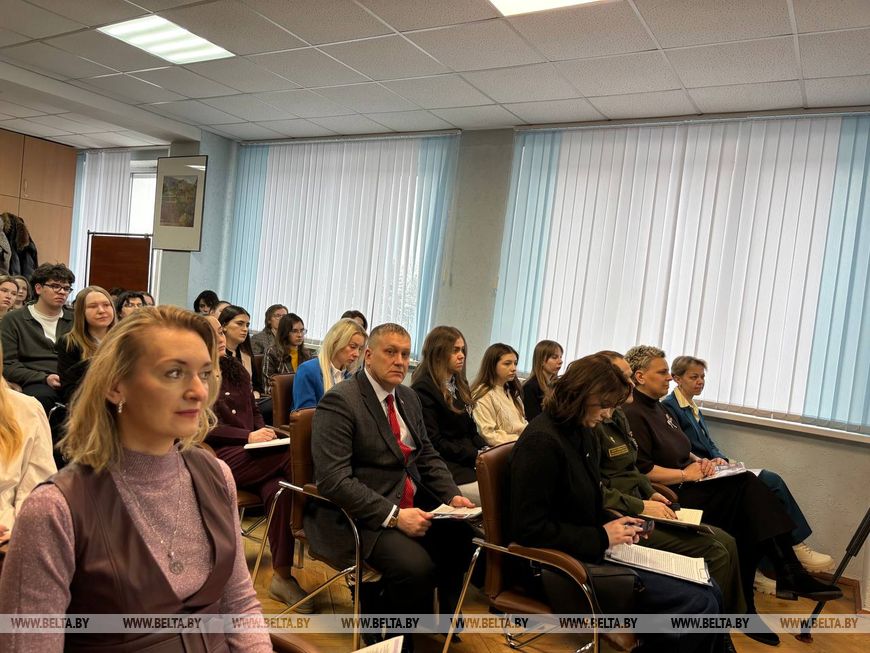
The event saw participation from representatives of the National Center of Intellectual Property, the Defense Ministry, the National Historical Archive of Belarus, the Academy of Public Administration under the aegis of the President of the Republic of Belarus, the Institute of Border Service, the Minsk City Technopark and a number of leading universities and organizations of the National Academy of Sciences of Belarus. Participants discussed the contributions of women scientists, state support, the scientific potential of female military personnel, career strategies, and the challenges of balancing professional and family roles.
The event, timed to coincide with the International Day of Women and Girls in Science and the Year of the Belarusian Women, brought together representatives from the country's leading scientific, educational, and state institutions.
According to Aleksandr Postalovsky, Deputy Director for Science at the Institute of Sociology of the National Academy of Sciences of Belarus, the event is significant. "The International Day of Women and Girls in Science has been observed since 2016. With this event, we aim not only to highlight the role of women in ensuring the national interests of the country and strengthening the human resources potential of science, but also to draw attention to the role models of women scientists who help overcome gender stereotypes in science,” he emphasized.
Alesia Solovey, a research fellow at the Institute of Sociology of the National Academy of Sciences of Belarus, outlined the key issues discussed during the roundtable. “The double burden, career, the role of women in society and how to balance it all. Also, female and male solidarity in science, scientific mentorship, and those elements of corporate culture that should exist not only in scientific organizations but also in the workplace,” she added.
One of the topics was the popularization of science and STEAM disciplines (science, technology, engineering, and mathematics). Anna Bareiko, a research fellow at the Institute of Microbiology of the National Academy of Sciences of Belarus, pointed out the importance of creating role models. “Our task is to bring these role models to the forefront, to show that women in science are interesting personalities,” she noted. According to her, special projects are being implemented at the Academy of Sciences to achieve this, such as the School of Science Popularization.
Special attention was given to women in public service. Tatiana Shushunova, a senior researcher at the Research Institute of Theory and Practice of Public Administration of the Academy of Public Administration, presented statistical data. “Government bodies in our country are predominantly represented by women -70%. This indicates that our country is aligned with the trend of popularizing public service specifically among women,” she noted.
Lyudmila Galich, a senior researcher at the Research Institute of Theory and Practice of Public Administration of the Academy of Public Administration, shared findings from a nationwide sociological study. “Belarusian women have an active life and professional stance; they manage to do it all, balancing professional and family duties. This proves that our women are competent leaders, highly qualified specialists, wonderful mothers, and excellent wives,” the senior researcher emphasized.
The event saw participation from representatives of the National Center of Intellectual Property, the Defense Ministry, the National Historical Archive of Belarus, the Academy of Public Administration under the aegis of the President of the Republic of Belarus, the Institute of Border Service, the Minsk City Technopark and a number of leading universities and organizations of the National Academy of Sciences of Belarus. Participants discussed the contributions of women scientists, state support, the scientific potential of female military personnel, career strategies, and the challenges of balancing professional and family roles.