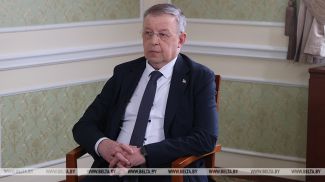
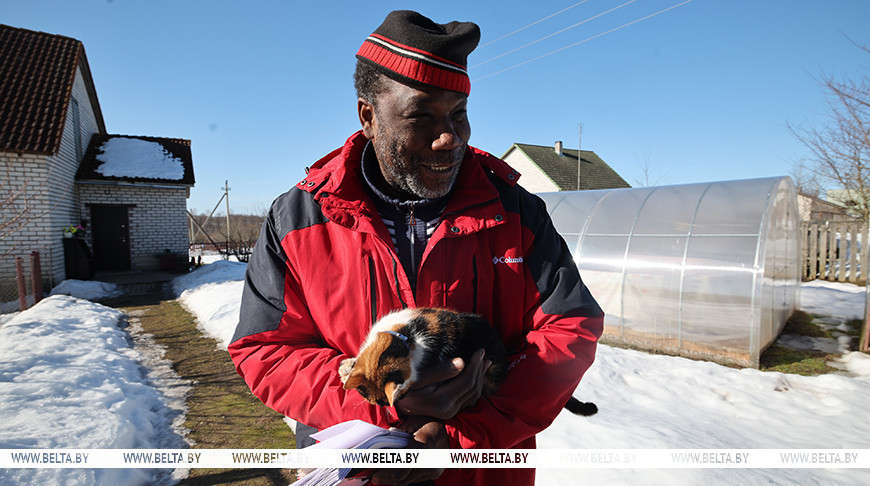
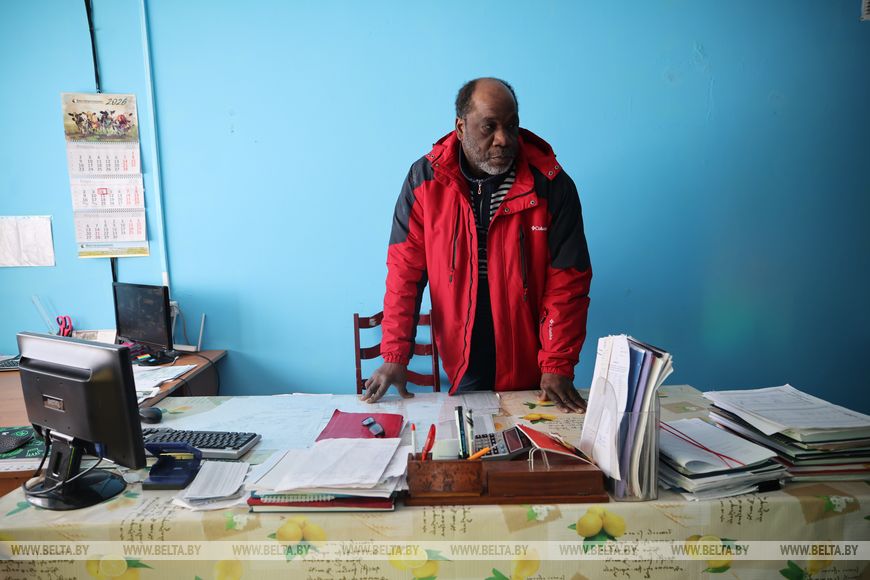
Until 1988, a native of the Republic of Mali in West Africa, knew practically nothing about Belarus but had heard a lot about the USSR. Soon he had the opportunity to get acquainted with the Soviet country: he was sent to study in the Soviet Union as one of the best high school graduates. So, together with several of his compatriots, the Malian ended up in Moscow, where the young man was informed that he would continue his studies at the Gorki Agricultural Academy. Thus began the story of the chief livestock specialist of Nestanovichi-Agro, Shaka Keita, who is now known throughout the country. Moreover, his contribution to agriculture, in particular to animal husbandry, has even been appreciated by the head of state.
‘ +13°C cold for those used to +33°C...’
The first thing that surprised the young Malian in Moscow was the city noise, completely unfamiliar to him.
“I was born in a small town about the size of a regional center, but we didn’t have the number of cars and urban transport that I saw in Moscow. Back then I thought: how can people even live peacefully in such noise? The second thing I immediately noticed was the smell. Well, and the weather: we arrived in the autumn, and it was already quite chilly outside, about +13°C. That was cold for people who are used to the comfortable +33°C and higher. We needed to buy a jacket, but we didn’t know the language, so we sat in the hotel,” Shaka recalled.

The future students spent part of their time in Moscow in quarantine, and only after a medical examination did they receive assignments to their universities.
“They bought me a ticket, put me on the train, and I traveled from Belorussky Station first to Orsha, then to Gorki,” Shaka Keita said.
One Malian and three Belarusians
The duration of study for foreign students was six years. The first year was not only a period of adaptation but also time to learn the language. The method of assigning dormitory rooms based on a ratio of two or three Belarusians per foreigner proved to be highly effective. This was not only an excellent school of everyday life but also good language practice.
“There were no conflicts, Soviet citizens were law-abiding, but initially I felt a distance that the guys maintained in communication. It seemed to me then that they were even a little afraid to get close. I observed how they managed their daily lives, learned new words, and got accustomed to the new living conditions,” Shaka said.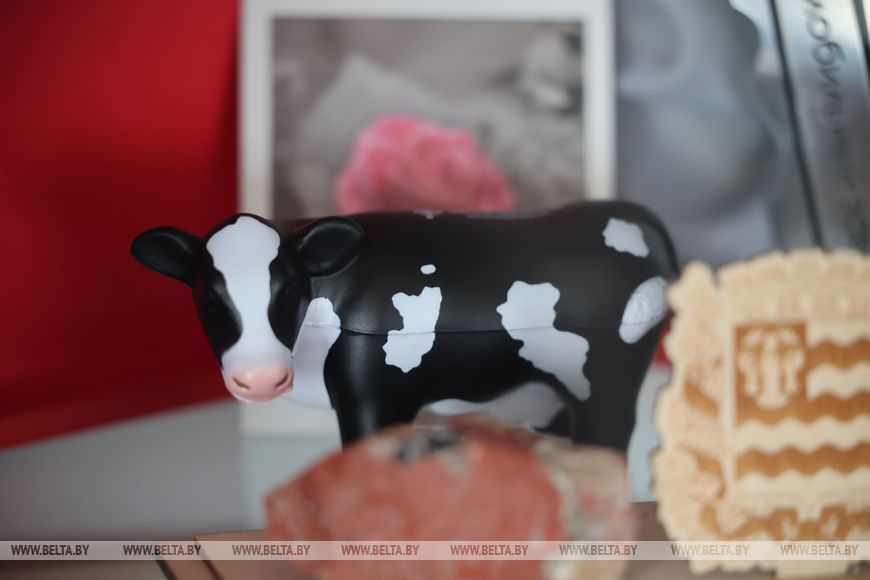
According to him, managing everyday life was much easier than getting used to the local food. The supply of spices brought from home quickly ran out, and it wasn’t possible to find alternatives in the stores. Therefore, the Malian, while taking charge in the student kitchen, had to learn how to fry potatoes. It soon became one of his favorite dishes.
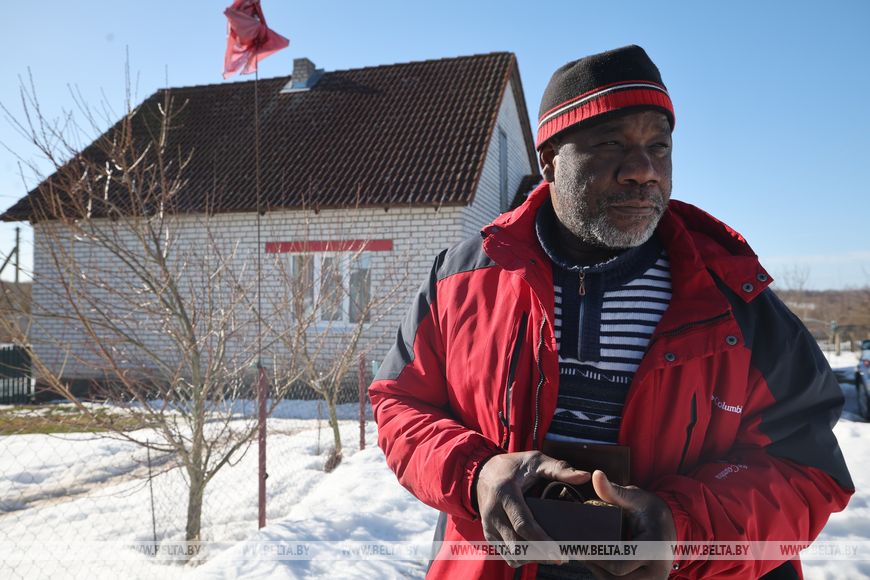



The first thing that surprised the young Malian in Moscow was the city noise, completely unfamiliar to him.
“I was born in a small town about the size of a regional center, but we didn’t have the number of cars and urban transport that I saw in Moscow. Back then I thought: how can people even live peacefully in such noise? The second thing I immediately noticed was the smell. Well, and the weather: we arrived in the autumn, and it was already quite chilly outside, about +13°C. That was cold for people who are used to the comfortable +33°C and higher. We needed to buy a jacket, but we didn’t know the language, so we sat in the hotel,” Shaka recalled.
The future students spent part of their time in Moscow in quarantine, and only after a medical examination did they receive assignments to their universities.
“They bought me a ticket, put me on the train, and I traveled from Belorussky Station first to Orsha, then to Gorki,” Shaka Keita said.
One Malian and three Belarusians
The duration of study for foreign students was six years. The first year was not only a period of adaptation but also time to learn the language. The method of assigning dormitory rooms based on a ratio of two or three Belarusians per foreigner proved to be highly effective. This was not only an excellent school of everyday life but also good language practice.
“There were no conflicts, Soviet citizens were law-abiding, but initially I felt a distance that the guys maintained in communication. It seemed to me then that they were even a little afraid to get close. I observed how they managed their daily lives, learned new words, and got accustomed to the new living conditions,” Shaka said.
According to him, managing everyday life was much easier than getting used to the local food. The supply of spices brought from home quickly ran out, and it wasn’t possible to find alternatives in the stores. Therefore, the Malian, while taking charge in the student kitchen, had to learn how to fry potatoes. It soon became one of his favorite dishes.
“Back home, French fries are considered a real delicacy, so I was already familiar with the taste. It’s the kind of dish you usually only have on holidays. Potatoes are expensive in Mali; our everyday side dish is rice. In Belarus, it’s the complete opposite. It’s here that I learned how to fry potatoes in a pan,” Shaka shared.
By his final year of university, he already had two children
Serious changes came into Shaka’s life during his fourth year of university - he got married.
“My girlfriend was from Vitebsk. Her mother is Belarusian, and her father is a Kenyan citizen. She was also studying in Gorki, at the Faculty of Economics. What brought us together wasn’t just our similar skin color, but also our mentality and similar outlooks on life,” the man said.
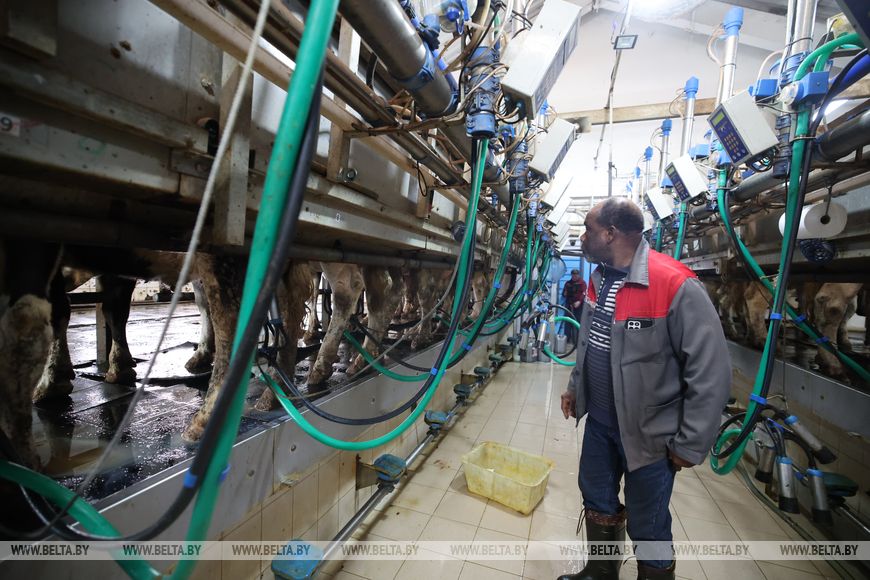
In 1994, the couple had a son, Rasim, and a daughter, Fatima, a year later. Towards the end of his studies, the family was making plans to move to Mali. “I went back home alone first, hoping to find a job. But after four months, I had to return; there were no job openings in my field. At that time, my wife was working in Mogilev Oblast and was provided with housing, so I tried to get a job there too. The farm management explained they couldn’t hire me as a specialist without a residence permit, only as a general worker. So I ended up milking cows. For three years, I gathered documents to get a residence permit and, thanks to a former classmate’s help, moved to a farm in Dribin District, where I became a farm manager.” Shaka laughs, recalling that the village where he and his family first settled was called Tyomny Les [Dark Forest].
A fateful newspaper article
In Mogilev Oblast, this disciplined, dark-skinned machine milking operator, who later became a farm manager with a university degree, naturally didn’t go unnoticed - a local newspaper wrote about him. The journalist asked Shaka about his dream, and he replied that he really wanted to work in his trained profession. The author detailed all this in the article.
“As it happened, that newspaper ended up on the desk of Gennady Fedorovich, the head of the 1 Maya collective farm in Logoisk District. He was just looking for a livestock specialist for the farm, and after reading the article, he called our village council. That’s how I got the job, and along with it, a house. The village was the center of the collective farm with good roads, a school, and a kindergarten, which my children attended,” the Malian explained.
The farm’s main livestock was concentrated on three complexes. The livestock specialist knew his job well, but connecting with his subordinates wasn’t easy at first.
“I was cautious with people. I felt they were also a bit wary of me. What was even harder was figuring out how to deal with workers who drank. I decided the only way was to act strictly within the bounds of the law. But in any case, I knew I couldn’t let a drunk person onto the farm. I believe my patience and strong nerves helped me. Experience came with time. Belarusians are good people; there are many hardworking and knowledgeable specialists among them,” Shaka noted.
It was in Logoisk District that Shaka Keita received his patronymic, Fedorovich, initiated by the then-head of the Minsk Oblast Executive Committee, Leonid Krupets [who held the position from 2002 to 2007].
The Malian was most surprised by Belarusian women.
“They are very emancipated, independent, brave, hardworking, and many of them hold leadership positions. I once arrived in a village and saw women building a fence. That was astonishing to me. Mali is a Muslim country, and women there usually take care of the household while all decisions are made by the husband. My father, for example, worked at the market, and my mother looked after the children,” he shared.
Eight years as both father and mother
Over the years, Shaka Keita adapted so well to rural life that he no longer imagined himself living in a city. In Zarechye, he set up his own small farm and tended a vegetable garden.
“I could work and live comfortably, but my wife wanted to move to the capital. The disagreements eventually led to divorce,” the Malian said.
Shaka Keita’s former wife moved to the city and rented an apartment, while the children stayed with their father. “The condition was that she could take the children only once she had her own apartment. As a result, they saw their mother only on weekends for eight years. I had to manage everything myself: cook meals, help my daughter and son with homework. They finished basic school in Zarechye and only spent their last two years studying in the capital. I’m proud of my children. Rasim and Fatima graduated from BSUIR, my son served in the Belarusian army, and now both work in the IT sector and have families of their own. I know they are competent specialists, speak foreign languages, and contribute to the country they live in,” Shaka Keita said.
“Farms of the 1990s and the new livestock complexes are like night and day”
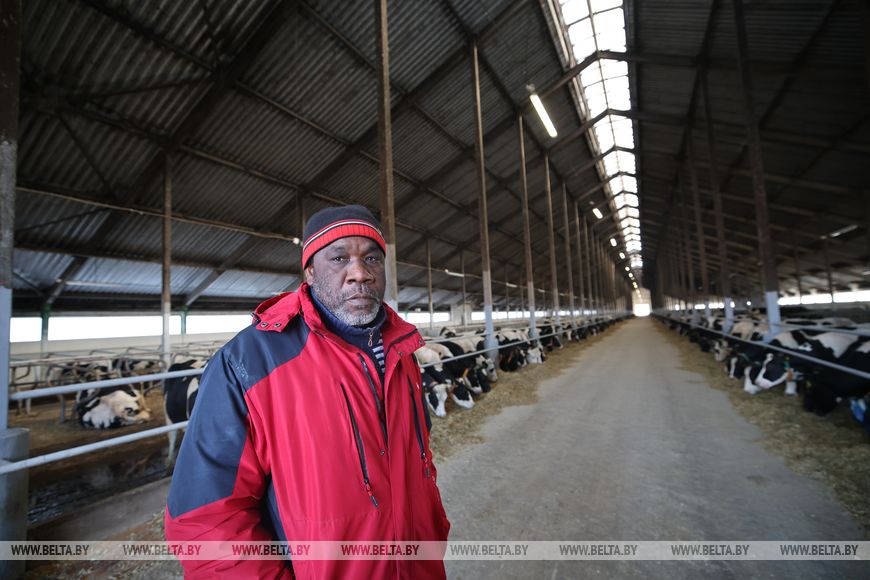
According to him, in his 30 years in agriculture he has seen a lot. He lived through the decline of agricultural enterprises and the reform period, when weaker farms were merged with stronger ones. During a staffing shortage, he even had to head one of the enterprises for a couple of years. 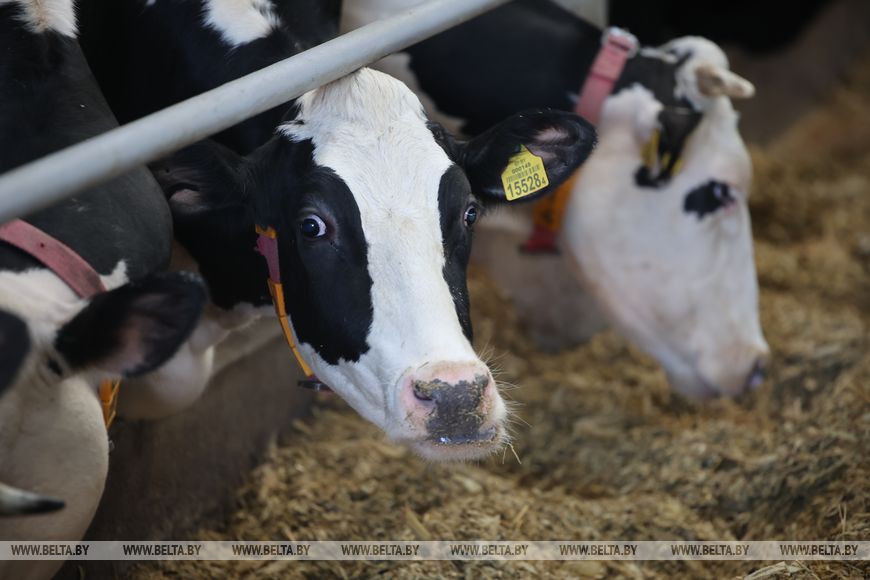
“I’ve been working at Nestanovichi Agro for more than 20 years. Things are definitely improving now. The farms I started on here compared to the modern ones: it’s like night and day. Just look at the numbers: five years ago we got about 6 liters of milk per cow per day, while the average daily yield at the new livestock complex is now 24 liters. In 2025, we produced 9,000 kg of milk per cow, which is above the regional average. I believe this is the achievement of our director, who managed to build a strong team,” he said.
And this, he is convinced, is far from the limit: the enterprise continues to develop steadily and build new facilities. In 2026, another livestock complex is expected to be commissioned, allowing the farm to completely abandon tethered housing and significantly improve working conditions for animal technicians.
“We, the older generation of specialists, also have a lot to learn now to keep up with new technologies. We need to catch up with the younger staff, master computer programs that even calculate and monitor animal rations. But this greatly simplifies the work, as does the high level of mechanization,” Shaka Keita noted.
An exam before the president and a watch as a reward
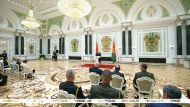
In 2024 at the Dazhynki festival for rural workers held in Volozhin, Shaka Keita was awarded by the head of state himself for his high performance in animal husbandry and many years of work in agriculture. He received a watch from the president.
“I was very proud. It meant that all those years of working in the agricultural sector had not been in vain. And the watch reminds me of that every time I look at it,” he said.
His second meeting with the president took place in 2026. “It was, of course, unexpected. But two months before the head of state’s visit we were living under constant scrutiny. Seminars and training sessions were held at the farm, and many people cited our calf nursery as an example. We had to pass an exam in front of the agriculture and food minister and the oblast governor. And then the president evaluated our work, which is a great responsibility. We will continue to develop. We have everything we need for that,” said the animal technician.
Fedorovich with a Belarusian accent
By the way, in Logoisk District Shaka Keita acquired the patronymic Fedorovich thanks to Leonid Krupets, who was the chairman of the Minsk Oblast Executive Committee in 2002-2007. And this is not the only thing that has brought the Malian closer to the Belarusians.
“You know, when I’m in Moscow, people immediately recognize where I’m from. It’s not my French accent that gives me away, but my Belarusian one. After so many years of living in Belarus, I’ve gotten rid of the habit of translating words. I think like a local now,” said Shaka.
In 2014, he managed to visit home for the first time after a long break. His parents had already passed away by that time, but he brought Belarusian gifts for his close relatives, including children: cookies, rye bread, sausage, and alcohol. His fellow countrymen appreciated the quality of the products and, according to the man, did not even dilute the vodka because there were very good snacks to go with it.
“I stayed in a hotel for a week, talked to my relatives and friends, and realized that I wanted to go home to Belarus where my family and my home are,” Shaka said.
Surprisingly, the man fell in love with the Belarusian winter with its snow-covered fields. On frosty days, he says, it is easier to breathe, and the purity of the snow amazes him every time.
But Shaka’s dream is still connected with Mali: he would very much like to bring his children there. He wants to show them the place where he grew up where he loved to play with friends, spend time thinking about the future, and finally feed them local cuisine.
“My son jokes that they will take me to Mali as a translator because the children have not yet mastered the French language spoken by the locals. They studied English intensively, which is necessary for programming,” he said.
He also added that he plans to go on a short vacation around Belarus, which he wants to get to know even better. He will definitely take his wife with him. By the way, she is one of the brave and emancipated Belarusian women.
By Yelena KHAREVICH,
photos by Ramil NASIBULIN,
BelTA.