
The mystery has been resolved. the opposition Tisza party (Respect and Freedom Party) led by Peter Magyar won the parliamentary elections in Hungary, held on 12 April, by a comfortable margin. The right-wing conservative party Fidesz, Hungarian Civic Union of Prime Minister Viktor Orban is moving into opposition., The entire liberal camp of the EU is celebrating victory together with Tisza, having gotten rid of the thorn in their side that was Orbán and taking a sort of revenge on the United States following last year's election in Poland. But is everything so clear-cut?

Orban's party stood at the helm for 16 years, and it was an extremely difficult time. The Fidesz government oversaw the massive migration crisis of 2015–2016, followed by the coronavirus pandemic, the Ukrainian conflict with its flow of refugees and energy disputes with the EU, and now also the war in the Middle East, which threatens Europe with a new economic shock.
Orban is a pragmatist who sought advantages for his country by every possible means. At times, he openly bargained for these advantages, engaging in heated disputes with Brussels and vetoing decisions of the European Commission. For this, Budapest fell out of favor with the liberal circles of the EU, facing criticism as well as political and economic pressure.
Why did Orban lose? There are different opinions on this matter among experts. Some point to economic difficulties in the country. Others point to the fatigue of Hungarians from endless confrontation with Brussels. Still others link the decline in Fidesz's popularity to the rise of negative sentiment toward the United States, which openly supported Orban in the lead-up to the parliamentary elections. Perhaps, amid political and economic uncertainty in the world, Hungarians decided that it would be safer for them to remain on the same ship as the EU, rather than in a separate lifeboat drifting toward an American aircraft carrier. Whatever the reasons, this is a decision of the Hungarian people and the internal affair of that country. However, the elections in Hungary have another dimension, a foreign political one, and on this we would like to dwell in more detail.
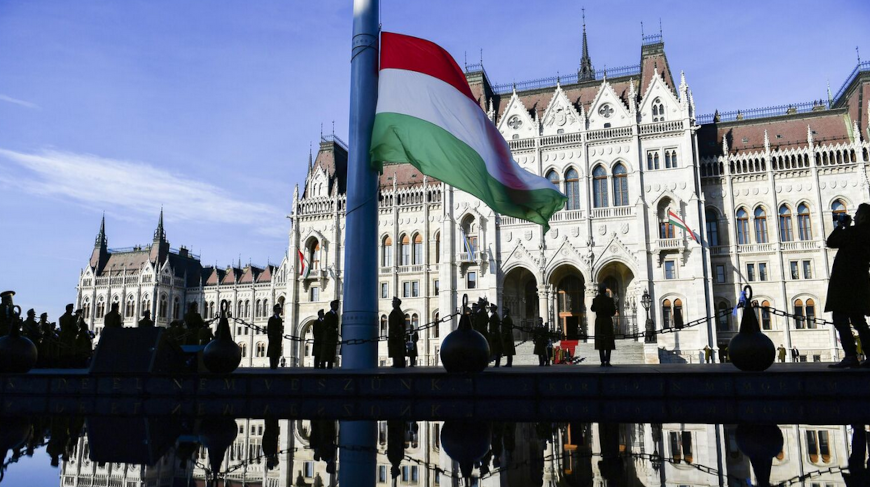
AP photo
As it has been noted, the outcome of the elections in Hungary is a major victory for Brussels. First, the leader of Tisza adheres to a pro-EU and pro-NATO course and will obviously be far more loyal than his predecessor. Second, the victory of Tisza is perceived in liberal circles as a victory over the right-wing forces that have significantly strengthened their positions in the EU political arena in recent years. It is worth noting that Orban is one of the most prominent representatives of right-wing forces in Europe today. Third, the defeat of Fidesz is a kind of defeat for Washington, which supported Orban. For Brussels, this is an opportunity to demonstrate its relevance to the Americans, while also taking revenge for the presidential election in Poland, where pro-American forces prevailed over pro-Brussels ones last year.
But for every 'pro,' there is a 'con'
First, Orban is not going anywhere. His party becomes the key opposition force in the country and will certainly continue to influence public sentiment and the domestic political landscape. At the same time, public sentiment will shape the political course of the new prime minister, who will have to navigate between voter expectations and Brussels’ demands. Whether Magyar will yield to European authorities is a big question.
Peter Magyar. TASS photo
Politico has already weighed in on this, suggesting that Brussels’ hopes for a sharp shift in Budapest’s course may be exaggerated. Take, for example, financial and military aid to Kiev. Given the rise of anti-Ukrainian sentiment in Hungarian society, Magyar is unlikely to abandon promises not to send weapons to Kiev and to put the question of Ukraine’s EU accession to a referendum.
By the way, Magyar has also spoken about dialogue with Russia. He stated that Budapest will have to negotiate with Moscow, since the geography of the two countries will not change and Hungary will continue to rely on Russian energy resources.
Second, interpreting Orban’s defeat as a weakening of the right-wing forces would be a mistake. Here again, the elections in Poland come to mind, where in 2023 the ruling right-wing camp lost the parliamentary elections and moved into opposition, while a pro-Brussels coalition won. Expectations soon turned to disappointment, and in the 2025 presidential election, voters cast their ballots for a right-wing candidate.
By and large, voters do not care if it’s a right, left, or centrist candidate… People simply want positive change. The problem is that achieving such change within the European Union is becoming increasingly difficult. Liberal elites have already unleashed all kinds of crises on their countries and continue to lead the European community down a dead-end path. The right-wing camp defends the right to act in accordance with national interests but faces fierce opposition from the liberal establishment. All of this looks like a large sinking ship, where a multinational crew holds elections for captains, changes flags, and recites beautiful slogans, but never gets around to patching the holes that are sending the entire vessel to the bottom.
Third, the so-called US loss in the Hungarian elections pales in comparison to Brussels’ complete fiasco on the American-European track. Current events in the Middle East demonstrate this perfectly. Yesterday, Brussels demanded that Orban unlock a €90 billion European loan for Kiev. Tomorrow, with the Strait of Hormuz blockaded, and possibly the Bab-el-Mandeb as well, the European Commission may have to seek loans for EU countries just to pay for energy resources.
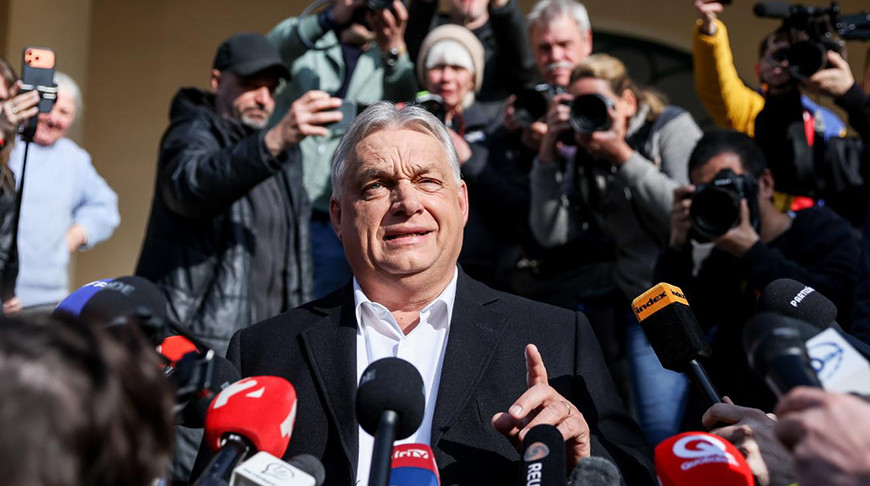
Viktor Orban. TASS photo
The EU’s main problem is not Orban, not the ‘right-wing tsunami’, and not even the chaotic policies of the United States. The main problem is the lack of an economic foundation that would allow the European community to withstand global political and economic turbulence. Once upon a time, that foundation for the EU was Russian energy resources, which fueled the economies of European countries, left or right. All that remains now is expensive American LNG and isolated victories in domestic political battles, while the war for energy, economic, and political sovereignty has all but been lost.
Vita Khanatayeva,
BelTA