
On 22 January, U.S. President Donald Trump met with Vladimir Zelensky in Davos. Following this, the U.S. delegation led by the U.S. President's Special Envoy Steve Witkoff, traveled to Moscow where they had negotiations with Russian leader Vladimir Putin late in the evening. Today Abu Dhabi will host the first meeting of the working group on security issues in a trilateral format - Russia, the United States, and Ukraine.
In this BelTA’s review, we break down the meetings in Davos and Moscow and look ahead to the upcoming talks in Abu Dhabi.
What we know about Trump's meeting with Zelensky
The meeting between Trump and Zelensky remained in question until the very last moment. Initially, it was expected that the Ukrainian topic would be the key issue at the World Economic Forum in Davos. Western media reported that Kiev and European allies hoped to convince Trump during the forum to support the idea of deploying Western troops to Ukraine after a ceasefire. A reminder, Moscow was categorically opposed to this. To implement their plan, the Europeans needed not just Trump's approval, but also the U.S. security guarantees, its commitment to protecting European military personnel in Ukraine in case of a conflict with Russia.
However, in the lead-up to the Davos forum, relations between the U.S. and Europe became seriously strained. Washington's claims on Greenland, the response of European allies by sending a handful of troops to the island, and mutual tariff threats… All of this created a conflict that is perceived by Europeans as far more pressing than the Ukrainian one.
Against this backdrop, Zelensky announced that he would not go to Davos. However, he ultimately changed his decision, after Trump, speaking at the forum, expressed a desire to talk with Zelensky. And I’m dealing with President Putin and he wants to make a deal. I believe I’m dealing with President Zelensky, and I think he wants to make a deal. I’m meeting him today. He might be in the audience right now, but they got to get that war stopped because too many people are dying needlessly,” Trump stated on 21 January.
Shortly after this, Zelensky flew over to Davos. The meeting took place on 22 January. It lasted about an hour. Both sides noted that the meeting was good and announced further negotiations.
“We're going to be meeting with President Putin. I had a very good meeting with President Zelensky. Everybody wants to have the war end,” the U.S. president said.
Speaking to journalists on board Air Force One, Trump stated that the parameters of the settlement agreement for Ukraine are already known to the parties and that Zelensky is ready for a deal. He noted that Zelensky had travelled to meet him and expressed a desire to end the war. “He said he’d like to make a deal,” Trump said. “Because people know the parameters. It’s not like, you know, we’re discussing things that have been discussed for six or seven months," Trump said.
Zelensky's statement following the negotiations was published by his press service. “A good meeting with the U.S. president - productive and substantive. We discussed the work of our teams, and practically every day there are meetings or communication. The documents are now even better prepared. We also spoke today about air defense for Ukraine... I thanked him for the previous package of air defense missiles and asked for an additional one.”
Later, speaking at the forum, Zelensky announced a trilateral meeting involving Russia, the USA, and Ukraine. "A trilateral meeting of Russia, the United States, and Ukraine will take place in the UAE on Friday and Saturday. It will be a two-day meeting. I think it’s good if this trilateral meeting starts at the technical level,” Zelensky said.
He also stated that the document on U.S. security guarantees for Ukraine is ready, with copies held by both countries. The document will be signed after the conflict ends and will then be ratified by the Congress and the Verkhovna Rada.

“While exchanging views on the Board of Peace, we emphasized our readiness to transfer US$1 billion to its budget from Russia’s assets frozen under the previous US administration. The remaining part of the Russian assets frozen in the US can be used for rebuilding the territories damaged during the hostilities after a peace agreement is signed between Russia and Ukraine. Discussions of this issue will continue in the bilateral economic group,” Ushakov said.
He also noted that Russia and the United States have enormous potential for cooperation in a wide variety of areas. The U.S. representatives are already making plans that could be implemented after the Ukrainian conflict is settled.
“Returning to today’s meeting of the working group on security, I should note that the Americans have done a great deal to prepare it, and they hope that it will be a success and will open new opportunities for progress on the entire range of issues related to putting an end to the conflict and reaching an agreement on a peaceful settlement. Overall, as I have said, the meeting that has just ended in the Kremlin was useful in every sense both for us and for the American side. It was decided at the meeting that the Russian and American sides will maintain close contacts with each other both on Ukraine and on other issues,” Ushakov concluded.
What to expect from meeting in Abu Dhabi?
Witkoff’s plane has already departed from Moscow. The next stop on the negotiation track is Abu Dhabi.
According to Zelensky, the territorial issue may be discussed at the trilateral meeting in the UAE. “At the trilateral meeting, perhaps each side will propose its own option. It’s all about the land. This is the issue which is not solved yet,” Zelensky stated.
Witkoff had previously also stated that the talks on Ukraine are now “down to one issue.” “I think we made a lot of progress. I think in the beginning of this process there was a little bit of confusion. I think we’ve got it down to one issue, and we have discussed iterations of that issue, and that means it’s solvable. If both sides want to solve this, we’re going to get it solved,” Witkoff stated back in Davos.
As noted above, the U.S. president believes Zelensky is ready to for a deal. However, Zelensky’s rhetoric so far suggests the opposite.
Expecting any global breakthroughs from talks in Abu Dhabi is probably unwarranted. Nevertheless, the upcoming meeting is itself significant. It is also important that the parties are returning to direct negotiations and that Americans, whose decisions largely determine Kiev’s position, will participate. Therefore, this negotiation format is perhaps the most optimal and effective if we are talking about bringing positions closer together and reaching specific agreements.
Vita KHANATAYEVA,
BelTA
In this BelTA’s review, we break down the meetings in Davos and Moscow and look ahead to the upcoming talks in Abu Dhabi.
What we know about Trump's meeting with Zelensky
The meeting between Trump and Zelensky remained in question until the very last moment. Initially, it was expected that the Ukrainian topic would be the key issue at the World Economic Forum in Davos. Western media reported that Kiev and European allies hoped to convince Trump during the forum to support the idea of deploying Western troops to Ukraine after a ceasefire. A reminder, Moscow was categorically opposed to this. To implement their plan, the Europeans needed not just Trump's approval, but also the U.S. security guarantees, its commitment to protecting European military personnel in Ukraine in case of a conflict with Russia.
However, in the lead-up to the Davos forum, relations between the U.S. and Europe became seriously strained. Washington's claims on Greenland, the response of European allies by sending a handful of troops to the island, and mutual tariff threats… All of this created a conflict that is perceived by Europeans as far more pressing than the Ukrainian one.
Against this backdrop, Zelensky announced that he would not go to Davos. However, he ultimately changed his decision, after Trump, speaking at the forum, expressed a desire to talk with Zelensky. And I’m dealing with President Putin and he wants to make a deal. I believe I’m dealing with President Zelensky, and I think he wants to make a deal. I’m meeting him today. He might be in the audience right now, but they got to get that war stopped because too many people are dying needlessly,” Trump stated on 21 January.
Shortly after this, Zelensky flew over to Davos. The meeting took place on 22 January. It lasted about an hour. Both sides noted that the meeting was good and announced further negotiations.
“We're going to be meeting with President Putin. I had a very good meeting with President Zelensky. Everybody wants to have the war end,” the U.S. president said.
Speaking to journalists on board Air Force One, Trump stated that the parameters of the settlement agreement for Ukraine are already known to the parties and that Zelensky is ready for a deal. He noted that Zelensky had travelled to meet him and expressed a desire to end the war. “He said he’d like to make a deal,” Trump said. “Because people know the parameters. It’s not like, you know, we’re discussing things that have been discussed for six or seven months," Trump said.
Zelensky's statement following the negotiations was published by his press service. “A good meeting with the U.S. president - productive and substantive. We discussed the work of our teams, and practically every day there are meetings or communication. The documents are now even better prepared. We also spoke today about air defense for Ukraine... I thanked him for the previous package of air defense missiles and asked for an additional one.”
Later, speaking at the forum, Zelensky announced a trilateral meeting involving Russia, the USA, and Ukraine. "A trilateral meeting of Russia, the United States, and Ukraine will take place in the UAE on Friday and Saturday. It will be a two-day meeting. I think it’s good if this trilateral meeting starts at the technical level,” Zelensky said.
He also stated that the document on U.S. security guarantees for Ukraine is ready, with copies held by both countries. The document will be signed after the conflict ends and will then be ratified by the Congress and the Verkhovna Rada.
During a speech at the forum, Zelensky sharply criticized Europe for its weakness, endless debates, and evasion of action. He also expressed disappointment that Western allies are no longer providing Kiev with long-range weapons. “Unlike previous years, there is now no talk about long-range weapons for Ukraine. In Europe, we are advised not to bring up Tomahawks, not to ask about Taurus missiles,” he said.
According to the Ukrainian publication Strana, Zelensky’s speech included arguments that Europe allegedly could never become strong without Ukraine, but with Ukraine, no one would dare to treat Europe with disrespect. In this way, he is promoting an idea that has already surfaced in Western media: the necessity of creating a military alliance between Europe and Ukraine without the USA.
“However, while the war is ongoing, this is an entirely hypothetical idea. Especially since Trump is unlikely to view it positively. Although Zelensky did not criticize him directly, and instead continually held him up as an example to the ‘indecisive Europeans’, his statement ‘when Ukraine is with you, no one will wipe their feet on you’ sounded rather ambiguous. Considering that currently, no one besides Trump is wiping his feet on Europe,” writes the Ukrainian publication.
Meanwhile, the Financial Times assessed Zelensky’s meeting with Trump in Davos as unsuccessful for Kiev. The British publication notes that Zelensky failed to secure agreements on either post-war security guarantees for Ukraine or the country’s economic recovery. According to the Financial Times, the parties did not finalize the documents that American and Ukrainian officials had coordinated prior to the summit and did not sign them.
What is known about the talks in Moscow?
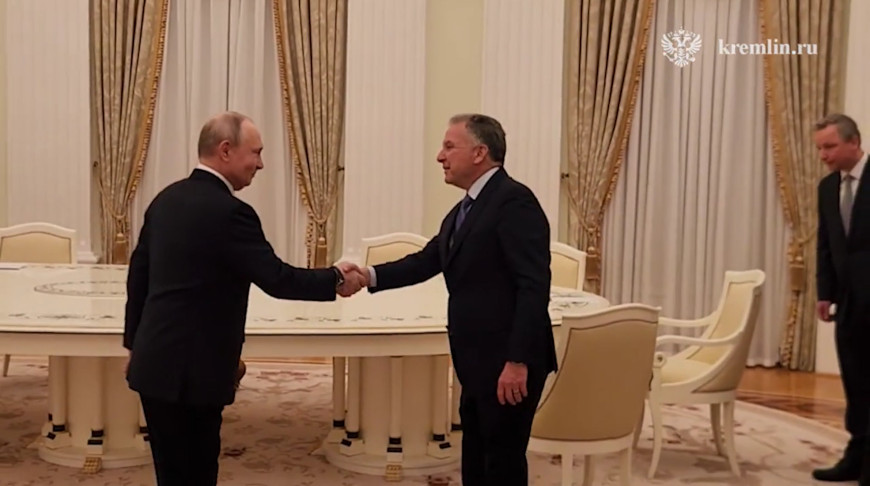
A plane carrying the U.S. delegation landed at Moscow’s Vnukovo Airport late in the evening on 22 January. The talks began closer to midnight.
The Russian side at the talks included Russian President Vladimir Putin, Russian leader’s aide Yury Ushakov, and the Presidential Special Representative for Investment and Economic Cooperation with Foreign Countries Kirill Dmitriev.
The U.S. side was represented by U.S. Presidents Special Envoy Steve Witkoff, businessman, investor, and Trump’s son-in-law Jared Kushner, as well as White House Senior Advisor Josh Gruenbaum.
It is worth noting that Gruenbaum joined the American team for the first time. He is also a senior advisor to the recently established Board of Peace.
The meeting lasted about four hours. Following its conclusion, Ushakov made comments to the press. He characterized the talks as exceptionally substantive, constructive, and extremely candid.
Ushakov noted that the U.S. counterparts shared their impressions and fresh assessments of Trump’s meeting with Zelensky in Davos, which both Witkoff and Kushner attended in person. They also provided an evaluation of other contacts they had during December and January in Mar-a-Lago, Florida, and in several European capitals.
“In general, I would say that the meeting between the Russian president and the U.S. representatives was specifically focused on obtaining information regarding the outcomes of the Americans’ contacts with the Ukrainians and European partners, and then jointly, so to speak as ‘a duo’, determining the parameters for further actions,” said Ushakov.
According to him, the next step in this direction has been agreed upon. Specifically, it was arranged that the first meeting of the trilateral working group on security issues - with representatives from Russia, the USA, and Ukraine - will take place in Abu Dhabi on 23 January. Concurrently, the heads of the bilateral group on economic affairs, Dmitriev and Witkoff, will also meet in Abu Dhabi.
Regarding the composition of the negotiation team that will represent Russia in Abu Dhabi, it includes representatives from the leadership of the Russian Ministry of Defense, headed by Chief of the Main Directorate of the General Staff Admiral Igor Kostyukov.
“Importantly, the participants in the conversation between the president of Russia and the Americans reaffirmed the fact that bringing about a lasting settlement would be unlikely without addressing the territorial issue based on the formula as agreed in Anchorage. Vladimir Putin has emphasised Russia’s sincere commitment to settling the Ukraine crisis by political and diplomatic means. But as long as this is not the case, Russia will persist in its consistent effort to achieve the special military operation’s goals on the battlefield, where Russia’s Armed Forces hold the strategic initiative,” Ushakov stated.
He also reported that the meeting at the Kremlin discussed Trump’s initiative to create the Board of Peace, a number of regional issues, and the situation surrounding Greenland.
He also reported that the meeting at the Kremlin discussed Trump’s initiative to create the Board of Peace, a number of regional issues, and the situation surrounding Greenland.
“While exchanging views on the Board of Peace, we emphasized our readiness to transfer US$1 billion to its budget from Russia’s assets frozen under the previous US administration. The remaining part of the Russian assets frozen in the US can be used for rebuilding the territories damaged during the hostilities after a peace agreement is signed between Russia and Ukraine. Discussions of this issue will continue in the bilateral economic group,” Ushakov said.
He also noted that Russia and the United States have enormous potential for cooperation in a wide variety of areas. The U.S. representatives are already making plans that could be implemented after the Ukrainian conflict is settled.
“Returning to today’s meeting of the working group on security, I should note that the Americans have done a great deal to prepare it, and they hope that it will be a success and will open new opportunities for progress on the entire range of issues related to putting an end to the conflict and reaching an agreement on a peaceful settlement. Overall, as I have said, the meeting that has just ended in the Kremlin was useful in every sense both for us and for the American side. It was decided at the meeting that the Russian and American sides will maintain close contacts with each other both on Ukraine and on other issues,” Ushakov concluded.
What to expect from meeting in Abu Dhabi?
Witkoff’s plane has already departed from Moscow. The next stop on the negotiation track is Abu Dhabi.
According to Zelensky, the territorial issue may be discussed at the trilateral meeting in the UAE. “At the trilateral meeting, perhaps each side will propose its own option. It’s all about the land. This is the issue which is not solved yet,” Zelensky stated.
Witkoff had previously also stated that the talks on Ukraine are now “down to one issue.” “I think we made a lot of progress. I think in the beginning of this process there was a little bit of confusion. I think we’ve got it down to one issue, and we have discussed iterations of that issue, and that means it’s solvable. If both sides want to solve this, we’re going to get it solved,” Witkoff stated back in Davos.
As noted above, the U.S. president believes Zelensky is ready to for a deal. However, Zelensky’s rhetoric so far suggests the opposite.
Expecting any global breakthroughs from talks in Abu Dhabi is probably unwarranted. Nevertheless, the upcoming meeting is itself significant. It is also important that the parties are returning to direct negotiations and that Americans, whose decisions largely determine Kiev’s position, will participate. Therefore, this negotiation format is perhaps the most optimal and effective if we are talking about bringing positions closer together and reaching specific agreements.
Vita KHANATAYEVA,
BelTA