News of the story
"Belarusians in the focus"
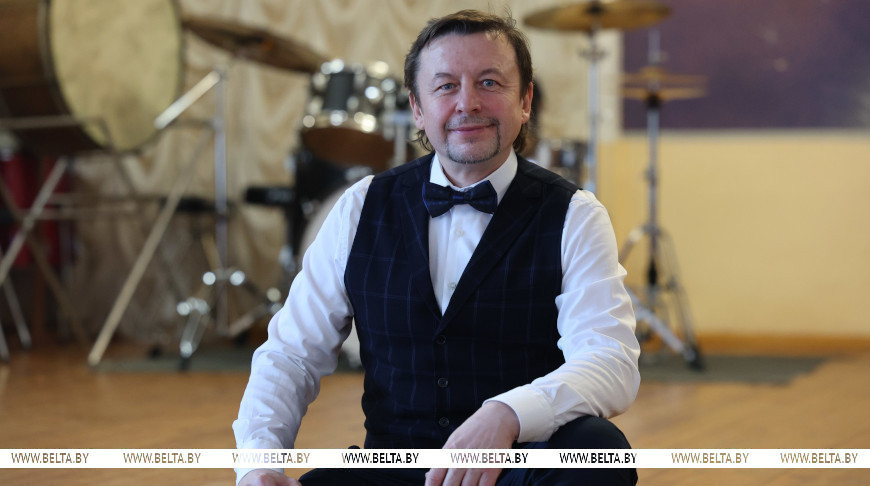
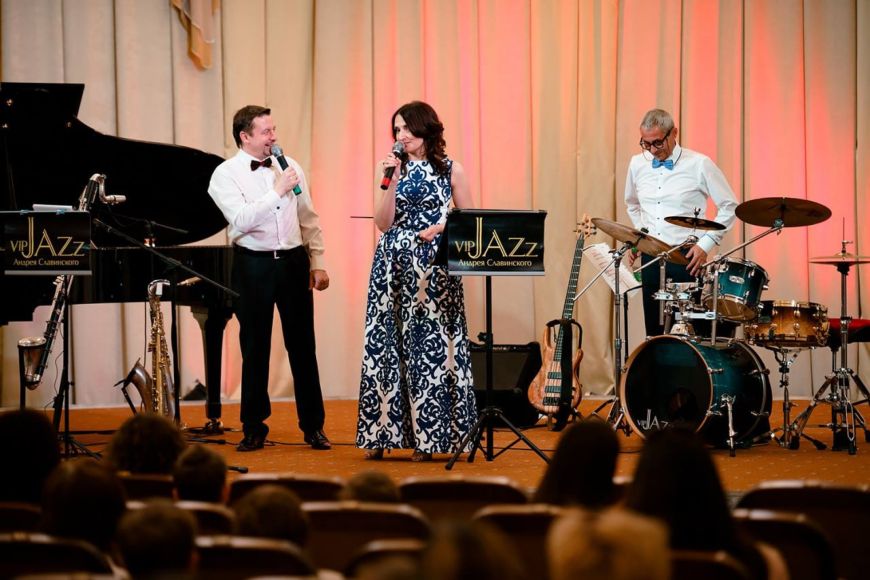
Andrei Slavinsky's relationship with jazz began in his childhood. Now, he passes on his experience and knowledge of drumming to future musicians, while also actively promoting his favorite genre and producing unique concerts. These events provides an opportunity to listen to jazz and also learn more about it. We spoke with the drummer about his career and the deeply personal projects that hold a special place in his heart.
First in the children's orchestra
Andrei Slavinsky has been immersed in the world of music since an early age. His elder brother was the leader of a band and his mother loved to sing when relatives and friends gathered together for holidays.
“There is a big age gap between me and my brother, and I watched with interest as he sang and played the guitar. But I was always drawn to percussion instruments. So as a child, I started looking for a place where I could learn to play them,” Andrei Slavinsky recalls.
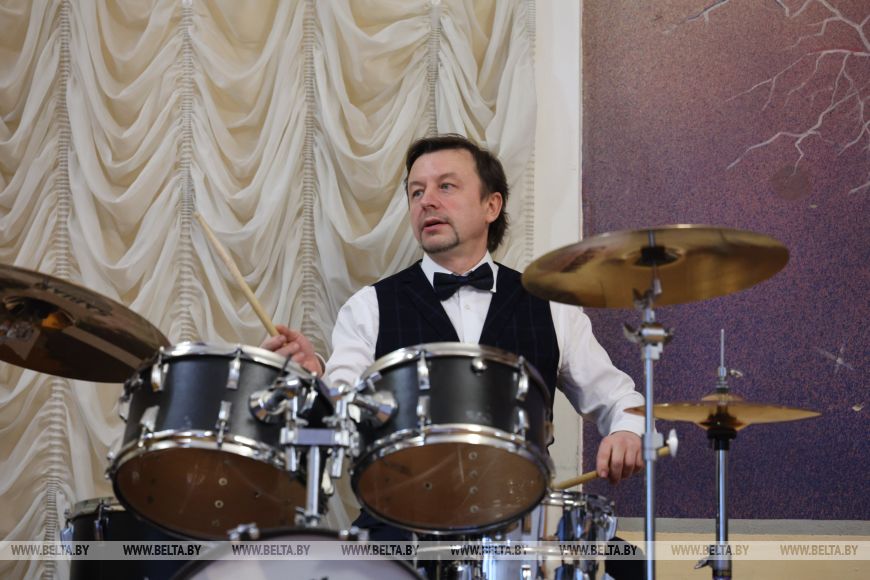 So he attended a music school where he learned the basics of classical and wind music. However, the drum kit interested him far more. So, alongside the main curriculum, the boy studied on his own using textbooks and mastered certain elements of drumming. His knowledge of theory came in handy when enrollment was announced for the first children’s jazz orchestra among music schools in Minsk.
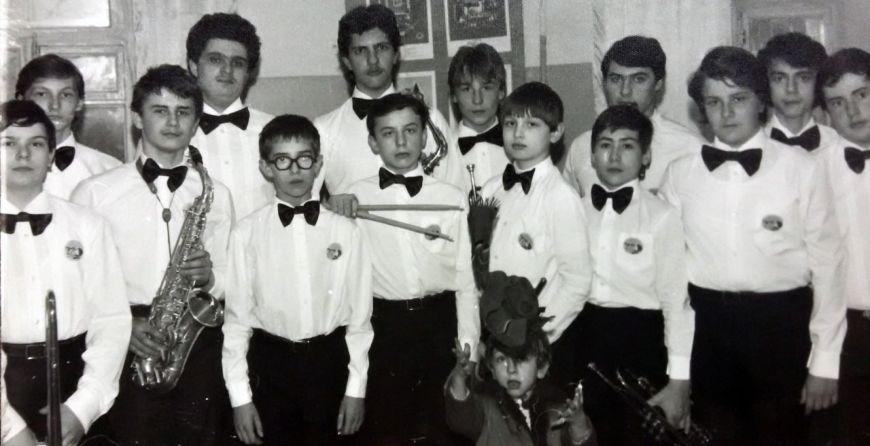 “At 15, I was offered a place at Rachmaninov Rostov State Conservatory. At that time, the conservatory was home to the country’s leading jazz instructors who had completed internships in Canada and brought back the most sophisticated teaching methods for percussion,” noted Andrei Slavinsky. According to him, it was precisely the Rostov conservatory that laid the foundation which later allowed him to realize his creative potential.
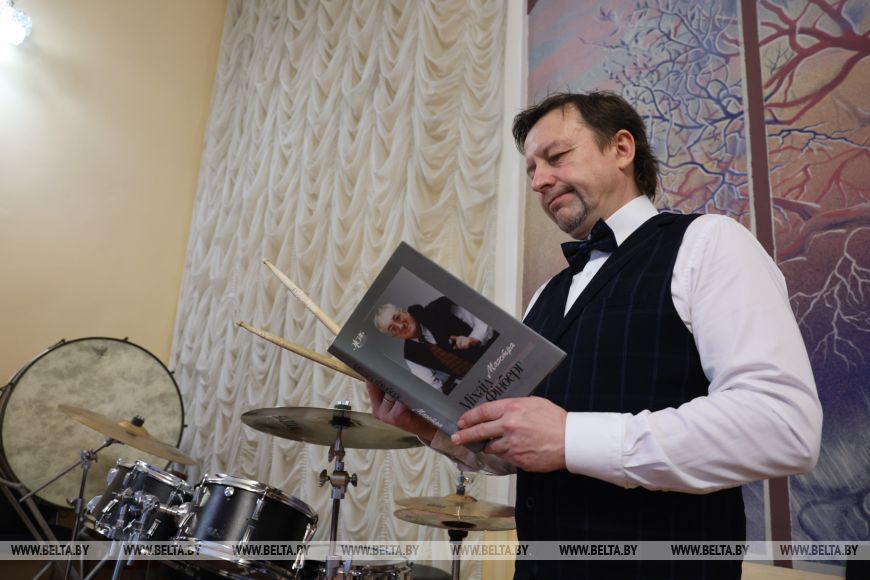 While still a student, our interviewee joined Kim Nazaretov’s jazz orchestra as its drummer. In 1995, while on tour in Sochi, he crossed paths with members of the Count Basie Orchestra – one of the world’s most influential ensembles, one that left its mark on musicians across the globe. Following each official concert, jam sessions would unfold, bringing instrumentalists together to play jazz standards familiar to everyone in the room.
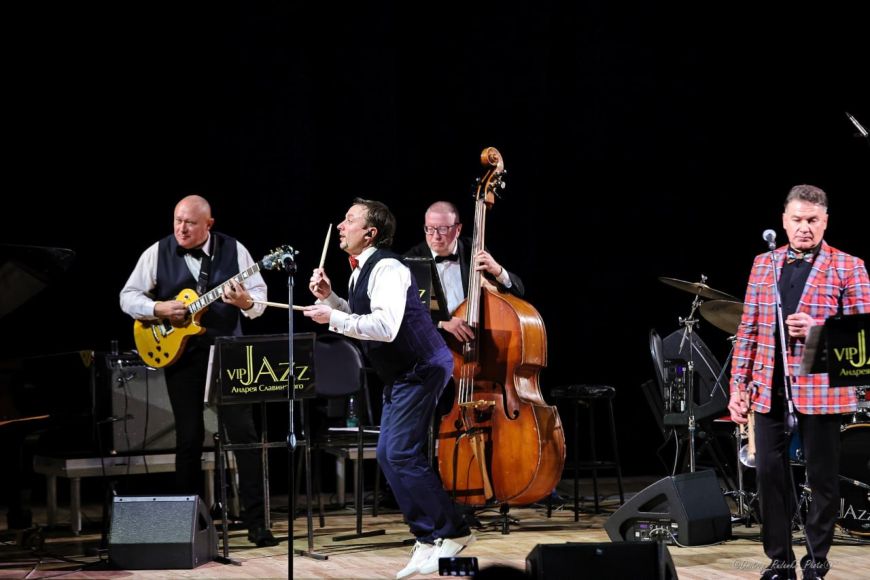 “Cinema and Jazz” is a deeply personal and family project that Andrei Slavinsky runs together with his wife, a great enthusiast of music and film. According to our interviewee, the concept’s uniqueness lies in introducing Belarusian audiences – through narratives accompanied by thematic music in a jazz style – to world cinematic masterpieces.
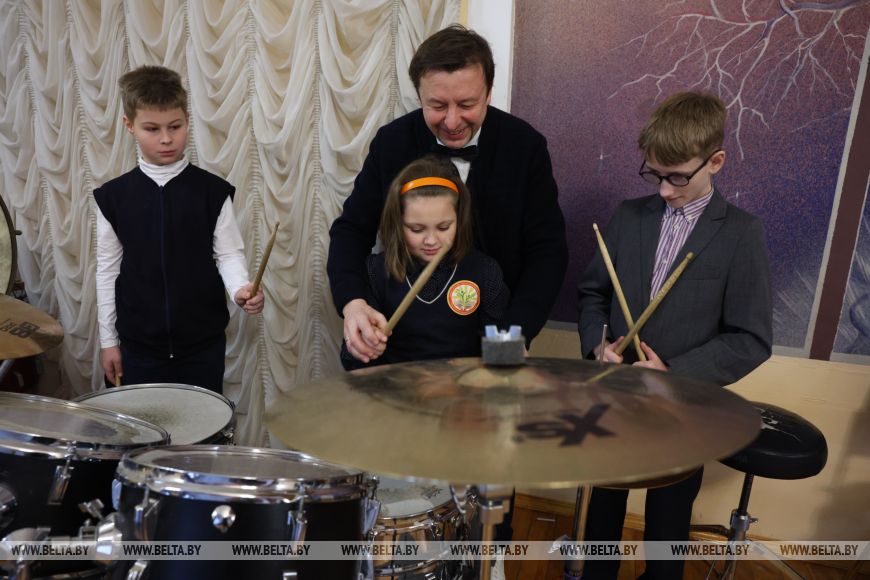 - “The goal was not to memorize a piece or a theme, but to involve the child in the process, to help them understand what live interaction within an orchestra or ensemble feels like on stage. There are moments in art that simply cannot be explained. A child grasps these subtleties only when they see adults doing it and try to imitate them,” Andrei Slavinsky noted.
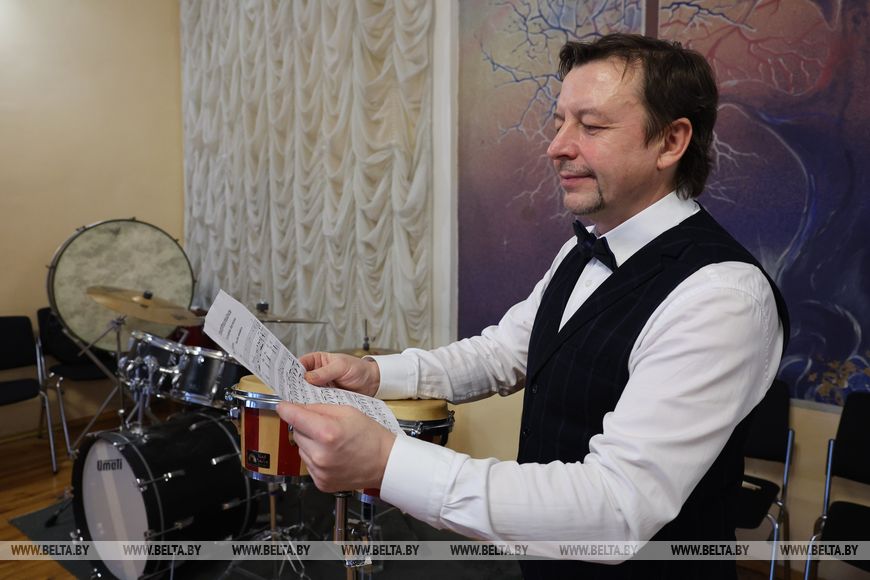
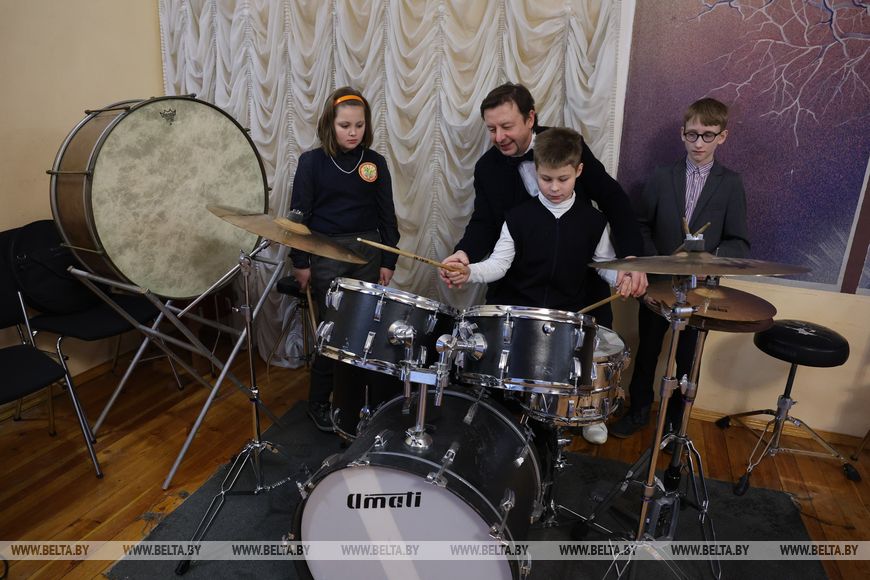
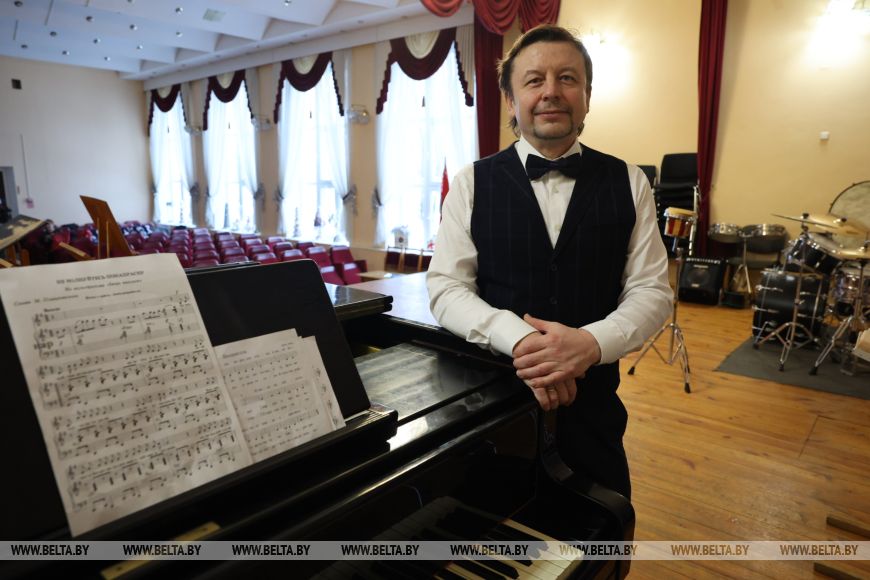 - “I believe one of the most important tasks of any artist is to pass on their experience and knowledge, to teach children to understand, interact with, and love music. You cannot learn this solely through YouTube videos, textbooks, or manuals. Live communication and the atmosphere a child absorbs during lessons play a decisive role. Only this way can we achieve results and take care of the creative future of our country,” Andrei Slavinsky said.
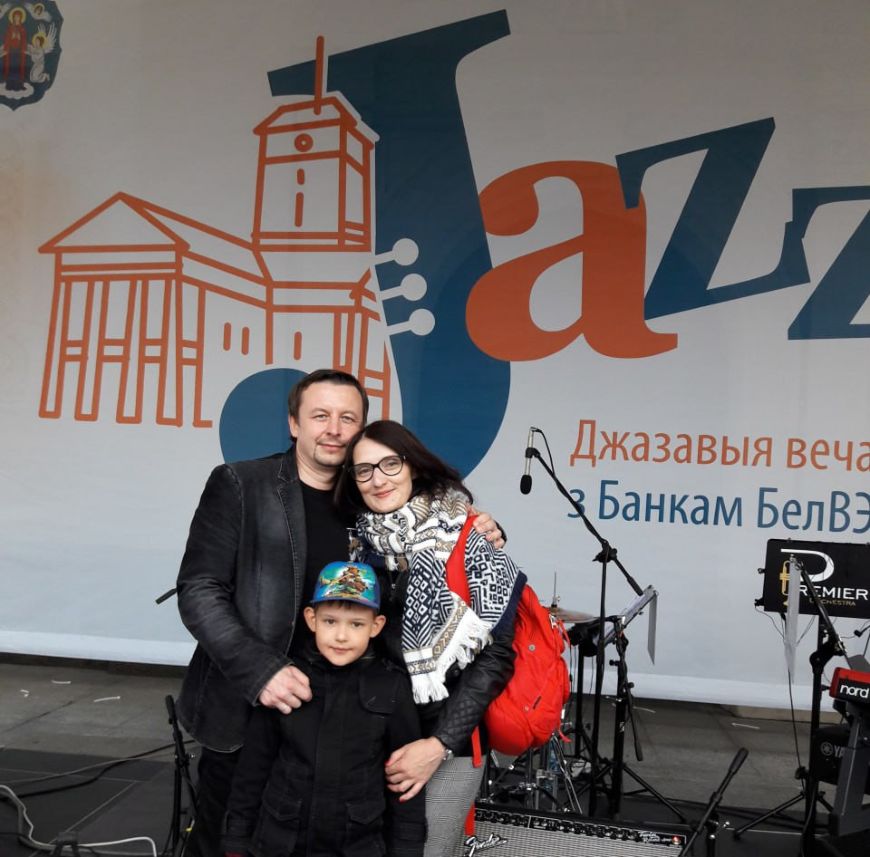 Their son chose a path in science and is following in his mother’s footsteps: she has two higher education degrees, one of which is in the methodology of science. He recently earned a place to study at the National Children’s Technopark, and his work was among the best and was recommended for further research at a higher level. Andrei Slavinsky supports his son in everything and is confident that all the conditions have been created in the country for children to develop and excel in this field.
 “Many musicians complain that the audience today is not what it used to be. That is far from true. After all, the children who participate in projects grow up quickly, and in ten years they become an audience with a good knowledge and understanding of music, and they will be the ones coming to your concerts,” Andrei Slavinsky concludes.
First in the children's orchestra
Andrei Slavinsky has been immersed in the world of music since an early age. His elder brother was the leader of a band and his mother loved to sing when relatives and friends gathered together for holidays.
“There is a big age gap between me and my brother, and I watched with interest as he sang and played the guitar. But I was always drawn to percussion instruments. So as a child, I started looking for a place where I could learn to play them,” Andrei Slavinsky recalls.
So he attended a music school where he learned the basics of classical and wind music. However, the drum kit interested him far more. So, alongside the main curriculum, the boy studied on his own using textbooks and mastered certain elements of drumming. His knowledge of theory came in handy when enrollment was announced for the first children’s jazz orchestra among music schools in Minsk.
“At that time, none of the music schools in Minsk taught drumming, but there was an audition. In the end, I was the only contestant who played the drums. I was accepted into the jazz orchestra,” Andrei recalled with pride. “They sat me down at the drum kit and told me I would be playing jazz. Back then, I didn’t really understand musical styles and genres. But over time, I began to notice that jazz sounded somewhat different and resembled rock in its energy and rhythm. After immersing myself and becoming more familiar with this musical genre, I learned that jazz was the predecessor of rock.”
Invitation from Maestro Finberg
In the early 1980s, there were only three children's jazz orchestras in the USSR, which would meet at various festivals. Through this, Andrei Slavinsky became acquainted with the finest representatives of Soviet jazz. A turning point for him came at the Golden Autumn festival in Vitebsk, where he was spotted by Kim Nazaretov, the director of one of the leading jazz orchestras in the USSR.
“At 15, I was offered a place at Rachmaninov Rostov State Conservatory. At that time, the conservatory was home to the country’s leading jazz instructors who had completed internships in Canada and brought back the most sophisticated teaching methods for percussion,” noted Andrei Slavinsky. According to him, it was precisely the Rostov conservatory that laid the foundation which later allowed him to realize his creative potential.While still a student, our interviewee joined Kim Nazaretov’s jazz orchestra as its drummer. In 1995, while on tour in Sochi, he crossed paths with members of the Count Basie Orchestra – one of the world’s most influential ensembles, one that left its mark on musicians across the globe. Following each official concert, jam sessions would unfold, bringing instrumentalists together to play jazz standards familiar to everyone in the room.
“Every musician knows jazz standards. What’s more, at the heart of this genre lies improvisation – composing music at the moment of performance. The uniqueness of jam sessions is that each participant expresses their ideas, emotions, and worldview through music. That’s precisely why jazz is so compelling to me – it allows one to convey the inner state of the soul with the greatest accuracy,” Andrei Slavinsky said.
After graduating from Rachmaninov Rostov State Conservatory, the musician received an invitation from Belarusian maestro Mikhail Finberg to join the National Academic Orchestra.
“He had a certain instinct and gathered the finest musicians from across the USSR in his ensemble. At the time, I had the opportunity to go to Moscow, but I ultimately chose Minsk and the National Orchestra, of which I was a member for 14 years,” Andrei Slavinsky noted.
A deeply personal project
The experience he gained, along with concerts and touring, prompted the musician to consider launching his own project.
“I felt the need to pursue something of my own, so I made the decision to leave the orchestra,” Andrei Slavinsky recounted.
Initially, the musician focused on producing jazz programs, bringing together the finest performers from the capital. Later, projects such as “Improvisation,” “Cinema and Jazz,” and “Jazz for Children” emerged. During the latter two, audiences are told that these art forms – cinema and jazz – emerged at virtually the same time.
“Cinema and Jazz” is a deeply personal and family project that Andrei Slavinsky runs together with his wife, a great enthusiast of music and film. According to our interviewee, the concept’s uniqueness lies in introducing Belarusian audiences – through narratives accompanied by thematic music in a jazz style – to world cinematic masterpieces.“A similar project exists for children as well: we introduce them to the golden collection of films and animated movies produced by Belarusfilm. These gatherings are very popular and help cultivate good taste for high-quality, kind-hearted productions in which music has become an essential element. Children and adults discover these art forms and understand how closely they are connected,” Andrei Slavinsky is convinced.
Another project by the musician, Jazz for Children, became not just a concert but a form of live interaction. The kids came up on stage, played together with professionals, and learned to feel the music from within.
- “The goal was not to memorize a piece or a theme, but to involve the child in the process, to help them understand what live interaction within an orchestra or ensemble feels like on stage. There are moments in art that simply cannot be explained. A child grasps these subtleties only when they see adults doing it and try to imitate them,” Andrei Slavinsky noted.
According to him, even those who used to think jazz was too complicated changed their minds after attending Jazz for Children and discovered a love for this genre.
“I try to make sure people receive the emotions they came for and truly experience the interaction with live music. That is my task as a producer,” he emphasized.
Returning to his roots
Andrei Slavinsky also teaches percussion at Children’s School of Arts No. 14 in Minsk, the very school where he once studied. Returning to his alma mater was a symbolic moment for him, as it was on this stage that his creative journey began.
In his teaching method, he uses a “jazz principle”, which allows him to adapt to any child’s character and temperament and choose the style that helps unlock the student’s creative potential. This is exactly how jazz finds its listener.
- “I believe one of the most important tasks of any artist is to pass on their experience and knowledge, to teach children to understand, interact with, and love music. You cannot learn this solely through YouTube videos, textbooks, or manuals. Live communication and the atmosphere a child absorbs during lessons play a decisive role. Only this way can we achieve results and take care of the creative future of our country,” Andrei Slavinsky said.
Balance and silence among flowers
The musician met his future wife after one of his concerts. He caught her interest, and she offered to interview him – something she often did with famous artists and creators.
“The interview came out a month after our conversation, and a year and a half later I proposed. Six months after we started dating, we officially became a family,” our hero says with a smile.
Their son chose a path in science and is following in his mother’s footsteps: she has two higher education degrees, one of which is in the methodology of science. He recently earned a place to study at the National Children’s Technopark, and his work was among the best and was recommended for further research at a higher level. Andrei Slavinsky supports his son in everything and is confident that all the conditions have been created in the country for children to develop and excel in this field.
Away from the stage and teaching, our hero finds balance in the quiet among the flowers and plants arranged throughout his apartment. He compares caring for them to the creative process.
“You need to create conditions for the music to sound, and it’s the same with flowers. You find them a spot with proper lighting, you water and fertilize them. But you cannot make them grow faster. I have often noticed this effect: when you leave a plant alone, it flourishes on its own. Music, too, cannot be created under pressure. You first learn, practice, then you relax and let the knowledge settle, and then, all of a sudden, the music flows from you on its own. Taking care of flowers gives you a chance to feel and understand that moment. I explain the same thing to my students. I tell them that the drumsticks play themselves. Sometimes a child asks, ‘So what do I need to be there for?’ I answer: ‘You are needed so that the drumsticks can play themselves,’” the jazz musician reflects.
In the future, the musician dreams of realizing his projects on the big stage so that Belarusian jazz becomes known across the post-Soviet space, in Europe, and in America. He also plans to attract even more people to his existing projects.
“Many musicians complain that the audience today is not what it used to be. That is far from true. After all, the children who participate in projects grow up quickly, and in ten years they become an audience with a good knowledge and understanding of music, and they will be the ones coming to your concerts,” Andrei Slavinsky concludes.
Vadim Kondratyuk,
Photos by Nikolai Petrov and from the personal archive of the hero,
7 Dnei newspaper