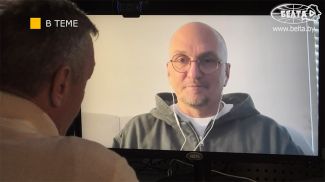
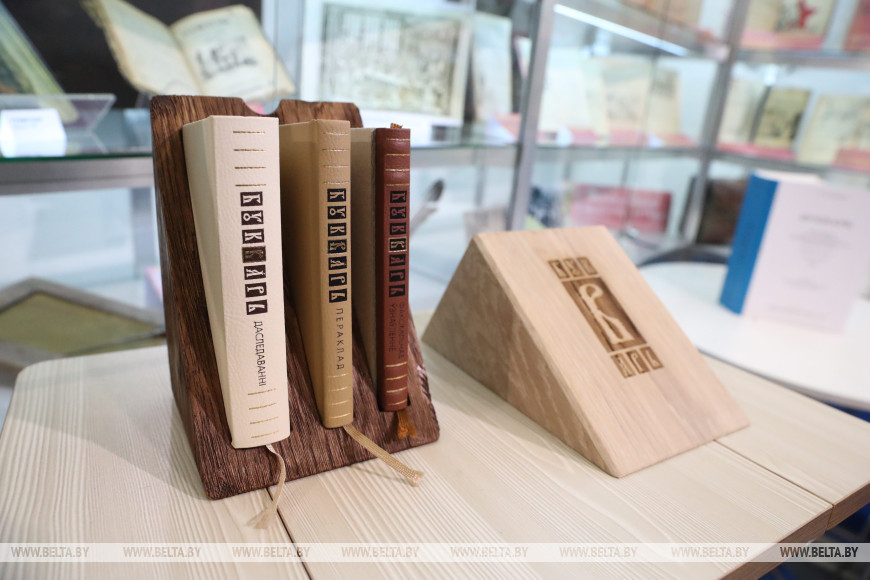
MINSK, 23 April (BelTA) - Spiridon Sobol, a book printer and the author of a 17th-century Belarusian primer, wanted to break into the book market of the Tsardom of Moscow. What prevented him from doing so was discussed by Igor Marzalyuk, Chairman of the Standing Commission on Education, Culture and Science of the House of Representatives, in the latest episode of BelTA’s project True History. Lectures by Igor Marzalyuk.
After successful book printing activities in his native Mogilev, Kiev, and Mstislavl, Spiridon Sobol wanted to conquer the book market of the Tsardom of Moscow. “He sought to move his operations to Moscow. In 1637, together with his friends, Mogilev merchants, he arrived in Moscow. There, he met with Moscow printer Vasily Burtsev. The latter held Spiridon Sobol in great respect and considered him his teacher in the printing trade. And Vasily Burtsev purchased from Spiridon Sobol the printing equipment he had brought with him,” the historian said.
Initially, Spiridon Sobol thought everything was working out for him. Deciding to move to Moscow, he sold off his property in Mogilev. “His aspirations were quite noble and, as he believed, were meant to bring only benefit to a kin nation. He intended to teach the art of typefounding, that is, high-quality printing work, to Moscow printers. Furthermore, he had developed an extensive program for the study and mastery of foreign languages (a kind of prototype of a language institute, so to speak, on Moscow soil). He planned to compile Latin, German, and Greek dictionaries for the needs of the Grand Principality of Moscow. But this was not fated to be realized. Why? Our printer was detained in Vyazma. Tsar Mikhail Fedorovich was informed of his intentions. And the intentions of the Mogilev first printer were as follows - to translate and print divinely inspired books and to teach children Greek, Latin, and Polish letters on the basis of these publications,” emphasized Igor Marzalyuk, adding that Spiridon Sobol proposed an entire educational program that included the creation of schools to teach children foreign languages.
Tsar Mikhail refused the book printer entry to Moscow. In response to the tsar’s decree, Spiridon Sobol declared that he would not tolerate such treatment and would return home. “Spiridon Sobol returns home but concludes that secular life has exhausted its possibilities and that he must save his immortal soul. Therefore, he goes to the Kiev Pechersk Lavra and takes monastic vows there. But the fame of his publications, the fame of his books, continued to spread throughout the Orthodox world. So in 1645, from distant Wallachia (a historical region in the south of modern-day Romania), a messenger arrived, knocked on the gates of the Kiev Pechersk Monastery, and delivered a message to Spiridon Sobol. It was an official invitation. It contained both a request and a proposal: to come to Wallachia, establish a printing press there, and engage in his beloved work - enlightenment and education. And Spiridon Sobol began preparing for a very long journey. But it turned out that this journey would be his last, a one-way road. At the end of 1645, Spiridon Sobol, printer of divine scriptures, passed on to a better world. His earthly existence came to an end. But his primers continued to live. Throughout the Orthodox Slavic world, people learned the Slavic language and literacy from them. And this continued for not just one generation, not just one century. A quality textbook is almost an eternal textbook. And the method of teaching grammar that Spiridon Sobol invented is still used today,” said Igor Marzalyuk.