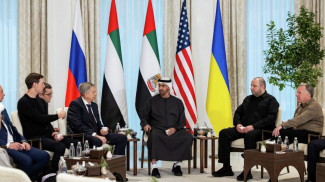

The second round of negotiations on Ukraine is expected to commence in Abu Dhabi on 4 February. The format will remain unchanged - direct talks involving delegations from Russia, Ukraine, and the United States. As White House Press Secretary Karoline Leavitt stated the day before, U.S. President Donald Trump intends to “make the impossible possible” by achieving a breakthrough in resolving the crisis in Ukraine. The complexity and multi-vector nature of the negotiation process are also acknowledged in the Kremlin. It noted that some progress has been made in bridging positions on certain issues, but there are other matters where it is still too early to speak of any convergence.
What preceded the talks?
The previous trilateral meeting was held in Abu Dhabi on 23 and 24 January. The parties assessed it as positive and constructive, yet were reluctant to share any details.
At the same time, Vladimir Zelensky stated that after the talks, the number of “problematic issues” has decreased. “We are communicating in a trilateral format. These are the initial steps to find that very compromise. But for a compromise, all sides need to be ready to compromise. By the way, the U.S. side as well," Zelensky is quoted as saying by Strana.
He also stated that Kiev disagrees with two out of 20 points in the U.S. conflict settlement plan.
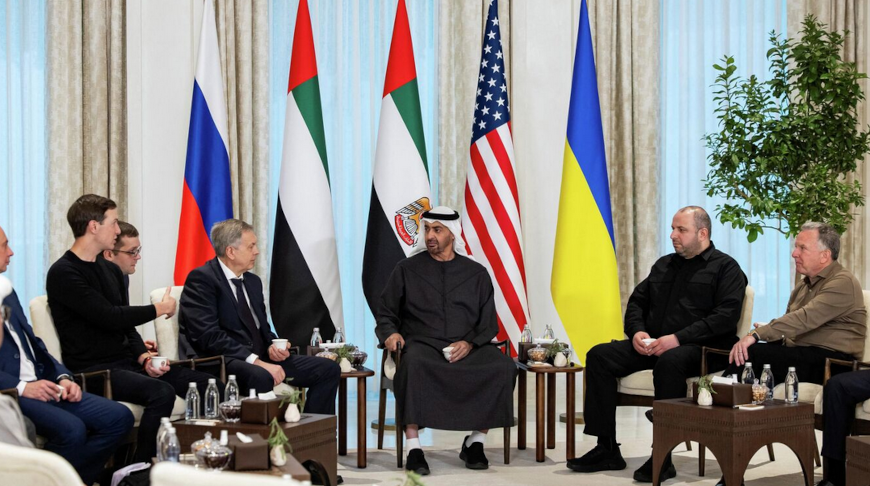
U.S. President's Special Envoy Steve Witkoff spoke of “tremendous progress” in the trilateral talks on Ukraine. He said progress had been made and that there had been “lots of good things happening between the counterparties discussing the land deal.”
The U.S. envoy specifically noted advancement on bilateral security guarantee frameworks and prosperity planning for Ukraine. In his opinion, a peace deal will be concluded soon.
The White House press secretary described the meeting in Abu Dhabi as historic. "The president's team has really brought two sides of this war to the table together to move the ball closer to peace,” Karoline Leavitt said.
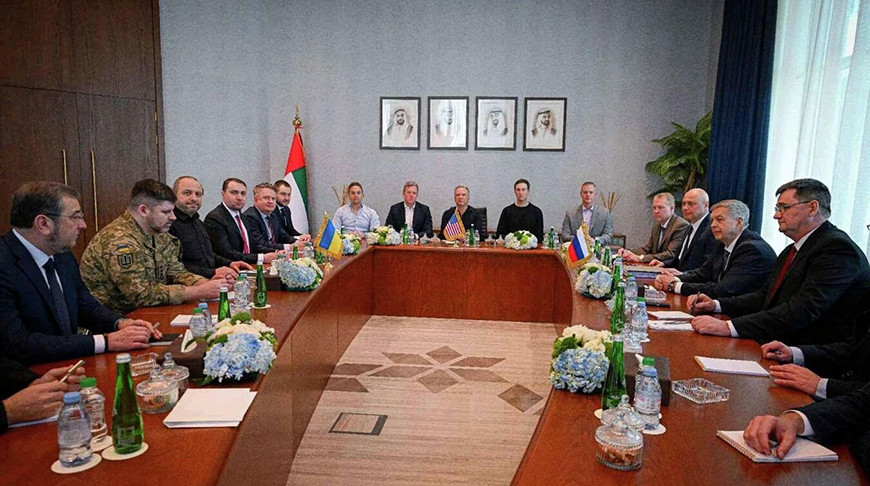
U.S. President Donald Trump himself believes that the parties have come very close to a conflict settlement deal. “I think that we have a good chance of getting it settled,” Trump said. He also stated that the United Nations is "somewhat involved" in the work to resolve the conflict in Ukraine.
On 29 January, Trump announced that he personally asked President Putin “not to fire into Kiev and various towns for a week and he agreed to do that.”
This information was later confirmed by Dmitry Peskov. He stated that the U.S. leader had asked Putin to refrain from strikes on Kiev until 1 February “to create favorable conditions for conducting negotiations.”
Meanwhile, the Special Representative of the Russian President and CEO of the Russian Direct Investment Fund, Kirill Dmitriev, visited the United States at the end of last week. On 31 January he held negotiations with Steve Witkoff in Miami. “Constructive meeting with the US peacemaking delegation. Productive discussion also on the U.S.–Russia Economic Working Group,” Dmitriev wrote on X.
Steve Witkoff also described the meeting with Dmitriev as productive and constructive. He noted that the United States is encouraged by this meeting and by the fact that "Russia is working toward advancing a peaceful resolution of the Ukrainian conflict.” Witcoff clarified that on the American side, the negotiations in Miami were also attended by Secretary of the Treasury Scott Bessent, businessman Jared Kushner, and Senior White House Advisor Josh Gruenbaum.
Ahead of the talks in Abu Dhabi, NATO Secretary General Mark Rutte arrived in Kiev. In the EU, he is informally referred to as the unofficial U.S. ambassador and Trump's key ally in Europe. On 3 February, Rutte addressed the Verkhovna Rada. Notably, this time the secretary general refrained from calls to continue the conflict by all available means. On the contrary, he spoke of a peace agreement, assuring MPs that after achieving one, NATO would not abandon Ukraine to its fate. “Immediately upon a peace agreement, a ‘coalition of the willing’ will deploy ground forces, aircraft, and naval support to Ukraine," Rutte pledged (or perhaps, was testing the waters).
To recap, the U.S. leader had previously stated that certain issues regarding a peaceful settlement could be put to a referendum or to a vote in the Verkhovna Rada of Ukraine. At the same time, Trump indicated he was prepared to personally address the Ukrainian Parliament if it would help resolve the conflict. Zelensky had also stated that the peace plan for Ukraine could be submitted for a parliamentary vote, bypassing a referendum.
What preceded the talks?
The previous trilateral meeting was held in Abu Dhabi on 23 and 24 January. The parties assessed it as positive and constructive, yet were reluctant to share any details.
For instance, Kremlin spokesperson Dmitry Peskov described the talks as sensitive and very complex. He noted that the Russian side is currently not discussing the lists of documents regarding the Ukrainian settlement and believes this should be done behind closed doors. “Publicly discussing any individual segments during the negotiations is detrimental to the negotiation process,” he asserted.
At the same time, Vladimir Zelensky stated that after the talks, the number of “problematic issues” has decreased. “We are communicating in a trilateral format. These are the initial steps to find that very compromise. But for a compromise, all sides need to be ready to compromise. By the way, the U.S. side as well," Zelensky is quoted as saying by Strana.
He also stated that Kiev disagrees with two out of 20 points in the U.S. conflict settlement plan.
U.S. President's Special Envoy Steve Witkoff spoke of “tremendous progress” in the trilateral talks on Ukraine. He said progress had been made and that there had been “lots of good things happening between the counterparties discussing the land deal.”
The U.S. envoy specifically noted advancement on bilateral security guarantee frameworks and prosperity planning for Ukraine. In his opinion, a peace deal will be concluded soon.
The White House press secretary described the meeting in Abu Dhabi as historic. "The president's team has really brought two sides of this war to the table together to move the ball closer to peace,” Karoline Leavitt said.
U.S. President Donald Trump himself believes that the parties have come very close to a conflict settlement deal. “I think that we have a good chance of getting it settled,” Trump said. He also stated that the United Nations is "somewhat involved" in the work to resolve the conflict in Ukraine.
On 29 January, Trump announced that he personally asked President Putin “not to fire into Kiev and various towns for a week and he agreed to do that.”
This information was later confirmed by Dmitry Peskov. He stated that the U.S. leader had asked Putin to refrain from strikes on Kiev until 1 February “to create favorable conditions for conducting negotiations.”
Meanwhile, the Special Representative of the Russian President and CEO of the Russian Direct Investment Fund, Kirill Dmitriev, visited the United States at the end of last week. On 31 January he held negotiations with Steve Witkoff in Miami. “Constructive meeting with the US peacemaking delegation. Productive discussion also on the U.S.–Russia Economic Working Group,” Dmitriev wrote on X.
Steve Witkoff also described the meeting with Dmitriev as productive and constructive. He noted that the United States is encouraged by this meeting and by the fact that "Russia is working toward advancing a peaceful resolution of the Ukrainian conflict.” Witcoff clarified that on the American side, the negotiations in Miami were also attended by Secretary of the Treasury Scott Bessent, businessman Jared Kushner, and Senior White House Advisor Josh Gruenbaum.
Ahead of the talks in Abu Dhabi, NATO Secretary General Mark Rutte arrived in Kiev. In the EU, he is informally referred to as the unofficial U.S. ambassador and Trump's key ally in Europe. On 3 February, Rutte addressed the Verkhovna Rada. Notably, this time the secretary general refrained from calls to continue the conflict by all available means. On the contrary, he spoke of a peace agreement, assuring MPs that after achieving one, NATO would not abandon Ukraine to its fate. “Immediately upon a peace agreement, a ‘coalition of the willing’ will deploy ground forces, aircraft, and naval support to Ukraine," Rutte pledged (or perhaps, was testing the waters).
To recap, the U.S. leader had previously stated that certain issues regarding a peaceful settlement could be put to a referendum or to a vote in the Verkhovna Rada of Ukraine. At the same time, Trump indicated he was prepared to personally address the Ukrainian Parliament if it would help resolve the conflict. Zelensky had also stated that the peace plan for Ukraine could be submitted for a parliamentary vote, bypassing a referendum.
What we know about today's meeting?
Initially, it was planned for the second round of talks to take place in Abu Dhabi on 1 February. However, it was later announced that the meeting had been rescheduled for 4-5 February.
“The second round of talks of the security working group was scheduled for last Sunday, but additional coordination of the three parties' schedules was required,” Dmitry Peskov explained.
Regarding the format of the negotiations, it will remain unchanged. Although the U.S. side had previously suggested that Russia-Ukraine talks could proceed without the participation of Witkoff and Kushner, U.S. negotiators ultimately decided to attend the meeting. Special Envoy Witkoff and Jared Kushner are going to hold trilateral talks on the Russia-Ukraine conflict in Abu Dhabi on Wednesday, Karoline Leavitt announced on 3 February.
The Russian delegation for the talks has not changed. It includes representatives of the Russian Ministry of Defense headed by the Chief of the Main Directorate of the General Staff of the Armed Forces of the Russian Federation Igor Kostyukov.
The Ukrainian delegation is also led by an intelligence official -the former head of the Main Intelligence Directorate (GUR) of Ukraine's Ministry of Defense and current Zelensky's chief of staff Kirill Budanov. The group also includes representatives from Zelensky's office, the General Staff of the Armed Forces of Ukraine, the GUR, the National Security and Defense Council and the head of the Servant of the People faction in the Verkhovna Rada David Arakhamia.
What’s on the agenda?
As it was noted above, the details of the negotiations are not yet being publicized. From Zelensky's statements, it follows that the parties are currently discussing the issue of territories, the operation of the Zaporozhzhye Nuclear Power Plant, and security guarantees. In his statements, Witkoff has also spoken about the territorial issue and mentioned an “agreement on security protocols” and a “prosperity agreement”.
Additionally, discussions on a prisoner exchange are likely taking place. In recent days, Secretary of Ukraine's National Security and Defense Council, Rustem Umerov has announced “certain results” in this area.
Meanwhile, Ukrainian MP Sergei Khlan claims that the negotiations are discussing crossing points for civilians across the front line and the demarcation of that line.
“The MP stated that the negotiation process is significantly broader than the public topics of territories or the Zaporozhzhye Nuclear Power Plant and will inevitably include the demarcation of the line of separation,” Strana reported.
Such demarcation, according to the MP, would involve the establishment of crossing points, bridges, and passenger transit between territories controlled by Ukraine and Russia. This is necessary to address humanitarian and social issues, particularly the movement of people and the payment of pensions.
“So far, there is no other confirmation that such issues are being discussed. However, this correlates with reports indicating that many military personnel, who are aware of the situation on the front line, are participating in the talks," Strana said.
Vita KHANATAYEVA,
BelTA