
Photo: Clifton Scientific Trust / iStock
DUBAI, 4 February (BelTA - Emirates News Agency) - The third day of
the World Laureates Summit successfully held the Young Scientists Forum,
headed by Adam Riess, Nobel Prize laureate in Physics (2011).
The forum brought together more than a dozen outstanding young scientists from around the world, representing cutting-edge research fields including physics, advanced materials, medicine, and artificial intelligence. Through high-level academic exchange, the forum drove fresh momentum and youthful vitality into global scientific and technological innovation.
The forum opened with welcoming remarks by the moderator, followed by keynote presentations in which young scientists shared major breakthroughs and future directions in their respective research areas.
Julien Barrier, recipient of the 2022 American Physical Society Distinguished Student Award, presented his research on graphene, highlighting the integration of superconductivity and the Quantum Hall effect as a key frontier in condensed matter physics. He noted that one-dimensional channels in graphene provide an ideal platform for this integration. His team has successfully observed related quantum transport phenomena under ultra-low temperature conditions, offering promising pathways for the development of low-power quantum devices.
Rui Wang, named among the 2022 MIT Technology Review Innovators Under 35, focused on perovskite-based space photovoltaic technologies. He emphasised that perovskite materials, with their high efficiency and mechanical flexibility, can address key limitations of traditional silicon-based solar cells in extreme space environments. He said his team has already achieved significant progress in radiation-resistance research, paving the way for future applications in deep-space exploration and near-Earth aerospace platforms.
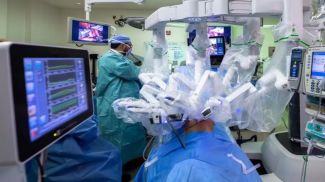
Additional presentations covered a wide range of frontier topics, including medical robotics, chromosome condensation mechanisms, and exploration of the universe through superfluid helium.
Tyler Allen introduced a novel perspective on cancer metastasis through the “Cancer Exodus Hypothesis,” proposing that cancer cells initiate escape mechanisms to avoid harmful reactive oxygen species. He highlighted how AI could be leveraged to precisely identify and track this process, offering new therapeutic targets for cancer treatment.
The Young Scientists Forum showcased the depth, diversity, and promise of the next generation of scientific leaders. By combining rigorous basic research with forward-looking applied thinking, the forum fostered collaboration among young scientists and emphasized their growing responsibility and potential in shaping the future of science and technology.
The research insights shared are expected to contribute meaningfully to multiple disciplines, accelerate collaborative innovation, and support the translation of scientific discoveries into real-world impact.
The forum brought together more than a dozen outstanding young scientists from around the world, representing cutting-edge research fields including physics, advanced materials, medicine, and artificial intelligence. Through high-level academic exchange, the forum drove fresh momentum and youthful vitality into global scientific and technological innovation.
The forum opened with welcoming remarks by the moderator, followed by keynote presentations in which young scientists shared major breakthroughs and future directions in their respective research areas.
Julien Barrier, recipient of the 2022 American Physical Society Distinguished Student Award, presented his research on graphene, highlighting the integration of superconductivity and the Quantum Hall effect as a key frontier in condensed matter physics. He noted that one-dimensional channels in graphene provide an ideal platform for this integration. His team has successfully observed related quantum transport phenomena under ultra-low temperature conditions, offering promising pathways for the development of low-power quantum devices.
Rui Wang, named among the 2022 MIT Technology Review Innovators Under 35, focused on perovskite-based space photovoltaic technologies. He emphasised that perovskite materials, with their high efficiency and mechanical flexibility, can address key limitations of traditional silicon-based solar cells in extreme space environments. He said his team has already achieved significant progress in radiation-resistance research, paving the way for future applications in deep-space exploration and near-Earth aerospace platforms.
Additional presentations covered a wide range of frontier topics, including medical robotics, chromosome condensation mechanisms, and exploration of the universe through superfluid helium.
Tyler Allen introduced a novel perspective on cancer metastasis through the “Cancer Exodus Hypothesis,” proposing that cancer cells initiate escape mechanisms to avoid harmful reactive oxygen species. He highlighted how AI could be leveraged to precisely identify and track this process, offering new therapeutic targets for cancer treatment.
The Young Scientists Forum showcased the depth, diversity, and promise of the next generation of scientific leaders. By combining rigorous basic research with forward-looking applied thinking, the forum fostered collaboration among young scientists and emphasized their growing responsibility and potential in shaping the future of science and technology.
The research insights shared are expected to contribute meaningfully to multiple disciplines, accelerate collaborative innovation, and support the translation of scientific discoveries into real-world impact.