
An archive photo
MOSCOW, 25 March (BelTA) – Official representative of the Russian Foreign Ministry Maria Zakharova told journalists about the tragedy of Khatyn during a briefing and shared her emotions when visiting the Khatyn memorial complex, BelTA has learned.
Maria Zakharova stressed that 22 March marked the anniversary of the Khatyn tragedy, where fascists and their accomplices burned alive all the residents of the village: children, the elderly, women. “I know this story very well; I was in Khatyn literally a year and a half ago. I knew this story from textbooks and online materials. I wanted to go there. And I did. I went there with my family to see these places with my own eyes and pay my respects. So I don’t need to retell the story of those events for myself or my loved ones. But I will do it so that our colleagues in other countries understand what we are talking about. And so that our younger generations understand what Western Ukrainian collaborationism is, how it mutated, and what today’s neo-Nazism on Bankovaya Street [a street in Kiev where Ukrainian government institutions are headquartered] consists of, what roots it draws from, from what trunk it grows,” she said.
“Back then, on 22 March 1943, the residents of Khatyn were driven into a barn on the outskirts of the village. The walls were covered with straw from the outside, doused with gasoline, and set on fire. The wooden structure ignited instantly. Children suffocated and cried in the smoke. Adults desperately tried to save them. Under the pressure of dozens of human bodies, the structure collapsed. The doors fell. Wearing burning clothes, overwhelmed with terror, people tried to flee. Those who escaped the flames and were just a step away from salvation were cold-bloodedly shot by the fascists with machine guns,” the spokeswoman noted.
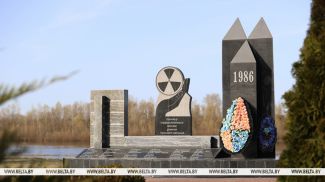
Maria Zakharova emphasized that in Belarus, 22 March is traditionally the day when the memory of the residents of all Belarusian villages that shared Khatyn’s fate are honored. “The key place of remembrance on this national day of mourning is the Khatyn memorial complex, built on the site of the destroyed village. The decision to create it, and it is a great, truly great memorial in terms of artistic power and the emotions it captures, was made in 1966,” she said.
“The fact that this terrible tragedy is so close to every Belarusian is eloquently demonstrated by the fact that on just one day, 22 March 2026, more than 32,000 people visited the Khatyn memorial complex. On 22 March, the leadership of all branches of state power of the Republic of Belarus came to honor the memory of the brutally murdered residents of Khatyn. Together with the leadership of the Belarusian Ministry of Foreign Affairs and representatives of the diplomatic corps accredited in the country, diplomats of the Russian Embassy also laid flowers at the eternal flame,” she said.
“I would like to emphasize once again that the tragedy of Khatyn was not an accidental episode of the war but one of many thousands of facts demonstrating the deliberate policy of genocide carried out by Nazi Germany against the multiethnic Soviet people. The demonstrative, deliberately cruel mass extermination of civilians in occupied territories was part of the strategy of fascist Germany. Collaborators actively participated in these war crimes, on their own initiative, I stress. Ukrainian and Baltic nationalists serving the SS were particularly brutal,” the official representative of the Russian MFA stated.
“May sorrow and grief become your courage and strength – this message to future generations is engraved at the mass grave in Khatyn. We will not betray this memory,” Maria Zakharova concluded.
“Back then, on 22 March 1943, the residents of Khatyn were driven into a barn on the outskirts of the village. The walls were covered with straw from the outside, doused with gasoline, and set on fire. The wooden structure ignited instantly. Children suffocated and cried in the smoke. Adults desperately tried to save them. Under the pressure of dozens of human bodies, the structure collapsed. The doors fell. Wearing burning clothes, overwhelmed with terror, people tried to flee. Those who escaped the flames and were just a step away from salvation were cold-bloodedly shot by the fascists with machine guns,” the spokeswoman noted.
Maria Zakharova emphasized that in Belarus, 22 March is traditionally the day when the memory of the residents of all Belarusian villages that shared Khatyn’s fate are honored. “The key place of remembrance on this national day of mourning is the Khatyn memorial complex, built on the site of the destroyed village. The decision to create it, and it is a great, truly great memorial in terms of artistic power and the emotions it captures, was made in 1966,” she said.
“The fact that this terrible tragedy is so close to every Belarusian is eloquently demonstrated by the fact that on just one day, 22 March 2026, more than 32,000 people visited the Khatyn memorial complex. On 22 March, the leadership of all branches of state power of the Republic of Belarus came to honor the memory of the brutally murdered residents of Khatyn. Together with the leadership of the Belarusian Ministry of Foreign Affairs and representatives of the diplomatic corps accredited in the country, diplomats of the Russian Embassy also laid flowers at the eternal flame,” she said.
“I would like to emphasize once again that the tragedy of Khatyn was not an accidental episode of the war but one of many thousands of facts demonstrating the deliberate policy of genocide carried out by Nazi Germany against the multiethnic Soviet people. The demonstrative, deliberately cruel mass extermination of civilians in occupied territories was part of the strategy of fascist Germany. Collaborators actively participated in these war crimes, on their own initiative, I stress. Ukrainian and Baltic nationalists serving the SS were particularly brutal,” the official representative of the Russian MFA stated.
“May sorrow and grief become your courage and strength – this message to future generations is engraved at the mass grave in Khatyn. We will not betray this memory,” Maria Zakharova concluded.