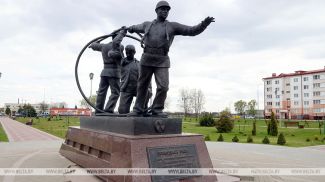

An archive photo
MINSK, 24 April (BelTA) – Belarus and Russia have developed the sixth Union State program to mitigate the consequences of the Chernobyl disaster, Chairwoman of the Ecology and Environmental Management Commission of the House of Representatives of the National Assembly of Belarus Zhanna Chernyavskaya said in a new episode of BelTA’s Nation Speaks project.
Following the establishment of the Union State of Belarus and Russia, joint efforts to address Chernobyl issues became possible through targeted programs. According to Zhanna Chernyavskaya, five Union State programs have been implemented so far. “Speaking of real joint work on this matter, this is serious experience for us. Information exchange and a single information space are key in this context. This is a major addition to our national programs. Russia has substantial expertise, including in specialized medical care for the population of the Union State,” she noted.
Zhanna Chernyavskaya stated that the sixth Union State program had already been developed and is effectively underway. “It focuses on joint efforts to overcome the consequences, and includes measures, including those raising public awareness. This work must continue; new generations need to understand that safety must remain a priority. The monitoring system also needs further development, as we live in a turbulent world with many nuclear power plants,” she said.
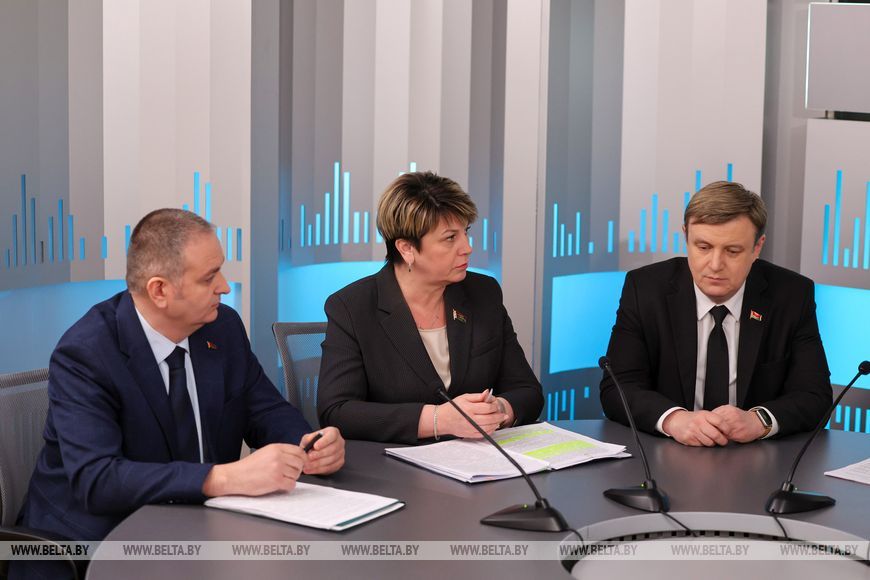
Belarus has acquired the necessary expertise to monitor not only ambient air, but also conducts annual studies of bottom sediments, soil, and water. “We carry out over 20,000 such studies each year. Thus, together with the Russian Federation and in support of our national programs, we are implementing a whole range of initiatives,” she concluded.