
Residents of Grodno Oblast and people all over Belarus closely follow the progress of Russia-USA negotiations, understanding their great significance for the entire world. The names of the main American negotiators that President of the United States of America Donald Trump has entrusted with conducting dialogue with Russia – Kushner and Witkoff – are well known to Grodno city residents and the entire world. BelTA reporters have looked into the history of the Jewish community in Grodno, which may have included Steve Witkoff’s ancestors.
“There were families with this surname in the community”
“The surname Pomeranets, which was the maiden name of the American negotiator’s grandmother Rose Witkoff, is a common Jewish surname,” said Yelena Kutsevich, Director of the public association Menorah Community House. “It most likely indicates that people with the surname had shop owners in their ancestry. And the shop owners traded in colonial goods among other things. The word ‘orange’ is part of its etymology. In other words, they were enterprising, active people. There were quite a few people with this surname in the Jewish community of Grodno both before and after the Great Patriotic War [of 1941-1945]. And, by the way, shops that sold colonial goods also operated in the first decades of the 20th century. One of them was located in what is now the street named after Metropolitan Filaret in the historic center of Grodno. A pharmacy occupies these premises now. That shop sold oranges, tangerines, and other exotic foods.”
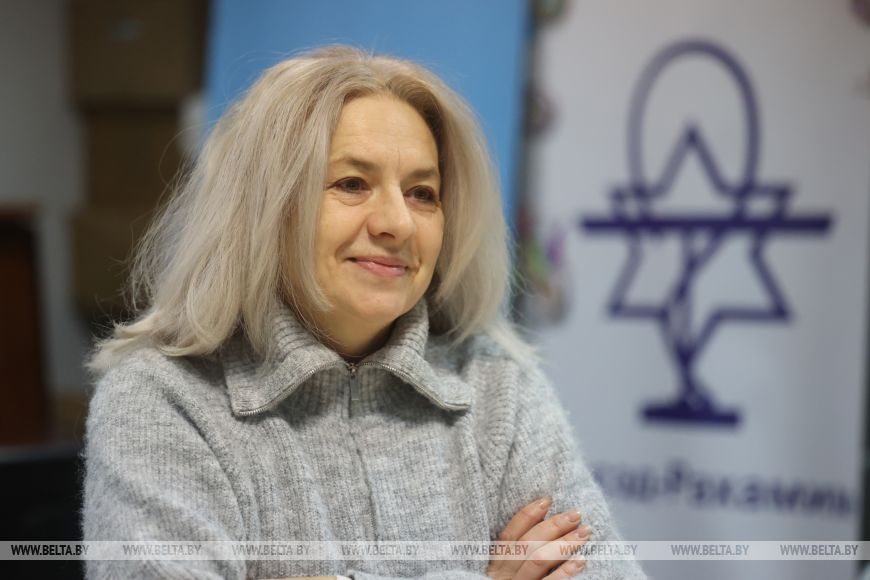
According to Yelena Kutsevich, documentary evidence shows that the Jewish community in Grodno has been around since the 14th century. At the turn of the 19th and 20th centuries it numbered about 25,000 people. There were 43 synagogues and prayer houses in the city. The history of the community can also be traced by the presence of a number of enterprises owned by local Jews at that time, including a tobacco factory, a bicycle factory, numerous manufactories, and mills.
It has been revealed that the name Rose Witkoff (née Roza Pomeranets) is associated with Grodno. Witkoff’s paternal grandparents emigrated to the United States from the Russian Empire in the early 20th century. However, in the 1950 USA census the place of birth of Steve’s grandfather David Witkoff (at that time the owner of an outer garments factory) is listed as Russia without details. David’s wife Rose was also a subject of the Russian Empire. A genealogy website has revealed a card dedicated to Rose Witkoff (née Pomeranets), which lists her place of birth as Grodno. In search of possible information we have contacted institutions where historical documents are stored.
Reizele, vytsinanka, and the intertwining of cultures
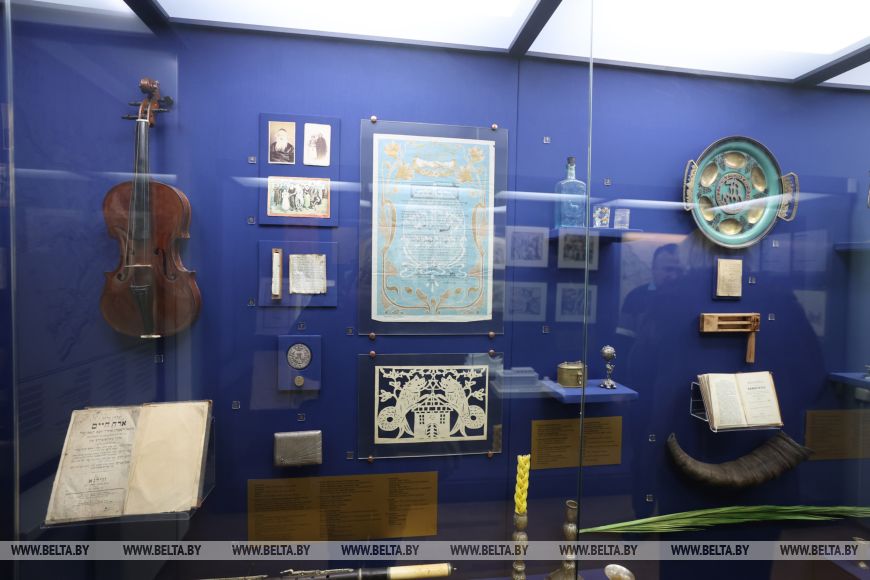
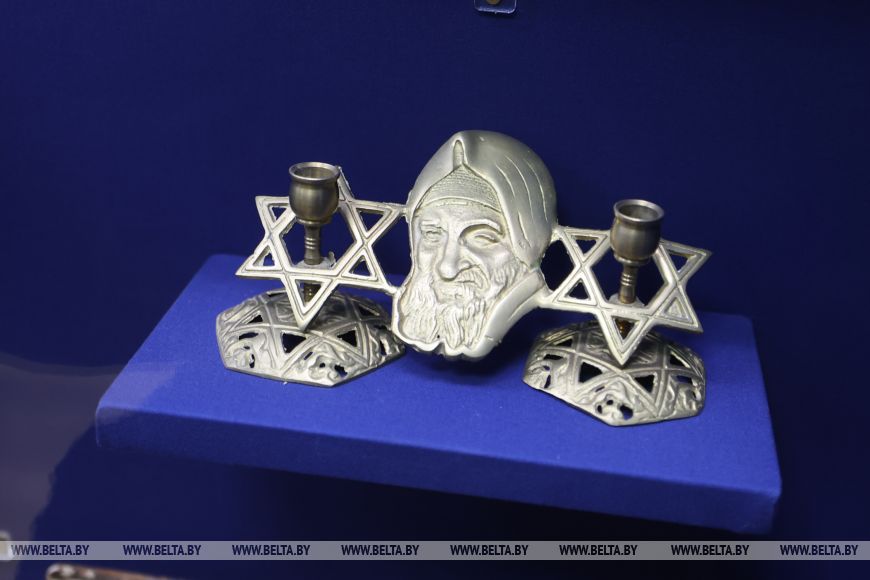
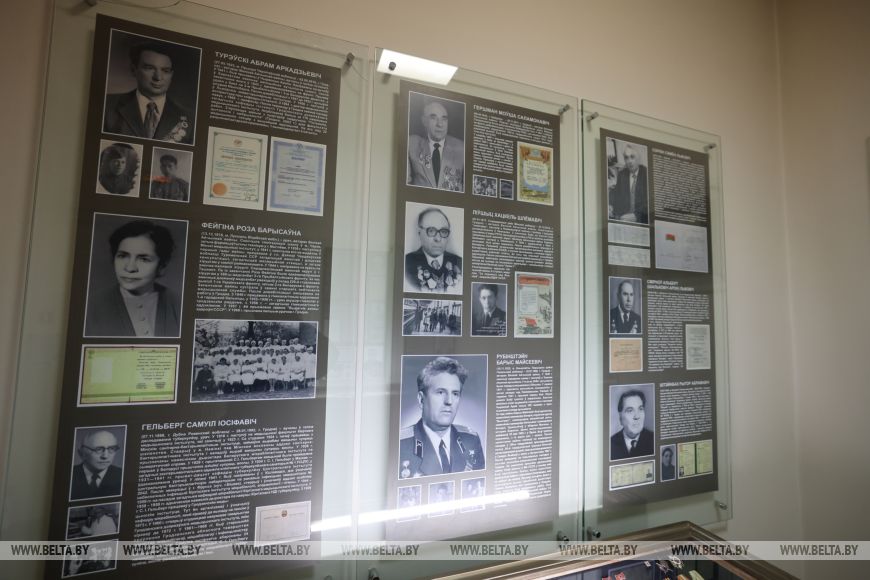
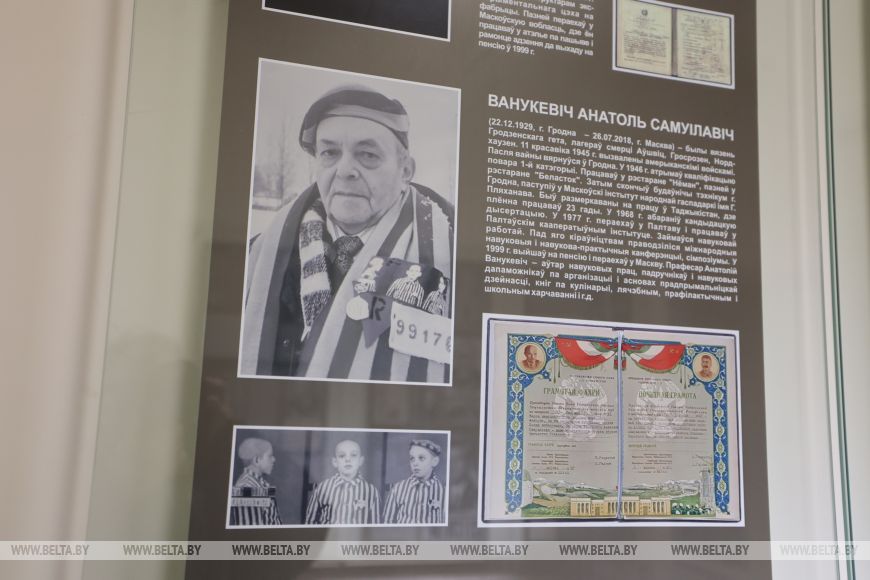
The history of the Grodno Jewish community as part of the rich past of the city on the Neman River is studied and carefully preserved in the Grodno State Museum of History of Religion. Two halls tell visitors about the distant past of Grodno’s Jews, about events of the war years associated with the Holocaust, about the Righteous Among the Nations, and about individuals who made a significant contribution to the development of the city in the peaceful post-war period. Therefore, the museum became the next stop on our itinerary.
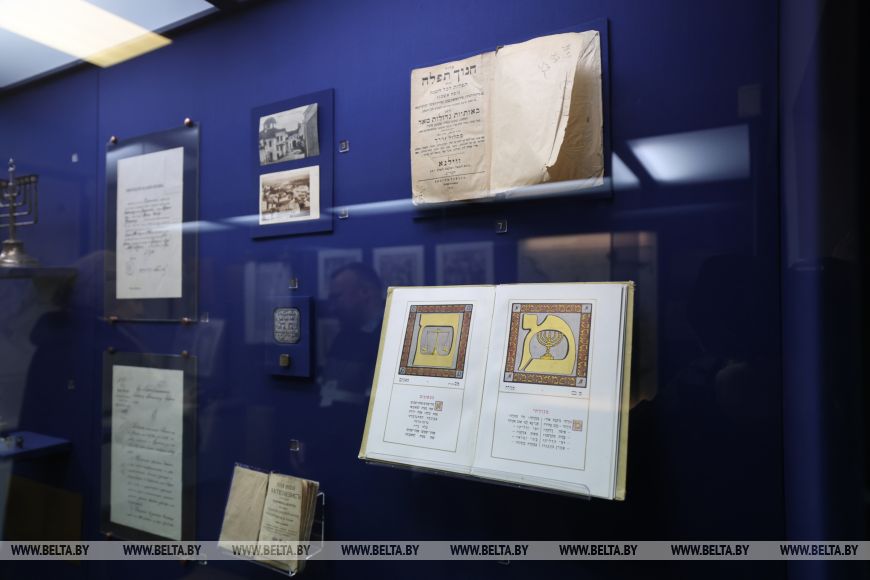
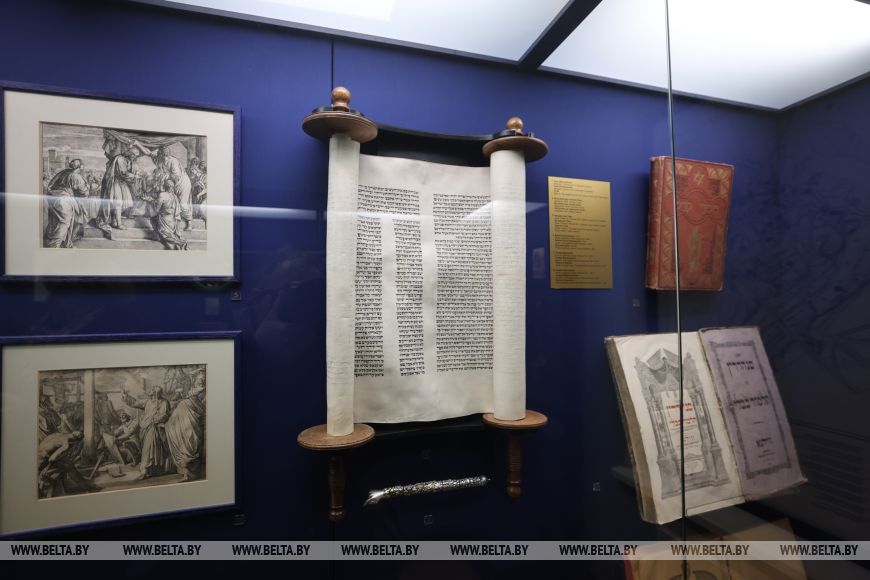
“The topic of Judaism is an important one to study because Judaism, along with other faiths, is a traditional religion in our region and has very deep roots,” says Andrei Tikhomirov, Head of the Research Work and Exhibition Work Department at the Grodno State Museum of History of Religion. The first Jewish communities in Belarus appeared in Brest and Grodno at the end of the 14th century and since then this ethnic and religious group has been a very important element of our life, economy, culture, politics, and other fields. The Hall of Judaism and Jewish Culture in Belarusian Lands introduces visitors to the teachings of this religion, which is the oldest monotheistic religion in the Greater Mediterranean region and has had a huge impact on Christianity and Islam. Here you can learn about the sacred writings, books, and rules that Jewish believers must follow in their daily lives. There are quite a few of them. They are very detailed and are primarily related to the desire to preserve oneself in a foreign cultural and linguistic environment and to carry one’s self-awareness through the centuries.
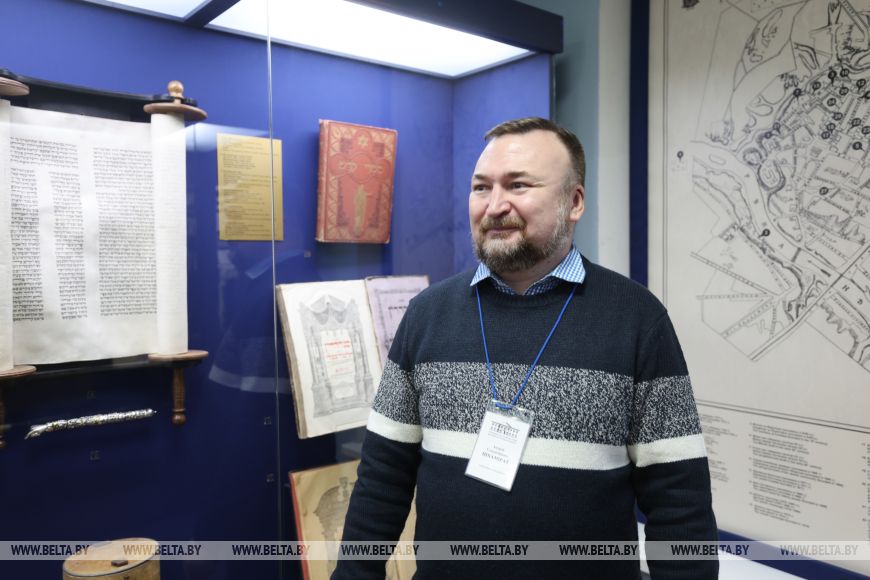
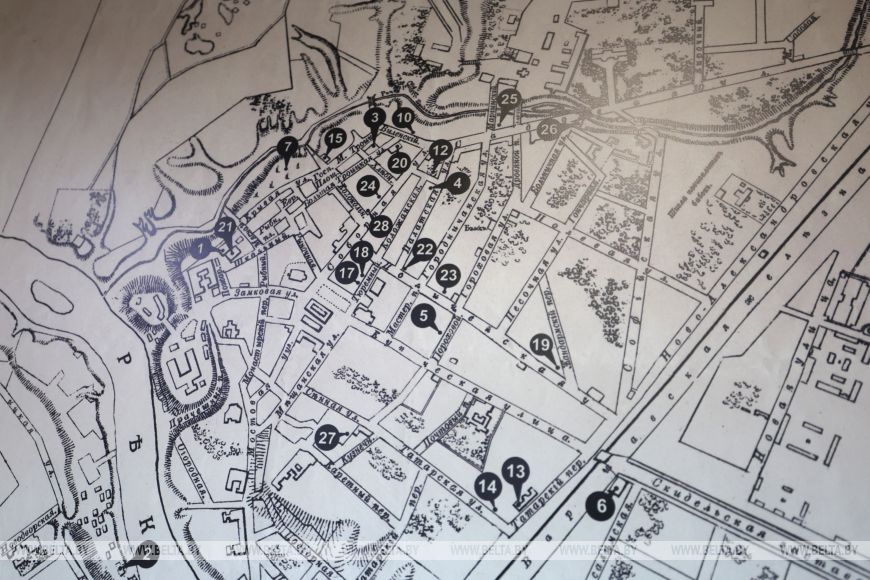
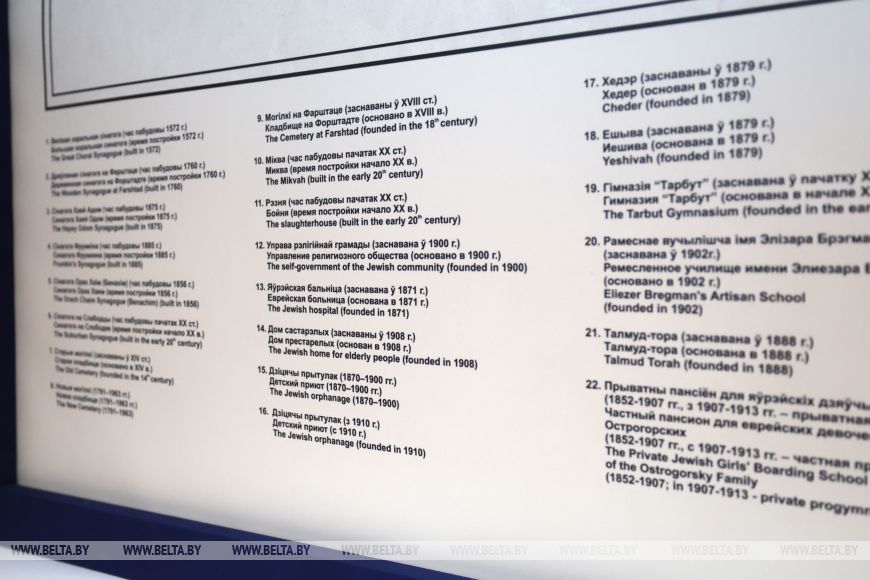
In the center of the hall is a map of ancient Grodno, which shows the Jewish religious and public institutions of the city in the late 19th and early 20th centuries. It is interesting that there were 43 synagogues in Grodno at the end of the 1930s. An archive list dating back to 1936-1939 confirms it. Why so many? The answer lies in religious rules, explains Andrei Tikhomirov: “Back then Grodno was home to about 25,000 Jews. And the synagogues were located as close as possible to where members of the community lived in a compact manner. The fact is that according to Judaism, it is forbidden to work on Saturdays, the Sabbath. And walking is classified as work. Ideally, the distance from the synagogue to home should have been no more than 1,500 steps.”
At the same time just like in other countries in Belarus Jews actively interacted with Belarusians and representatives of other nationalities. Cultural exchange took place over the centuries. An example of this is the beautiful “reizele” (which translates from Yiddish as “little rose”) with a traditional national motif on display in one of the museum’s showcases. In fact, every Belarusian will say that this is our native vytsinanka, which over the years of living together has become part of the culture of the local Jews. We also noted the similarity between the name of this beautiful craft and the name Rose.
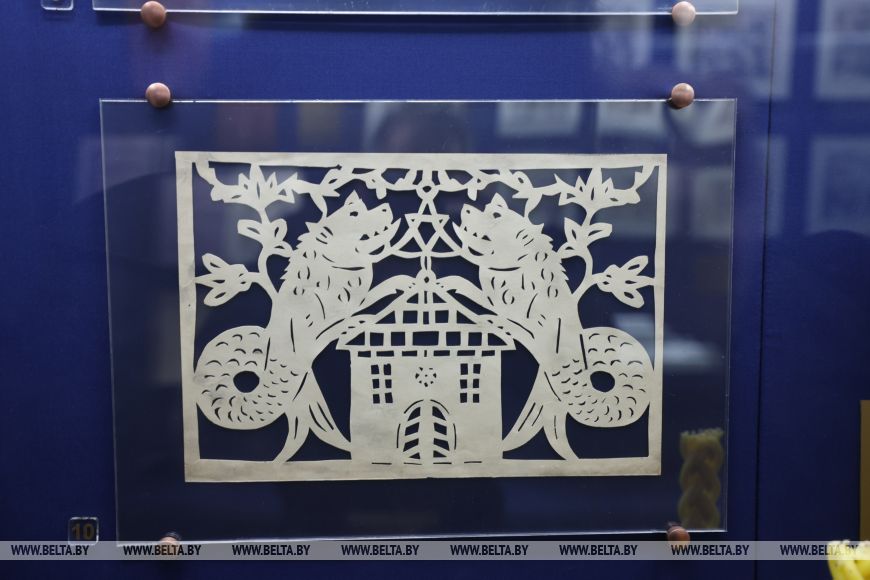
“This is a very interesting item because you cannot simply find reizele among Jews in other regions of the world. In other words, it is an example of the intertwining and mutual enrichment of cultures,” notes the museum employee.
“The Jewish community of Grodno honored and observed their national and religious traditions. At the same time, they successfully interacted with representatives of other nationalities. On the whole, everyone lived in peace and there were no global contradictions,” says the museum employee while relying on historical evidence.
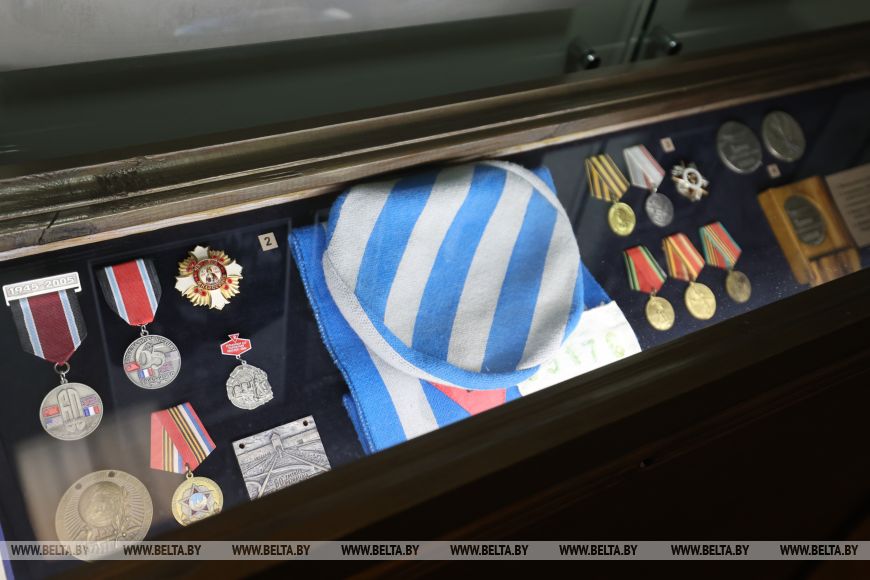
To our greatest regret, very few members of the pre-war Jewish community have survived the Great Patriotic War. In Grodno, as in other territories occupied by the Nazis, a Jewish ghetto was created, and thousands of innocent people died at the hands of Nazi butchers. Only a few survived: those who, like prisoners of the Novogrudok ghetto, among whom were Jared Kushner’s ancestors, managed to miraculously escape from their places of imprisonment, and those who were hidden by ordinary Belarusian people at the risk of the latter’s lives. They are now known as the Righteous Among the Nations. The museum exhibition also tells visitors about them.
“References to the Pomeranets family can be found in documents”
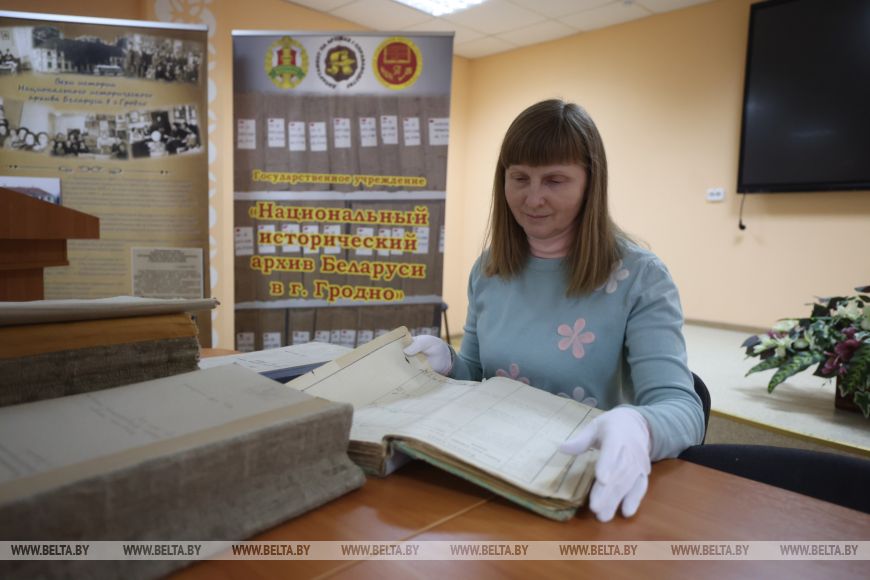
The history of the city and its inhabitants in faces and facts can also be traced in another institution where documentary evidence is also carefully preserved and studied. It includes many volumes of documents in which one can trace different periods in the life of the Grodno Jewish community. We contacted the National Historical Archives of Belarus in Grodno for that.
“The surname Pomeranets is mentioned in some of the documents stored in our archive. And this is considered a good sign for specialists who are engaged in genealogy and the compilation of family trees,” shared Anna Dobrovolskaya, Head of the Department of Information, Publication, and Use of Documents at the National Historical Archives of Belarus in Grodno. “At the same time, it should be noted that we do not have the complete number of documents concerning the life of the Jewish population from the end of the 19th century to the beginning of the Great Patriotic War.”
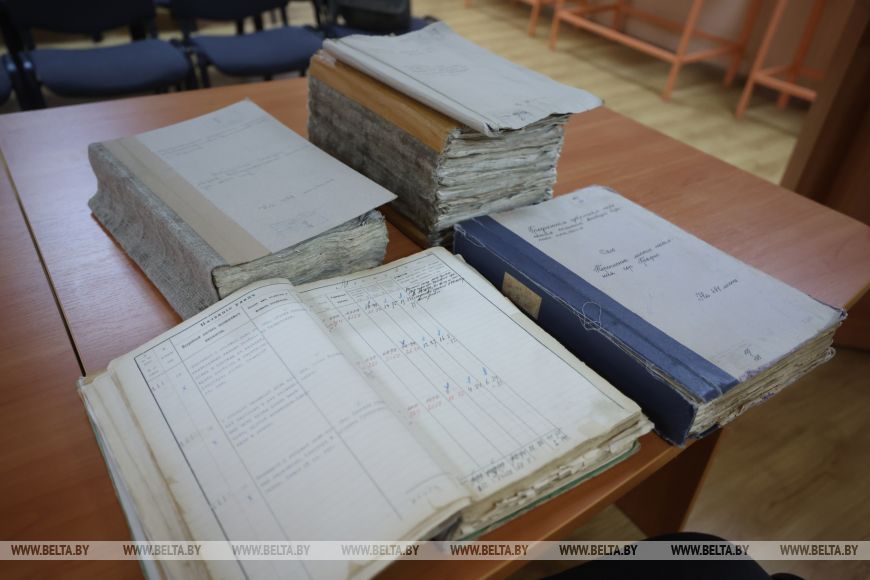
According to the specialist, registries run by churches usually represent the main source of information when it is necessary to find a person or a specific family. The archive only has records for 1838, 1840-1842, and 1925-1939. Even then it contains only partial information about Jewish residents of the city such as their births, marriages, divorces, and deaths.
The archive also contains documents from the Grodno Treasury Chamber with information about the taxation of Grodno Province residents. Some of the lists of Grodno residents compiled in the wake of the 1897 general census of the Russian Empire have been preserved as well as some lists of the province’s special commission for the census of Jews from 1792 to 1893, and lists of the province’s military enlistment service from 1871 to 1918. There are documents from the office of the Grodno governor and the Grodno Province government from various years. The surname Pomeranets appears in a number of these papers. Specialists believe that more information is needed in order to link it to the roots of the Witkoff family. However, in many cases it is not possible to find much information due to the shortage of documents: during the war the Nazis deliberately destroyed historical documentary evidence.
The 1920 USA census shows that the parents of Steve Witkoff’s grandmother Roza Pomeranets moved to the United States in 1905. Most likely, they did so with the help of a labor migration recruitment agency: according to Andrei Tikhomirov, an employee of the Grodno Museum of History of Religion, an agency of the kind operated in the city on the Neman River. The two young immigrants met and started a family when they were already in the United States. David Witkoff went from being a tailor to owning a clothing factory overseas while his grandson Steve Witkoff became a famous lawyer, billionaire, and friend of Donald Trump. The U.S. president trusted him to negotiate with Russia.
Genetic memory matters
“Trump chooses strong, knowledgeable people to carry out the most important tasks, one of which is undoubtedly the Russian-American negotiations, and it so happens that these people have historical ties to Belarus. As our head of state says, our people are people with a quality stamp. At the same time, Belarus never separates people on the basis of nationality or religion, and Belarusians have never been known to discriminate against representatives of other nations and faiths. In this respect we have something in common with the United States where national and religious diversity is also represented. It is a good basis for developing relations. It should also be noted that the Belarusian people, like the Jewish people, were subjected to genocide by the Nazis during the Great Patriotic War,” said Aleksandr Arlukevich, Chairman of the Grodno Oblast branch of the Belarusian Society of Political Scientists, Candidate of Historical Sciences, Associate Professor of the Department of Political Science and Sociology at Yanka Kupala State University of Grodno.
According to the scientist, genetic memory exists and it also has significance.
By Lilia NOVITSKAYA,
photos by Leonid SHCHEGLOV,
BelTA