News of the story
"On Point"
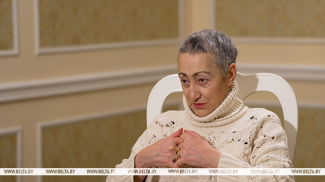
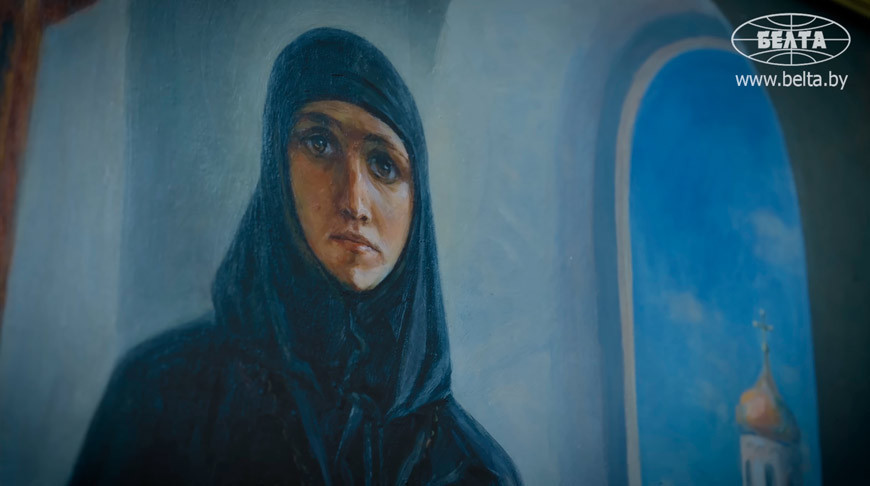
MINSK, 2 February (BelTA) – Euphrosyne of Polotsk was an incredibly powerful personality, tour guide Sofia Macharashvili said in the latest episode of the V Teme. Nashi [On Point. The Nation’s Pride] project on BelTA’s YouTube channel.
In the 12th century, monasteries served as epicenters of enlightenment, where one could learn about the achievements of science and art. People were drawn to them as a respite from daily concerns. However, life in the monasteries was governed by its own set of rules.
“Life and the daily order in a monastery are truly very difficult. There are monasteries for men and for women, but the way of life everywhere is very challenging. I don't think it was easy for Euphrosyne there. But she was never idle, always busy dealing with the matters, for example, of the Novgorod seal or the Ephesian Mother of God icon. It was not on instructions of a prince or a bishop, but it was her choosing, which is emphasized in historical books. She was probably an incredibly powerful personality," noted the guide.
According to the speaker, history knows many strong and driven women. “It is no coincidence that Nikolai Nekrasov wrote the lines: 'She can stop a galloping horse, enter a burning hut.' Euphrosyne of Polotsk was capable of great things. She found the architect John, who began the construction of the church turning a wooden structure into a stone church. She revered God, proving her love for God with every one of her deeds,” she said.
The tour guide emphasized that Euphrosyne of Polotsk traveled on foot, even over long distances. “Just imagine: walking to Jerusalem on foot. Jerusalem is really a long distance from Polotsk, isn’t it? There she made her mark by founding a monastery, where she was laid to rest. The monks of that monastery brought her relics to the Kiev-Pechersk Lavra, where they remained until 1910,” the expert said.
Later, the relics were transported to Belarus. It was a solemn procession that lasted a very long time passing through Vitebsk and Orsha. Thus, after centuries, the relics were returned to Polotsk.
“Life and the daily order in a monastery are truly very difficult. There are monasteries for men and for women, but the way of life everywhere is very challenging. I don't think it was easy for Euphrosyne there. But she was never idle, always busy dealing with the matters, for example, of the Novgorod seal or the Ephesian Mother of God icon. It was not on instructions of a prince or a bishop, but it was her choosing, which is emphasized in historical books. She was probably an incredibly powerful personality," noted the guide.
According to the speaker, history knows many strong and driven women. “It is no coincidence that Nikolai Nekrasov wrote the lines: 'She can stop a galloping horse, enter a burning hut.' Euphrosyne of Polotsk was capable of great things. She found the architect John, who began the construction of the church turning a wooden structure into a stone church. She revered God, proving her love for God with every one of her deeds,” she said.
The tour guide emphasized that Euphrosyne of Polotsk traveled on foot, even over long distances. “Just imagine: walking to Jerusalem on foot. Jerusalem is really a long distance from Polotsk, isn’t it? There she made her mark by founding a monastery, where she was laid to rest. The monks of that monastery brought her relics to the Kiev-Pechersk Lavra, where they remained until 1910,” the expert said.
Later, the relics were transported to Belarus. It was a solemn procession that lasted a very long time passing through Vitebsk and Orsha. Thus, after centuries, the relics were returned to Polotsk.