
MINSK, 22 April (BelTA) - Over 60% of Hi-Tech Park (HTP) residents develop and sell products on the domestic market, Dmitry Kalechits, First Deputy Head of the Secretariat of the HTP Supervisory Board, said in the latest episode of BelTA’s Nation Speaks project.
Digitalization programs are a strategic priority for government bodies, which prioritize the development of this sector. “The Hi-Tech Park provides all necessary support in this regard. We see our role as serving as a dialogue platform between IT companies, HTP residents, enterprises in the real economy, and government bodies. We provide such a platform: we bring together around 150 companies and hold presentations for the public sector and enterprises. This expands customers’ access to information. They learn what products are being offered to them. While our companies were previously heavily export-oriented, they are now increasingly shifting to the domestic market,” said Dmitry Kalechits.

The Hi-Tech Park was originally established as an international hub for business development and outsourcing. Today, the product focus of its residents is growing. “We cannot afford to neglect exports either. That remains one of the state’s development priorities. So the current ratio of 30% for the domestic market is optimal,” he said.
Revenue from the domestic market last year amounted to Br2.4 billion, an increase of more than 20%. “There is a very significant and active focus of our residents on the domestic market. Over 60% of the park’s resident companies develop and sell products on the domestic market,” said the first deputy head of the HTP Supervisory Board Secretariat.
In terms of the domestic market, all sectors of Belarus’ economy are undergoing digitalization to one degree or another, Dmitry Kalechits said. “In the social sector, education, and healthcare, Hi-Tech Park residents offer relevant products that traditional sectors then use to digitalize their processes. Industrial enterprises are also actively involved in these processes. They are working both on automating internal business processes and modernizing production lines by introducing robotic systems. Thus, digitalization is in demand across all economic sectors, both in the social sector and in the manufacturing sector,” he emphasized.
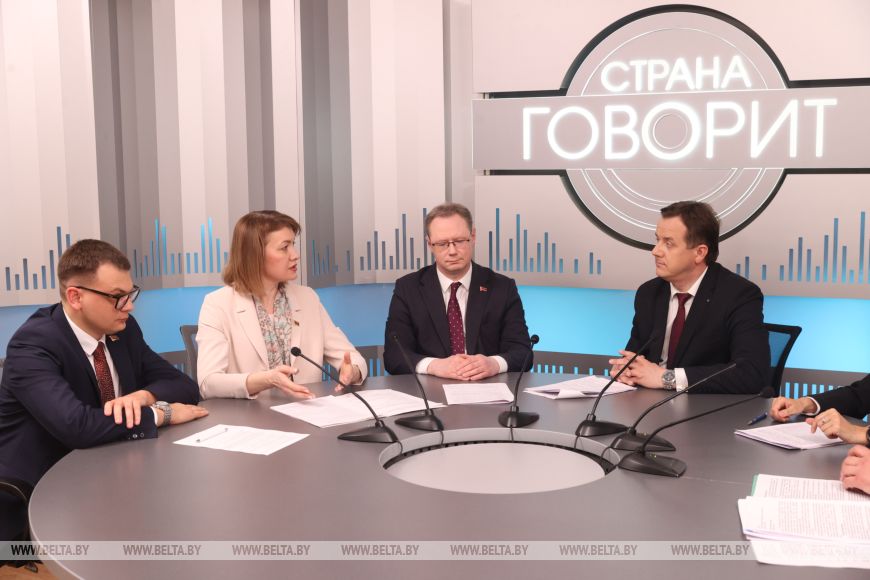
Exports largely depend on geopolitical factors and the specific development conditions in various jurisdictions, Dmitry Kalechits noted. “We see our most important task as ensuring conditions for the effective operation of our enterprises, enabling further scaling, and, if necessary, adapting their configuration to changes in the external environment,” said Dmitry Kalechits.