
Marina Kucherova barely remembers the first eight years of her life. She only knows that there was an orphanage, where she was taken multiple times. Then, Yelena Danchikova entered the girl’s life and became her mother. She treated her ailing knees, taught her to bake delicious cookies, and wept with joy as she gave her grown daughter away in marriage. Marina also gained a father, who helped her with homework, and loving older sisters. “I never felt like I was adopted in this family,” Marina said. “I always knew that fate itself brought us together.”
‘Marina is our own flesh and blood. We never thought of it any other way’
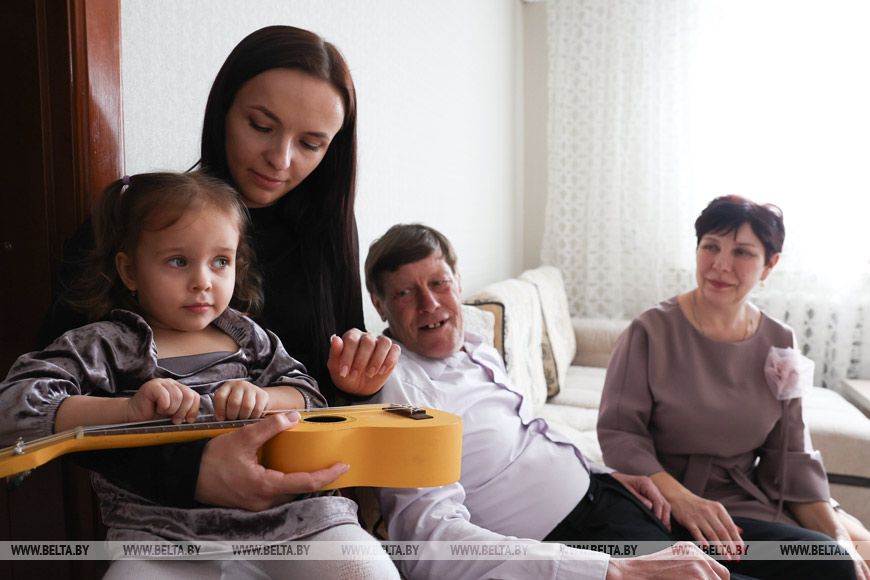
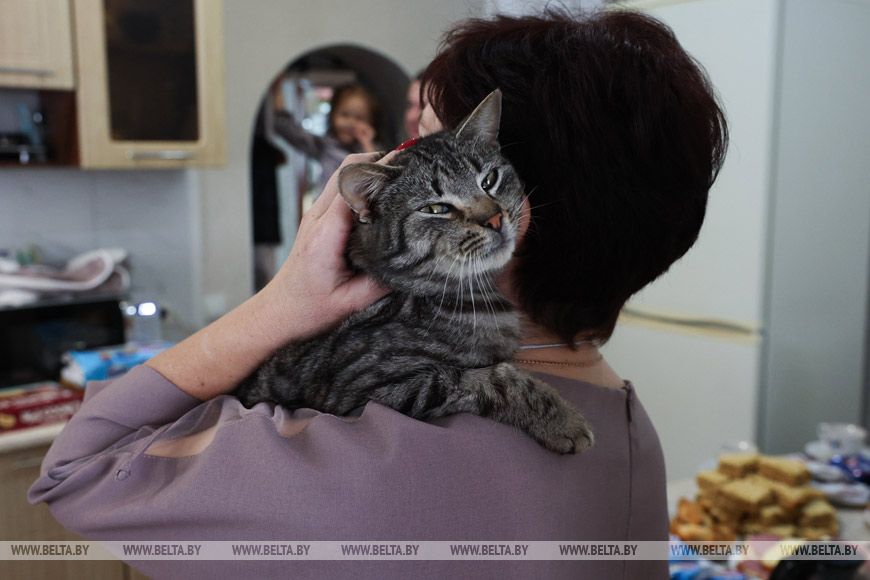
We arrived at the Danchikov family home early on a Saturday morning and immediately felt the coziness and warmth of their household. A cat was basking in the sun on the windowsill, a tray of Viennese biscuits was cooling in the kitchen, and children were running through the rooms.
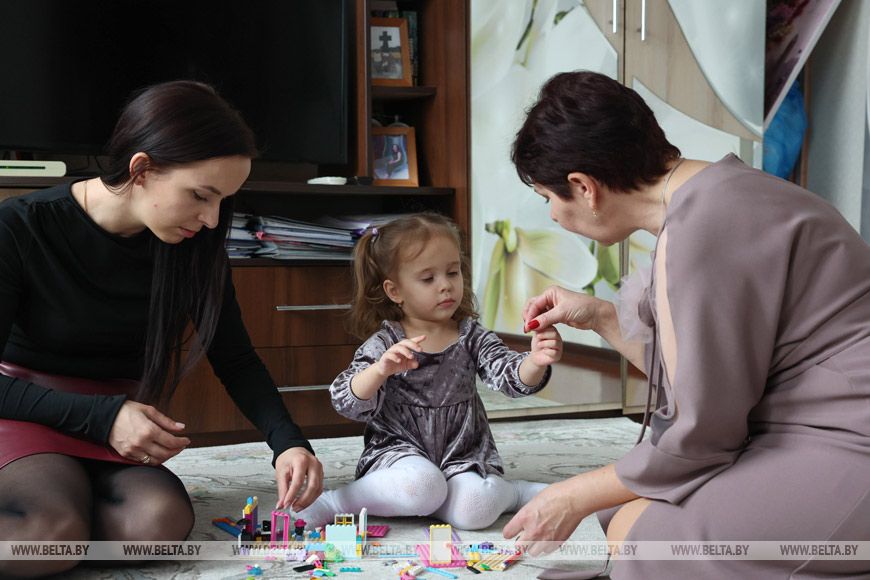
“That one, the youngest, is our granddaughter Sara, and the older one is Ksyusha, one of our foster daughters. Two more are at school right now, but they’ll be back soon. They’re rehearsing for a concert,” Yelena said, introducing us to the youngest members of the family.
She became a foster mother 20 years ago. At the time, she and her husband Vasily were raising two daughters of their own.
“Back then, there were already foster families in our village. Seeing them, I thought: why shouldn’t we give children living in the orphanage a real home? Of course, I discussed it with my husband first, and then I talked to our daughters. Zhenya and Nastya were hesitant about the idea at first, but eventually they agreed,” Yelena said frequently glancing toward the window as her youngest daughter with her family was expected any minute.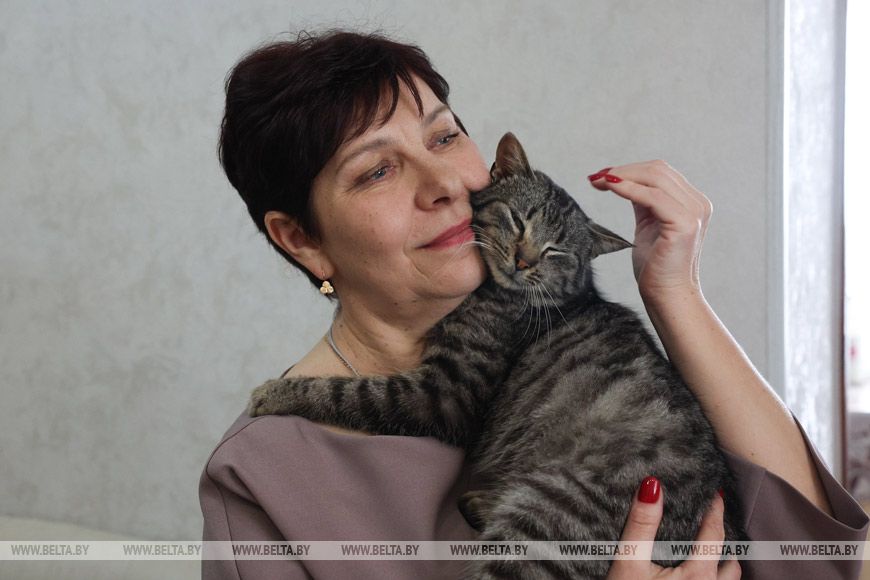
‘Marina is our own flesh and blood. We never thought of it any other way’
We arrived at the Danchikov family home early on a Saturday morning and immediately felt the coziness and warmth of their household. A cat was basking in the sun on the windowsill, a tray of Viennese biscuits was cooling in the kitchen, and children were running through the rooms.
“That one, the youngest, is our granddaughter Sara, and the older one is Ksyusha, one of our foster daughters. Two more are at school right now, but they’ll be back soon. They’re rehearsing for a concert,” Yelena said, introducing us to the youngest members of the family.
She became a foster mother 20 years ago. At the time, she and her husband Vasily were raising two daughters of their own.
“Back then, there were already foster families in our village. Seeing them, I thought: why shouldn’t we give children living in the orphanage a real home? Of course, I discussed it with my husband first, and then I talked to our daughters. Zhenya and Nastya were hesitant about the idea at first, but eventually they agreed,” Yelena said frequently glancing toward the window as her youngest daughter with her family was expected any minute.
When a car pulled up outside the house, Yelena hurried out to welcome her loved ones. Moments later, a sweet, smiling young woman appeared at the kitchen doorway, holding the hand of a toddler about two or three years old.
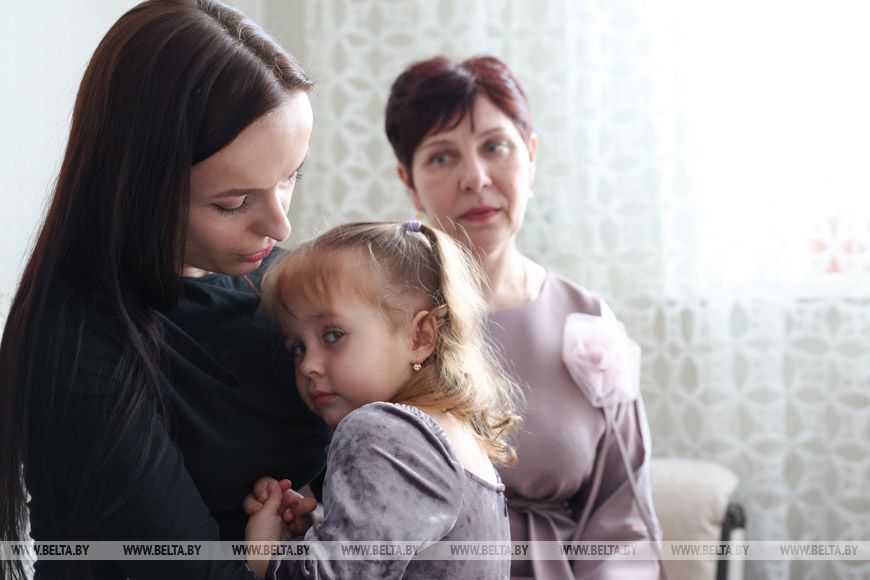
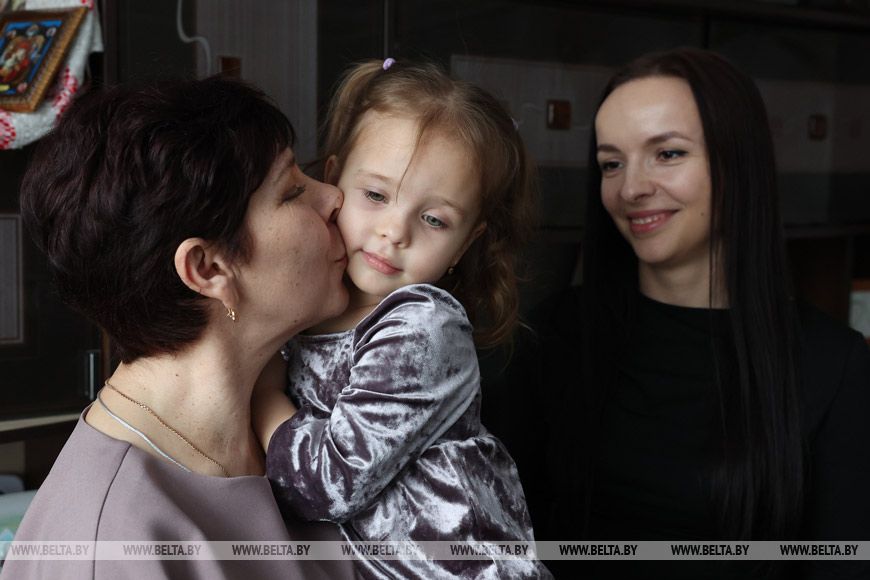
“Here is our youngest daughter Marina with our granddaughter Margaritka,” the hostess said proudly, introducing the newcomers as she gently embraced them both. Looking at them, I am struck by their resemblance. As it turns out, I was not the first to point this out. “At Marina's wedding, when some guests learned that I wasn’t her biological mother, they couldn’t believe it. But she truly is our own flesh and blood. We never thought of it any other way.”
‘Not going back! I’ll cling to the bed if I must!’
Twenty years ago, after Yelena completed a course for foster parents at the social and pedagogical center, she was offered the chance to take a girl from the orphanage for the weekend. That girl was Marina, who was 8 at the time.
“On Monday, I was supposed to return Marina to the orphanage. But when I told her, she looked at me sternly and said: ‘I'm not going! If I have to, I’ll hold onto the bed!’ In the end, I went back to the orphanage alone to tell the administration that the girl would be staying with us,” Yelena recalled. “We completed all the necessary paperwork, and on 6 June 2006 Marina officially became our first foster child.”
Marina and her adoptive parents faced difficulties too – which family does not? But these close-knit people learned to overcome them together.
“The first thing you need to do is sit down, calmly talk it through, and weigh all the pros and cons,” her mother said. “Because I, for example, am an emotional person. I can lose my temper, but I cool down quickly. And once you have had a night to think it over, you often see the problem in a new light. For instance, when Marina was in her final year of school, I was pushing for the profession of a psychologist. But when her math teacher found out, she was horrified. I still remember her words: ‘A psychologist? This girl needs to go to Minsk, to the economic university.’ We got together, discussed everything, and realized the teacher was right.”
Yelena found it very hard to let her daughters go to the big city. Marina, too, felt drawn back to her home village, to her parents.
“I remember during the first months of university, I would sob into the phone and beg to come home, and my mom, barely holding back tears herself while trying to comfort me, would say: if it’s that hard, of course you can come back. I missed them terribly at first and came home every weekend. But eventually, I settled in, became friends with my roommates, and we’re still in touch.”
“We both learned how to be mothers”
Marina met her future husband on social media. They got married after she graduated from university. Soon after, the young family moved to Zhlobin, and three years ago, their daughter was born. As she tells this, Marina cannot hide her smile, and Yelena’s face beams with the same expression.
“As a mother, I am very happy for Marina and Maksim,” she said. “After all, we always want our child to find a good partner, for everything to work out for them. These two are a perfect match – they complete each other in every way. My daughter has also been fortunate with her work, and what’s important is that she loves what she does. So, my heart is at peace for her. I am very proud of her.”
“What have you learned from each other over the years?” I asked first the mother, then the daughter.
“Actually, quite a lot. But first and foremost – how to be a mother,” Yelena said.
“Here is our youngest daughter Marina with our granddaughter Margaritka,” the hostess said proudly, introducing the newcomers as she gently embraced them both. Looking at them, I am struck by their resemblance. As it turns out, I was not the first to point this out. “At Marina's wedding, when some guests learned that I wasn’t her biological mother, they couldn’t believe it. But she truly is our own flesh and blood. We never thought of it any other way.”
‘Not going back! I’ll cling to the bed if I must!’
Twenty years ago, after Yelena completed a course for foster parents at the social and pedagogical center, she was offered the chance to take a girl from the orphanage for the weekend. That girl was Marina, who was 8 at the time.
“On Monday, I was supposed to return Marina to the orphanage. But when I told her, she looked at me sternly and said: ‘I'm not going! If I have to, I’ll hold onto the bed!’ In the end, I went back to the orphanage alone to tell the administration that the girl would be staying with us,” Yelena recalled. “We completed all the necessary paperwork, and on 6 June 2006 Marina officially became our first foster child.”
“At first, I didn’t even want to leave the shelter. When they told me that an unfamiliar family would take me for the weekend, I even started crying,” Marina joined the conversation. “But then the caregivers explained that two girls lived in that house, they could play the guitar and would be able to teach me. That’s when I got interested and agreed. Now it seems to me that it wasn’t about the guitar at all: I still can’t play it. We were simply meant to meet.”
After Marina’s confession, everyone falls silent for a moment. We are all probably thinking the same thing: what would have happened to that eight-year-old girl if she had refused to go?
“How long did you stay in the shelter?” I asked Marina.
“I don’t remember exactly how long that last time was,” she replied, and seeing my confusion, explained: “I ended up in the shelter several times, and in between I would return home. I lived with my mother then, but she was ill. The last time, social workers came for me right at school. They said my mother wasn’t feeling good again, but that in eight days she would return from the hospital and take me home. She never managed to do that.”
Marina remembers very little about her life before joining her foster family. But she gladly talked about her first summer with the Danchikovs:
“Almost immediately I started calling my foster parents mom and dad. I also became friends with the girls very quickly. I often imagined how I would grow up and become just like them, going to different activities, walking around with friends. My sisters became role models for me. I had a very happy childhood. Looking back, I can’t remember a single bad moment. My parents did everything to make me happy.”
One of the important rules that Yelena Danchikova and Vasily Danchikov strictly follow is to help their foster children in every possible way, but never intrude into their inner world: never press them with questions about their parents or their past. But if a child wants to talk, they will drop everything and listen. That was the case with Marina as well.
“It is very important to understand that every child is a complete person with their own habits, character, life experience, and often trauma. Many foster children have gone through illness or the loss of their parents, and this must always be taken into account. Every life is its own world, and figuring it out can be incredibly difficult,” Yelena Danchikova said. “Good parents try to give their children everything they can: a safe home, love, warmth… And you know how heartbreaking it is for those who have been deprived of all that? So my husband and I try to make things right.”
'I cried into the phone and begged to come home'
When asked whether Marina was a difficult teenager, she smiled and shook her head.
“This is definitely not about me! But, like everyone, I sometimes had difficulties with my studies. For example, I knew mathematics perfectly, but I didn’t like history. My older sisters would come to the rescue, especially Zhenya, who would sit with me with a textbook until I memorized all the dates. And my dad still recalls with a smile how he helped me with English. Once I got to secondary school, I handled everything on my own. Though Zhenya would still sometimes threaten to check my history homework.”
“Marina was so responsible and meticulous that I always admired her for it,” her mother confirmed. “All her notebooks were in perfect order, her diary was always filled out, with all grades. Sometimes I would open it to sign it, and there would be nothing but nines and tens. I would sometimes wonder how she managed to do it all.”
“Marina was so responsible and meticulous that I always admired her for it,” her mother confirmed. “All her notebooks were in perfect order, her diary was always filled out, with all grades. Sometimes I would open it to sign it, and there would be nothing but nines and tens. I would sometimes wonder how she managed to do it all.”
Marina and her adoptive parents faced difficulties too – which family does not? But these close-knit people learned to overcome them together.
“The first thing you need to do is sit down, calmly talk it through, and weigh all the pros and cons,” her mother said. “Because I, for example, am an emotional person. I can lose my temper, but I cool down quickly. And once you have had a night to think it over, you often see the problem in a new light. For instance, when Marina was in her final year of school, I was pushing for the profession of a psychologist. But when her math teacher found out, she was horrified. I still remember her words: ‘A psychologist? This girl needs to go to Minsk, to the economic university.’ We got together, discussed everything, and realized the teacher was right.”
Yelena found it very hard to let her daughters go to the big city. Marina, too, felt drawn back to her home village, to her parents.
“I remember during the first months of university, I would sob into the phone and beg to come home, and my mom, barely holding back tears herself while trying to comfort me, would say: if it’s that hard, of course you can come back. I missed them terribly at first and came home every weekend. But eventually, I settled in, became friends with my roommates, and we’re still in touch.”
“We both learned how to be mothers”
Marina met her future husband on social media. They got married after she graduated from university. Soon after, the young family moved to Zhlobin, and three years ago, their daughter was born. As she tells this, Marina cannot hide her smile, and Yelena’s face beams with the same expression.
“As a mother, I am very happy for Marina and Maksim,” she said. “After all, we always want our child to find a good partner, for everything to work out for them. These two are a perfect match – they complete each other in every way. My daughter has also been fortunate with her work, and what’s important is that she loves what she does. So, my heart is at peace for her. I am very proud of her.”
“What have you learned from each other over the years?” I asked first the mother, then the daughter.
“Actually, quite a lot. But first and foremost – how to be a mother,” Yelena said.
“We’ve both learned from each other how to be mothers. I treat Margarita exactly the same way you once treated me: with tenderness and love,” says Marina, turning to Yelena Danchikova. “And I’m constantly worried about my daughter. Just as you used to worry about my sisters and me. But my mom is always by my side, and at any moment I can ask for advice or help, knowing that you’ll never say no.”
…Our conversation with these wonderful women lasted for almost two hours. During that time many confessions and warm words were spoken, and some moments brought tears to the eyes of more than just the protagonists of this story. And yet, I didn’t bring up one of the most difficult questions right away.
“Why didn’t you adopt Marina and give her your last name?” I ask, bracing myself for the possibility that Yelena Danchikova wouldn’t want to discuss this. But she answers. And after hearing her words, I can no longer hold back my tears.
“Marina ended up in an orphanage and then with a foster family because she didn’t have a father, and her mother was very ill and couldn’t care for her daughter, but her parental rights weren’t taken away. For that reason the law didn’t allow us to adopt Marina and give her our last name. We could only be foster parents. But that didn’t matter much, because even then we considered her our daughter, and she considered us her mom and dad,” says Yelena Danchikova, adding: “Marina is our daughter, and no document can change that. I don’t know how we would have lived if she weren’t around. Fate truly brought us together.”
Different forms of family placement
Belarusian legislation provides for various forms of family placement for children, notes Tatiana Belevich, Director of the National Adoption Center. For example, a foster family and a family-type children’s home are forms of professional family care for children who have been left without parental care and are temporarily placed in families. Foster parents and foster caregivers are employed by the education administration or the education department and are paid a wage for their work of raising children taken into their families.
“Up to four children are placed in a foster family and up to 10 in a family-type children’s home. In our country there are more than 1,200 foster families raising over 2,200 children as well as more than 280 family-type homes housing over 1,800 boys and girls,” notes Tatiana Belevich. “Nearly 4,500 families in our country have gone ahead with the responsible decision adoption is and some of them have done so more than once.”
Up-to-date information about aspects of adoption, taking children into foster and guardianship families, and family-type children’s homes is available online at dadomy.by as well as on the website of the National Adoption Center.
By Yulia Gavrilenko, 7 Dnei newspaper. Photos by Tatiana Matusevich