GRODNO, 12 February (BelTA) - The Lida Historical and Art Museum displays a special exhibit — a piece of the famous Sikhote-Alin meteorite, which fell to Earth exactly 79 years ago, on 12 February 1947, BelTA has learned.
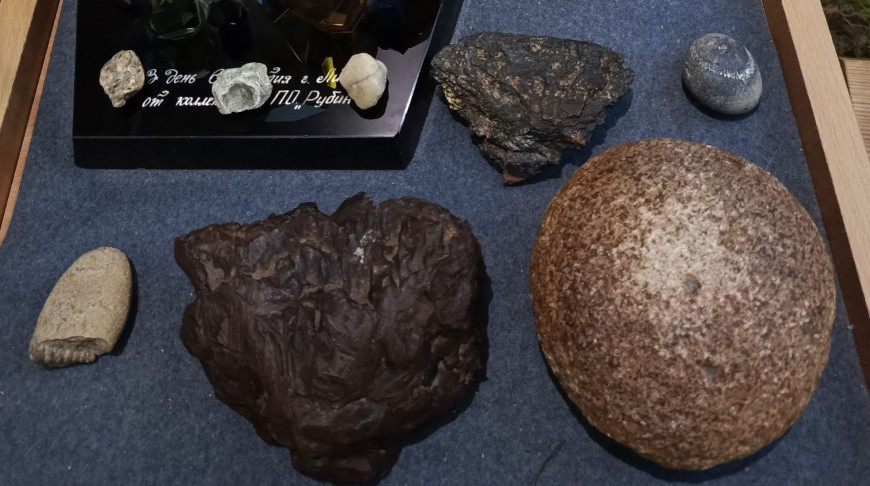
In appearance, the piece is almost indistinguishable from an ordinary cobblestone and is easy to overlook in the display case of the Stone Rainbow exhibition. In reality, however, this “cobblestone” is a piece of the renowned Sikhote-Alin meteorite, which broke apart upon entering the atmosphere on 12 February 1947 and fell as a meteorite shower.
"The Sikhote-Alin meteorite is one of the largest to have fallen on the territory of the former USSR. It landed in the Primorye region, in the Sikhote-Alin mountains, on 12 February 1947, at 10.38 a.m. The dazzling light from the bolide was visible in Khabarovsk and other populated areas. A mass weighing approximately 23 tonnes broke apart as it passed through the atmosphere, shattering into myriad fragments that fell as a meteorite shower. Thirty craters formed by the debris were found on the Earth's surface, ranging from 7 to 28 meters in diameter and up to 6 meters deep. The largest recovered fragment of the meteorite weighs 1,745 kg. The first to report the impact site of this celestial “wanderer” were pilots from the Far Eastern Geological Directorate. According to chemical analysis, the iron content of the meteorite is 94%," the museum noted.
The Lida Historical and Art Museum holds a large piece of the famous meteorite, weighing more than 2,794 grams. The museum acquired this piece from the former Lida Planetarium. Where the planetarium originally obtained it remains a mystery.
In honor of the anniversary of this largest meteorite, the Lida Historical and Art Museum has organized an exhibition tour “The Sikhote-Alin Meteorite” exploring this and other cosmic secret. The tour will be available from 12 to 20 February.
In appearance, the piece is almost indistinguishable from an ordinary cobblestone and is easy to overlook in the display case of the Stone Rainbow exhibition. In reality, however, this “cobblestone” is a piece of the renowned Sikhote-Alin meteorite, which broke apart upon entering the atmosphere on 12 February 1947 and fell as a meteorite shower.
"The Sikhote-Alin meteorite is one of the largest to have fallen on the territory of the former USSR. It landed in the Primorye region, in the Sikhote-Alin mountains, on 12 February 1947, at 10.38 a.m. The dazzling light from the bolide was visible in Khabarovsk and other populated areas. A mass weighing approximately 23 tonnes broke apart as it passed through the atmosphere, shattering into myriad fragments that fell as a meteorite shower. Thirty craters formed by the debris were found on the Earth's surface, ranging from 7 to 28 meters in diameter and up to 6 meters deep. The largest recovered fragment of the meteorite weighs 1,745 kg. The first to report the impact site of this celestial “wanderer” were pilots from the Far Eastern Geological Directorate. According to chemical analysis, the iron content of the meteorite is 94%," the museum noted.
The Lida Historical and Art Museum holds a large piece of the famous meteorite, weighing more than 2,794 grams. The museum acquired this piece from the former Lida Planetarium. Where the planetarium originally obtained it remains a mystery.
In honor of the anniversary of this largest meteorite, the Lida Historical and Art Museum has organized an exhibition tour “The Sikhote-Alin Meteorite” exploring this and other cosmic secret. The tour will be available from 12 to 20 February.