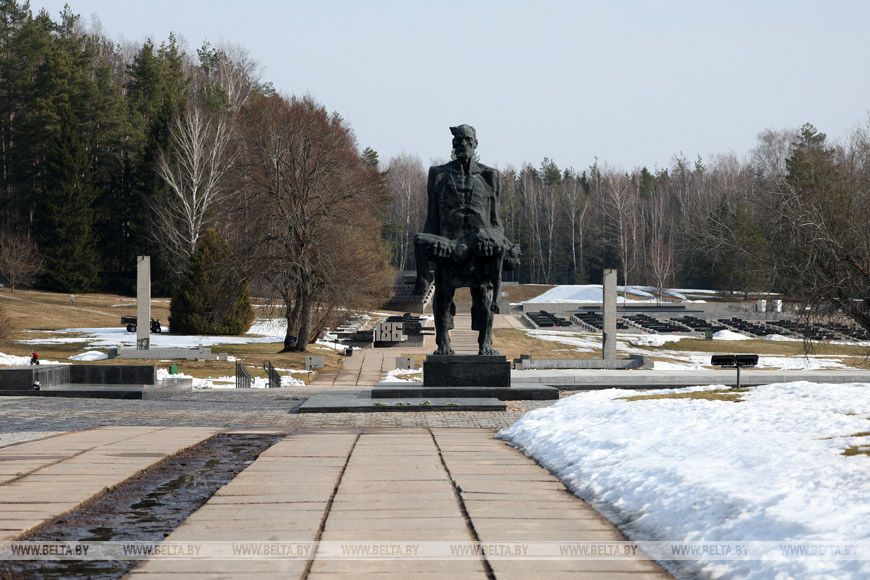
Here you can hear the memories of children from whom blood was drained, and see photographs of adults digging their own graves. Upon entering one of the halls, you will find yourself in a burning barn… The museum at the Khatyn memorial complex is unlike any other in our country. The fear and pain of war are felt so acutely in this place that those under 12 are not recommended to visit it. Adults, too, cannot always contain their emotions when seeing what Belarusian people endured. In the run-up to the 83rd anniversary of the Khatyn tragedy, our correspondents visited this place, which is holy for every Belarusian.
‘To make your heart weep’
The idea of building a museum in Khatyn was suggested by the head of state. During his visit to the memorial complex on 16 April 2022, the Belarusian president said: “The main thing is an exposition that will be set up. I very much want people to feel overwhelmed even before they set foot here.” These words became the starting point. Just a few weeks after the Belarusian leader's visit, work at the memorial began.
The grand opening of the museum was timed to coincide with the 80th anniversary of the Khatyn tragedy. Aleksandr Lukashenko visited this unique facility. The president noted that previously, the events of the war years were sometimes portrayed in a somewhat cinematic way. But the new museum features everything as close to reality as possible. “Everything is simple and clear. Exactly as it was back then,” the Belarusian leader emphasized.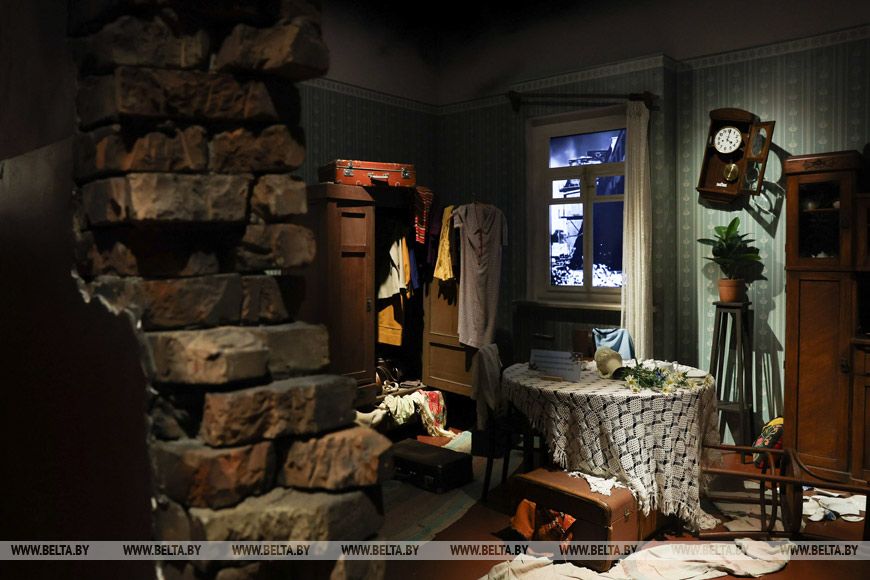
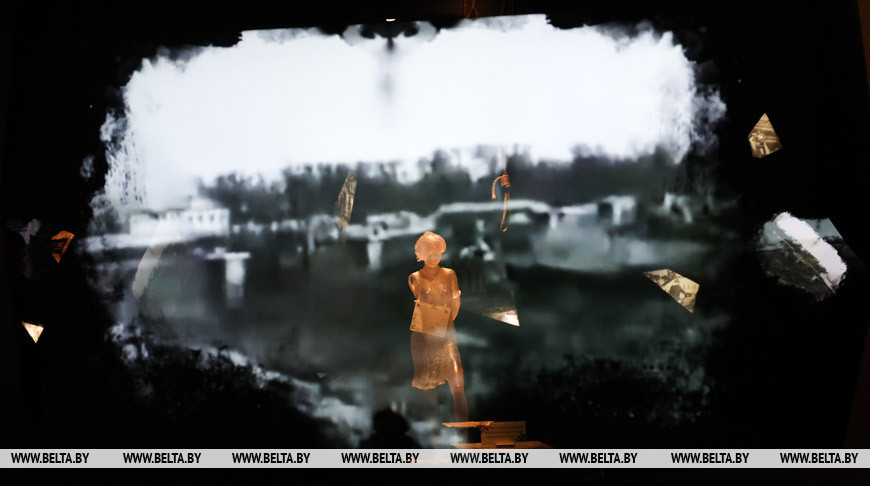
One of the main features of the museum is its maximum realism. For instance, the tragedy of Khatyn is not recounted by tour guides here, but by a holographic image of Vitya Zhelobkovich, a seven-year-old boy who miraculously survived. Listening to his story, you have no doubt about its authenticity. Furthermore, there are unusually few exhibits here, but each and every one of them carries a deep, sacred meaning.
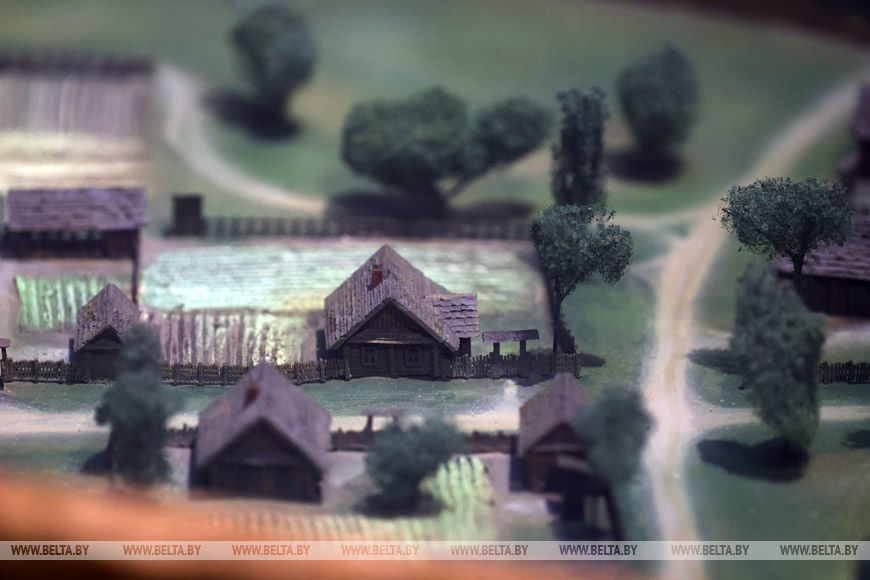
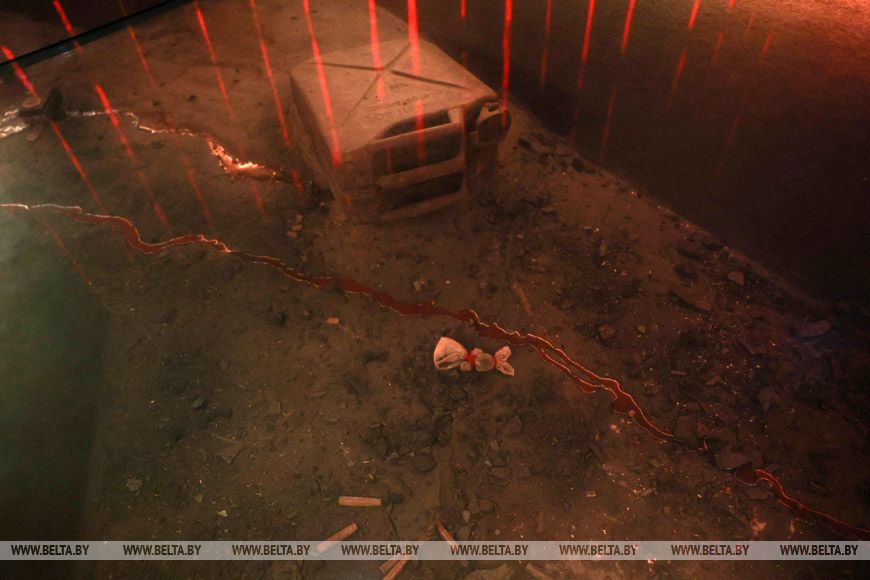
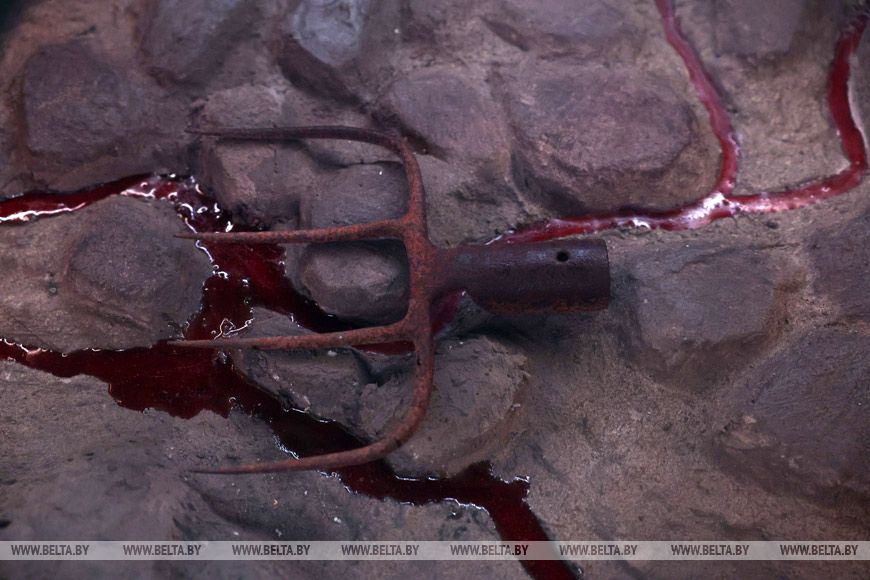
Each of the six museum halls is dedicated to a specific period in the history of our people. We pause in the first one, where visitors are told about the most terrible military conflicts that have affected Belarus. Here, too, the “bloody stream” originates, at the bottom of which lie artifacts that once belonged to real people. In the midst of all this horror, we see a child's cradle, and in it - a mock-up of the village of Khatyn as it once was.
‘To make your heart weep’
The idea of building a museum in Khatyn was suggested by the head of state. During his visit to the memorial complex on 16 April 2022, the Belarusian president said: “The main thing is an exposition that will be set up. I very much want people to feel overwhelmed even before they set foot here.” These words became the starting point. Just a few weeks after the Belarusian leader's visit, work at the memorial began.
The grand opening of the museum was timed to coincide with the 80th anniversary of the Khatyn tragedy. Aleksandr Lukashenko visited this unique facility. The president noted that previously, the events of the war years were sometimes portrayed in a somewhat cinematic way. But the new museum features everything as close to reality as possible. “Everything is simple and clear. Exactly as it was back then,” the Belarusian leader emphasized.
One of the main features of the museum is its maximum realism. For instance, the tragedy of Khatyn is not recounted by tour guides here, but by a holographic image of Vitya Zhelobkovich, a seven-year-old boy who miraculously survived. Listening to his story, you have no doubt about its authenticity. Furthermore, there are unusually few exhibits here, but each and every one of them carries a deep, sacred meaning.
Each of the six museum halls is dedicated to a specific period in the history of our people. We pause in the first one, where visitors are told about the most terrible military conflicts that have affected Belarus. Here, too, the “bloody stream” originates, at the bottom of which lie artifacts that once belonged to real people. In the midst of all this horror, we see a child's cradle, and in it - a mock-up of the village of Khatyn as it once was.
‘On this day they celebrated Soroki’
The chronology of the Khatyn tragedy has now been reconstructed down to the smallest details. But very little is known about how the village lived before 22 March 1943, Anna Papko, Deputy Director of the State Memorial Complex Khatyn said.
“We know little about Khatyn’s pre-war life: for instance, in 1935, the villagers joined a collective farm, as evidenced by a surviving document, and in 1940, one of the Khatyn residents, while serving in the military, died in the war with Finland,” said Anna Papko. “The Great Patriotic War began on 22 June 1941, and by 28 June, enemy tanks were already in Minsk. Residents of localities near the capital, which included Khatyn, heard and felt what war meant from the very first days.”
Despite the occupation, bombings, and constant shooting, the villagers’ lives went on. They continued to raise their children, plow the land, and sow grain. The morning of 22 March 1943, held no foreboding of trouble for the residents of Khatyn.
“According to the Orthodox calendar, this is the day of remembrance of the Forty Martyrs of Sebaste, who were brutally killed for their faith. If we take the Belarusian folk calendar, on this day they celebrated Soroki (also known as The Holy Forty or The Larks), one of the children’s favorite holidays. Even despite the hungry war years, housewives tried to bake buns in the shape of little birds for Soroki, and the children would visit each other and exchange these pastries. After lunch, everyone would gather at the highest point in the village, sing folk songs, and call for spring,” Anna Papko said. “According to the memories of Vitya Zhelobkovich, on the day of the tragedy, when people were being driven from their homes, many didn’t even have time to get dressed and went out barefoot. Children running along the spring street, stepping into puddles, rejoiced and laughed. No one could have imagined what terrible tragedy awaited them. But when everyone started being herded into the barn, anxiety, horror, and fear took over.”
‘16-year-old boys sobbed uncontrollably’
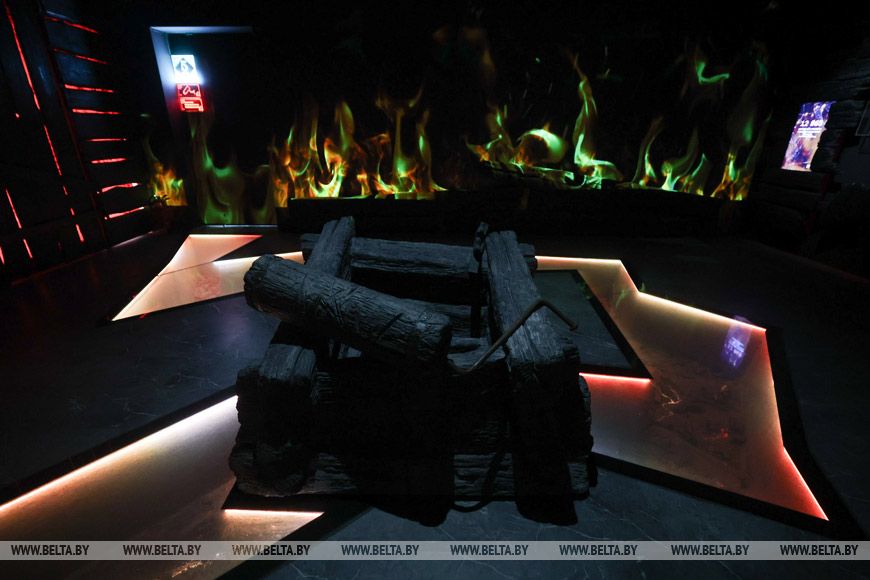
One of the museum’s most terrifying halls is the fourth one. Entering it, you feel as if you find yourself inside the burning barn. This effect was achieved through the sound of flames devouring wood and LED dynamic screens that display images of blazing walls. No other special effects are used here, yet many visitors begin to smell smoke. Some visitors become so overcome with unease that they have to cut the tour short.
“This hall evokes the strongest inner emotions. One of the participants of the Memory Train project, upon entering it, admitted that he suddenly found it hard to breathe. The young man felt as if there was smoke around him and couldn’t understand why others didn’t see it. There was no smoke, of course: that’s how powerful his emotional shock was,” Anna Papko explained. “For this reason, the museum does not recommend entry for children under 12.”
“Teachers certainly devote a lot of attention to the topic of the Great Patriotic War during lessons, additional classes, and extracurricular activities. But learning from textbooks is one thing; facing the terrifying, bloody reality presented in the museum through archival photographs and documents is something entirely different. A child must be prepared for this. Unfortunately, we sometimes have situations where even older children faint from what they see,” Anna Papko emphasized. “Teenagers are always our most impressionable group of visitors. They often have a certain detached, seemingly calm attitude toward everything. But I personally witnessed 15-16-year-old boys sobbing uncontrollably when the hologram of a young witness of the Khatyn tragedy recounted what happened on 22 March 1943. When we manage to reach a child’s heart and see their response, when they truly absorb what we show, those are probably the most touching moments. It reassures us once again that our younger generation is not lost; they are capable of feeling and empathizing.”
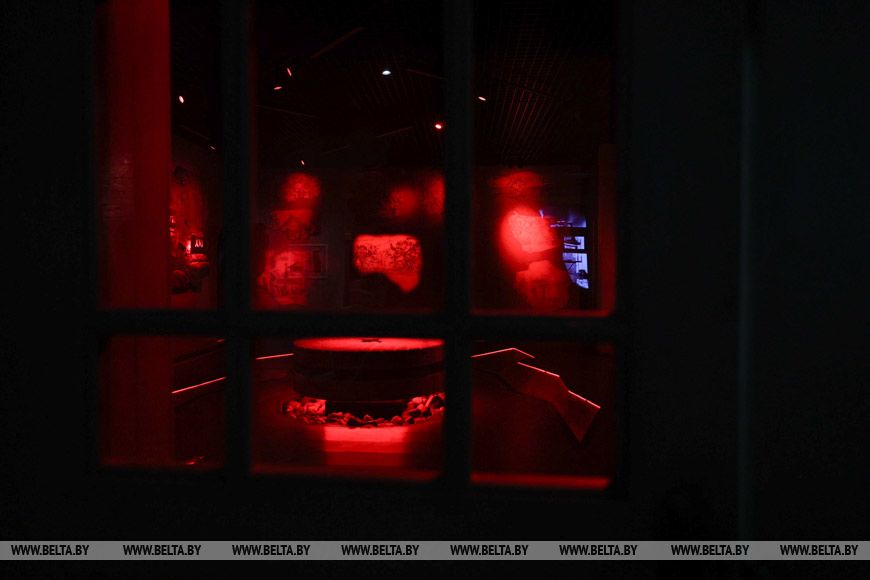
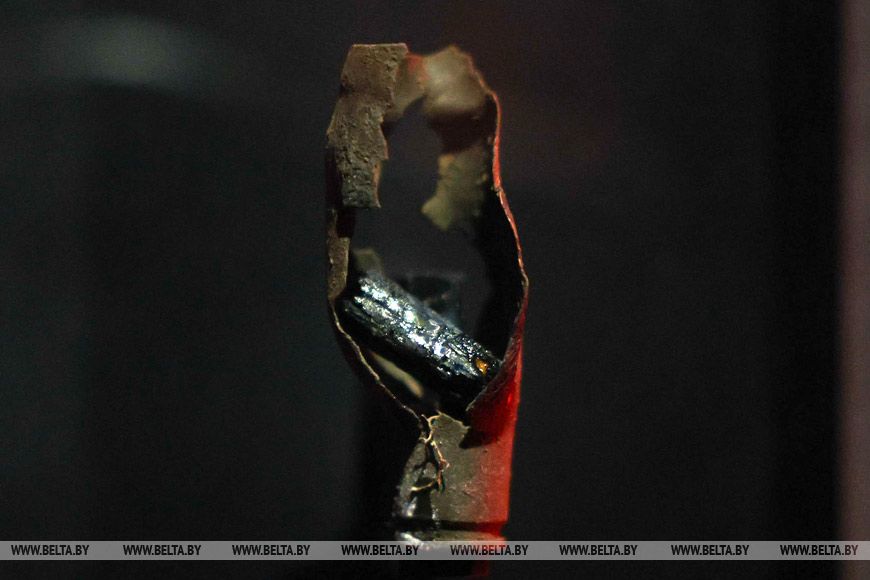
In the center of the fourth hall stands a charred well that many museum visitors cannot bring themselves to look into. The walls draw attention with photographs of people who witnessed the burning of Belarusian villages. All of those villages were destroyed by punitive forces. Another unique exhibit in the museum, impossible to overlook despite being tucked in a corner, is displayed behind glass: a twisted shell casing found on the grounds of the memorial complex during the latest reconstruction. Inside it, a fragment of charred wood remains lodged.
'How much we didn’t know!'
In 2024, the museum of the Khatyn Memorial Complex became the most visited in our country, and interest continues to grow. There are so many people wishing to come that tours are fully booked until November. And this is despite extended opening hours: the museum now welcomes visitors until seven in the evening.
“Teachers certainly devote a lot of attention to the topic of the Great Patriotic War during lessons, additional classes, and extracurricular activities. But learning from textbooks is one thing; facing the terrifying, bloody reality presented in the museum through archival photographs and documents is something entirely different. A child must be prepared for this. Unfortunately, we sometimes have situations where even older children faint from what they see,” Anna Papko emphasized. “Teenagers are always our most impressionable group of visitors. They often have a certain detached, seemingly calm attitude toward everything. But I personally witnessed 15-16-year-old boys sobbing uncontrollably when the hologram of a young witness of the Khatyn tragedy recounted what happened on 22 March 1943. When we manage to reach a child’s heart and see their response, when they truly absorb what we show, those are probably the most touching moments. It reassures us once again that our younger generation is not lost; they are capable of feeling and empathizing.”
In the center of the fourth hall stands a charred well that many museum visitors cannot bring themselves to look into. The walls draw attention with photographs of people who witnessed the burning of Belarusian villages. All of those villages were destroyed by punitive forces. Another unique exhibit in the museum, impossible to overlook despite being tucked in a corner, is displayed behind glass: a twisted shell casing found on the grounds of the memorial complex during the latest reconstruction. Inside it, a fragment of charred wood remains lodged.
'How much we didn’t know!'
In 2024, the museum of the Khatyn Memorial Complex became the most visited in our country, and interest continues to grow. There are so many people wishing to come that tours are fully booked until November. And this is despite extended opening hours: the museum now welcomes visitors until seven in the evening.
“Guided tours are available in Russian and English, and soon foreign visitors will be able to hear about the tragedy of the Belarusian people in Italian and Spanish, and also make use of sign language interpretation. The museum also offers audio guides in Russian, Belarusian, English, and Chinese,” Director of the Khatyn State Memorial Complex Dmitry Viltovsky says. “The information provided to visitors is regularly updated using data from the Prosecutor General’s Office. Our guides share the latest figures available – the most up-to-date information coming to light through the investigation into the genocide of the Belarusian people during the Great Patriotic War.”
Visitors come to honor the memory of Khatyn’s victims not just from Belarus, but from dozens of countries around the world. The overwhelming majority are from Russia and not only from the regions bordering Belarus: people make the journey from as far away as Yakutsk, Magadan, and Vladivostok.
According to Dmitry Viltovsky, residents of the post-Soviet countries have known of the Belarusian village of Khatyn that was burned by punishers since their school years. But when they visit the memorial complex and realize that behind this dot on the map lies the three-year tragedy of an entire people, the experience leaves a profound mark on them. For many, it comes as a huge shock and realization that the museum tells not only the story of the village’s perished residents, it also shows how millions of human lives were destroyed.
“I recall the words of Chairman of the Mäjilis of the Parliament of the Republic of Kazakhstan Yerlan Koshanov who said after his tour: ‘Khatyn is a special place for every person, known and remembered since our school years. But we did not realize that such a national tragedy stood behind this name.’ Sometimes we hear similar sentiments from our own compatriots who, after visiting the museum, exclaim: ‘It turns out there was so much we didn’t know!’” Dmitry Viltovsky says. “It doesn’t matter if a person comes from China, the island of Mauritius, or the African continent. Everyone has families, children, and parents. When you start telling them about the youngest victims, about the elderly and the sick who were shot on the spot if they couldn’t get out of bed, it leaves no one indifferent.”
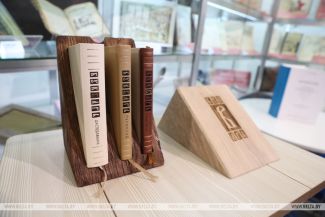
A book about the tragedy of the village of Khatyn will be presented in the memorial complex on 22 March. The new edition is a tribute to the memory of the former director of the memorial complex Artur Zelsky, who died in January 2025. The book kind of resembles the museum itself. It offers an overview of the history over the course of ten centuries, during which Belarus witnessed terrible wars and battles that took millions of human lives. The history of the village of Khatyn is presented in detail starting with the first mentions and up to the day of the tragedy. Close attention is paid to the beginning of the Great Patriotic War in the Belarusian land and to the period of Nazi occupation of Belarus’ territory. It emphasizes the fact that Khatyn is just one out of the thousands of destroyed villages that have not been reborn and that similar villages can be found in every oblast. Personnel of the memorial complex are busy working on two more books. Readers will see the Mound of Glory book in May and a book about the village of Dalva in June. The three books will be available in Russian, Belarusian, and English.
More facts
1. People are expected to rally in the WW2 memorial complex Khatyn on 22 March. On this day thousands of people come from all parts of the country to honor the memory of the innocent victims of the tragedy and to lay flowers at the Eternal Flame.
2. A unique exhibition “Destiny’s happy gift of life” opened in the museum on 19 March. For a month visitors will be able to see photos, archive documents and materials telling the story of the destinies of the Khatyn tragedy witnesses. Many of the exhibits on display were kept in family archives for decades and have never been revealed to the general public.
3. The last, sixth hall of the museum showcases terrible finds that have been unearthed by search parties and employees of the Prosecutor General’s Office in the course of investigating the genocide case. These are not just artefacts but material evidence of the purposeful eradication of the Belarusian nation.
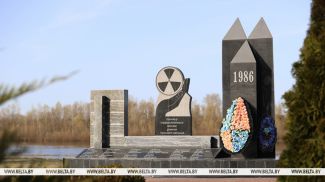
4.Khatyn was razed together with its residents on 22 March 1943. The elderly, women, and children were herded into a barn and burned alive. A total of 149 people died, including 75 kids. The smallest resident was under two months old at the moment of the tragedy. 5 July 1969 saw a memorial complex opened at the location of the village that had not been reborn. It became a symbol of eternal memory about all the burned-down Belarusian villages. About 40 million people have visited it over the course of its history.
By Yulia GAVRILENKO, 7 Days Newspaper
Photos by Tatiana MATUSEVICH