
Nothing illustrates the failure of the EU's foreign and economic policy as clearly as the story with the U.S. claim to Greenland. The fact that an external power claimed rights to EU territory, while Europeans essentially had nothing to respond with, neither militarily nor economically, became an indicator of the weakness and vulnerability of the European Union and the unpreparedness of European elites to defend the community from external threats.
Indeed, the desire to acquire Greenland, an autonomous territory of Denmark, was openly stated by Trump during his first presidential term. “It's essentially a large real estate deal,” the Republican said in August 2019, discussing the potential purchase of the island. However, the matter never progressed beyond talk. Even Trump himself acknowledged at the time that acquiring the island was not a priority for the United States.
Today, Trump is far more categorical. “The U.S. will have Greenland one way or the other,” the U.S. leader declared recently. In doing so, he made it clear that he views the island as part of the United States, not as leased territory. “Countries have to have ownership and you defend ownership, you don't defend leases. And we'll have to defend Greenland,” the U.S. president stated.

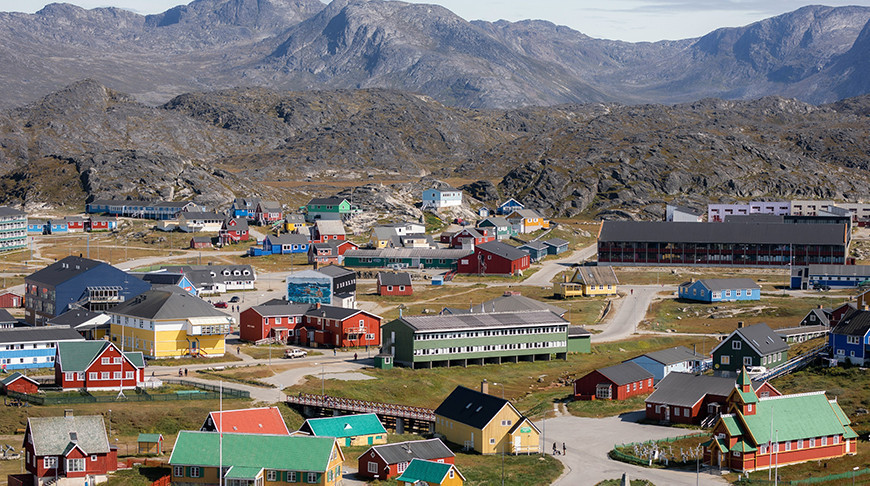
Indeed, the desire to acquire Greenland, an autonomous territory of Denmark, was openly stated by Trump during his first presidential term. “It's essentially a large real estate deal,” the Republican said in August 2019, discussing the potential purchase of the island. However, the matter never progressed beyond talk. Even Trump himself acknowledged at the time that acquiring the island was not a priority for the United States.
Today, Trump is far more categorical. “The U.S. will have Greenland one way or the other,” the U.S. leader declared recently. In doing so, he made it clear that he views the island as part of the United States, not as leased territory. “Countries have to have ownership and you defend ownership, you don't defend leases. And we'll have to defend Greenland,” the U.S. president stated.
But it is not just about Trump. While the American leader’s methods are undoubtedly unorthodox, it is worth recalling that during his first term, Trump similarly divided the world into winners and losers. He likewise pressured the EU, both on trade, by waging tariff wars, and in the military sphere, by harshly demanding that allies increase defense spending. All of this was framed by the “America First” slogan, through which Trump made it clear to Europeans that no concessions would be made.
At that time, however, European leaders held their ground. Most EU countries refused to significantly expand their military budgets, actively imposed retaliatory tariffs on the U.S., and even activated a mechanism to circumvent anti-Iranian sanctions after Washington withdrew from the Iran nuclear deal.
And what do we see today? The EU is ceding ground to the U.S., one position after another. Over the past year, European allies were virtually unable to push back against the Trump administration on any major point of contention. First, the Americans pushed through a decision to raise NATO military spending to 5%. And then, the EU moved forward with a burdensome trade deal with Washington, which Europeans refer to as nothing less than an act of surrender by Brussels. The only area where European elites have truly excelled is in prolonging the Ukrainian conflict. In truth, however, the primary role here was played by radicals in Trump’s circle and the U.S. weapons lobby.
Photo by AP
And ahead, the European Union likely faces yet another capitulation. If Trump does not abandon his claims on Greenland, the autonomous Danish territory will, in all likelihood, become part of the USA. Given the island’s geostrategic importance, both commercially and militarily, there can be little doubt about the seriousness of Trump’s intentions.
If any doubts remain, they concern the EU’s ability to respond to Washington’s demands. Of course, some will argue that the EU is not a military bloc and cannot respond militarily. But in the proxy war in Ukraine, the European community has essentially acted as a party to the conflict by sponsoring Kiev, supplying the Ukrainian army, training Ukrainian soldiers, providing intelligence, and participating in the planning of military operations. Can one expect that EU countries would call on Denmark to fight for Greenland, as they urged Ukrainians to fight for Crimea? Would they arm the Danish army, impose sanctions against the United States, freeze American assets to later transfer them to Copenhagen, or issue an arrest warrant for Trump?
The answer to these questions is obvious. And it is no longer so important whether Danish autonomy becomes U.S. property or a leased territory. The situation around Greenland has sent a clear signal to the international community, EU political and business circles, and European society: the European Union has no instruments of protection.
Did the EU have such instruments during Trump’s first presidential term? Of course, European allies would not have engaged in military confrontation with the United States under any circumstances. However, the EU of 2017-2021 had two important advantages. First, a strong economy with a resource base thanks to cooperation with Russia. Second, the ability to balance not only economic but also foreign policy relations – again due to close ties with Russia. Could Trump have considered such a scenario involving Greenland without fear of a sanctions response from the EU or the political drift of European allies towards Russia and China?
As the 45th president of the United States, Trump viewed the European Union as a rival. Now, as the 47th president, he treats Europeans as a defeated party. The issue is not in the U.S. goals or approaches. The issue is that under the Biden administration, Europe’s frantic dash to escape Russian energy reliance upset the geopolitical equilibrium and left it with no room for maneuver.
Photo by Unsplash
The Biden administration slipped a leash around Europe’s neck. Now, the Trump administration is giving it a yank whenever it sees fit. European leaders, for their part, appear to be counting down the days to the next election in the USA, overlooking the fact that for the U.S. establishment, be it Democrats or Republicans, the guiding principle remains America First.
Vita KHANATAYEVA,
BelTA