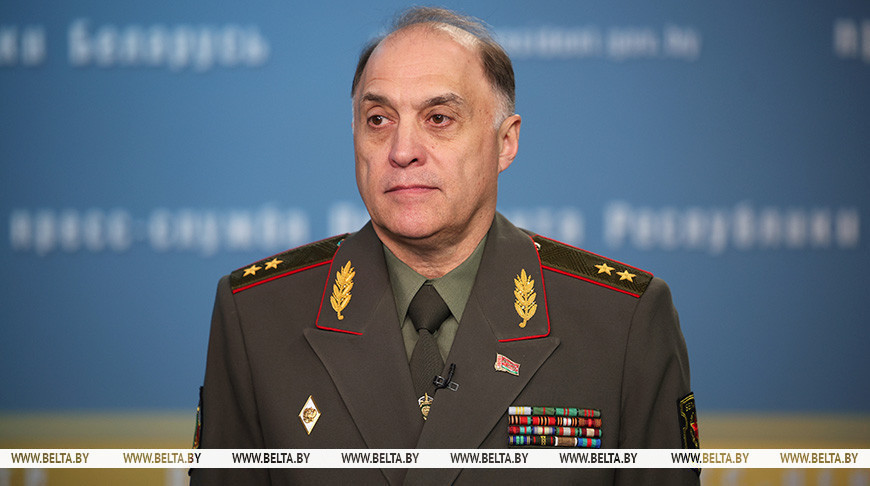
MINSK, 1 April (BelTA) – Following the army inspection, it is important to draw the necessary conclusions in order to make the Armed Forces of Belarus even stronger and more capable, State Secretary of the Belarusian Security Council Aleksandr Volfovich told the media after a meeting with Belarusian President Aleksandr Lukashenko to review the results of the Armed Forces' comprehensive inspection, BelTA has learned.
He recalled that the inspection took place from January through March, spanning nearly two and a half months. It was the first time such a large-scale exercise had been conducted: 44 military units, including ready-alert units, were unexpectedly put on combat alert and put to the test.
“The purpose of the inspection is not to check and grade as 'excellent,' 'good,' or ‘unsatisfactory’. The purpose of the inspection is to assess the level of readiness and capability of the Armed Forces to defend the country, to protect sovereignty and territorial integrity,” Aleksandr Volfovich said.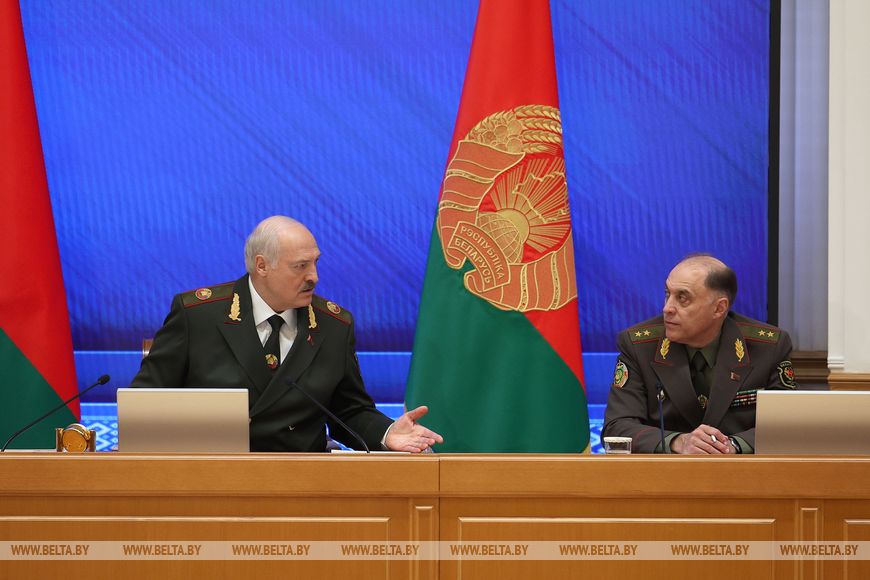 He noted that the military-political situation in the world remains tense, is rapidly changing, and, unfortunately, the trends are discouraging. "What is happening during the Special Military Operation in Ukraine, in the Middle East, and in other corners of the world indicate that any country must have well-prepared, professional Armed Forces and other structures of the state’s military organization capable of protecting the national interests of the country above all. And this is what our president, our Commander-in-Chief, emphasizes,” Aleksandr Volfovich remarked, speaking about the objective necessity of conducting the Armed Forces inspection.
"If everyone can see that our Armed Forces, though small and compact, are capable of deploying in the shortest possible time and fulfilling their tasks of protecting the sovereignty and the Belarusian people, I think no one will dare come to our land with ill intentions,” he added. “Although one must prepare for anything. By preparing for war, you ensure that war will not happen.”
The main focus during the inspection was on the ability to counter enemy sabotage and reconnaissance groups, illegal armed formations, to repel a sudden attack on army columns, protect them, and to occupy prepared defensive lines in the shortest possible time.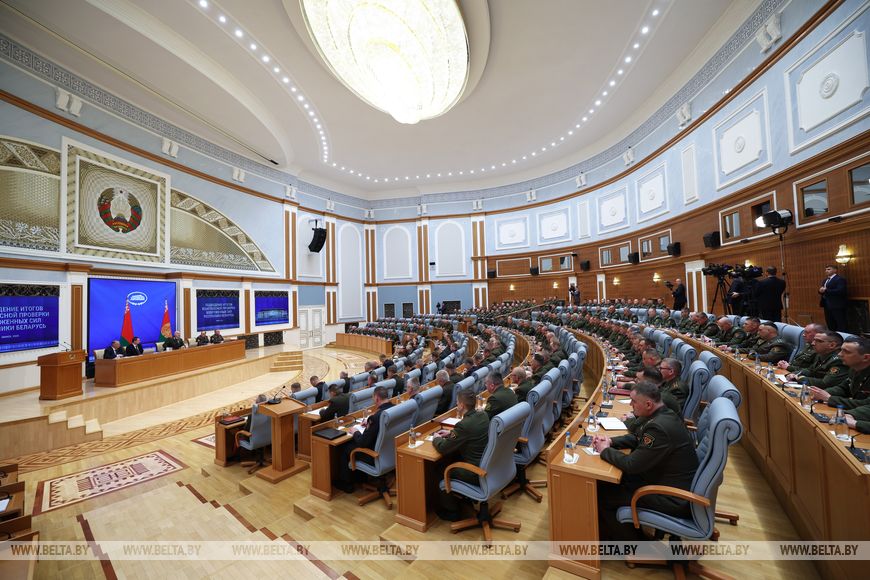 The main conclusion following the inspection, according to him, is unequivocal: “Today, the people in uniform are capable and ready to defend their country.”
At the same time, the inspection uncovered some problematic issues related in particular to the use of new forms and methods of conducting combat operations, means of destruction, and armed struggle. But naturally, the identified shortcomings are not discussed openly. No one in the world does that, which is why the meeting with the president was held behind closed doors. The participants included members of the Security Council, senior officials, and heads of the military department down to the brigade and regiment commanders.
It was a candid, principled and tough conversation. For example, unit commanders where shortcomings had been identified were unexpectedly called up to the podium from their seats in the hall. So were military commanders.
“The president demanded an unvarnished report on all the details, issues, what worked, what did not work, and what needs attention. He gave me and the defense minister clear tasks to analyze once again and submit concrete proposals on how to improve the situation regarding the identified problems. To replace those who are incapable of leading. Because war does not and will not forgive mistakes,” the state secretary said. He emphasized that any unit commander must meet the criteria expected of a person in uniform: to be professionally trained, capable of independently carrying out a combat mission, making command decisions, and leading personnel.
"It was a substantive, tough, man-to-man conversation. We will draw appropriate conclusions to ensure that our Armed Forces become even stronger and even more capable,” he noted.