

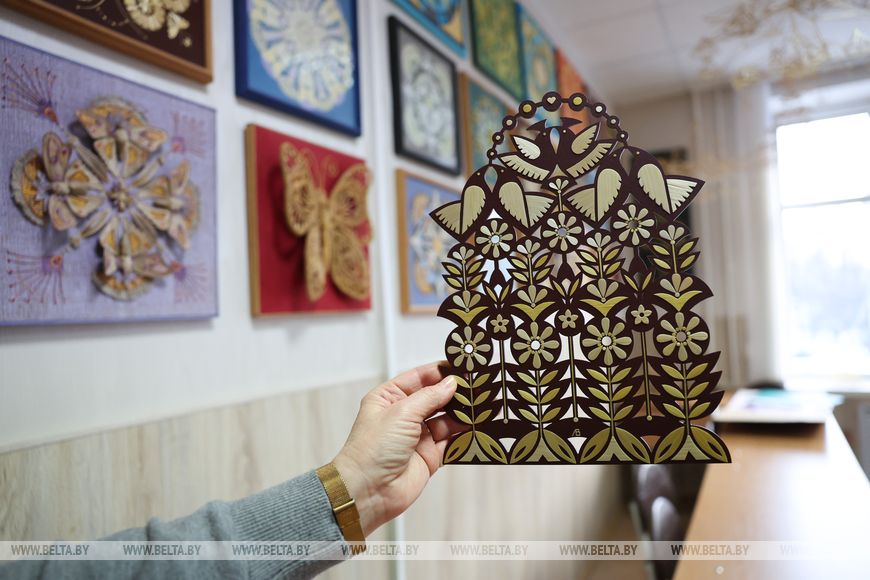
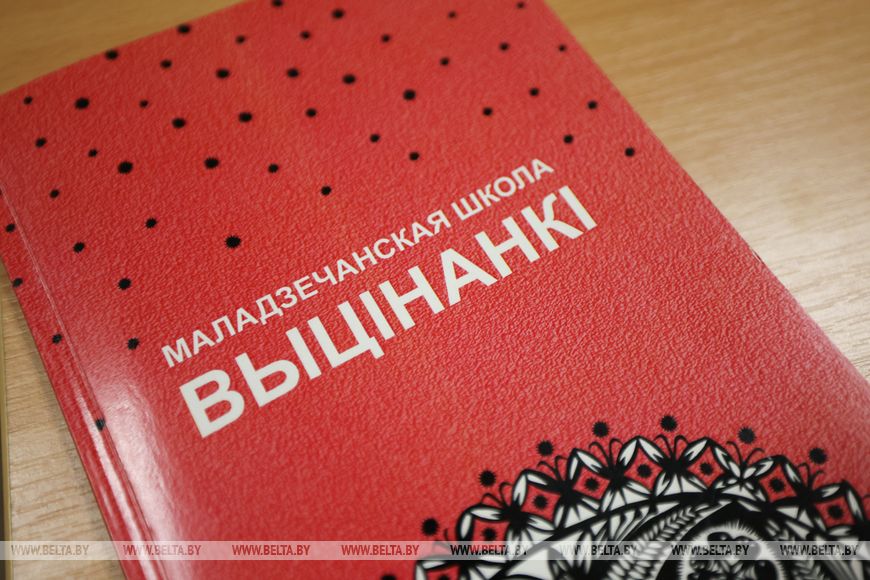
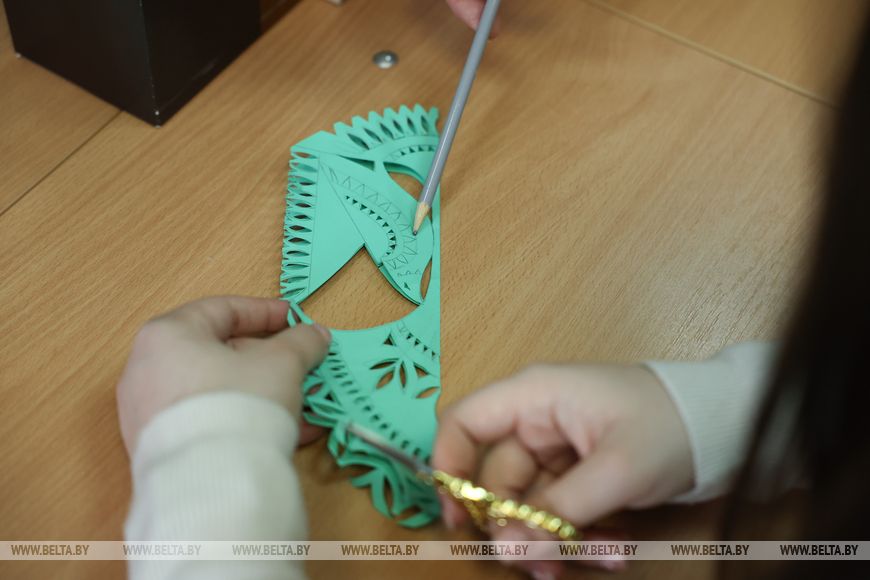
In 2024, Belarusian art of paper cutting (vytsinanka) was inscribed on the UNESCO Intangible Cultural Heritage list, becoming the sixth element of national culture there, alongside practices like straw weaving and folk rituals. Unique Belarusian paper cutting techniques, including regional styles, have not only survived to the present day thanks to local artisans but have also found new expression through their synthesis with other forms of decorative and applied arts and cultural movements. Today, vytsinanka, as a universal form of creativity, is boldly combined with straw weaving, wood carving, fashion and interior design, and even music. The secrets behind the birth of this paper lace - the time it takes to craft one work and the tales hidden in its cut-out designs - were revealed to BelTA by representatives of the Molodechno vytsinanka school.
 From mother to daughter
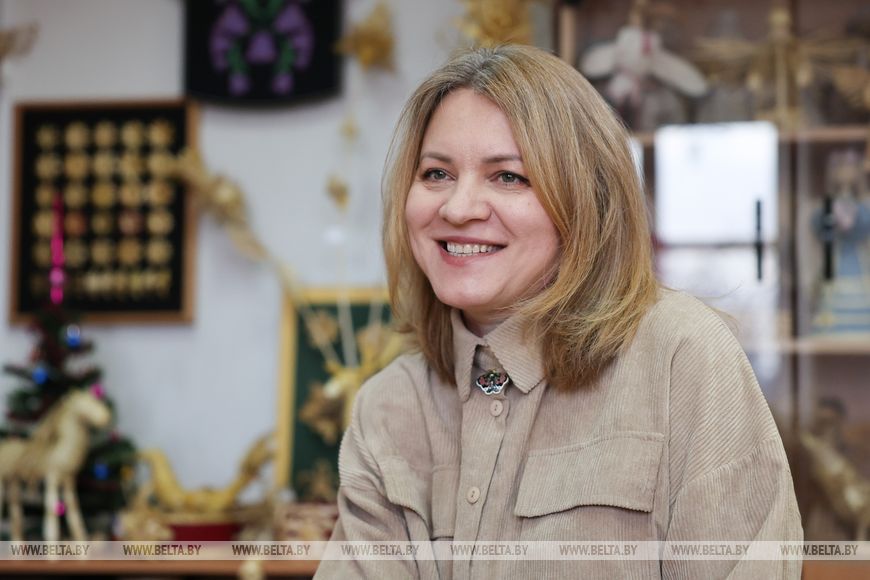
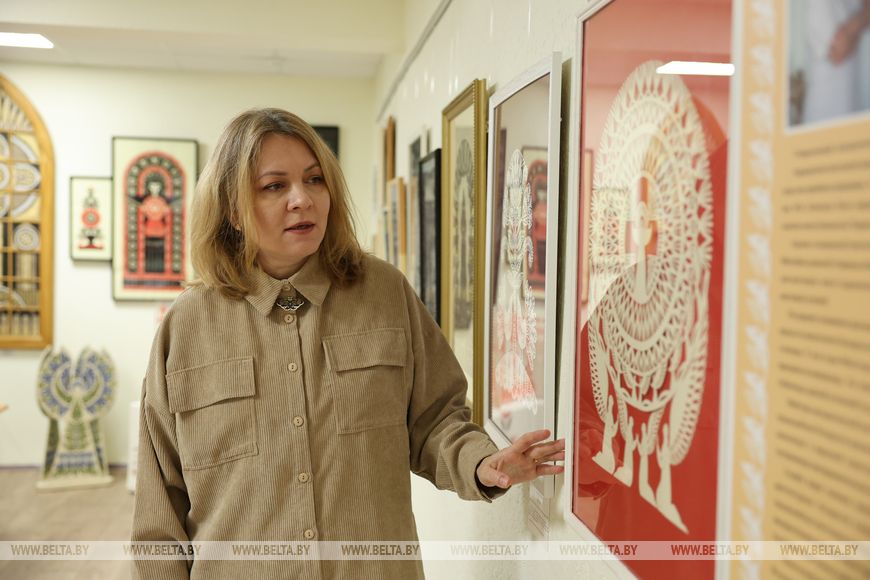 “Papercutting has been with me since early childhood: I first learned to cut simple patterns at home, inspired by my mother’s passion, and then later as a student at an art school. Children’s interest in this form of decorative and applied art has always been high, which is driven not only by the accessibility of materials but also by the quick results. I was successful at it too, so my motivation to study was strong. I dreamed of dedicating my life to art and chose a corresponding specialized university,” said Yelizaveta Chervontseva.
 Notably, papercutting was not among the subjects taught at the Faculty of Folk Crafts, so the student proposed her own topic on the eve of her diploma work preparation. She also found a thesis supervisor who agreed to oversee the project.
 Vytsinanka in digital, fabric, metal and music
 However, as an artist herself, the teacher is also in a constant search for new ideas and projects that allow her to showcase papercutting as a universal, widely applicable form of decorative and applied art.
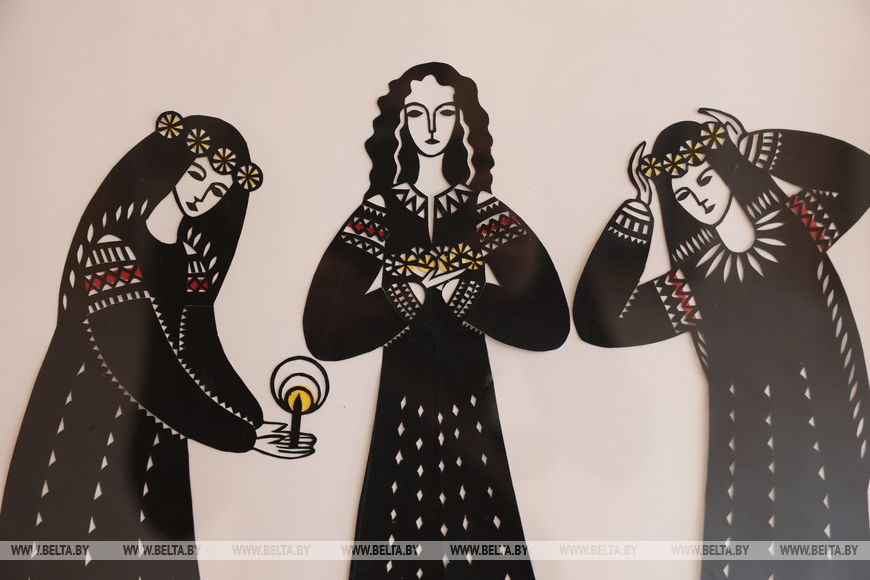
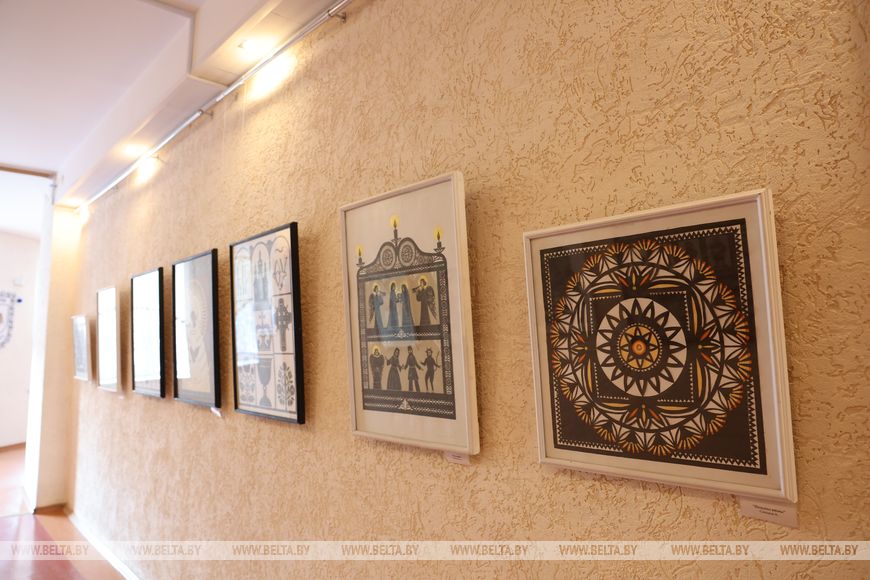
 “There were times when our interpretation of papercutting was not always accepted, with critics insisting that its classic form is black, and that the presence of silhouettes, figures, and complex compositions in works is more akin to graphic art. But we consistently pursued our own path, proving that the utilitarian form of papercutting can and should be combined with artistic silhouette cutting. In this way, our style gradually took root, gained recognition, and developed its own unique signature that is recognizable in the works,” Yelizaveta said.
The artisan shared that the popularization of the Molodechno vytsinanka style has also been aided by a series of interesting projects.
 “Papercutting can be applied to any design for decorating exteriors and interiors, creating stage sets, and combined with modern technologies, such as using it as a stencil for laser cutting metal, acrylic glass, or wood. This led to several of our collaborative projects with fashion designers who used vytsinanka in their costumes. Notably, the Vyrai collection by Yekaterina Gerasimenko was showcased at the ceremony for the inscription of vytsinanka on the UNESCO World Heritage List,” said Yelizaveta.
 Incidentally, elements of the Molodechno vytsinanka school can be seen even in the Minsk metro: its influence is evident in the forged metal artwork by blacksmith Mariya Tarletskaya that adorns the Kovalskaya Sloboda station.
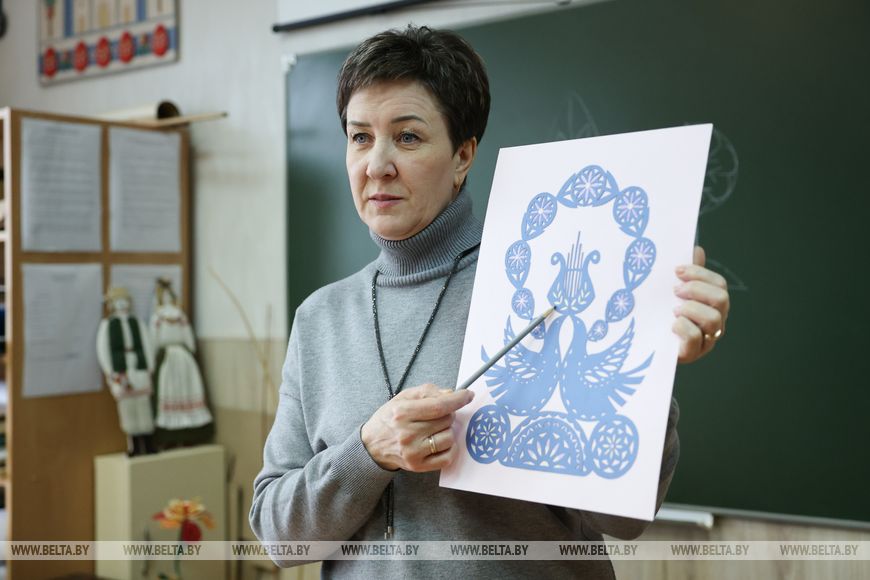 “I was fortunate to be part of a project like the folk art class, which had only ten students. It later became the foundation for the college’s department of the same name. I was among its first graduates in 1997. Then, after gaining ten years of work experience, I returned here as a teacher upon the invitation of Viktoriya Chervontseva. It so happened that vytsinanka always went hand in hand with straw weaving in my life. They are completely different forms of folk art, requiring different approaches to material preparation and varying amounts of time to create the works themselves, but mastering these techniques incredibly enriches the creative vision of the artisan, allowing their talent to unfold in multiple ways. Over time, my passion for both straw weaving and papercutting allowed me to merge these two forms of decorative and applied art and introduce the term ‘vytsisolomka’,” Lyudmila Volkovich-Boris said.
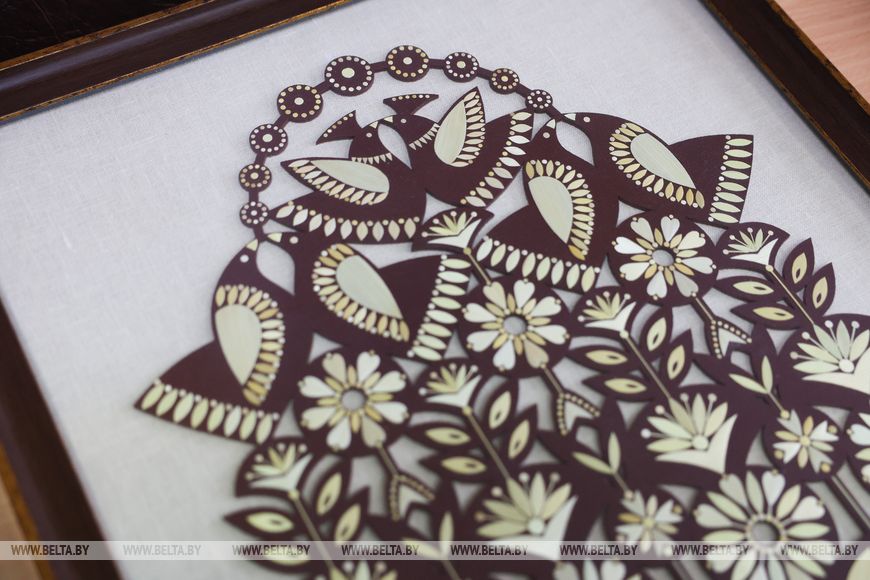
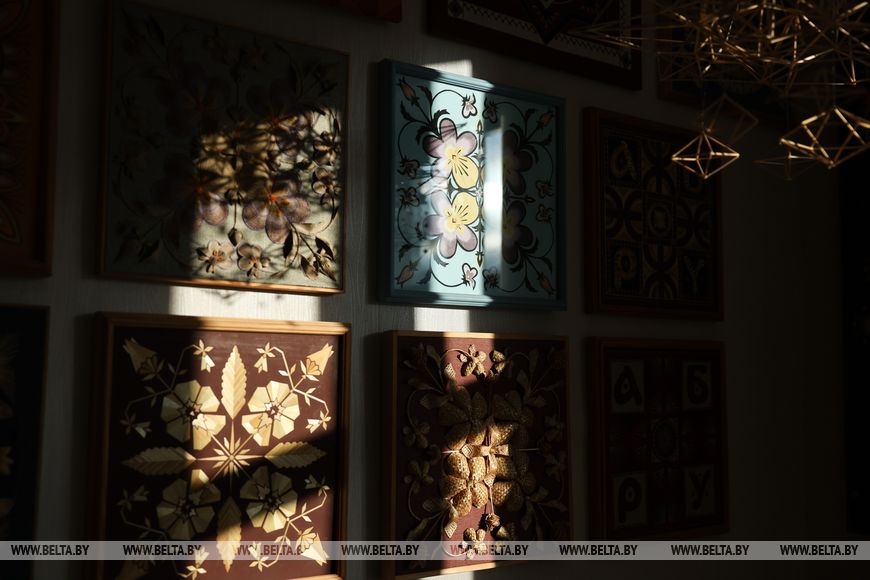 Works in the vytsisolomka technique, where straw inlay is applied to a prepared papercutting with a specific theme, are still few in number. However, the Molodechno school has become the progenitor of a unique, new direction in decorative and applied art that can now be taught to others.
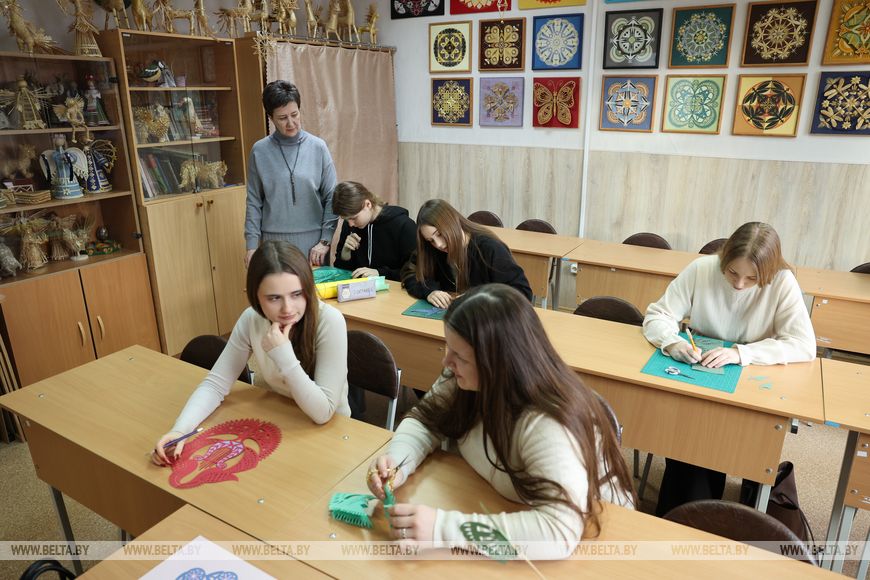
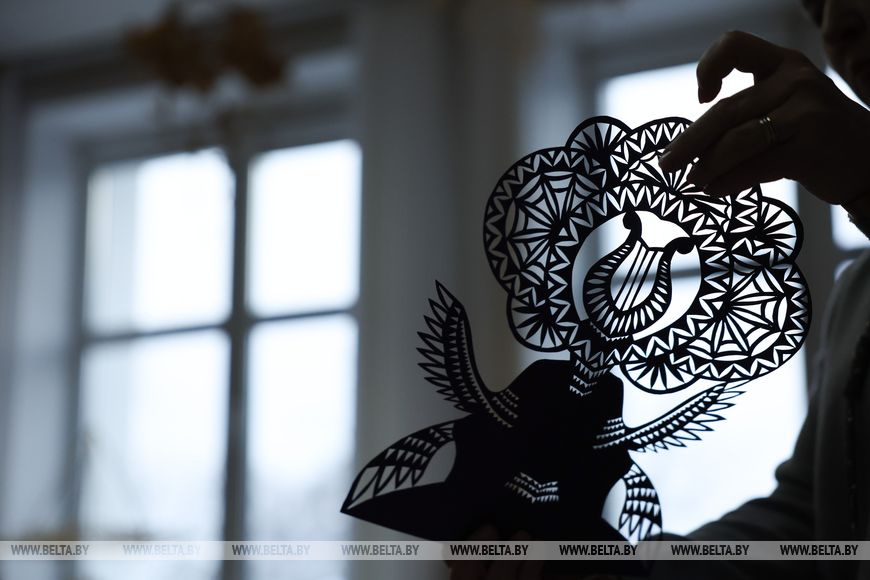 Today, artisans from Molodechno promote a form of collaboration based on experience exchange, having established the open creative forum Making Vytsinanka Together, which is held at the college.
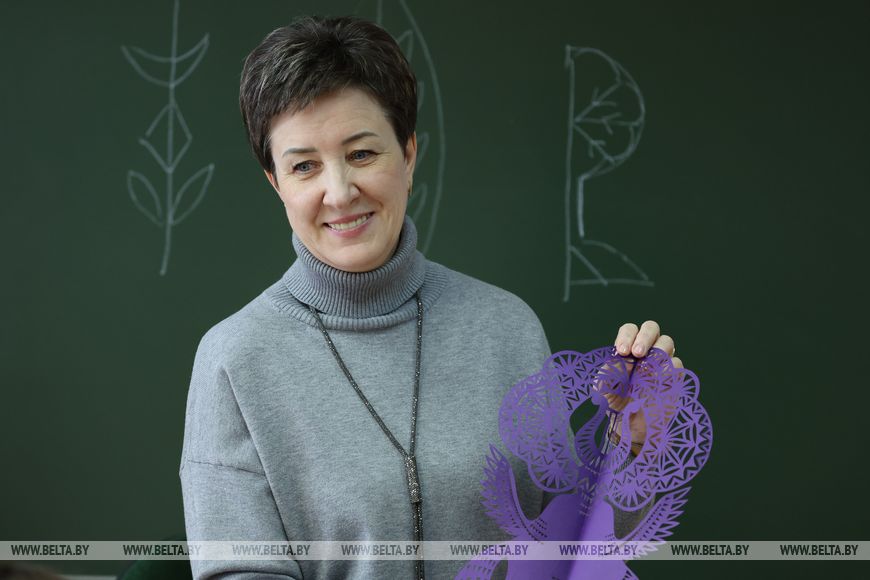 However, they are ready to support any innovation, interesting project, or collaboration.
 By Yelena Kharevich,
From mother to daughter
The preservation of the Molodechno vytsinanka school, which has its own distinctive characteristics, owes much to a teacher from the local art school, Viktoriya Chervontseva. She not only infused this form of decorative and applied art with her unique style but also developed teaching methodologies and passed her skill on to numerous students. Among them are artisans who have followed in the footsteps of the talented teacher, notably her daughter, Yelizaveta, a lecturer in the decorative and applied arts department at the Molodechno State Musical College named after M.K. Oginsky.
“Papercutting has been with me since early childhood: I first learned to cut simple patterns at home, inspired by my mother’s passion, and then later as a student at an art school. Children’s interest in this form of decorative and applied art has always been high, which is driven not only by the accessibility of materials but also by the quick results. I was successful at it too, so my motivation to study was strong. I dreamed of dedicating my life to art and chose a corresponding specialized university,” said Yelizaveta Chervontseva. Notably, papercutting was not among the subjects taught at the Faculty of Folk Crafts, so the student proposed her own topic on the eve of her diploma work preparation. She also found a thesis supervisor who agreed to oversee the project.
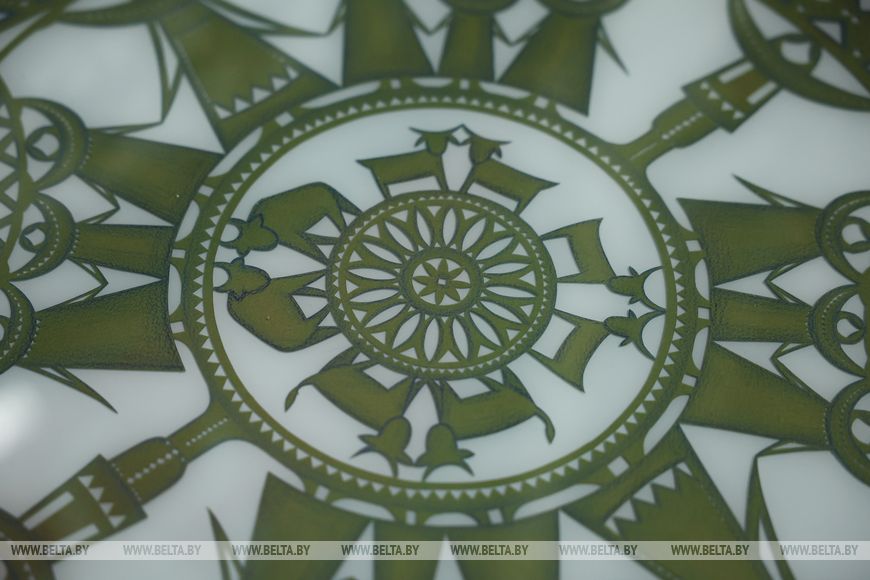
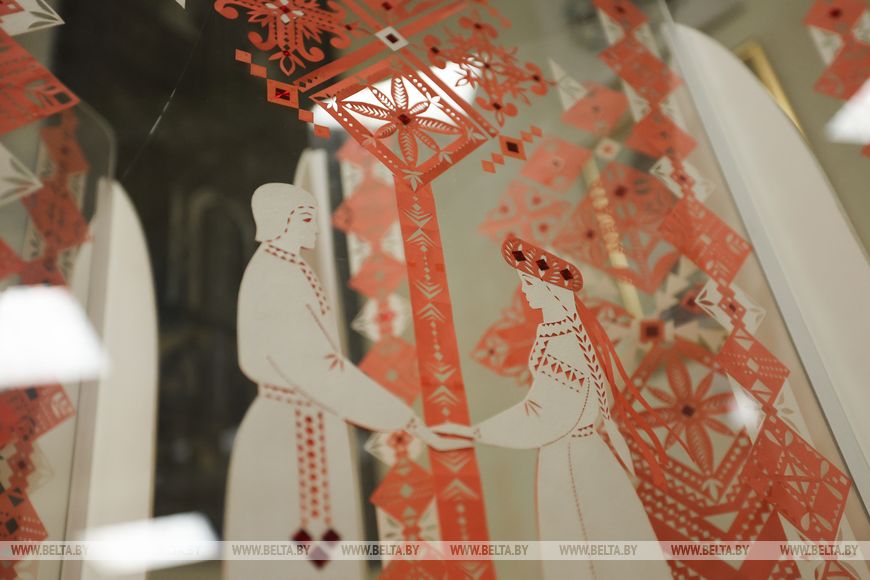
“It was quite challenging, but with the support of my mother and teachers, including an instructor from Molodechno, the well-known graphic artist Yury Gerasimenko-Zhiznevsky, I was able to prepare and defend my diploma work on the theme The Wheel of Life. It was important for me to show that papercutting is a profound form of folk art with elements of graphic art, through which one can depict numerous images and symbols and encode entire narratives,” Yelizaveta said.
Vytsinanka in digital, fabric, metal and music
As Yelizaveta Chervontseva notes, she is now delighted to work with talented young people who are equally in love with art and are the bearers of cultural traditions and techniques. They demonstrate their skills in unique works where papercutting, among other things, finds new interpretations and new forms.
However, as an artist herself, the teacher is also in a constant search for new ideas and projects that allow her to showcase papercutting as a universal, widely applicable form of decorative and applied art.“There were times when our interpretation of papercutting was not always accepted, with critics insisting that its classic form is black, and that the presence of silhouettes, figures, and complex compositions in works is more akin to graphic art. But we consistently pursued our own path, proving that the utilitarian form of papercutting can and should be combined with artistic silhouette cutting. In this way, our style gradually took root, gained recognition, and developed its own unique signature that is recognizable in the works,” Yelizaveta said.
The artisan shared that the popularization of the Molodechno vytsinanka style has also been aided by a series of interesting projects.
“Papercutting can be applied to any design for decorating exteriors and interiors, creating stage sets, and combined with modern technologies, such as using it as a stencil for laser cutting metal, acrylic glass, or wood. This led to several of our collaborative projects with fashion designers who used vytsinanka in their costumes. Notably, the Vyrai collection by Yekaterina Gerasimenko was showcased at the ceremony for the inscription of vytsinanka on the UNESCO World Heritage List,” said Yelizaveta.Incidentally, elements of the Molodechno vytsinanka school can be seen even in the Minsk metro: its influence is evident in the forged metal artwork by blacksmith Mariya Tarletskaya that adorns the Kovalskaya Sloboda station.
Domestic musicians have also found unusual applications for vytsinanka. An ethnic music group used a video sequence of colorful paper lace based on the works of Molodechno artisans.
“While adhering to the canons of this folk art, which we are obliged to preserve and pass on to our students, and by showcasing the uniqueness of Belarusian papercutting, which is recognized worldwide, we demonstrate the idea that it is a highly dynamic, extraordinarily rich, and universal form of decorative and applied art,” the artisan stressed.
How Vytsisolomka came to be
Chairperson of the Decorative and Applied Arts Department at the college Lyudmila Volkovich-Boris is also a student of Viktoriya Chervontseva, so she was first introduced to vytsinanka while studying at art school.
“I was fortunate to be part of a project like the folk art class, which had only ten students. It later became the foundation for the college’s department of the same name. I was among its first graduates in 1997. Then, after gaining ten years of work experience, I returned here as a teacher upon the invitation of Viktoriya Chervontseva. It so happened that vytsinanka always went hand in hand with straw weaving in my life. They are completely different forms of folk art, requiring different approaches to material preparation and varying amounts of time to create the works themselves, but mastering these techniques incredibly enriches the creative vision of the artisan, allowing their talent to unfold in multiple ways. Over time, my passion for both straw weaving and papercutting allowed me to merge these two forms of decorative and applied art and introduce the term ‘vytsisolomka’,” Lyudmila Volkovich-Boris said.
Works in the vytsisolomka technique, where straw inlay is applied to a prepared papercutting with a specific theme, are still few in number. However, the Molodechno school has become the progenitor of a unique, new direction in decorative and applied art that can now be taught to others. Today, artisans from Molodechno promote a form of collaboration based on experience exchange, having established the open creative forum Making Vytsinanka Together, which is held at the college.
From idea to paper-cut design
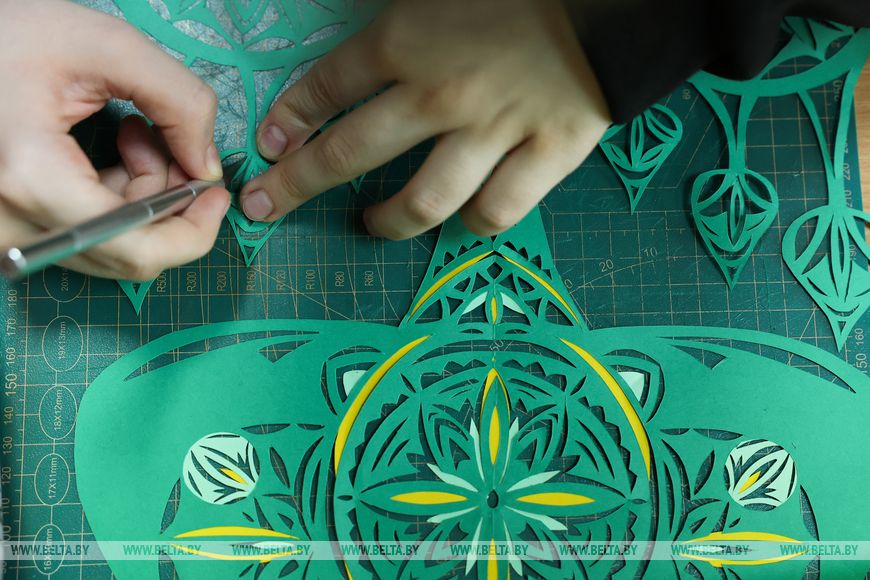
According to Lyudmila Volkovich-Boris, for an artisan, the most difficult part is finding the subject that will ultimately be captured in the finished work. The creative search can be a long process, and inspiration can suddenly awaken from a page read in a book, a legend heard, or a scene glimpsed outside a window. At other times, the symbolism in vytsinanka is the result of deep research into a particular theme. This is why artisans are so protective of their work and oppose the copying of their designs or, simply put, plagiarism.
However, they are ready to support any innovation, interesting project, or collaboration.
“I was glad to participate in a project by watchmaker Andrei Martynyuk from Dzerzhinsk, whose reputation extends far beyond Belarus. He used our vytsinanka art to create decorative elements for his timepieces. Furthermore, at My Belarus exhibition in the Minsk Oblast pavilion, one can see Molodechno-style vytsinanka on glass. This is very gratifying, and we are ready to share our experience and showcase the rich world of Belarusian papercutting art as widely as possible,” Lyudmila Volkovich-Boris said.
By Yelena Kharevich,
photos by Andrei Sinyavsky,
BelTA