
Photo courtesy of AP
The World Economic Forum (WEF) recently took place in Davos, Switzerland. The famous Alpine resort attracted heads of state, billionaires and millionaires, leaders of the largest business empires, and numerous experts – about three thousand participants from 130 countries in total. They came to breathe the mountain air and embrace the spirit of dialogue, which was the forum’s official motto. Yet, in neutral and secluded Switzerland, once the perfect venue for calm dialogue, no such idyll was to be found. Instead, the Davos Forum appeared to signal the demise of the old world order, with global players charting increasingly separate courses.
What you need to know about the Davos Forum
The World Economic Forum was first held in Davos in 1971 (until 1987 it was called the European Management Forum). That symposium, initiated by economist Klaus Schwab, brought together almost five hundred leaders of European companies to discuss the future of the global economy and develop a common long-term strategy. Over the years, the forum’s themes expanded, and influential people from around the world were invited, which eventually allowed the Davos Forum to gain the status of one of the main events of the year.
Today, the WEF is an international non-governmental organization, a kind of closed club for an elite circle, for which it regularly faces criticism. The annual meeting in Davos, the forum’s key event, is often called a “talk show for the elite,” a symbol of social inequality and globalization, where people who are by no means poor discuss poverty in luxurious surroundings. Discontent is also caused by the high price tag: an invitation to the forum for a company today costs 250,000 dollars, while just five years ago the participation fee was ten times cheaper.
On the other hand, Davos is used as a platform for important behind-the-scenes negotiations. It was here in 1988 that Greece and Türkiye signed a declaration that prevented a military conflict. The following year, on the forum’s sidelines, the first meeting at the ministerial level between North Korea and South Korea took place. And in the 1990s, the WEF facilitated dialogue that helped end apartheid in South Africa.
What defined the Davos 2026 meeting
This year, the World Economic Forum in Davos was held against the backdrop of a rare combination of uncertainty and fatigue with old recipes: the global economy cannot boast encouraging growth, and conflicts have become commonplace and a mandatory component of interstate relations.
According to the U.S. publication Politico, the prevailing theme of this year’s World Economic Forum in Davos was one of shocks and chaos.
Davos 2026 saw no shortage of bold declarations and plenty of the right words spoken. As always, however. In a separate article, BelTA collected the most important and resonant statements from the forum, which largely reflect the beliefs, priorities, and at times the fears of political elites. Now, let’s try to understand what was happening behind the scenes of the forum.
No Paris meeting after Davos
The French president stood out to many in Davos, primarily due to his tough-guy image. In dark aviator sunglasses, looking rather like a Terminator or Rambo, he indeed cut a formidable figure as he publicly declared the powerful tools Europe could wield in its confrontation with the USA.
“The USA demand maximum concessions and openly aim to weaken and subordinate Europe. Europe has very strong tools now, and we have to use them when we are not respected,” Emmanuel Macron said in Davos.
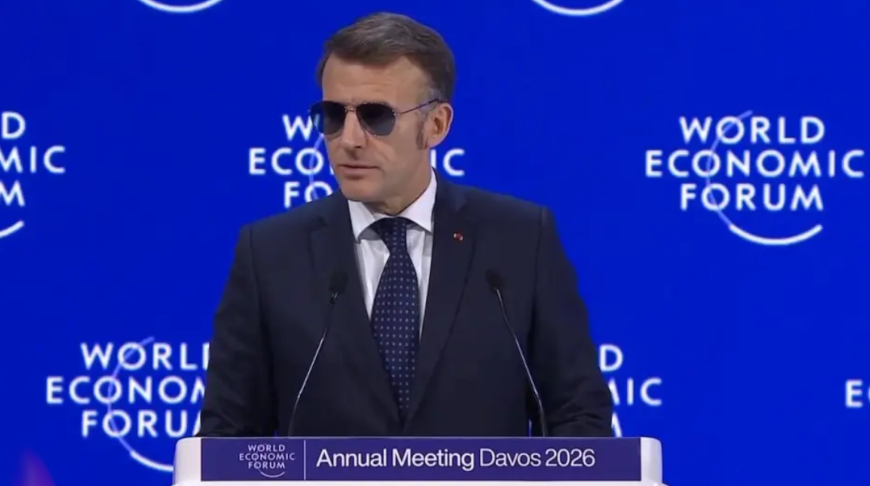
However, in his personal communication with Donald Trump (the U.S. leader did not miss the chance to share the private message from the French president), Emmanuel Macron looked far from a cinematic hero. Noting that their views on Syria completely coincided, and that Paris and Washington could achieve great results on the issue of Iran, the French leader suggested his U.S. counterpart meet.
“I can organize a G7 meeting in Paris on Thursday afternoon after Davos. I can invite the Ukrainians, the Danes, the Syrians and the Russians on the sidelines. Let us have a dinner together in Paris on Thursday before you go back to the USA,” Emmanuel Macron wrote.
The French president left Switzerland without waiting for Donald Trump’s arrival. Perhaps he was in a hurry to prepare for the meeting in Paris. However, the U.S. leader never made it to the city of love.
Furthermore, it became known ahead of the event that France intends to reject the U.S. invitation to join the Gaza Board of Peace, to which the head of the White House remarked: Emmanuel Macron is not needed by anyone anyway because he will soon leave his post soon.
German Chancellor Friedrich Merz was more restrained in his statements. He reacted diplomatically to the situation around Greenland, just in case promising to protect it from the Russian threat.
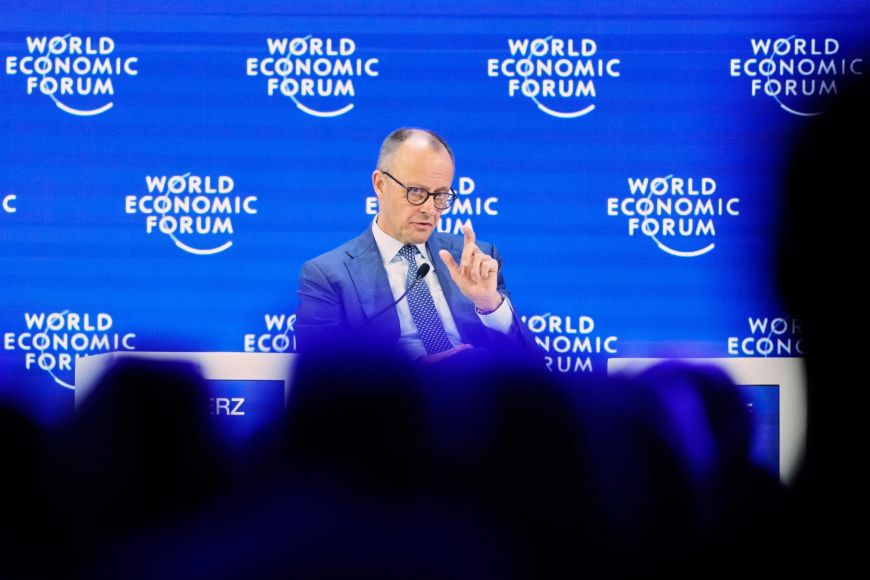
Experts explain Friedrich Merz’s cautious statements by Germany’s strong dependence on the USA. The United States is Germany’s main foreign trade partner. In 2025, Germany exported goods to the USA worth over 135 billion euros. According to estimates by the Prognos institute, about 1.2 million jobs in Germany depend on trade with the USA, roughly one in ten. In other words, Germany is the most powerful economy in Europe and simultaneously the most vulnerable among the eight European countries that Donald Trump threatened with tariffs. Therefore, Berlin reacts cautiously to possible threats.
All talk and no action
Vladimir Zelensky also stood out in Davos. Actually, he initially did not plan to fly there. But he flew anyway. A meeting between Ukrainian and U.S. sides was planned in Switzerland. Kiev hoped to agree there on receiving $800 billion in assistance from the USA for Ukraine’s reconstruction.
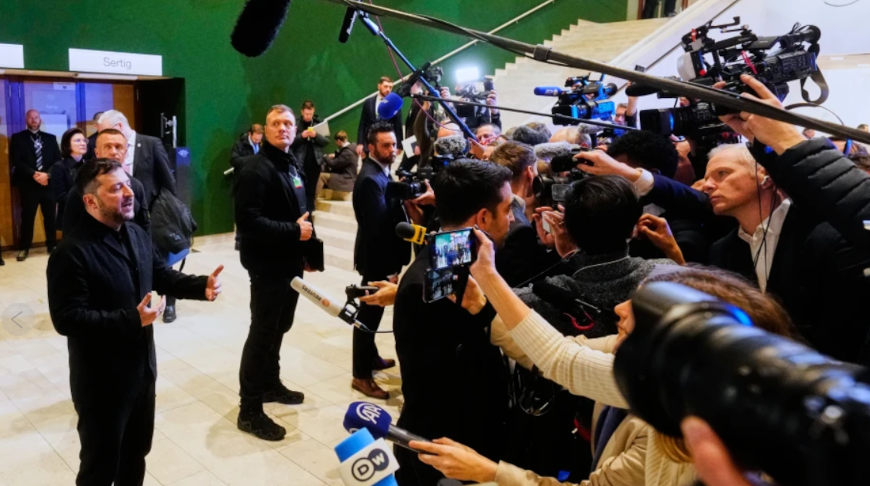
The talks between Donald Trump and Vladimir Zelensky in Davos lasted about an hour. The sides noted that the meeting was good and announced further contacts.
The Financial Times newspaper has already called the lack of an agreement on Ukraine’s recovery following the meeting with Trump a blow to Zelensky.
However, the Office of the head of the Kiev regime called such an interpretation of events incorrect. They stated that Zelensky was satisfied with the meeting, and the final signing of documents was not planned. One of the priorities was to agree on air defense.
Instead, Vladimir Zelensky seized the spotlight at the forum. First, he stated that Ukraine was ready to defend Greenland, then he reprimanded Europe and NATO, and in the end, he even called for giving Viktor “a smack upside the head.”
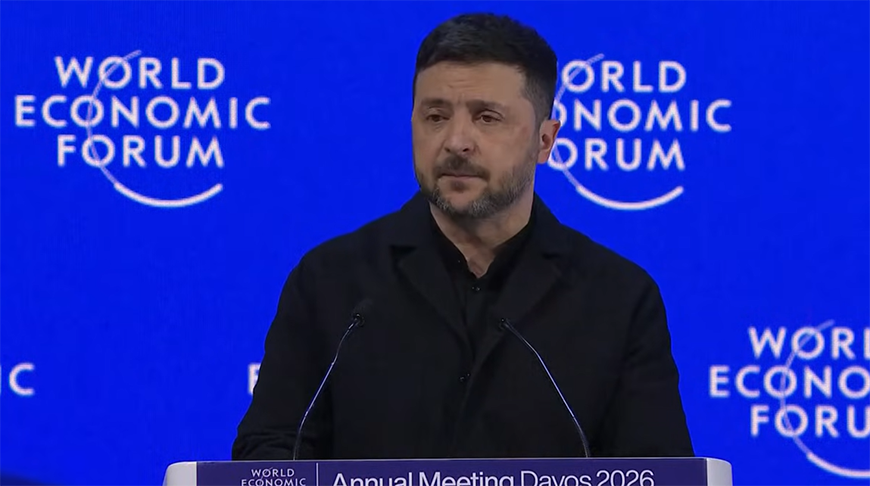
“Every Viktor who lives off European money while trying to sell out European interests deserves a smack upside the head. And if he feels comfortable in Moscow, it doesn’t mean we should let European capitals become little Moscow’s,” Zelensky said.
Hungarian Prime Minister Viktor Orban was quick to respond. His government has consistently blocked new anti-Russia sanctions, and he has personally denounced the plan to fund Ukraine with seized Russian assets.
Viktor Orban stated that Vladimir Zelensky crossed a line in Davos. The prime minister noted that he is “a free man who serves the Hungarian people,” while calling Zelensky “a man in a desperate position who, for the fourth year now, has been unable or unwilling to bring a war to an end – despite the fact that the President of the United States has provided every possible assistance to do so.”
“The Ukrainian people, of course – despite your carefully chosen insults – can still count on us to continue supplying your country with electricity and fuel, and we will also continue to support refugees arriving from Ukraine,” Viktor Orban wrote.
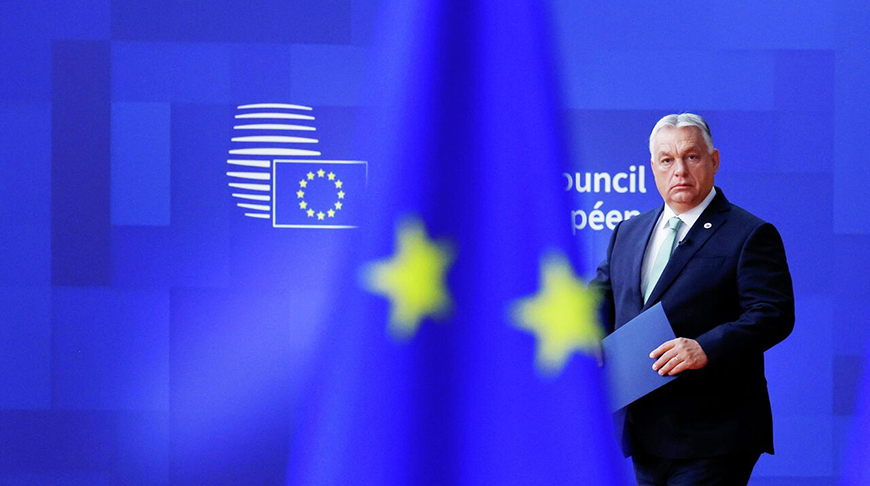
Later, speaking with journalists, he said that Hungary is against Ukraine’s accession to the EU. Therefore, Kiev is trying to interfere in Budapest’s internal affairs ahead of the elections, hoping that the opposition will come to power.
“I think that in the next hundred years, there will be no parliament in Hungary that would vote for Ukraine’s accession to the EU,” the Hungarian politician emphasized.
The head of the Ukrainian MFA, Andrei Sibiga, decided to join the game. “This plan is doomed to fail, Mr. Prime Minister. Your master in Moscow won’t last 100 years even if you were ready to donate him all organs. And on the day Ukraine joins the EU, we will frame this headline in the Verkhovna Rada of Ukraine to remember your lies for the next 100 years,” he wrote on social network X.
It’s even hard to say what diplomatic protocol dictates after such insults from a foreign minister. Summon the ambassador? Close the embassy? Or perhaps finally stop the supplies of electricity and fuel? One can only marvel at the restraint of the Hungarian leadership, which understands that in the event of such an escalation, only ordinary Ukrainian citizens would suffer.
Dialogue without dialogue
In the corridors of Davos and from the high podiums, forum participants unanimously declared the importance of dialogue for resolving conflicts and finding consensus. Even the current WEF motto, Spirit of Dialogue, spoke for itself. Yet it should be noted that this motto carries no obligation or blame. It merely lets all parties pose as advocates for communication while holding fast to their approaches.
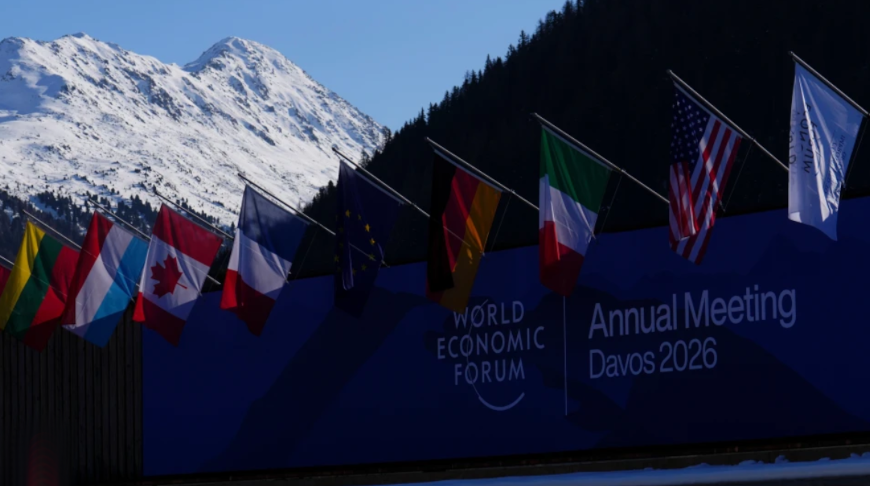
However, the very concept of dialogue implies not just the opportunity to speak and hear an opponent, but also to adjust one’s position under the influence of the other side. This time at the WEF, this was hardly observed: positions were voiced, recorded, and... remained with their owners. There were few points of contact.
The fact that the absence of dialogue has become the norm, not the exception, is also indicated by yet another non-invitation of the Russian delegation to the World Economic Forum. According to unofficial data, the issue of Russia’s participation was not even considered as a subject of discussion.
Thus, the forum with the motto Spirit of Dialogue was held without one of the key countries directly involved in a major international conflict. It turns out that for the Western, or rather European, elite, dialogue today is understood as a conversation only among themselves. But this is not how things are done. Therefore, everything returns to square one: to the era of a multipolar world.