
Image credit: Unsplash
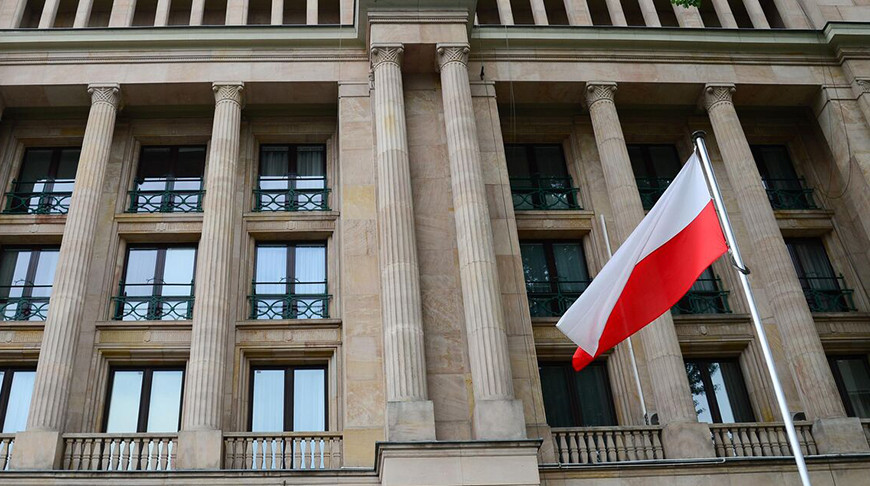
Poland has once again been left off the guest list for Ukraine negotiations. This time, the meeting was in London this Monday, a four-way gathering of British Prime Minister Keir Starmer, German Chancellor Friedrich Merz, French President Emmanuel Macron, and, of course, Vladimir Zelensky. In Warsaw, which until recently was considered a key ally of Kiev, the exclusion from the London summit was taken as a painful blow. Media outlets wrote of a catastrophe for foreign policy, experts predicted Poland’s marginalization in Europe, and politicians from opposing camps traded mutual accusations.
Yet, if one steps back to look at the situation, there seems to be no cause for drama. Quite the opposite, in fact. In light of global and regional geopolitical shifts, entirely new opportunities are opening up for Poland. It will be quite interesting to observe what the Polish leadership chooses: to keep banging on closed doors or to forge a new path for itself.
“Yet another European summit on the war in Ukraine without representatives of the Polish government. Our position on the international stage is catastrophic. Donald Tusk is constantly sidelined and humiliated, even though he himself claimed no one in the EU could defeat him,” opposition Law and Justice (PiS) party representative Mariusz Błaszczak said, lashing out at the Polish prime minister.
But what is the reason for this treatment of Poland? For years, the Polish authorities have been at the forefront of Western Russophobia, spared no effort in militarily supporting Kiev, provided aid to Ukrainian refugees, harmed their own economic interests by backing EU sanctions against Russia and Belarus, and jeopardized national security by escalating tensions at the border... And now what? Have past merits been forgotten? Or did Downing Street simply not have an extra chair?
There are various theories on this matter within Polish expert circles. Jacek Bartosiak, founder of the think tank Strategy & Future, believes the reason for Poland’s exclusion from talks on Ukraine lies in its unrealistic demands and moralizing diplomatic tone, which fail to yield tangible results.
“We have not regained any independence; we were merely integrated into the Western system, and the Polish elite embraced a Western outlook without understanding its implications,” the analyst stated on the air of the Polsat News. “The fact that we are not at the negotiating table, that Ukrainians do not take us seriously, is largely the fault of the Polish political elite.”
However, other opinions exist. Political scientist Roman Kuźniar, in an interview with Onet, linked Poland’s absence from the London summit to Warsaw’s unwillingness to send Polish soldiers to Ukraine. “To some extent, we excluded ourselves from these negotiations because we do not want to send even one military unit to Ukraine as part of peacekeeping forces. Other European countries are willing to make that sacrifice,” the political scientist stated.
Yet, according to Kuźniar, this is not the sole reason for the exclusion from the summit. “The main reason is that both the president and the Law and Justice party complicate our relations in Europe. The sabotage by Karol Nawrocki makes our external partners hold their breath and prefer not to include Poland in important negotiations. Through his destructive behavior, the president is attempting to bring our diplomacy to a standstill,” the expert believes.
Kuźniar criticized not only Nawrocki but also U.S. President Donald Trump. “The USA is not yet threatening us with weapons as it threatens Latin America, but that may only be a matter of time... The U.S. strategy clearly demonstrates how European democracy hinders the United States. Because there is no democracy left in the USA, it is a plutocracy governed solely by money. Under Trump, Washington wants to destroy European unity, leaving countries to their own fate...” the Polish expert lamented.
A similar view was expressed by Marcin Zaborowski, an international relations expert and former head of the Polish Institute of International Affairs. In an interview with Polskie Radio 24, he noted that Polish society does not want to participate in military support for Ukraine by deploying “stabilization forces” there. In his opinion, this weakens Poland’s position.
“If Poland had offered its own concrete military contribution and our foreign policy were not being weakened by a president who does not like Ukraine, I believe we would be in London, and not only in London. We would be one of the key players in security policy and in European politics as a whole,” Marcin Zaborowski said.
Many similar opinions have been voiced in recent days. Admittedly, watching this parade of self-deprecation from the Poles has been unusual. Especially since, in reality, there is little reason for such dramatization.
For Poland, a country that for years sought leadership in Europe, suddenly finding itself pushed to the sidelines is understandably unpleasant. Not long ago, Warsaw spoke of reviving the Weimar Triangle (Poland, France, Germany) as Europe’s directorate. Today, however, we see a rather different directorate, with the United Kingdom instead of Poland. This triangle believes it has the right to determine the future of our Eastern European region. However, Poland is still seen as a peripheral state, a kind of eastern borderland, by some. For Germany, it is little more than a buffer. For the United Kingdom – a military outpost.
But can Poland turn the situation around? As we see, some experts believe that agreeing to send “stabilization forces” to Ukraine could bring Warsaw back into the game. Perhaps so. But in what capacity: as a player or as a sacrifice?
In previous years, when the Law and Justice Party (PiS) was in power, Warsaw maintained close ties with the Visegrad Group countries (consisting of Poland, Czechia, Slovakia, and Hungary) as well as with the Baltic states. This led to the formation of a bloc of states within the European Union that could potentially gain political weight and even shift the center of gravity from the West to the East. However, there were significant differences of opinion among the countries in this bloc on many important issues, including the conflict in Ukraine. Although Poland claimed leadership, it was unable to develop a positive agenda capable of uniting the countries around it. Instead of proposing projects in economy, power engineering, and logistics that would be of real interest, Warsaw tried to capitalize on the themes of war and Russophobia.
The Law and Justice Party (PiS) was replaced by Tusk’s coalition, which was more inclined towards the recognized leaders: Berlin and Paris. At the same time, Polish mass media started talking about a new “directorate of Europe” in the EU. We can now see where this has led.
And yet the situation can be fixed. In fact, Poland’s absence from the London summit is a great opportunity to distance itself from the failure of the main European “directors.” It is an opportunity to learn lessons and rethink its foreign policy course. An opportunity to smooth out the rough edges in relations with the United States, which, as stated in the U.S. security strategy, intends to restore strategic stability in the European region.
And stability means peace, security, and economic development. It may be just the positive agenda that Poland needs in order to increase its political weight.
As for Belarus, our country would be only too happy to have a neighbor capable of pursuing a sensible, pragmatic, and peaceful policy. We have already seen that Warsaw is capable of making sensible decisions. However, it is not a question of capabilities, but of the strategic choice that the Polish leadership needs to make.
By BelTA’s Vita Khanatayeva
Image credit: RIA Novosti archive