
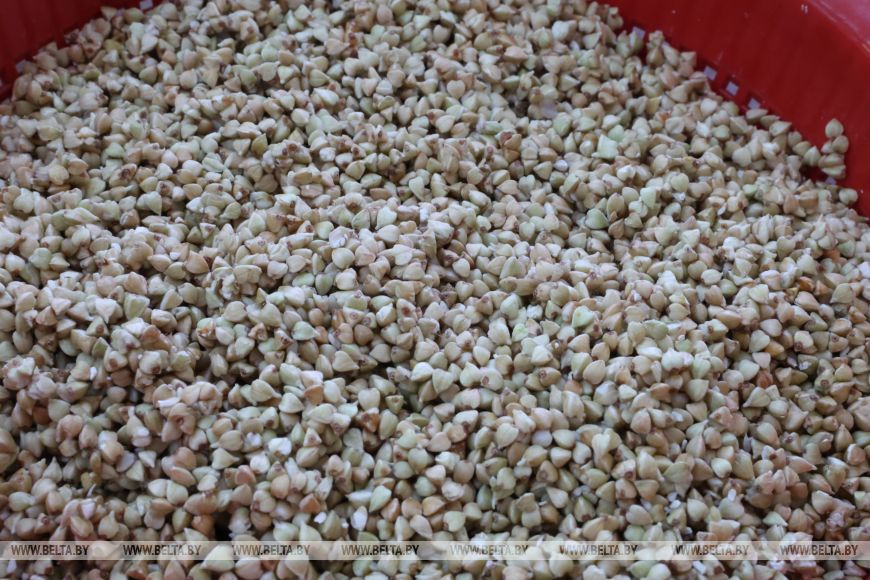
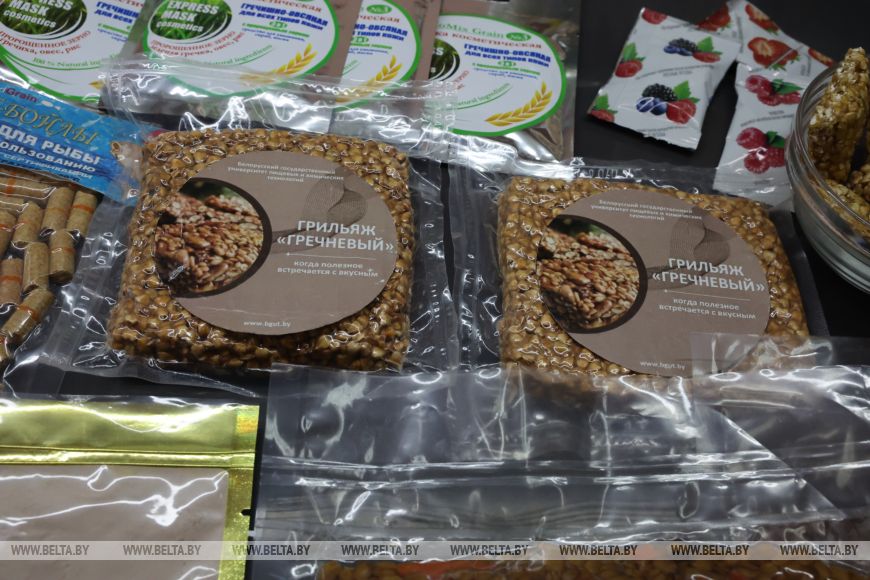
In the Grain Products Laboratory of the Belarusian State University of Food and Chemical Technologies, a single humble buckwheat seed gives rise to a whole line of healthy products: nougat, breakfast cocktails, gluten-free pasta, and even cosmetic masks. The developments by postgraduate student Liana Shustova have already gained recognition at international competitions. For her technology of producing functional concentrates from fermented buckwheat, she received a scholarship from the Belarusian president. BelTA correspondents met with the young woman for whom science has become a calling.
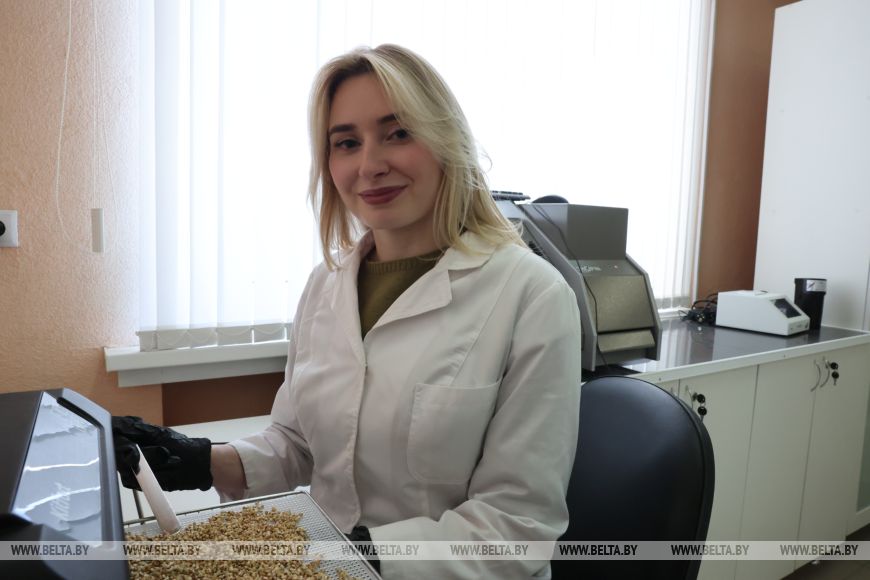
Liana has known who she wanted to become since childhood. “I always excelled in engineering subjects: mathematics, physics, chemistry,” the young woman said. Therefore, she initially planned to apply not to a food university but to an engineering faculty in Minsk. However, her mother said that engineering was not a profession for women. So, Liana enrolled in the Department of Bread Product Technology at the Belarusian State University of Food and Chemical Technologies.
“We have an excellent teaching staff and a very high level of training,” Liana noted. “I have never once regretted choosing this university. When the time came for job placement, my research supervisor suggested that I continue my studies and engage in science.”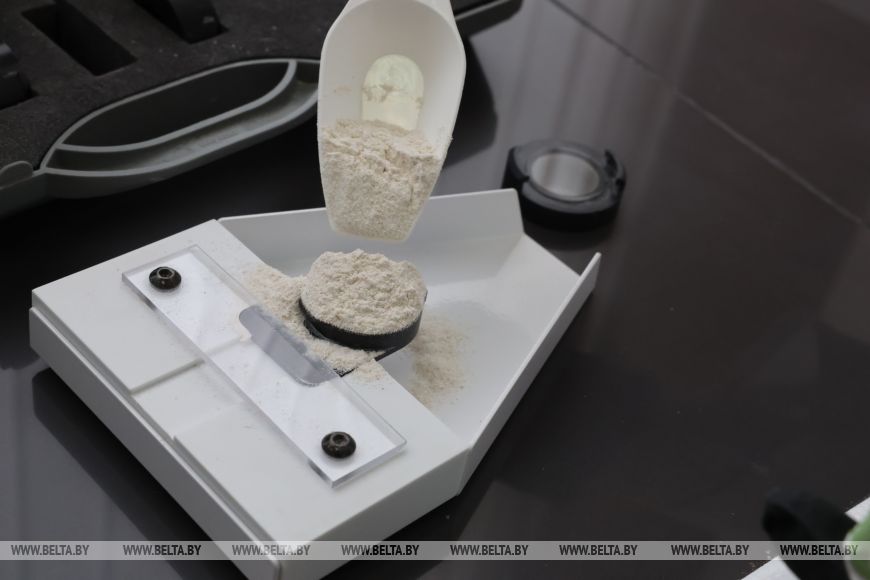
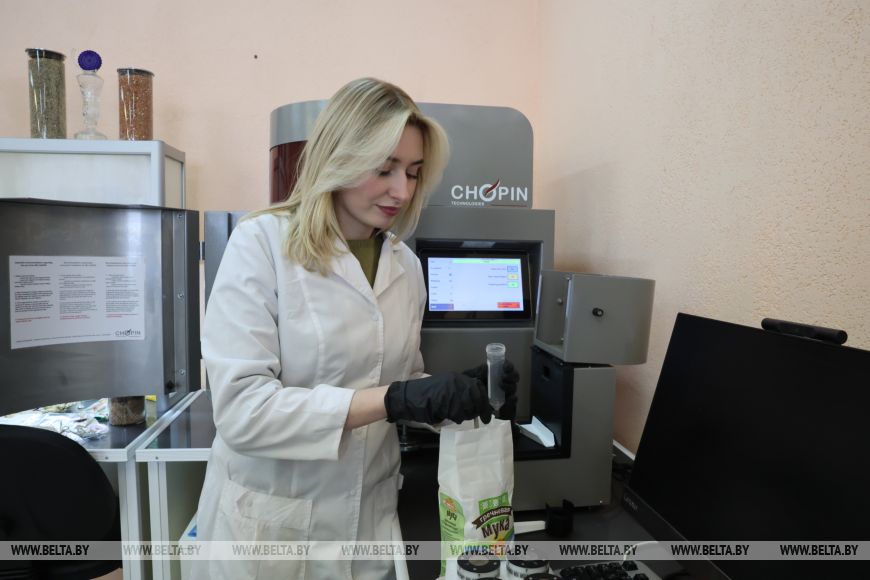
 “For the first time in our history, we won a special prize for the project ‘ASECMO – What Unites Us’,” she explained. “This is a biotechnological complex specializing in the manufacture of products from sprouted grains and seeds. It allows making a whole range of products, from feed and dry concentrates to fermented grains. The idea so captivated the jury that it took top honors.”


Liana has known who she wanted to become since childhood. “I always excelled in engineering subjects: mathematics, physics, chemistry,” the young woman said. Therefore, she initially planned to apply not to a food university but to an engineering faculty in Minsk. However, her mother said that engineering was not a profession for women. So, Liana enrolled in the Department of Bread Product Technology at the Belarusian State University of Food and Chemical Technologies.
“We have an excellent teaching staff and a very high level of training,” Liana noted. “I have never once regretted choosing this university. When the time came for job placement, my research supervisor suggested that I continue my studies and engage in science.”
The proximity to her hometown played a role, the young woman hails from Shklov. But the most important thing was discovering her calling. “At first, I understood very little about science,” she admitted. “But everything came with experience. Now I sincerely love what I do. This is my passion, and I am fully dedicated to it.”
Liana's dissertation focuses on sprouted green buckwheat, not steamed but “live” retaining all its beneficial properties. “So, what are its advantages? During sprouting, the enzymatic system is activated. Proteins break down into amino acids, fats into fatty acids, and starch into sugars. The product is better absorbed, macro- and microelements are released, and most importantly, vitamin C is synthesized,” Liana explained.
Liana's dissertation focuses on sprouted green buckwheat, not steamed but “live” retaining all its beneficial properties. “So, what are its advantages? During sprouting, the enzymatic system is activated. Proteins break down into amino acids, fats into fatty acids, and starch into sugars. The product is better absorbed, macro- and microelements are released, and most importantly, vitamin C is synthesized,” Liana explained.
This “live” buckwheat is precisely what Liana and her colleagues are using to create healthy foods. One of their innovations is a grain smoothie. “It provides a long-lasting feeling of satiety, making it ideal for replacing breakfast or dinner. And crucially, it’s made entirely from local ingredients. Everything is organic,” she emphasized.
Another successful product is buckwheat brittle, which has already gained popularity. Its development was a direct response to a practical problem: when imports of nuts and sunflower seeds were restricted due to high cadmium levels, the young scientists decided to create a recipe using local ingredients. They chose buckwheat. Creating brittle from sprouted green buckwheat is regarded not merely as a scientific experiment, but as the fulfillment of a state procurement order of the food industry.
Why buckwheat, not wheat or oats? The answer is simple: the trend toward healthy eating and the rising number of people with gluten intolerance. “Buckwheat is gluten-free and has a low glycemic index. This is important for people with celiac disease,” noted the post-graduate student.
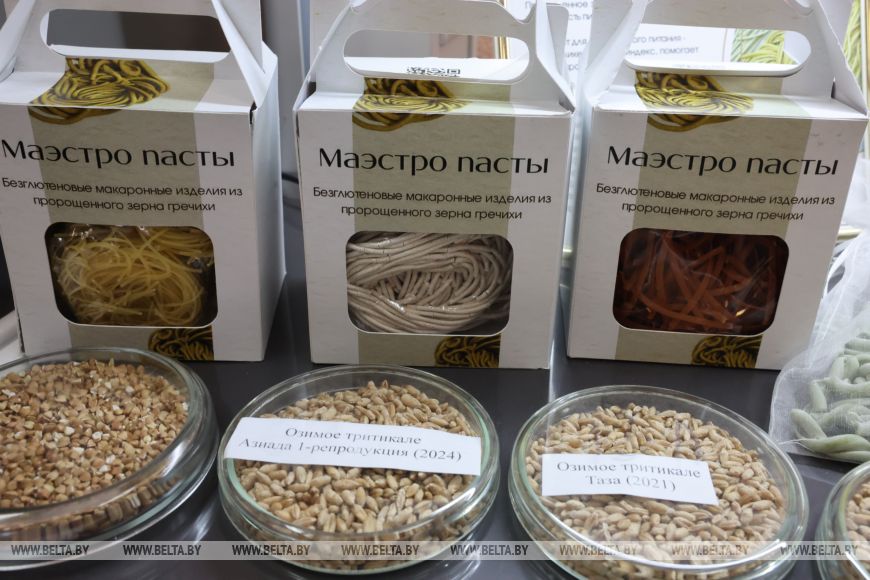
Today, Liana and her teammates are actively developing an entire new product line. Their portfolio includes fermented cereals with improved digestibility, nutritious buckwheat bread, and gluten-free pasta.
The success of these innovations is confirmed by awards at prestigious competitions. The team’s projects have repeatedly won prizes at events like “100 Ideas for Belarus” and the National Competition of Innovative Projects. She is especially proud of their victory at an international competition in St. Petersburg.
“For the first time in our history, we won a special prize for the project ‘ASECMO – What Unites Us’,” she explained. “This is a biotechnological complex specializing in the manufacture of products from sprouted grains and seeds. It allows making a whole range of products, from feed and dry concentrates to fermented grains. The idea so captivated the jury that it took top honors.”
“We work directly with enterprises. Our products are already on store shelves. We’ll soon launch the cocktails for mass production,” Liana shares. It is important to her that the products occupy a segment of healthy nutrition, which is currently dominated by imports. “The president has repeatedly stated that our products should be sold. That is exactly what we are doing - developing competitive Belarusian products,” she adds.
Alongside her postgraduate studies, Liana works as a specialist in the digital education department at the Institute for Advanced Training and Retraining of Belarusian State University of Food and Chemical Technologies. “We are involved in the supplementary education of managerial staff and specialists in the food, processing, and chemical industries,” Liana explains. “Our task is their retraining, skill upgrading, and the organization of internships.” The young specialist herself holds two specializations: Technology for the Storage and Processing of Plant Raw Materials and Economics and Management in an Industrial Enterprise.
In 2024, the workforce nominated the young specialist as a candidate in the local elections. “The work was not easy - meetings with work collectives, direct dialogue with voters, but people believed in me. Today, I am a deputy of the Mogilev City Council of Deputies and a delegate to the Belarusian People’s Congress,” Liana shares. She emphasizes that the support from the university’s leadership, especially from her research supervisor, Candidate of Technical Sciences, Associate Professor, and Director of the Institute for Advanced Training and Retraining Yelena Urbanchik, was a key factor in her success.
“Food and agricultural raw material exports brought in over $9.5 billion in 2025 [$10 billion]. This is one of the leading sectors of the economy. I understand the significance of my work and the responsibility to those who have placed their hopes in me,” she says.
The culmination of her years of effort was receiving the Presidential Scholarship. “It was an emotional, heart-pounding moment. We submitted the documents, waited for the results. The surname Shustova was at the very end of the list. An acquaintance told me: ‘You’re not on the list of scholarship recipients’. I was upset. But then I found it myself on the last line – Liana Shustova. The feelings were overwhelming - anxiety, joy, and the understanding that everything we do is not in vain,” the young specialist recalls.
Earlier, she had already received a special president’s award for winning the national competition of scientific works. “Last week we celebrated the 30th anniversary of the establishment of the Belarus president’s special funds to provide support to gifted school and university students and talented youth, and I also took part in this event,” Liana said. “Being part of this event and realizing that you are part of this significant 30-year history of support is both exciting and honorable. It is clear proof that our country values and invests in the future of young scientists and in the development of science.”
She always found support in her family. “My parents believe in me. When I first entered science, not all competitions ended in victories. But my mother supported me. And the further I went, the more victories there were. There was a period when we took home every award wherever we participated,” the postgraduate student said with a smile.
Today Liana sees prospects in scaling up gluten‑free products and exporting her developments. “The demand for healthy food is growing. People want a quick snack, but at the same time to get a full set of nutrients. Our cocktail meets this need,” she noted.
For the young scientist, it is important that the technologies are based on local raw materials. “This is import substitution, efficient processing of Belarusian buckwheat, and expanding the product range for different groups of the population, especially for those who cannot tolerate gluten,” Liana emphasized.
Liana does not plan to stop. New recipes, cooperation with enterprises, training of specialists, all this is part of a single mission: to make Belarusian food products not only accessible but also in demand on the international market. It all began with a single buckwheat grain and her mother’s advice to study food. Sometimes such turns determine the future of an entire industry.
Tatiana Seledtsova,
photos by Oleg Foinitsky,
BelTA