
MINSK, 10 March (BelTA) - Experts shared their views on the disadvantages of robotizing military operations in the latest episode of BelTA’s Nation Speaks project.
When asked about how warfare has changed, national security expert Aleksandr Tishchenko emphasized that the increased speed of operations is now obvious. “But I’m noticing the role of artificial intelligence and automated processes in reconnaissance and decision-making. There’s a situation we’ll have to reckon with. Everything is observed and assessed quickly, decisions are made instantly, but execution remains manual,” the expert said. “This creates challenges with friend-or-foe identification. Humanitarian principles are disappearing. Robots don’t distinguish between civilians and military personnel, and it’s unlikely you can program that parameter.”
The main trend is the growing distance from the front line to support or decision-making. “Snipers have moved to greater distances and gone into hiding. In the past, camouflage was enough; now a different approach is needed - various shelters, dugouts. The same goes for tanks. Helicopters have pulled back further from the contact line. The battlefield is changing dramatically,” the expert said.
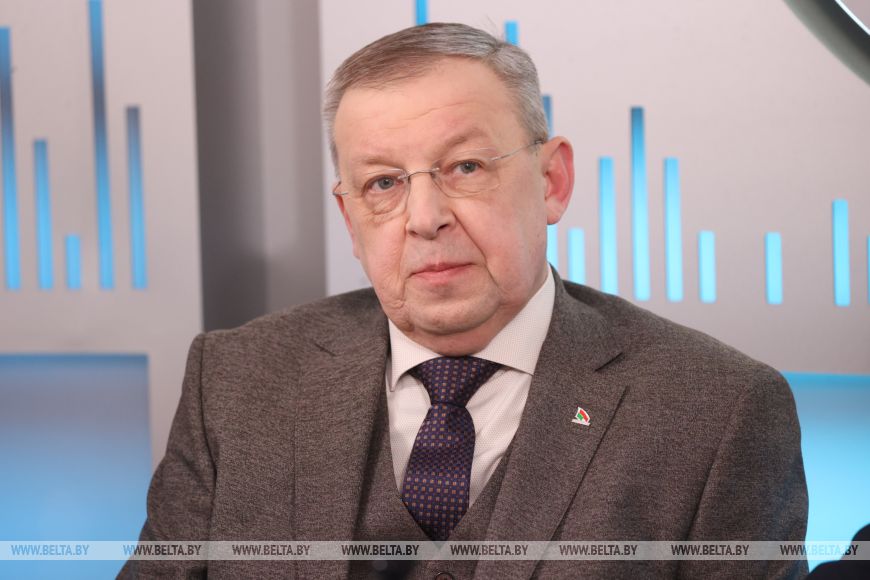
In his view, warfare will transition to other formats. “What we see today is a transitional period, a temporary situation. The distance factor will also change in terms of impact, because if some new weapon is developed, a countermeasure will inevitably follow,” Aleksandr Tishchenko emphasized.
Anatoly Bulavko, a member of the House of Representatives’ Standing Committee on National Security, stressed that despite all the changes currently taking place on the battlefield, the decisive role still belongs to humans. “Today, the idea that victory will go not to those who outshoot the enemy, but to those who outthink them, is coming to the forefront. That’s why artificial intelligence is being used. But with all this, addressing the older generation, I’ll take the liberty of recalling the film Inquest of Pilot Pirx, where a humanoid robot decided to start a rebellion and, naturally, lost. And why? Because man’s strength turned out to be in his weakness. The man simply didn’t know what to do in a certain situation, and the robot perceived this as some incomprehensible scheme,” he offered as an example.
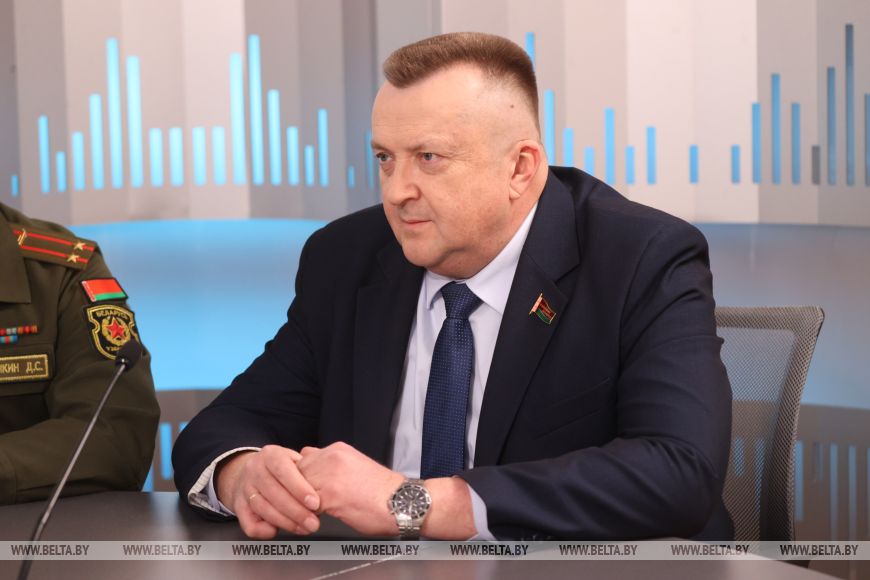
The same thing is happening now, the MP said. “Look at how Russian servicemen went behind enemy lines through a pipeline. Where, in what textbook was that written?” he asked rhetorically. “A robot couldn’t have done that, but a human could, overcoming themselves, beyond normal human capabilities. So when we talk about high-tech warfare, the human factor shouldn’t be discounted for many years to come.”