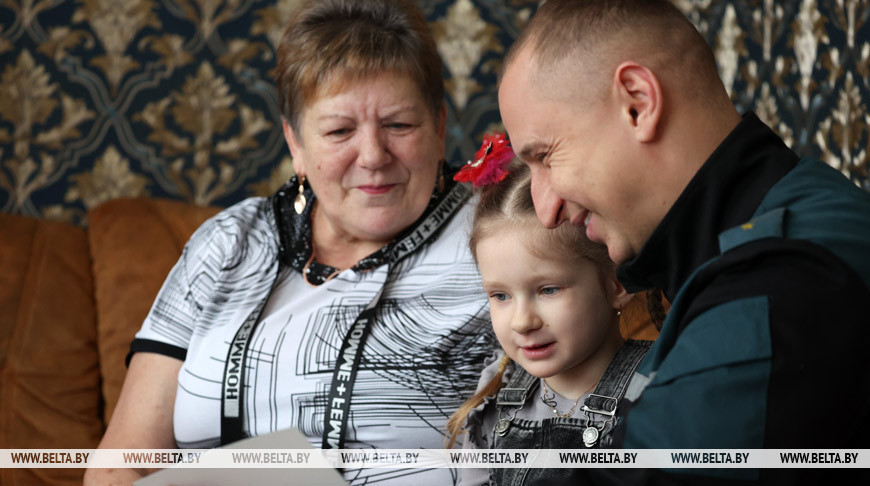
On November 4, a call was received to 112 about a fire in an apartment on Yubileynaya Street in the agrotown of Veseya, Slutsk District. Upon arrival of the Emergencies Ministry units at the scene, open flames and heavy smoke were observed in an apartment on the first floor of a three-story multi-apartment residential building... Behind these official figures lie three human lives saved, including 5-year-old Sonechka, who, along with her grandmother, was carried out of the smoke-filled room by firefighter Aleksei Valetko. Sometime later, we invited them to a meeting filled with tears of sincere gratitude: grandmother Yelena Buzun could not contain her emotions as she looked into the eyes of the man who saved them. Little Sonya will forever remember him as a superhero who gave her a second chance at life. We share the details of this poignant story in our new project Fate Brought Them Together.
In 2025, more than 7,000 people were rescued or evacuated during emergencies.
 'Fell asleep with an unextinguished cigarette’
To meet Aleksei Valetko, one of the rescuers who promptly arrived at the scene of the fire that November day, we head to the Slutsk District Emergencies Department. It was Aleksei who held the frightened girl in his arms as he descended the stairs through the window from the third floor.
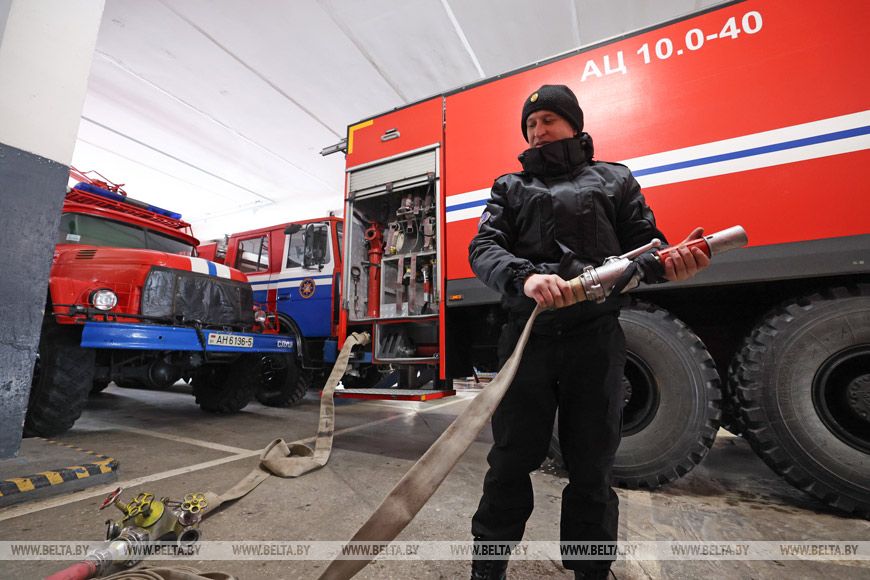
The smiling man suggested we immediately head over to see the equipment. The trucks are impressive, but it is the rescuer himself who deserves admiration first and foremost. Over the past 18 years that Aleksei Valetko has been in the profession, he has seen a lot: he has responded to accidents, helped people trapped in wrecked cars get out, frequently went on calls with ambulances to carry the injured, saved wild and domestic animals in distress, and, of course, extinguished fires. The recent incident in the agrotown of Veseya, Slutsk District, is far from the first time he has saved people. Aleksei believes his work is very important and must be performed 100%, and he calls residents’ adherence to safety rules the best gratitude for it.
As we drive to meet the grandmother and granddaughter, Aleksei is visibly nervous and admits that he does not often get to meet the people he has saved. To somehow distract him from the mounting emotions, we ask him to reveal some professional secrets and show what equipment is currently in use by the Emergencies Ministry.
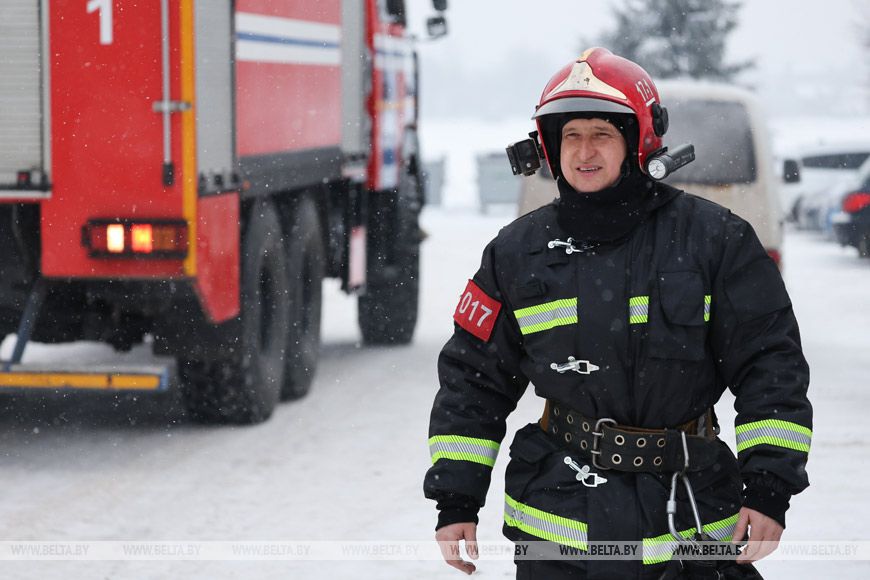 “Four vehicles always respond to a fire. The first is the rapid response vehicle (RRV), which is small and highly maneuverable. It carries only 500 liters of water and is equipped with a high-pressure hose, emergency rescue tools, and hydraulic equipment. The latter is necessary when responding to traffic accidents. On the roof there is a special raft for water rescues. There is also a so-called 'halligan tool' for forcing doors, life jackets, and portable fire extinguishers,” Aleksei explained in detail, noting that everything needed for the fastest possible response is available. “Here we have hydraulic spreaders, cutters, climbing equipment, and ropes. If, for example, we respond to an apartment fire, the team members must have a rope with them (30 or 50 meters long) in case the evacuation routes are cut off. We need to be prepared for such scenarios and minimize risks to our personnel. Next come the tanker trucks and other vehicles - this heavy equipment is capable of extinguishing any fire.”
With this lineup, the rescuers responded to the call in the agrotown of Veseya, Aleksei said, adding: “I often encounter fires caused by faulty heating stoves (poor stove condition or improper operation during the cold season) and smoking while intoxicated. That day in Veseya, it was the latter. In the three-story multi-apartment building, a man living on the first floor fell asleep with an unextinguished cigarette. When the fire broke out and he realized he couldn’t handle it on his own, he got out into the street, but his neighbors were in grave danger because the fire began to spread quickly and the smoke was rising upward...”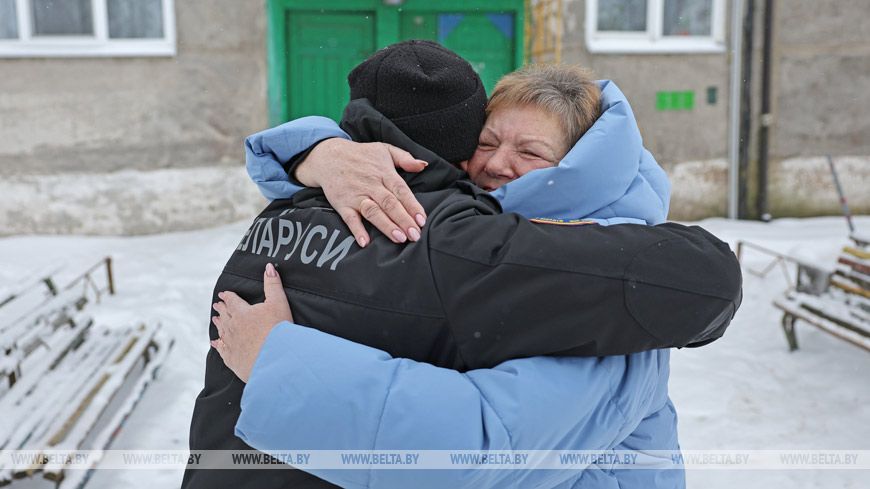 'Breathe, Sonechka, breathe!'
 “She noticed smoke in the hallway and told me right away. I was puzzled because there was nothing on the stove. As I started moving through the apartment, smoke was seeping in from everywhere. To this day, I ask myself how I missed it at first,” she said. “It was especially bad from the balcony; the smoke quickly engulfed the kitchen. Sonya panicked and started screaming: ‘Grandma, I can’t breathe!’ I called my husband – he used to work for the Emergencies Ministry – and asked him what to do. He instructed me to soak some large towels, drape them over us, and get out right away. I did as he said, but the moment I opened the door, I knew it was already too late to leave. The stairwell was choked with thick, black-and-gray smoke: I couldn’t make out the neighbors’ doors, let alone the staircase. There was no way we would have reached the first floor without passing out. We had to stay inside, but even there, it was becoming harder and harder to breathe. It was terrifying, and of course, by opening the door, I let even more smoke into the apartment. We went into the room. I dressed Sonya in her jacket, hat, and boots, placed her on the windowsill next to the open window, and cried out: “ Help!” Sonya kept telling me she felt unwell. I didn’t know what to do; I just kept saying over and over: ‘Breathe, Sonechka, breathe!’”
 “I was very worried, but not for myself – for my granddaughter. Then the rescuers arrived. They came into our apartment and set a ladder against the window. One of them quickly took Sonya into his arms, and they climbed down together. That was our Aleksei,” Yelena said, joy evident in her voice. “I thought the ladder wouldn’t hold me; I was afraid: after all, it was the third floor! But the firefighters had me on a safety line, so I made it down fairly quickly. The neighbors were already outside – a large crowd had gathered. They even told me I had done a good job, that I had climbed down with impressive speed. I was wearing my jacket and warm socks but no shoes; my friend quickly brought me her boots… The first few minutes out in the open air were physically difficult; I could feel the stress throughout my entire body, especially in my heart. The medics who were already on the scene immediately listened to me and offered to take me to the hospital. But I calmed down quickly: after all, it was all behind us; we had been saved. Everyone was alive. I refused to go to the hospital and stayed with my granddaughter. She was frightened and crying.”
“When dad found out what had happened, he came right away. I hugged him, and he hugged me back. I told him everything: how they wanted to take grandma to the hospital, and how the man picked me up in his arms, and we went down the stairs together.”

In 2025, more than 7,000 people were rescued or evacuated during emergencies.
'Fell asleep with an unextinguished cigarette’
To meet Aleksei Valetko, one of the rescuers who promptly arrived at the scene of the fire that November day, we head to the Slutsk District Emergencies Department. It was Aleksei who held the frightened girl in his arms as he descended the stairs through the window from the third floor.
The smiling man suggested we immediately head over to see the equipment. The trucks are impressive, but it is the rescuer himself who deserves admiration first and foremost. Over the past 18 years that Aleksei Valetko has been in the profession, he has seen a lot: he has responded to accidents, helped people trapped in wrecked cars get out, frequently went on calls with ambulances to carry the injured, saved wild and domestic animals in distress, and, of course, extinguished fires. The recent incident in the agrotown of Veseya, Slutsk District, is far from the first time he has saved people. Aleksei believes his work is very important and must be performed 100%, and he calls residents’ adherence to safety rules the best gratitude for it.
As we drive to meet the grandmother and granddaughter, Aleksei is visibly nervous and admits that he does not often get to meet the people he has saved. To somehow distract him from the mounting emotions, we ask him to reveal some professional secrets and show what equipment is currently in use by the Emergencies Ministry.
“Four vehicles always respond to a fire. The first is the rapid response vehicle (RRV), which is small and highly maneuverable. It carries only 500 liters of water and is equipped with a high-pressure hose, emergency rescue tools, and hydraulic equipment. The latter is necessary when responding to traffic accidents. On the roof there is a special raft for water rescues. There is also a so-called 'halligan tool' for forcing doors, life jackets, and portable fire extinguishers,” Aleksei explained in detail, noting that everything needed for the fastest possible response is available. “Here we have hydraulic spreaders, cutters, climbing equipment, and ropes. If, for example, we respond to an apartment fire, the team members must have a rope with them (30 or 50 meters long) in case the evacuation routes are cut off. We need to be prepared for such scenarios and minimize risks to our personnel. Next come the tanker trucks and other vehicles - this heavy equipment is capable of extinguishing any fire.”
With this lineup, the rescuers responded to the call in the agrotown of Veseya, Aleksei said, adding: “I often encounter fires caused by faulty heating stoves (poor stove condition or improper operation during the cold season) and smoking while intoxicated. That day in Veseya, it was the latter. In the three-story multi-apartment building, a man living on the first floor fell asleep with an unextinguished cigarette. When the fire broke out and he realized he couldn’t handle it on his own, he got out into the street, but his neighbors were in grave danger because the fire began to spread quickly and the smoke was rising upward...”
'Breathe, Sonechka, breathe!'
Yelena and her five-year-old granddaughter were already waiting for us outside the house. There were hugs, warm words of gratitude for Aleksei Valetko, and a heartfelt invitation to step inside. As we enter the stairwell, we notice the walls have been tidied up, the charred paint scraped away, yet a faint trace of smoke still hangs in the air, and the door, blackened by fire, tells the story of what happened. As we make our way up, we find out that it had been a regular weekday: most of the neighbors were at work, but on the top floor, a woman bound to a wheelchair and a man who had managed to get out by climbing down knotted bedsheets were still there. The firefighters evacuated the woman down the stairs using a rescue mask, while the man later suffered broken bones and cuts from shattered glass…
Inside the apartment, everything was in perfect order; one would hardly guess that acrid smoke had once made it impossible to leave. Yelena recalled:
“It was an ordinary day. Sonya’s parents had brought her to stay with us and my husband for a few days. Our son serves in the police, his schedule is demanding, and our daughter-in-law was in the maternity ward: we were waiting for the family to grow. That morning, my husband went out mushroom hunting, leaving the two of us alone. Sonya said she needed help learning a poem she had been given at kindergarten, and she went to fetch the alphabet book.
“We were learning a poem about the letter A,” Sonya confirmed.
“She noticed smoke in the hallway and told me right away. I was puzzled because there was nothing on the stove. As I started moving through the apartment, smoke was seeping in from everywhere. To this day, I ask myself how I missed it at first,” she said. “It was especially bad from the balcony; the smoke quickly engulfed the kitchen. Sonya panicked and started screaming: ‘Grandma, I can’t breathe!’ I called my husband – he used to work for the Emergencies Ministry – and asked him what to do. He instructed me to soak some large towels, drape them over us, and get out right away. I did as he said, but the moment I opened the door, I knew it was already too late to leave. The stairwell was choked with thick, black-and-gray smoke: I couldn’t make out the neighbors’ doors, let alone the staircase. There was no way we would have reached the first floor without passing out. We had to stay inside, but even there, it was becoming harder and harder to breathe. It was terrifying, and of course, by opening the door, I let even more smoke into the apartment. We went into the room. I dressed Sonya in her jacket, hat, and boots, placed her on the windowsill next to the open window, and cried out: “ Help!” Sonya kept telling me she felt unwell. I didn’t know what to do; I just kept saying over and over: ‘Breathe, Sonechka, breathe!’”
'I realized immediately: there was no way out of the apartment'
The woman never grows tired of expressing her gratitude to the rescuers for arriving so quickly, though she admits that for her and her granddaughter, each second at that moment seemed to stretch into an eternity.
“I was very worried, but not for myself – for my granddaughter. Then the rescuers arrived. They came into our apartment and set a ladder against the window. One of them quickly took Sonya into his arms, and they climbed down together. That was our Aleksei,” Yelena said, joy evident in her voice. “I thought the ladder wouldn’t hold me; I was afraid: after all, it was the third floor! But the firefighters had me on a safety line, so I made it down fairly quickly. The neighbors were already outside – a large crowd had gathered. They even told me I had done a good job, that I had climbed down with impressive speed. I was wearing my jacket and warm socks but no shoes; my friend quickly brought me her boots… The first few minutes out in the open air were physically difficult; I could feel the stress throughout my entire body, especially in my heart. The medics who were already on the scene immediately listened to me and offered to take me to the hospital. But I calmed down quickly: after all, it was all behind us; we had been saved. Everyone was alive. I refused to go to the hospital and stayed with my granddaughter. She was frightened and crying.”
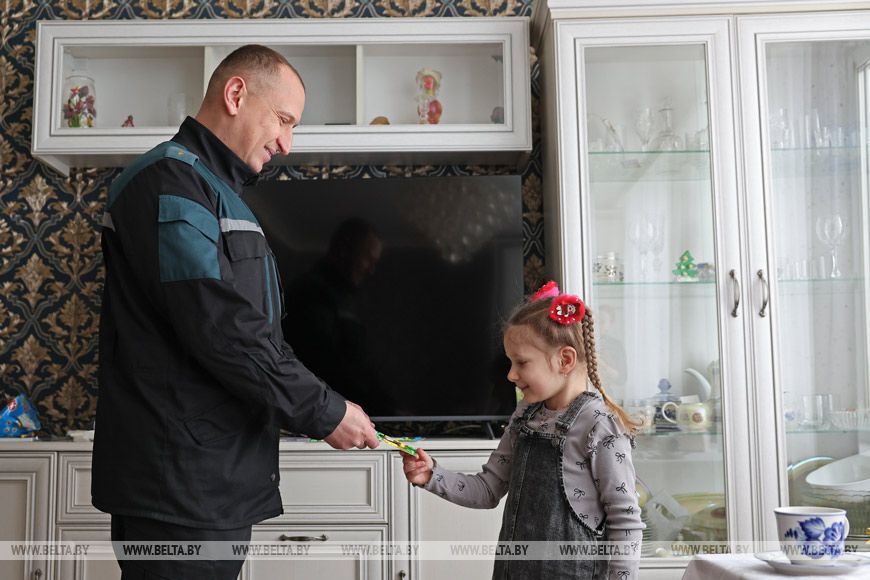
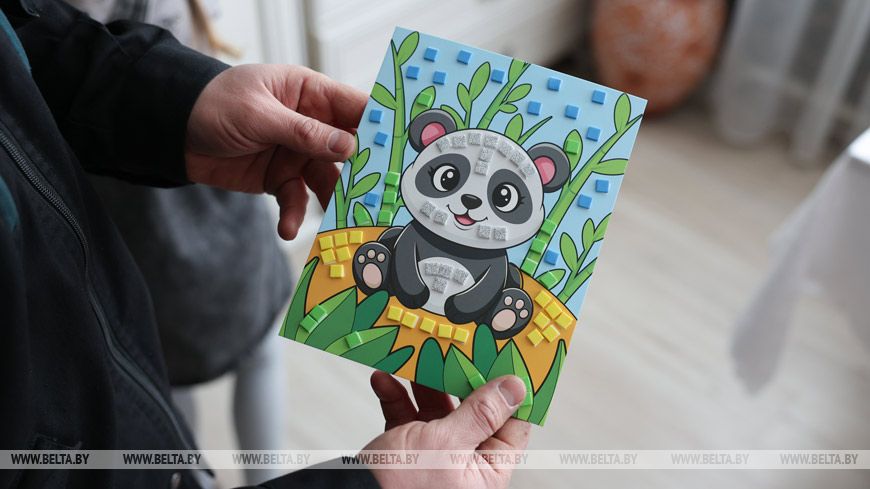
Sonya is a beautiful and cheerful girl who attends a preparatory class. She brought a craft she had made with her own hands for Aleksei Valetko, the man who had saved her and her grandmother, and told him:
“When dad found out what had happened, he came right away. I hugged him, and he hugged me back. I told him everything: how they wanted to take grandma to the hospital, and how the man picked me up in his arms, and we went down the stairs together.”
After the incident, the child was surrounded with warmth and attention, and they bought her treats. And yet little Sonya is still afraid to stay alone and won’t let adults out of her sight.
“Going over those events in my mind, I think I should have shut the balcony door tightly, stuffed the gap under the front door with wet towels… But at the time I couldn’t think straight: everything was sudden and frightening,” Yelena said. “I immediately realized there was no way to get out of the apartment on our own… If my husband had been there, he would have done all that, and things might have turned out differently. What did you tell grandpa, Sonya?”
“That he is now under house arrest!”
“She wouldn’t let her grandfather go anywhere for a long time. Only recently has she eased her vigilance.”
A person’s psyche holds on to the imprint of trauma for a long time, and memories of it can torment them. In a fire, the initial fear lessens if a person sees the source of the flames and feels they can influence the situation. But when the fire is far away, and acrid smoke seeps through the tiniest cracks, poisoning the air and cutting off your breath, with no way to escape, the terror only grows. After such an ordeal, it is crucial to support your loved ones and try to return to normal life, gradually restoring familiar routines. And yet the memories of that day, like soot embedded in the walls, still won’t let go. Even now, two and a half months after the incident, soot continues to settle on the light-colored furniture in the rooms. The homeowner fights the black dust and keeps asking herself:
“Going over those events in my mind, I think I should have shut the balcony door tightly, stuffed the gap under the front door with wet towels… But at the time I couldn’t think straight: everything was sudden and frightening,” Yelena said. “I immediately realized there was no way to get out of the apartment on our own… If my husband had been there, he would have done all that, and things might have turned out differently. What did you tell grandpa, Sonya?”
“That he is now under house arrest!”
“She wouldn’t let her grandfather go anywhere for a long time. Only recently has she eased her vigilance.”
A person’s psyche holds on to the imprint of trauma for a long time, and memories of it can torment them. In a fire, the initial fear lessens if a person sees the source of the flames and feels they can influence the situation. But when the fire is far away, and acrid smoke seeps through the tiniest cracks, poisoning the air and cutting off your breath, with no way to escape, the terror only grows. After such an ordeal, it is crucial to support your loved ones and try to return to normal life, gradually restoring familiar routines. And yet the memories of that day, like soot embedded in the walls, still won’t let go. Even now, two and a half months after the incident, soot continues to settle on the light-colored furniture in the rooms. The homeowner fights the black dust and keeps asking herself:
“I don’t understand why my hands were covered in soot when I came downstairs. I didn’t touch anything…”
‘They fight through fire and smoke for the lives of strangers’
On the first floor of that ill-fated apartment, the broken windows have already been replaced. Life is returning to normal, but it took only minutes to destroy the property, while restoration will take months.
Sonya’s baby brother, who was born the day after the fire, is growing by the hour, as his grandmother says. He adores his sister and often smiles at her. This year, Yelena will celebrate a milestone birthday, and she is already planning the celebration.
‘They fight through fire and smoke for the lives of strangers’
On the first floor of that ill-fated apartment, the broken windows have already been replaced. Life is returning to normal, but it took only minutes to destroy the property, while restoration will take months.
Sonya’s baby brother, who was born the day after the fire, is growing by the hour, as his grandmother says. He adores his sister and often smiles at her. This year, Yelena will celebrate a milestone birthday, and she is already planning the celebration.
“There is such a profession to rescue people from trouble! We are so grateful to Aleksei and all the guys who saved us,” she said, tears in her eyes. “Just think how hard their work is, and yet they selflessly fight through fire and smoke for the lives of people they don’t even know! Thank you, Aleksei, for your work. I sincerely wish you and your loved ones all the best. Keep doing what you do: saving people. A deep bow to you; thanks to you, we are alive. Thank you, thank you, and once again thank you. We are grateful to you personally and to everyone who works in the Emergencies Ministry.”
Life sometimes writes stories that outshine even the boldest movie scripts, connecting strangers with invisible threads for years to come. 7 Dnei newspaper is launching a new project “Fate Brought Them Together”, a chronicle of remarkable encounters between Belarusians that changed their lives forever. There is no place for coincidence in these stories: one person happened to be in the right place at the right time to help another.
Olga Prolyuk, 7 Dnei newspaper
Photos by Andrei Sinyavsky (BelTA) and from open internet sources
Life sometimes writes stories that outshine even the boldest movie scripts, connecting strangers with invisible threads for years to come. 7 Dnei newspaper is launching a new project “Fate Brought Them Together”, a chronicle of remarkable encounters between Belarusians that changed their lives forever. There is no place for coincidence in these stories: one person happened to be in the right place at the right time to help another.
Olga Prolyuk, 7 Dnei newspaper
Photos by Andrei Sinyavsky (BelTA) and from open internet sources