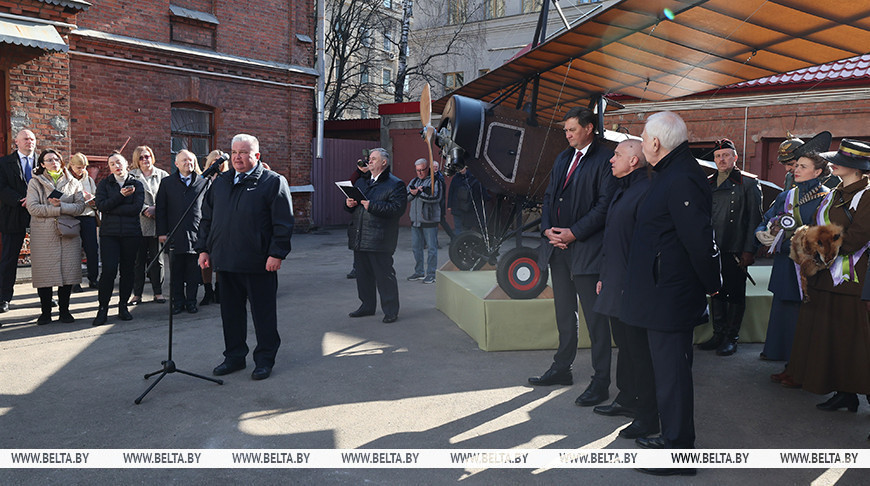
MINSK, 18 March (BelTA) – It is important to preserve peace and seek ways to resolve problems through negotiation, Belarus’ Minister of Foreign Affairs Maxim Ryzhenkov said at the opening ceremony of the exhibition Saving Europe. 110 years of the Lake Naroch offensive at the National Historical Museum, BelTA has learned.
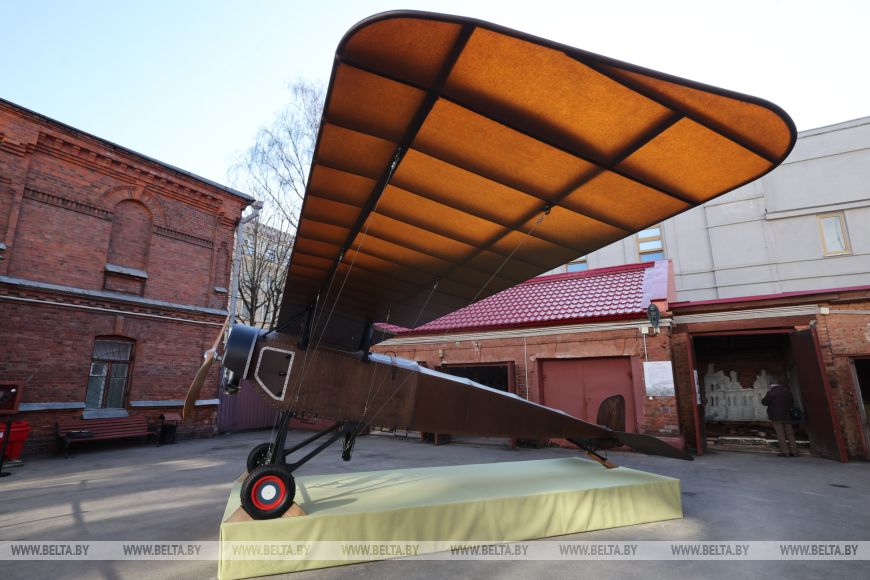
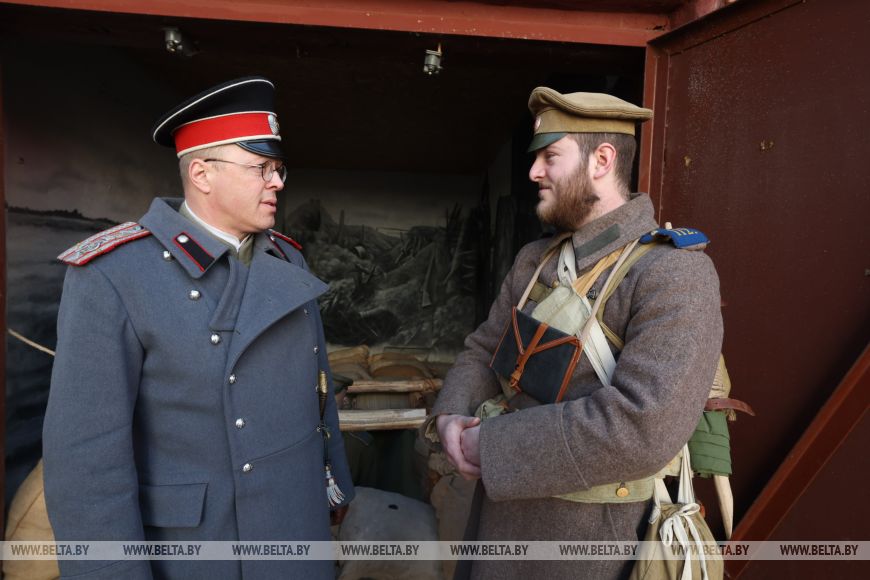
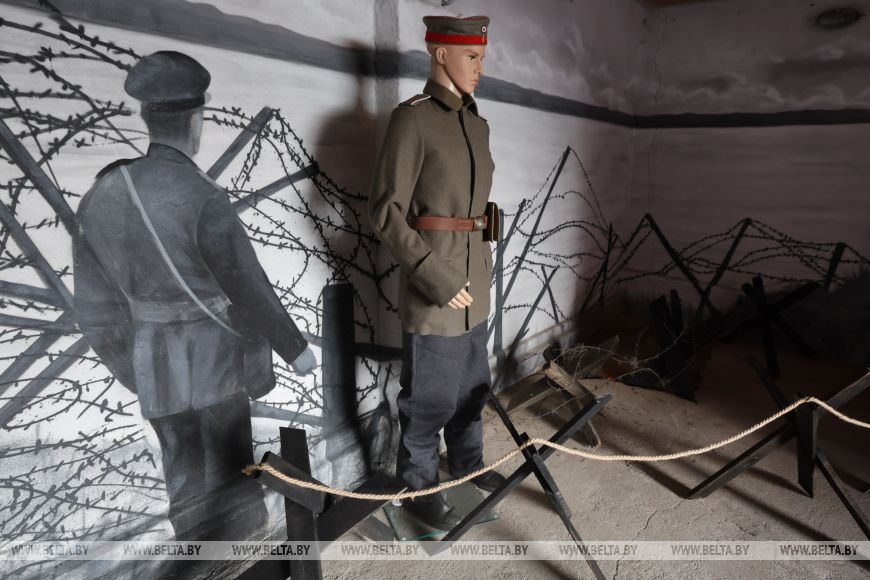 The minister noted that the events of the First World War are still insufficiently studied, and significant work remains to be done in this area, especially since the tragic pages of the Lake Naroch offensive are passed down from generation to generation.
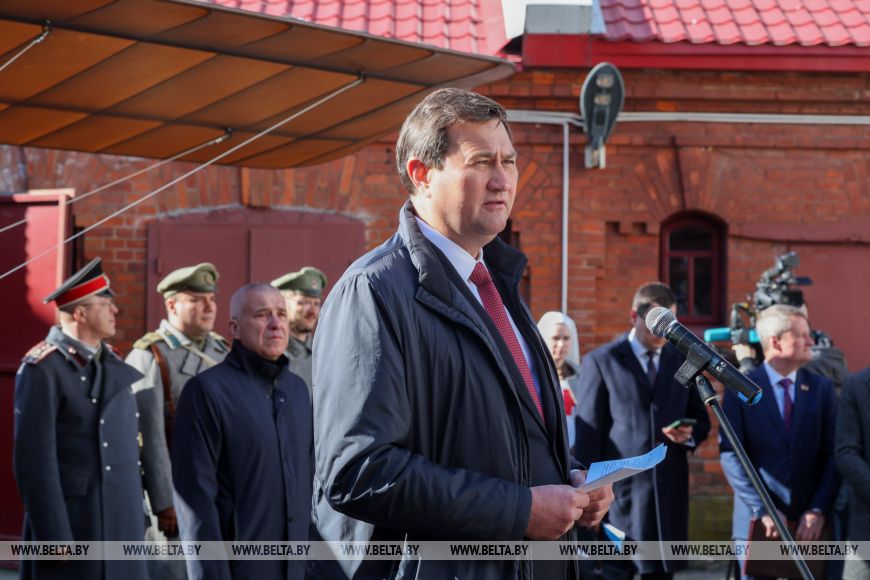 “Today we are speaking about an event that forever changed the course of world history. The First World War became the first global catastrophe of the 20th century. For four years, three months, and ten days it raged across the territories of 38 states with a combined population of more than 1.5 billion people: three-quarters of the world’s population at the time,” Maxim Ryzhenkov stressed. “For a long time, despite the scale of the disaster, things remained relatively calm for the Russian Empire: the war had taken on a positional character. Belarusian lands became a deep rear: the Supreme Commander’s headquarters was first in Baranovichi and later in Mogilev. It seemed the front line was far away. But everything changed when the allies asked for help.”
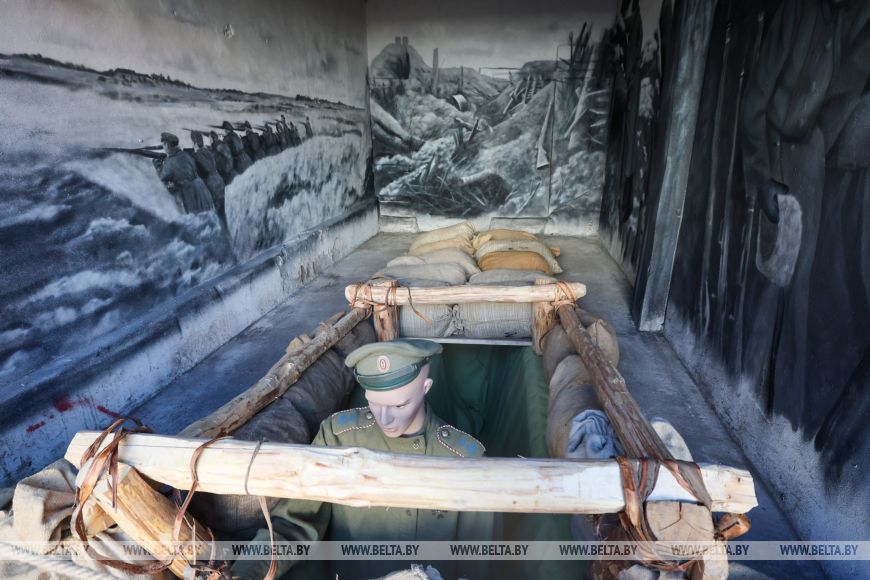
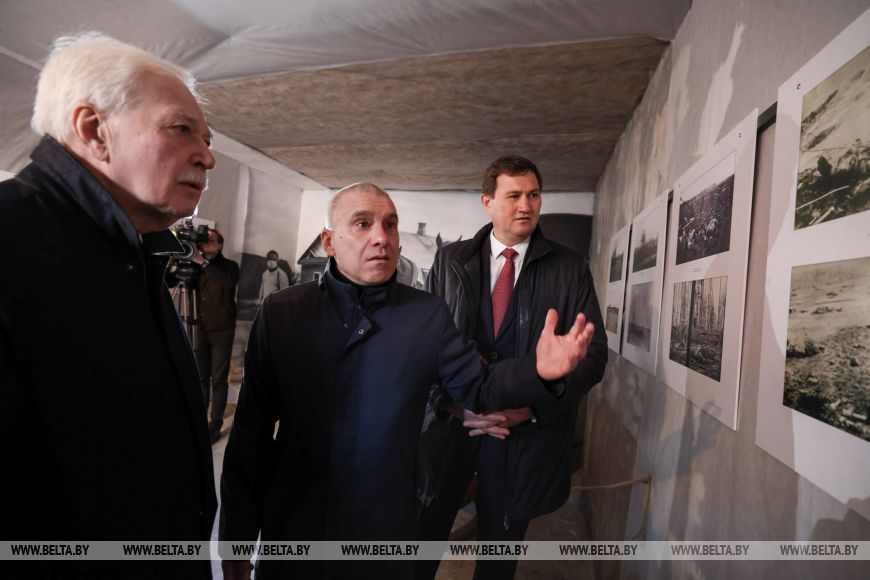 Exactly 110 years ago, at dawn on 18 March 1916, the fate of Europe was being decided in the forests and marshes of Belarus. Under the thunder of artillery, the operation to save distant France and Verdun began near Lake Naroch.
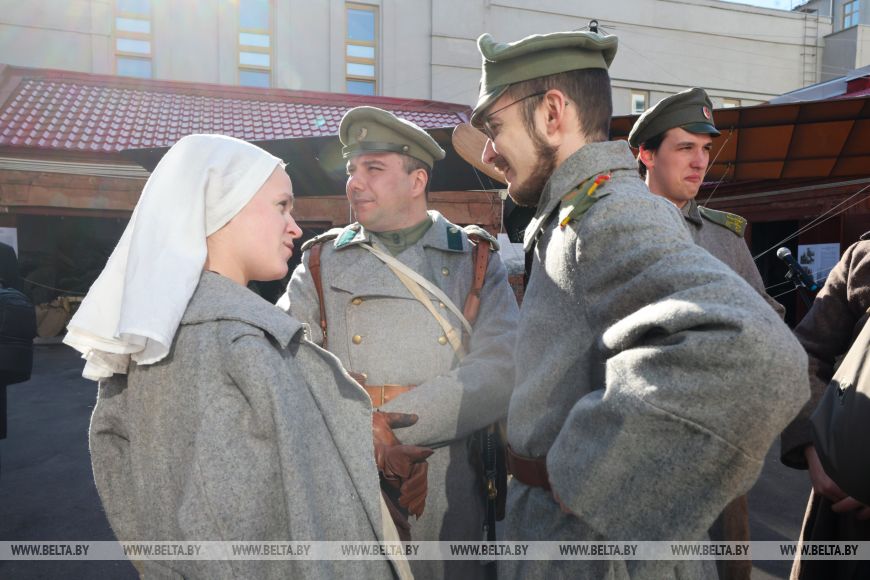
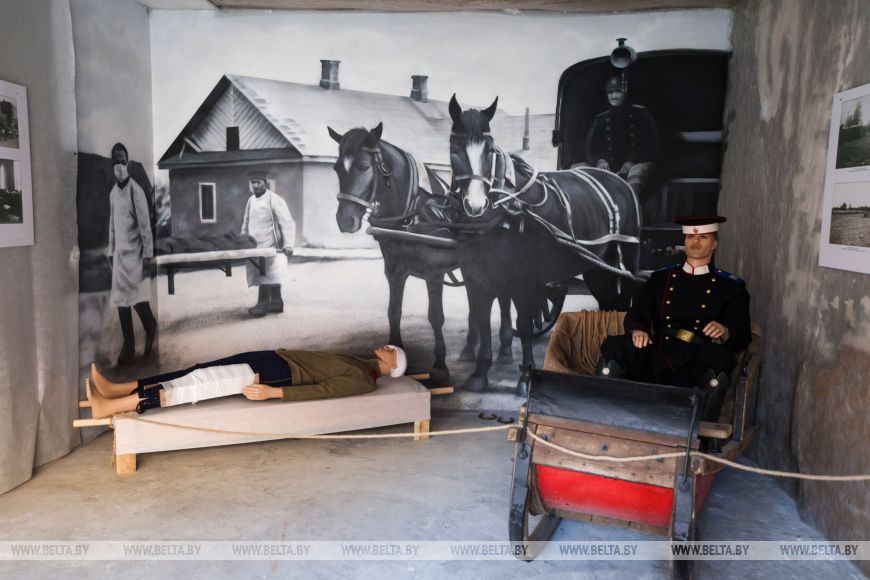 More than 2.2 million Belarusians became refugees, losing everything they had. Another 50,000 were forcibly taken to Germany and Austria-Hungary. The fate of the town of Smorgon was especially tragic: German forces used phosgene there. As a result of the fighting, the town was completely destroyed and reduced to ruins. Of its 16,000 residents, only about 130 remained.
The minister noted that the events of the First World War are still insufficiently studied, and significant work remains to be done in this area, especially since the tragic pages of the Lake Naroch offensive are passed down from generation to generation.“Today we are speaking about an event that forever changed the course of world history. The First World War became the first global catastrophe of the 20th century. For four years, three months, and ten days it raged across the territories of 38 states with a combined population of more than 1.5 billion people: three-quarters of the world’s population at the time,” Maxim Ryzhenkov stressed. “For a long time, despite the scale of the disaster, things remained relatively calm for the Russian Empire: the war had taken on a positional character. Belarusian lands became a deep rear: the Supreme Commander’s headquarters was first in Baranovichi and later in Mogilev. It seemed the front line was far away. But everything changed when the allies asked for help.”
At that time, France’s Verdun was on the brink of falling. Russia, faithful to its allied duty, decided to save the situation at the cost of its soldiers’ blood by drawing German forces onto itself, the minister emphasized.
Exactly 110 years ago, at dawn on 18 March 1916, the fate of Europe was being decided in the forests and marshes of Belarus. Under the thunder of artillery, the operation to save distant France and Verdun began near Lake Naroch.
“The strategic objective was achieved: the pressure on Verdun weakened, and Paris was saved. All of Europe applauded. But these actions became a deeply tragic page in the history of Belarusian lands and, frankly, of all Eastern Europe,” Maxim Ryzhenkov said. “The cost of this victory was enormous. Belarus alone paid a significant price. Roadsides were covered with graves. According to historians, more than 800,000 Belarusians were mobilized, half of all able-bodied men. Between 600,000 and 1 million residents of Belarus died during the war.”
More than 2.2 million Belarusians became refugees, losing everything they had. Another 50,000 were forcibly taken to Germany and Austria-Hungary. The fate of the town of Smorgon was especially tragic: German forces used phosgene there. As a result of the fighting, the town was completely destroyed and reduced to ruins. Of its 16,000 residents, only about 130 remained.
“We know the value of life, and modern Belarus’ peace-oriented policy is reflected in various international initiatives of our country,” Maxim Ryzhenkov emphasized.
Photos by Nikolai Petrov/ BelTA