
MINSK, 3 February (BelTA) – We need a step-by-step anti-crisis plan for Vitebsk Oblast, Belarusian President Aleksandr Lukashenko said at a meeting to discuss the social and economic development of Vitebsk Oblast, BelTA has learned.
Aleksandr Lukashenko reminded everyone that a large-scale meeting on the social and economic development of Vitebsk Oblast was held in October 2025. He noted that the situation in the region is more challenging than in others, but other regions should not become complacent. “What we see in Vitebsk Oblast is characteristic of all regions. I want you to hear this and convey it to every governor,” the Belarusian leader emphasized.
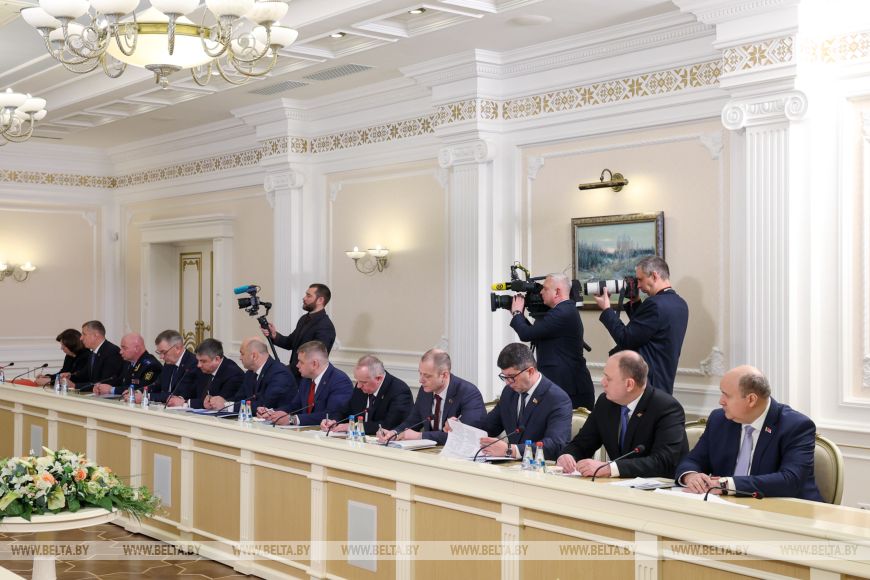
The head of state noted that the meeting in Vitebsk outlined the problems that had remained unresolved for years and that were passed down “as an inheritance” from one governor to another, and ultimately became systemic. It was also agreed that the regional leadership would take urgent measures to sort things out before the new year.
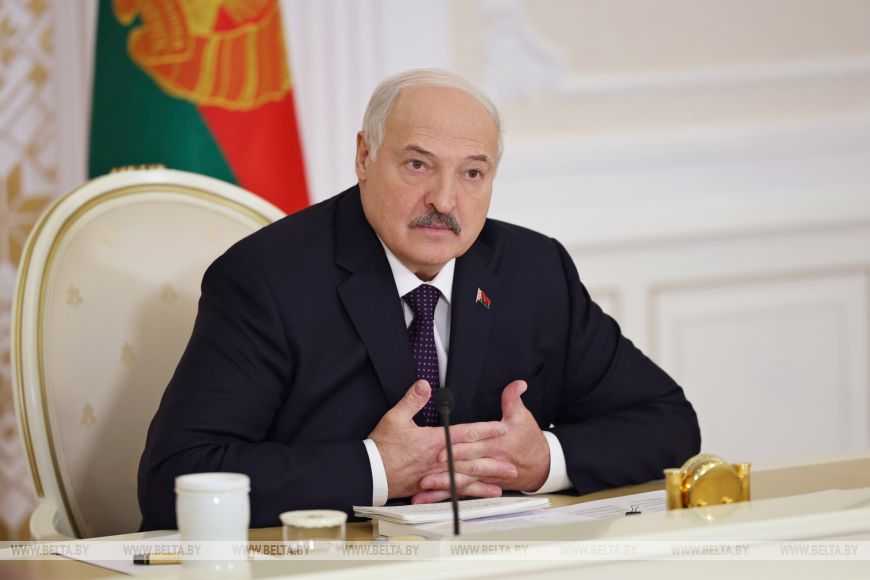
In January of this year, Aleksandr Rogozhnik was appointed Chairman of the Vitebsk Oblast Executive Committee. “Today is the first checkpoint to assess the real situation and understand if there is positive momentum. A governor must start with the pain points and decision-making. Decisions need to be made. If you make a mistake, we will correct it,” Aleksandr Lukashenko said.
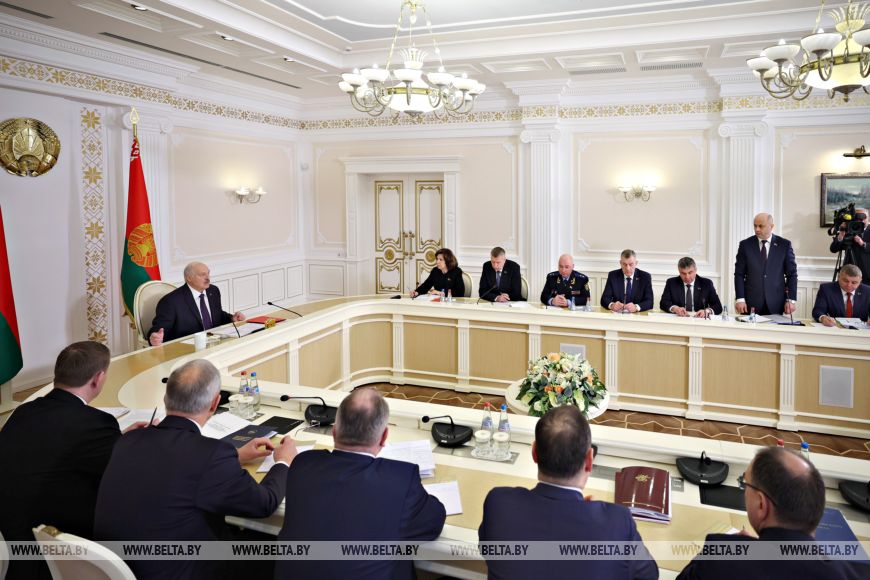
“It is up to the new governor, with the team he has, to resolve all problems. He is essentially starting work in field conditions. You have a character akin to a military man. Everyone must keep their eyes on the ball [while implementing the tasks for the region's development]. If you do, I will help and support you, provided you deserve it. A realistic plan and military discipline in executing these plans are needed,” the Belarusian leader emphasized.
In particular, Aleksandr Lukashenko mentioned the integration structures in the agricultural industry of Vitebsk Oblast, of which six currently remain. “I have found responsible people for three of these structures for you. They will provide assistance, ask questions, demand results, and keep me informed,” the president said.
These three individuals are people who are already implementing successful projects in the agricultural industry, including representatives of private business: Vladimir Lukyanov, General Director of the Dzerzhinsky Agrokombinat; and businessmen Aleksandr Moshensky and Evgeny Baskin.
“Here are the raw material zones. Three out of six. Well, for the other three [integration structures], you'll find them yourselves. They will be your assistants. Technologically, financially, organizationally. But they will help you, make recommendations. The governor must make decisions together with the chairmen of the district executive committees. There are 21 of them. Work through them,” the president stated.
Aleksandr Lukashenko noted that he even considered the possibility of introducing some tax incentives for Vitebsk Oblast. However, this option needs to be thoroughly evaluated.
“We need to consider different options. But for now, we will help on a pinpoint basis. For example, the governor approaches the government with the 200 calf nurseries project. You know the price. Minus another 10%. Because we will help with and other materials. Timber might be handled by Vitebskdrev. We will manufacture the metal posts for this money that we will assist with, and give them to them. Let them do it. We have the experience. We will build one calf farm. We will show it to the 21 district executive committee chairmen and the governor,” the head of state said.
“Decide who will take the lead, who will handle the groundwork, and what the returns will be. Think about what products you will manufacture,” the Belarusian leader noted.
Aleksandr Lukashenko recalled that some promising projects have already been proposed for Vitebsk Oblast, and relevant plans exist. This includes cooperation with partners from China and Oman.
For example, the discussion involves expanding greenhouse farming by utilizing unused resources from Lukoml State District Power Plant. “We agreed that greenhouses would be built all around there. Since electricity is cheap there. We will finally get tomatoes, cucumbers, and other produce that is lacking, so that people can eat normally during the off-season,” the head of state noted.
The same applies to the prospects of growing flowers in greenhouses which can be sold not only within Belarus as an alternative to imports. The president is confident that anything can be grown in greenhouses.
“You need to be proactive! I’m not even talking about wood processing. Yours is a forest region. Today, timber is in demand everywhere,” the head of state emphasized.
Regarding cooperation with Oman, Aleksandr Lukashenko recalled the large-scale project to build a pulp and paper mill. “Build it. They will take all the products, sell them, and pay you the money,” the president said.
Aleksandr Lukashenko also reminded everyone about the planting campaign, the active phase of which will begin in just two months. However, he noted that nationwide, there is currently some lagging in terms of fertilizer accumulation. “Well, that's your business, how you'll manage to get out of this. Think about how we will do spring fields in two months. Gorlov [Agriculture and Food Minister Yuri Gorlov] said that spring will be early," remarked the head of state.
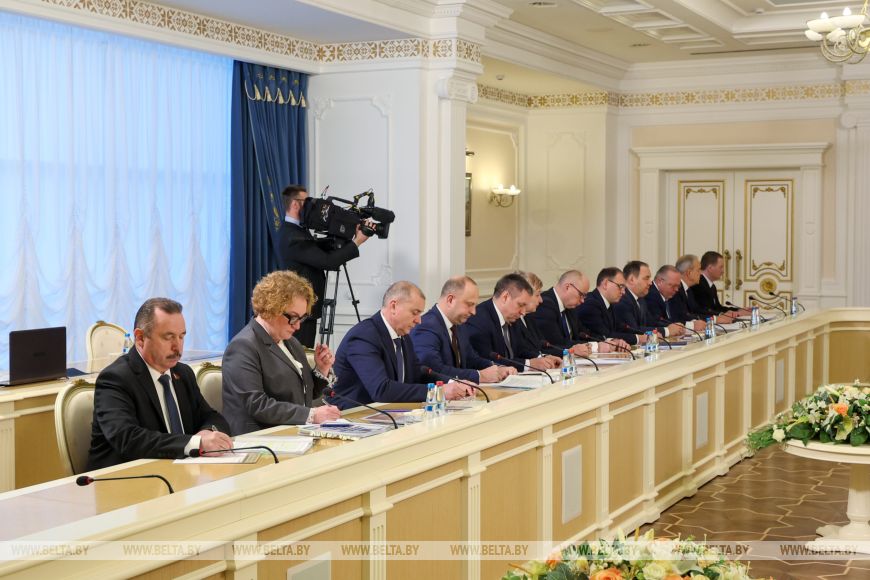
The meeting brought together Prime Minister Aleksandr Turchin; Speakers of both chambers of parliament Natalya Kochanova and Igor Sergeyenko, who also head the working group monitoring the social and economic development of Vitebsk Oblast; Head of the President Administration Dmitry Krutoi; Chairman of the State Control Committee Vasily Gerasimov; Prosecutor General Dmitry Gora; Chairman of the Board of the National Bank Roman Golovchenko; and Head of the Belarus President Property Management Directorate Yuri Nazarov. The deputy prime ministers, several ministers, deputy governor of Vitebsk Oblast and heads of banks were also invited to the meeting.