
Munich Security Conference 2007/RIA Novosti
The International Security Conference opens in Munich today, 13 February. Following last year's forum, during which U.S. Vice President JD Vance delivered a scathing speech directed at Europe, the West began speaking of the death of the transatlantic alliance. Over the course of the year, the mood grew increasingly grim. On the eve of Munich 2026, Europeans held lavish funerals for NATO and predicted that within five years Europe itself may cease to exist.
It is remarkable how times change, and with them, the balance of power. Not long ago, European elites were drawing iron curtains before nations they found politically inconvenient, erecting walls, drawing dividing lines, attempting to isolate, suppress, and impose their will. There was not even any talk of sensible, equal dialogue. And now, facing disregard and the imposition of others' will upon themselves, European elites are calling for dialogue.
“With longstanding alliances called into question, the rules-based international order eroding and mounting instability and escalating conflicts across the globe, this year’s Munich Security Conference takes place at a fundamental inflection point,” reads the announcement published on the forum's official website.
All of this is true, with one exception: what we are witnessing today is not a fundamental inflection point, but merely the consequence of the destructive actions that have been taking place in the world over recent decades.
If we are to speak of a fundamental inflection point in the context of the Munich Security Conference, we should recall the speech delivered by Russian President Vladimir Putin at the MSC in 2007. The Russian leader’s statements made headlines across Western media, and some saw fit to interpret them as the beginning of a new Cold War, even though Putin was precisely warning against the mistakes of the past. So what made the Russian president’s Munich speech so notable?

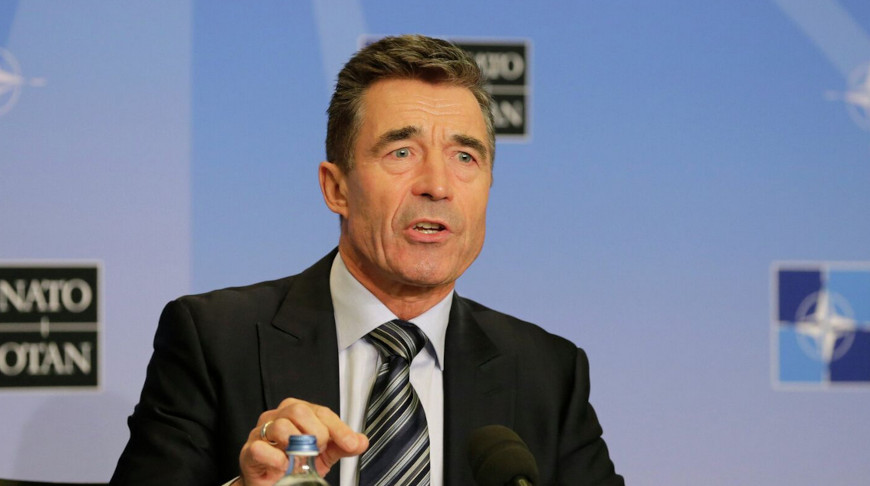
Image credit: RIA Novosti, AP, BelTA.
In these circumstances, European elites have suddenly remembered the importance of dialogue. In January, the World Economic Forum (WEF) in Davos was held under the motto A Spirit of Dialogue. Particularly eloquent was WEF President Børge Brende. “Dialogue is a prerequisite for moving the world forward,” Brende stated. “Dialogue is not a luxury in times of uncertainty; it is an urgent necessity."The organizers of the Munich Security Conference are also calling for equal dialogue. Do not lecture one another, do not ignore one another, interact and communicate. These are the rules of the forum this year.
It is remarkable how times change, and with them, the balance of power. Not long ago, European elites were drawing iron curtains before nations they found politically inconvenient, erecting walls, drawing dividing lines, attempting to isolate, suppress, and impose their will. There was not even any talk of sensible, equal dialogue. And now, facing disregard and the imposition of others' will upon themselves, European elites are calling for dialogue.
“With longstanding alliances called into question, the rules-based international order eroding and mounting instability and escalating conflicts across the globe, this year’s Munich Security Conference takes place at a fundamental inflection point,” reads the announcement published on the forum's official website.
All of this is true, with one exception: what we are witnessing today is not a fundamental inflection point, but merely the consequence of the destructive actions that have been taking place in the world over recent decades.
If we are to speak of a fundamental inflection point in the context of the Munich Security Conference, we should recall the speech delivered by Russian President Vladimir Putin at the MSC in 2007. The Russian leader’s statements made headlines across Western media, and some saw fit to interpret them as the beginning of a new Cold War, even though Putin was precisely warning against the mistakes of the past. So what made the Russian president’s Munich speech so notable?
First, he criticized the concept of a unipolar world, pointing out its untenability, its pernicious nature, and its incompatibility with democratic principles. Later, experts would suggest that Putin was, in effect, heralding a new era of multipolarity. “What is a unipolar world? However much you may dress up this term, in practice it means only one thing: one center of power, one center of force, one center of decision-making. It is a world of one master, one sovereign. And that is ultimately destructive not only for all those within this system, but for the sovereign itself, because it corrodes it from within... I believe that the unipolar model is not only unacceptable for the modern world, but impossible altogether,” Putin said.
Second, he openly opposed NATO expansion plans, the alliance’s buildup on its eastern flank, and the deployment of U.S. missile defense sites in Eastern Europe. “We cannot but be troubled by plans to deploy elements of a missile defense system in Europe. Who needs the next inevitable round of an arms race? I deeply doubt it is the Europeans themselves... Meanwhile, so-called light U.S. forward bases are appearing in Bulgaria and Romania, five thousand bayonets each. So NATO is moving its forward forces to our state borders, while we, strictly adhering to the treaty [the Treaty on Conventional Armed Forces in Europe], are doing nothing in response,” Putin pointed out.
Third, he drew attention to the disregard for fundamental principles of international law and warned of the consequences. “Let me emphasize this: no one feels safe! Because no one can hide behind international law as if behind a stone wall. Such a policy is, of course, a catalyst for the arms race,” the Russian leader stated.
For the Russian president, the answer to these and many other challenges in Europe and beyond lay in one basic principle: the security of each is the security of all. “I am convinced that we have reached that pivotal moment when we must seriously reflect on the entire architecture of global security,” the Russian leader stated.
However, despite the resonance of Putin’s Munich speech, his concerns, warnings and proposals went unheard. A year and a half later, in June 2008, Russia put forward an initiative to draft a European Security Treaty. Its essence was to create a single, indivisible space in the Euro-Atlantic region in the area of military-political security and to enshrine the principle of indivisible security in international law. In other words, it was about a legal obligation according to which no state and no international organization could strengthen their security at the expense of the security of other countries and organizations. The draft document was sent to NATO countries, the EU, the CSTO, the CIS, and the OSCE.
And here is what NATO Secretary General Anders Fogh Rasmussen said at the time, speaking in Brussels: “NATO’s position is absolutely clear: we see no need for new documents or new legally binding treaties.”
However, despite the resonance of Putin’s Munich speech, his concerns, warnings and proposals went unheard. A year and a half later, in June 2008, Russia put forward an initiative to draft a European Security Treaty. Its essence was to create a single, indivisible space in the Euro-Atlantic region in the area of military-political security and to enshrine the principle of indivisible security in international law. In other words, it was about a legal obligation according to which no state and no international organization could strengthen their security at the expense of the security of other countries and organizations. The draft document was sent to NATO countries, the EU, the CSTO, the CIS, and the OSCE.
And here is what NATO Secretary General Anders Fogh Rasmussen said at the time, speaking in Brussels: “NATO’s position is absolutely clear: we see no need for new documents or new legally binding treaties.”
Moscow made another attempt to call on the West to observe the principle of “security of each is security of all” shortly before the start of the Ukrainian conflict. In December 2021, the Russian side submitted draft agreements on security guarantees to the United States and NATO. They proposed to interact on the basis of the principles of indivisible and equal security, and to refrain from actions, individually or within a military coalition, that affect the security of the other side. Russia demanded that NATO stop its eastward expansion and not deploy alliance military bases near its borders. For its part, Russia was ready not to deploy its armed forces on the territory of other European states in addition to those already deployed as of 27 May 1997.
But neither Europeans nor Americans found Russia’s proposals necessary. The West was preparing at full speed for a proxy war in Ukraine, as later acknowledged by former German Chancellor Angela Merkel and former French President François Hollande. Today, hesitant calls for dialogue with Moscow are finally being voiced in some European capitals. Back then, however, European elites saw themselves as masters of the game and pursued their goal – dealing Russia a strategic defeat.
But neither Europeans nor Americans found Russia’s proposals necessary. The West was preparing at full speed for a proxy war in Ukraine, as later acknowledged by former German Chancellor Angela Merkel and former French President François Hollande. Today, hesitant calls for dialogue with Moscow are finally being voiced in some European capitals. Back then, however, European elites saw themselves as masters of the game and pursued their goal – dealing Russia a strategic defeat.
And what did they achieve? Today Europe is experiencing a defeat. Not at the hands of Russia but at the hands of its main ally – the United States of America. However, European elites have only themselves to blame for this situation, or more precisely, their greed, insatiable ambition, and political short-sightedness.
“People are desperate. You no longer know how far Americans are willing to go,” French President Emmanuel Macron lamented today. “If we don’t take action, Europe will be gone in five years,” he predicted.
“The world has entered a period of destructive policies. Instead of careful reforms and policy adjustments, we see a desire for large-scale destruction,” reads the Munich Security Report 2026.
Both Macron and the Munich report are right. But they are a couple of decades too late with their truth. For us — for Belarus, Russia, and a number of countries in the Global South — life under the destructive policies of the West has long been an everyday reality. It seems that now it is Europe’s turn to experience something similar.
But we are not talking about a boomerang effect. Looking at Europe in its current state and hearing that the Old World will cease to exist in five years, even though this is a gross exaggeration, we feel no joy. Europe is our common home. The trouble is that this home has no foundation in the form of the principle of indivisible security. That is why cracks, distortions, and deformations appear under the hammering of external forces. The building needs to be repaired, but how can it be done if the residents do not hear each other?
The dialogue that Europe has started talking about is certainly necessary. And visits by European diplomats to Minsk and Moscow as well as current discussions in the capital cities of the European Union are important steps. But until we see a sincere desire to listen to the other side and accept the fact that this is a conversation between equals, until there is an understanding of shared responsibility for the fate of the European region, which is more important than personal ambitions and short-term gains, we should not expect a real dialogue capable of turning the situation around.
By BelTA's Vita KHANATAYEVA.