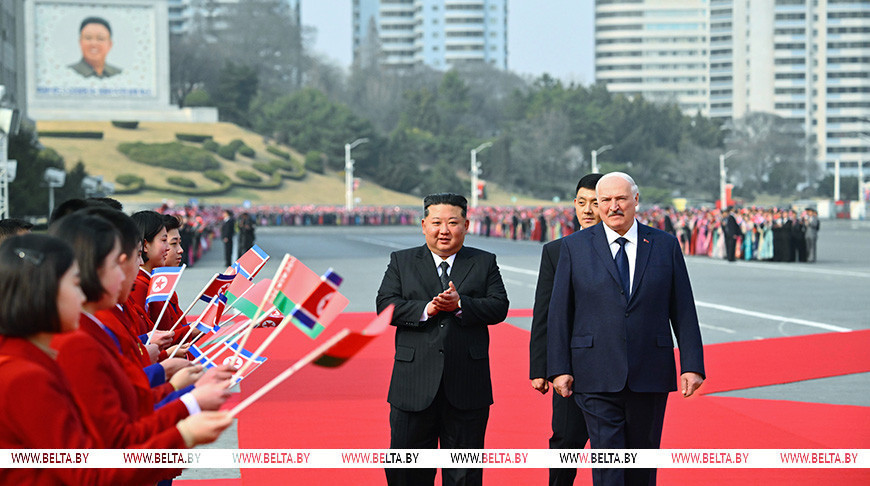
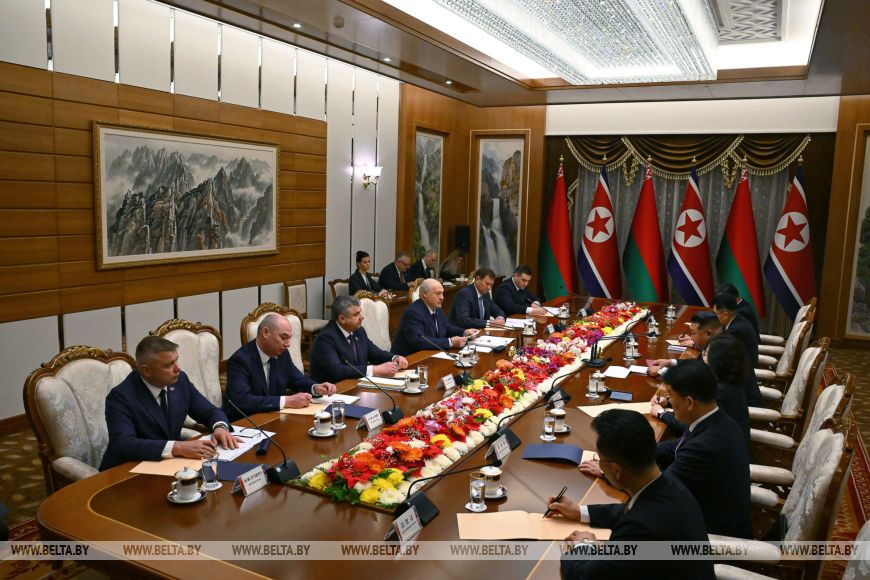
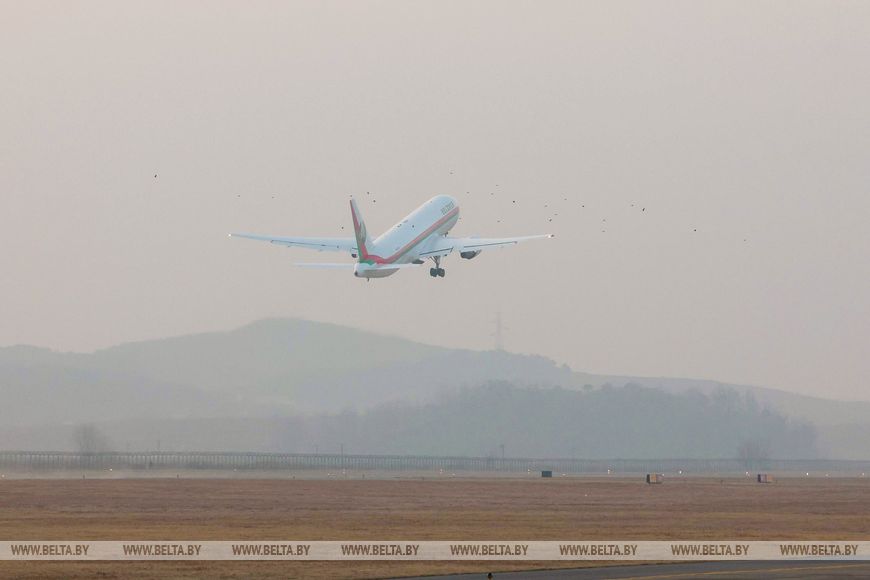
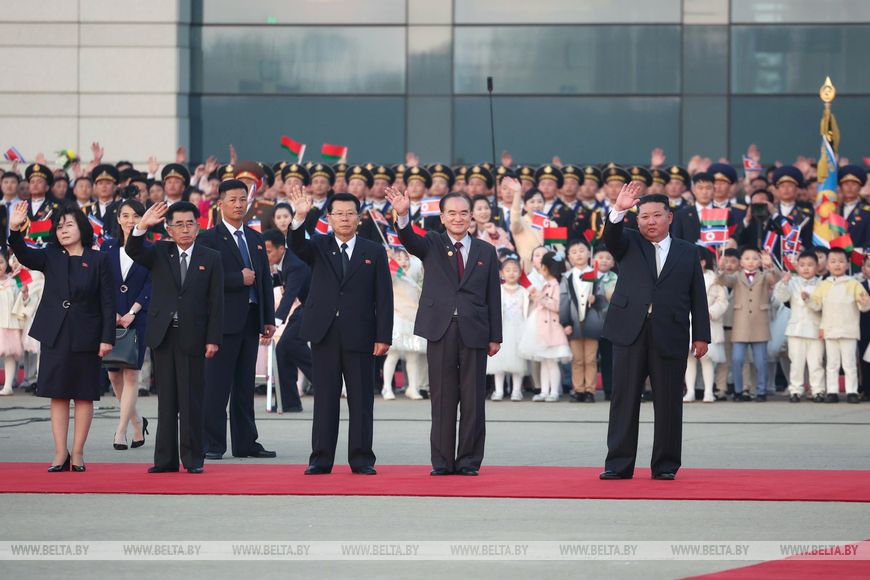
Belarusian President Aleksandr Lukashenko paid his first official visit to the Democratic People's Republic of Korea at the end of March. During the talks with Kim Jong Un, the Belarusian leader stated that relations between the two countries are entering a fundamentally new stage. Aleksandr Lukashenko’s visit to the DPRK also became a notable event on the international agenda. In American and European media, for instance, it was portrayed not so much as a diplomatic trip but as an element of broader geopolitical dynamics. The meeting between the leaders of Belarus and the DPRK also commanded attention in Asia. Read more about what the media wrote regarding Aleksandr Lukashenko’s first visit to Pyongyang in the feature by BelTA.
Some context
Some context
Although dialogue between Minsk and Pyongyang has only seen a notable revival in recent years, Belarus’ strategic position regarding the Democratic People's Republic of Korea was established long ago. As early as the 2000s, Aleksandr Lukashenko called on the international community and countries involved in negotiations to fulfill all agreements and commitments that had been made to the DPRK in exchange for freezing its nuclear program.
“The most important thing is not to corner the leadership of the DPRK. Because when you’re in a corner, there's only one way out - straight ahead. Whatever stands in the way, you go straight through. We, in Belarus know this well. We have been, and continue to be, politically cornered. That’s why we support this approach. We need to engage in dialogue with the DPRK leadership in a humane, constructive way. Especially since everyone knows what Koreans are like. People in North Korea are very resolute. You don’t provoke people who possess weapons of mass destruction - chemical, biological, and nuclear,” the president emphasized in March 2003. Just a few months earlier, Pyongyang had withdrawn from the Treaty on the Non-Proliferation of Nuclear Weapons.
In 2020, Aleksandr Lukashenko stated that Belarus was looking forward to strengthening relations with the DPRK, noting that the level of cooperation was unjustifiably low.
“We closely follow the developments on the Korean Peninsula and support all efforts being made to ensure peace and resolve existing tensions in the region as a whole,” the head of state said while accepting the credentials from the DPRK ambassador. “We are interested in maintaining constructive contacts within international organizations. We ask the new head of the diplomatic mission to focus on such areas of cooperation as the production of medicines and food, vocational training, and professional development.”
In January 2025, the president said that several countries, including the DPRK, had sent Belarus proposals to organize high-level meetings to discuss cooperation. A little later, it became known that the Belarusian leader was planning a visit to Pyongyang.
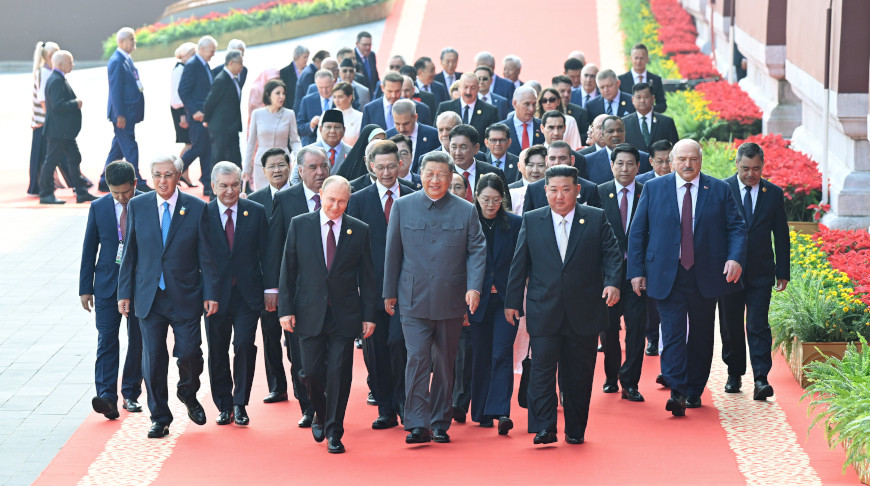
Aleksandr Lukashenko and Kim Jong Un exchanged congratulatory messages on several occasions to mark significant dates and events, but their first face-to-face conversation, or at least the one reported in the media, took place last autumn in Beijing. This occurred during the celebrations marking the 80th anniversary of victory over Japanese militarism and the end of World War II. The North Korean leader invited the Belarusian head of state to visit Pyongyang at any convenient time, and now this long-awaited visit has taken place.
How the West assessed Lukashenko’s visit to the DPRK
On the day of Aleksandr Lukashenko's arrival in Pyongyang, Western media wrote not only about the visit itself but also about its context. The British news agency Reuters, for instance, reported on “cementing ties between two close allies of Russia's Vladimir Putin.” Journalists also noted that Belarus and the DPRK had have withstood years of external economic pressure, and that U.S. President Donald Trump has engaged with both states.
“Belarus and North Korea sign a new friendship treaty in Pyongyang, deepening their anti-Western alliance and backing Russia's war in Ukraine," Euronews said dedicating considerable attention to both countries’ relations with Russia.
The U.S. news agency Associated Press and The Washington Post also link the visit to geopolitics, describing Minsk as a key ally of Moscow and the DPRK as a country that is strengthening military cooperation with the Russian Federation.
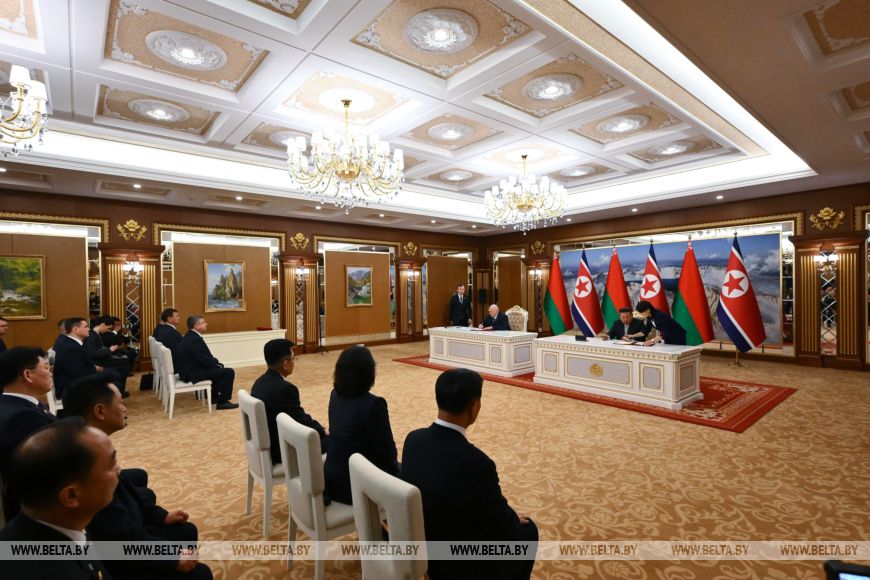
“Belarus’ President Aleksandr Lukashenko and North Korean leader Kim Jong Un held talks in North Korea’s capital on Thursday and signed a friendship and cooperation treaty as the key allies of Moscow draw closer amid their confrontations with the U.S.-led West,” The Washington Post said.
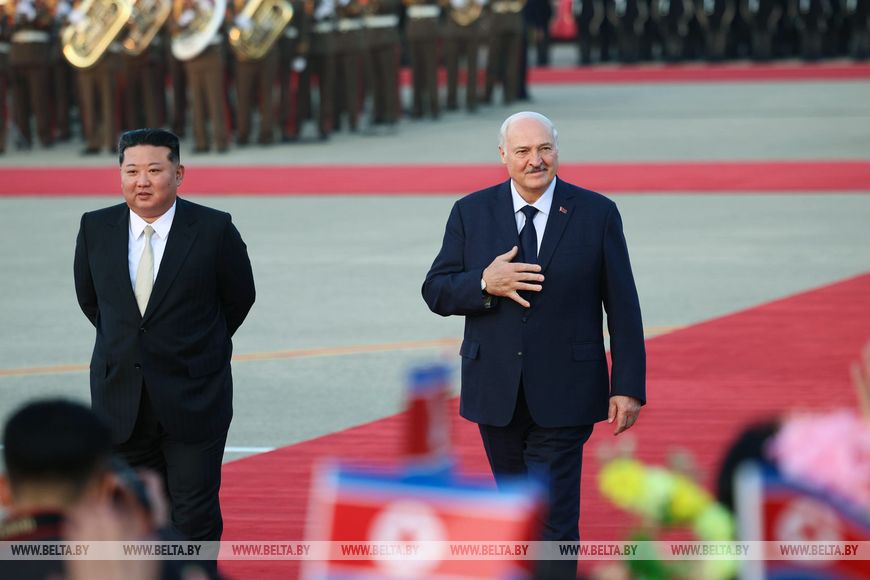
Journalists at The Sun, however, proved more impressionable. The gift exchange ceremony between the leaders of Belarus and the DPRK inspired a string of metaphors from them. The Belarusian assault rifle in Kim Jong Un's hands was variously described as a “chilling moment”, “shocking and chilling footage”, and an “haunting clip.”
“The North Korean and Belarusian dictators showered each other with praise as they met for a Pyongyang summit – sparking fears over the growing bond between Russia‘s allies,” the British tabloid said following the same general line
.
Lukashenko-Kim Jong Un meeting through the eyes of Asian media
Chinese media covered the Belarusian leader”s visit to the DPRK in a neutral and diplomatic tone, emphasizing the fact of the visit and the talks that took place. They avoided making explicit assessments regarding sanctions, an “anti-Western alliance”, and certainly did not link the meeting between Aleksandr Lukashenko and Kim Jong Un to the war in Ukraine.
In Japan, they approached the negotiations in Pyongyang with caution. “Belarus and North Korea are part of a push driven by Chinese President Xi Jinping and Putin to create what they call a "multipolar world" to challenge Western hegemony,” The Japan Times said.
The newspaper also cited a researcher, Lee Ho-ryung, of the Korea Institute for Defense Analyses [a leading South Korean think tank] who suggested that the visit was intended to "show solidarity among nations opposed to the Western order.”
“Kim will try to use the occasion to raise its diplomatic profile and strengthen solidarity among the so-called anti-Western bloc," she said.
Japan's public broadcaster NHK also believes that the leaders of Belarus and the DPRK, by strengthening bilateral ties, hope to deter Western countries.
Interestingly, Aleksandr Lukashenko’s visit to Pyongyang took place against the backdrop of a crisis in relations between the DPRK and Japan. As a result, the talks between the two leaders drew particular interest in the Land of the Rising Sun.
"We are closely monitoring everything related to the DPRK, including the developments you mentioned regarding its relations with Belarus. We are gathering and analyzing information," Minoru Kihara, Chief Cabinet Secretary of Japan, said in response to a question from TASS.
The visit was also analyzed in detail in Seoul. " The unification ministry in Seoul views Thursday's Kim-Lukashenko talks as likely to focus on economic affairs as part of a bid to cement trilateral cooperation also involving Russia,” said Yonhap, the largest news agency of the Republic of Korea.
Belarus is among the few countries with which North Korea seeks economic cooperation in the face of UN sanctions over its nuclear and missile programs, the Korea JoongAng Daily noted.
The newspaper added: “In a speech to the Supreme People's Assembly on Monday, Kim Jong Un accused the United States of engaging in global 'state terrorism and aggression' and of fomenting 'anti-American sentiment,' calling on Pyongyang to take a more active stance in a united front against Washington.”
Aleksandr Lukashenko’s visit to the DPRK became an important step toward deepening bilateral relations and expanding areas of cooperation, including in economy and education. For international audiences, particularly in the West, the Belarusian leader’s trip acquired a geopolitical context from the outset, even before his arrival in Pyongyang, and was covered by the press as part of a broader picture: the formation of “anti-Western alliances” and ongoing confrontations. But what matters most is something else: Belarus once again demonstrated its ability to engage in dialogue with different countries and create opportunities for joint projects in economy, science, and education, regardless of any constraints.