
MINSK, 24 February (BelTA) – Belarusian Deputy Minister of Foreign Affairs Igor Sekreta made a speech during a high-level discussion within the framework of the 61st session of the UN Human Rights Council in Geneva, Switzerland on 24 February, BelTA learned from the Permanent Mission of the Republic of Belarus to the United Nations Office and other international organizations in Geneva.
The discussion touched upon the 25th anniversary of the Durban Declaration and Program of Action, which are key framework documents on combating racism, racial discrimination, xenophobia, and related intolerance.
The Belarusian diplomat noted that racism, xenophobia, and discrimination remain a reality in a number of Western countries. He expressed concern about the growing popularity in the West of the political parties and movements that organize their activities around the promotion of Nazi ideologies and racial superiority. “Unfortunately, even 25 years later, partly due to the recent complete disregard for these documents by a number of Western countries, racism, xenophobia, and discrimination remain a reality for millions of people around the world while armed conflicts fuel such phenomena. As a result, in some Western countries intolerance has increased and racial segregation in education and the labor market has worsened. We are particularly concerned about the growing popularity in the West of the political parties and movements that organize their activities around the promotion of Nazi ideologies and racial superiority, not only on the basis of nationality and language, but also on the basis of statehood,” Belarus’ representative noted.
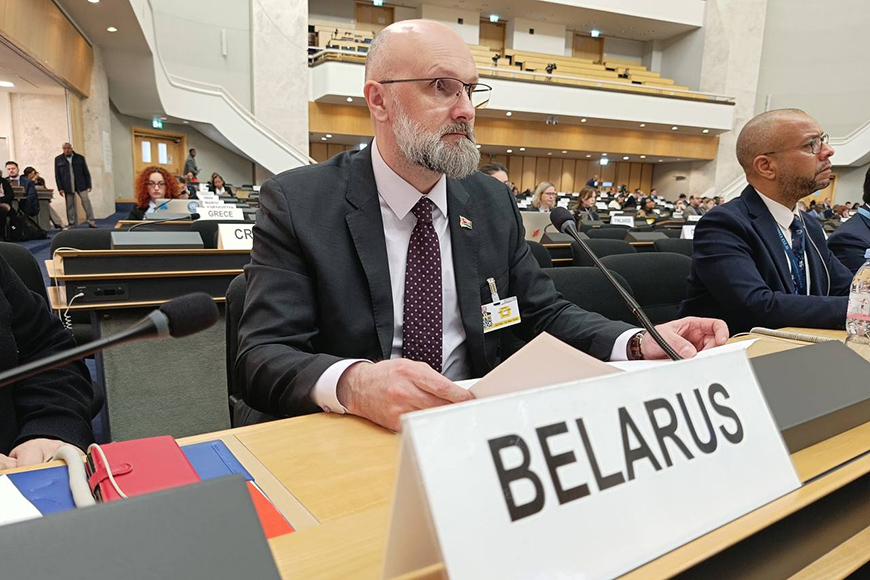
Photo courtesy of the Ministry of Foreign Affairs
The deputy minister of foreign affairs supported the claims for reparations made by African and Asian countries, which populations suffered from crimes of genocide during the colonial era. “The declaration explicitly points to the need to acknowledge the consequences of colonial policies, which still determine the social and economic standing of millions of people. For centuries European powers used colonies as a source of raw materials, cultural values, cheap labor, and export markets. Countries in Africa and Asia still bleed due to wounds of the genocide against their local populations, which was on par with the Nazis’. We support these countries’ claims for compensation and reparations,” Igor Sekreta emphasized.
He confirmed Belarus’ intention to continue following the goals and principles of the Durban Declaration, upholding the principles of equality and justice. “Political will is needed to achieve the goals of the declaration. Belarus has always followed the goals and principles of the Durban Declaration, upholding the principles of equality, justice, and dialogue. And it will continue this work,” the deputy minister noted.