Photo courtesy of the Ministry of Foreign Affairs
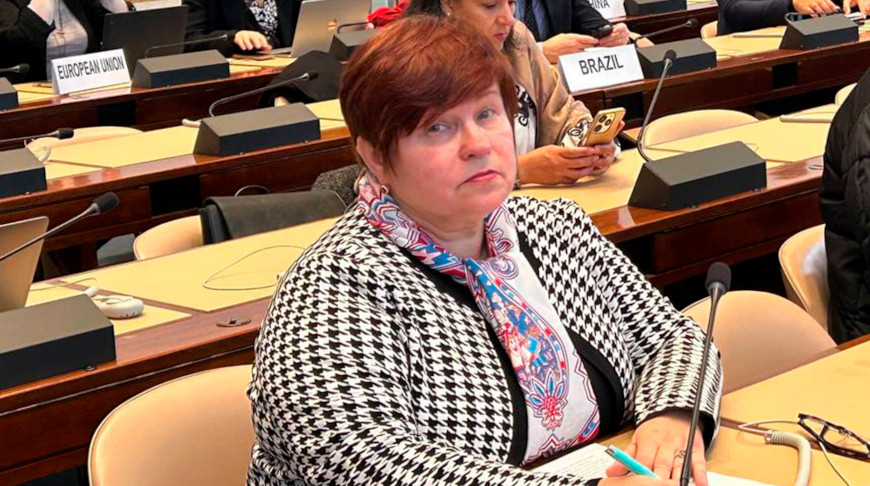
MINSK, 4 December (BelTA) – Permanent Representative of the Republic of Belarus to the United Nations Office and other international organizations in Geneva Larisa Belskaya took part in a special conference organized by the Group of Friends in Defense of the Charter of the United Nations in the UN Office in Geneva, Switzerland on 4 December on the occasion of the International Day Against Unilateral Coercive Measures, BelTA learned from the Belarusian Ministry of Foreign Affairs.
It is the first time the day has been marked in line with the UN General Assembly resolution adopted in June 2025.
“Like the international majority Belarus is convinced that unilateral coercive measures violate international law and the UN Charter and undermine interstate cooperation based on the principles of respect for sovereignty and non-interference in domestic affairs. As a rule, sanctions are used by Western states to push for the political and economic interests of their elites, who use unilateral coercive measures on a massive scale as a weapon against sovereign states while disregarding their negative consequences for human rights, the global economy and trade, and sustainable development,” Larisa Belskaya emphasized.
The Belarusian diplomat welcomed the work of Alena Douhan, special rapporteur on the negative impact of unilateral coercive measures on the realization of human rights. Thanks to efforts of the special rapporteur an extensive body of evidence has been compiled on the devastating impact of sanctions on human rights, including the basic rights to life, health, education, and many other ones.
Larisa Belskaya called on participants of the event to facilitate effective monitoring and assessment of the impact of unilateral coercive measures on human rights and to actively oppose illegitimate policies based on sanctions.
Belarus’ permanent representative emphasized the importance of the international community’s decision to establish the International Day Against Unilateral Coercive Measures in order to bring closer a complete rejection of their use in international relations.