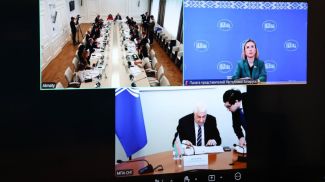

MOSCOW, 20 April (BelTA) – The Belarusian delegation presented its priorities for the near future at a meeting of the Council of the Parliamentary Assembly of the Collective Security Treaty Organization in Moscow on 20 April, BelTA has learned.
“In today’s challenging conditions, it is vital for us to strengthen allied ties within the CSTO. The Republic of Belarus fully supports the priorities announced by the Russian Federation for its chairmanship of the CSTO this year, particularly emphasizing consultations among member states and the strengthening of interparliamentary cooperation in ensuring collective security,” said Igor Sergeyenko, Chairman of the House of Representatives of the National Assembly of Belarus.
“Our vision of the role and tasks of the CSTO Parliamentary Assembly, as well as the principles and mechanisms for implementing priority areas of development, are reflected in the statement of the CSTO PA Council on the occasion of the 20th anniversary of its establishment, which we will review and adopt today. The main task is well known to everyone: ensuring that the agreements reached by the heads of state are enshrined at the legislative level, harmonizing national legislation, and preparing and implementing coordinated measures on international platforms.”
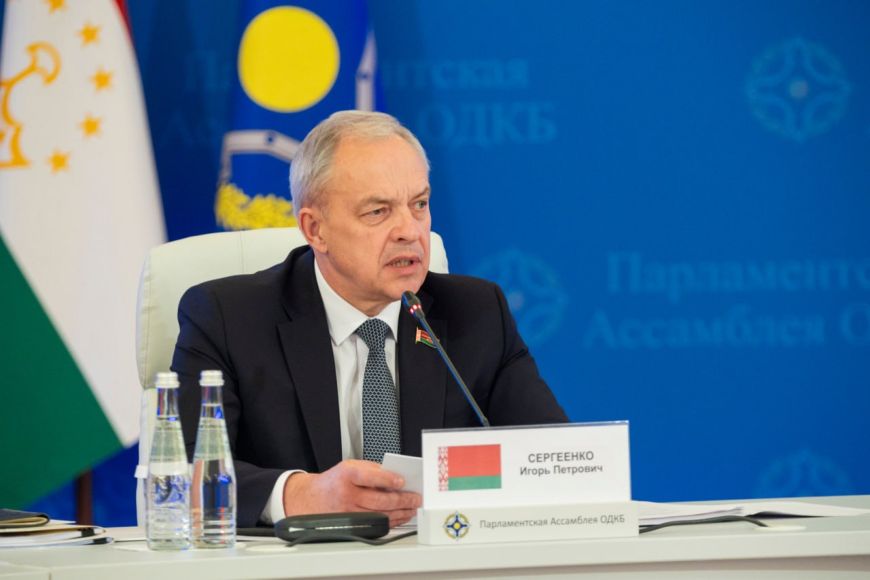
“I would like to note that the program for completing the harmonization of national legislation for 2026-2030 comprehensively covers the organization’s areas of activity and provides for measures to counter current and anticipated threats to national and collective security within the CSTO area. In the near term, the priorities include ensuring information security, combating terrorism, extremism and drug trafficking, as well as issues of biological security. It is important to develop unified standards for protecting critical information infrastructure, transport, communications and financial payment systems, as well as effective mechanisms to counter destructive influence on the internet, including through the use of artificial intelligence technologies,” Igor Sergeyenko said.
“And finally, the fundamental issue of protecting historical memory and traditional values,” he added, inviting participants to attend the international forum Great Heritage – Common Future, scheduled to take place in Brest in June.