

News of the story
"Belarusians in the focus"
Pavel Mikhailovsky, from the village of Ryabinovka, Uzda District, Minsk Oblast has been in the flower business for eight years. In anticipation of Women’s Day the farmer grew 180,000 tulips in his greenhouse. Yellow or white, red or orange, purple or pink ones – reporters from the 7 Dnei newspaper visited the vibrant plantation to find out which shades are in style among Belarusians, what the tulip grower gives his wife on 8 March, and how the frosty and snowy winter affected such a delicate business.
180,000 flowers in a single greenhouse
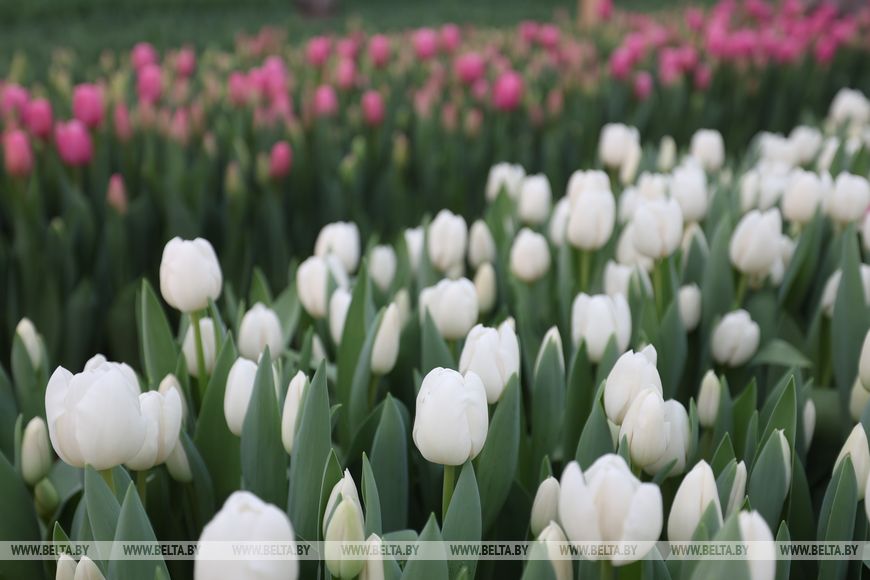
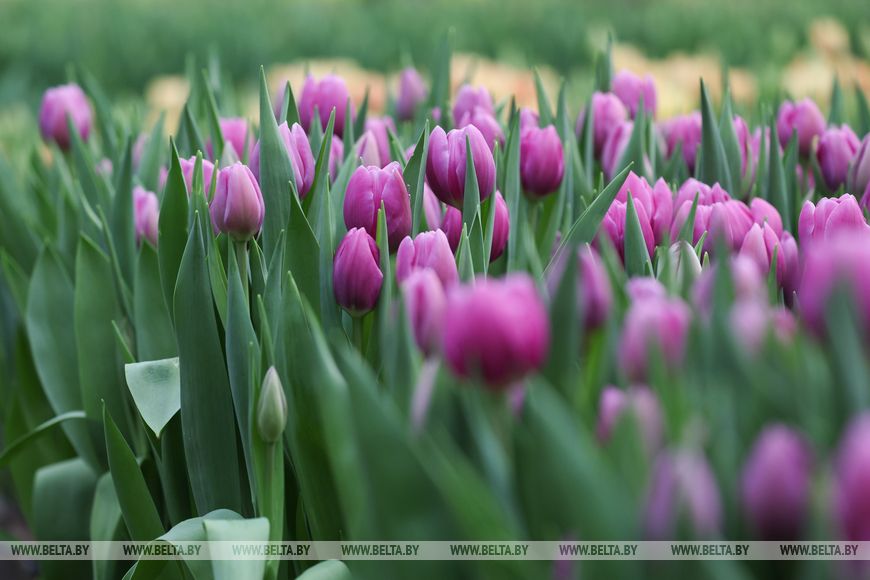
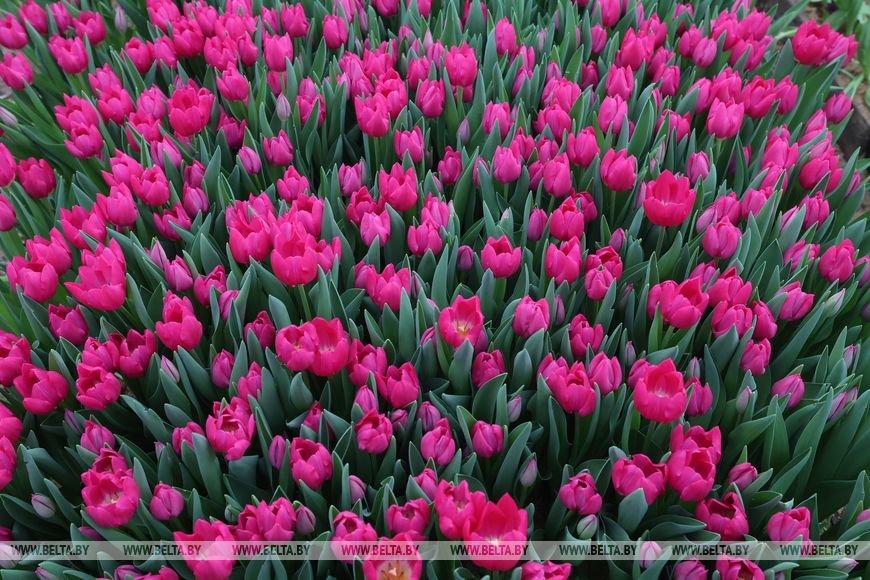
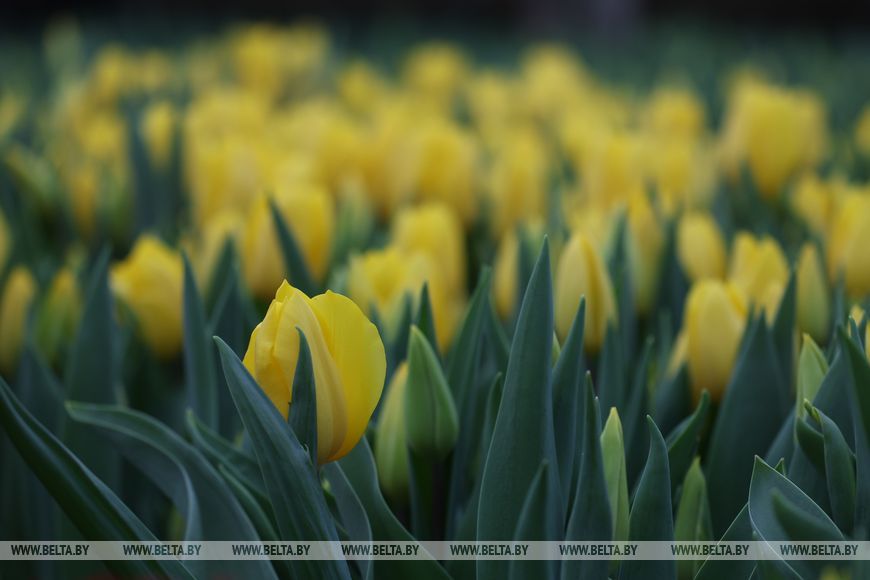
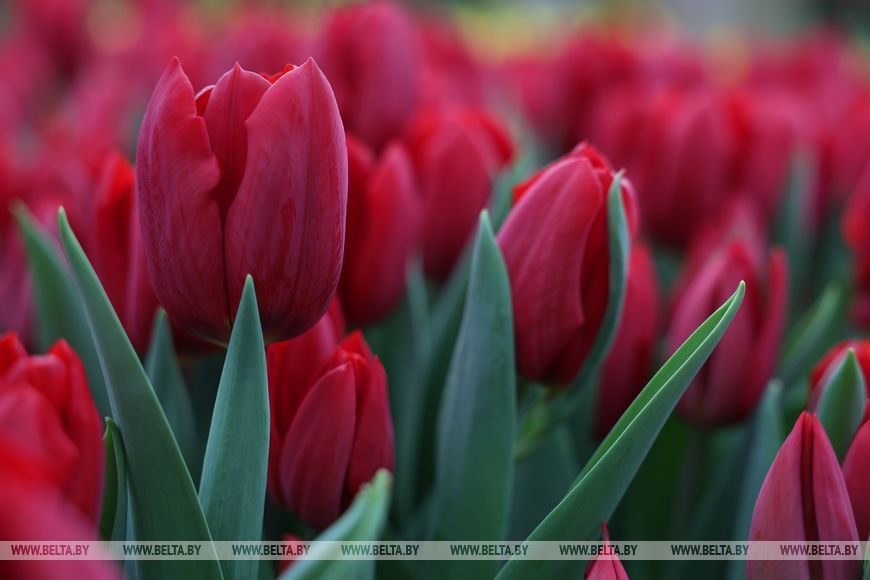
“Please, come in!” the owner warmly invites us, opening the door to a huge greenhouse. And a few seconds later a multicolored carpet of tulips appears before us: purple and crimson, orange and yellow, red and burgundy, white and pink… A veritable riot of colors, and with them, a riot of emotions. It seems we won’t be able to count the exact number of flowers in a whole day.
“180,000 flowers!” Pavel Mikhailovsky says, as if reading our minds. “After 8 March not a single tulip will be left here.”
Just 10–15 years ago the flower business was primarily run by farmers in southern Belarus: in Pinsk District, Ivanovo District, Brest District, and Drogichin District. Today, however, tulip plantations can be found in various regions of the country, including the central region — the village of Ryabinovka in Uzda District. And it’s all thanks to modern technologies that make it possible to create optimal conditions for the development and growth of the main symbols of the women’s holiday.
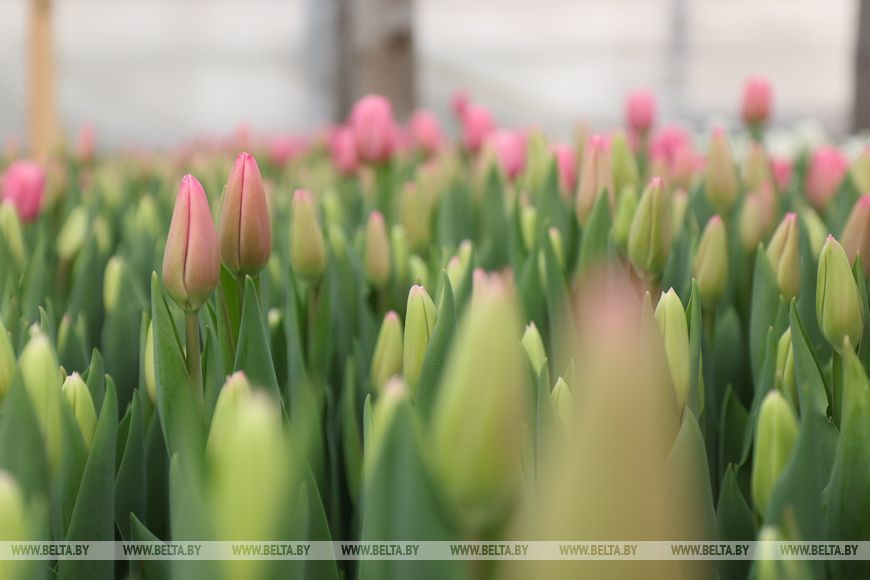
“Eight years ago I started small. I planted 50,000 flowers. Then 100,000, and after that I added another 80,000. About 30 different varieties grow on 1,000m2,” says Pavel, recalling that his love for working the land began when he was a child. “Even though I graduated from an agricultural academy with a degree in engineering, I’ve always been interested in agronomy and plant cultivation. I’m a city boy myself, but I spent every summer at my grandmother’s in the village. I helped her in the garden: we weeded the beds, harvested vegetables, and even managed to sell some things at the marketplace. And the potato fields alone covered several hectares.”
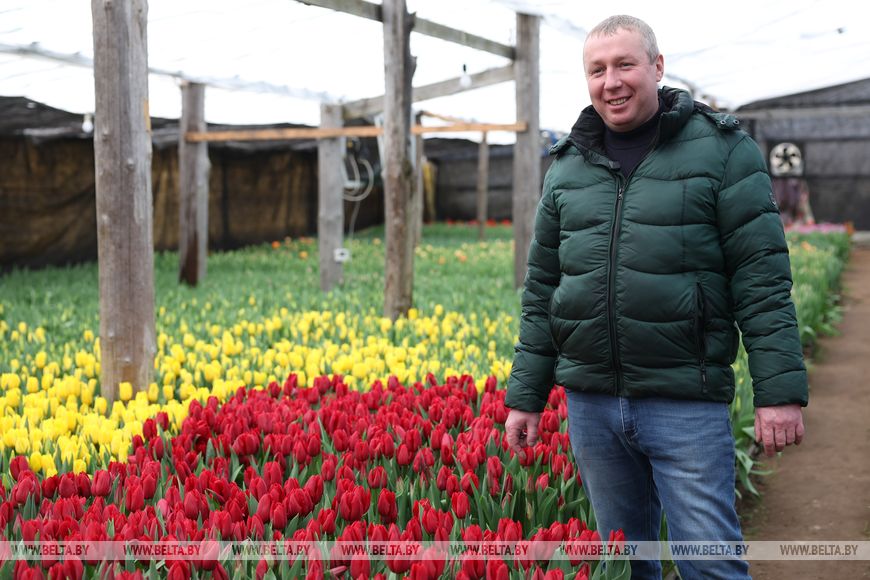
When he started growing tulips, he actively studied the experience of colleagues who had been in the business for a long time. Most of the questions focused on the technical side: how to build a greenhouse, which fans to choose, and what temperature to maintain. He handled the planting and accelerated growing of the flowers himself, so to speak, through trial and error. Pavel admits that over the years of running his business, no matter how difficult it got, he has never once regretted choosing the flower business. Besides, now automation helps maintain the microclimate in the greenhouse. Whereas before everything had to be adjusted manually, now all it takes is the push of a button.
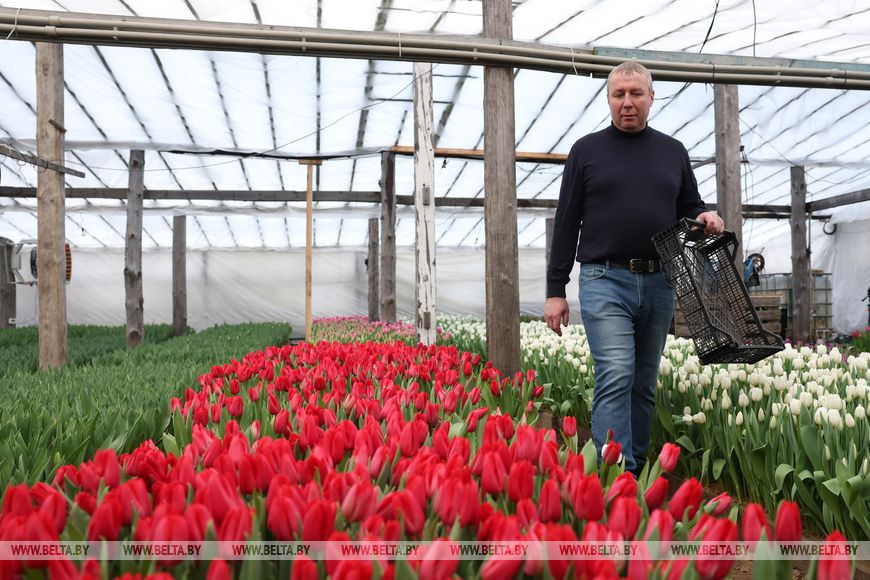
“At first I heated the greenhouse with firewood. Sometimes I’d sit here all night to keep the temperature right. Then I modernized it: I installed a gas boiler. Through an app on my phone, I can see everything that’s happening here at any time of day. I can adjust the temperature remotely from home: raise or lower it if necessary,” he explains. “There’s an automatic ventilation system. You can set it to run at any time, and fresh air will flow inside. I also use drip irrigation.”
In his words, you need to create the right conditions for the flowers and follow proper growing techniques even despite the cold and snow outside.
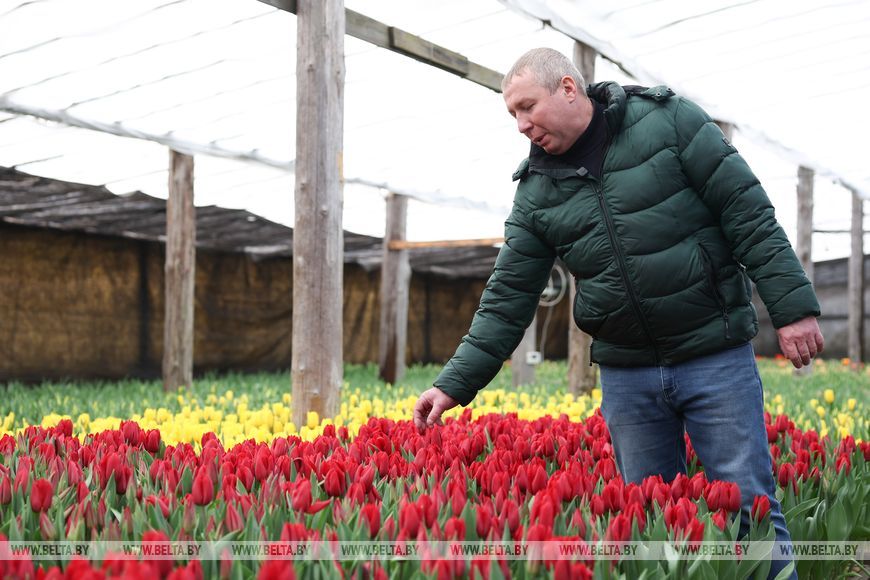
“I’ve been heating the greenhouse since 9 January. This year’s winter has been particularly snowy. So much snow had piled up on the roof that at two in the morning the automatic system kicked in, saying the temperature in the greenhouse had dropped significantly. I forgot to sleep! I had to rush out there and fix it. I managed to get it sorted just in time for morning,” he says. “When the temperature outside dropped to minus 30C, the boiler in the greenhouse sometimes couldn’t even reach the required temperature. But overall, we got through the winter without major losses.”
Even the most seemingly insignificant detail can affect the results. For example, if the temperature in the greenhouse is just 1C lower than it should be.
“Humidity must not exceed 80%. I have a special meter that tracks the readings. Excessive moisture can cause tulips to develop diseases,” explains the farmer. “It’s just as important to maintain the correct temperature: 16–17C during the day, 15–16C at night. When the greenhouse heats up in the sun, it’s essential to ventilate it to prevent the buds from drying out. Look: the black fabric on top is sunshade curtains, which we use to protect the flowers from bright light.
The bud knows best!
Pavel Mikhailovsky’s flower-growing season begins in November with the planting of bulbs in the ground. During this period the greenhouse remains roofless until the end of December. While it’s still warm outside, the plants take root. Then a dormant phase sets in: the tulips go into hibernation. In early January the farmer turns on the boiler for heating: at low temperatures the flowers wake up and begin to grow. This is how the first shoots appear. By midwinter the greenhouse reaches its maximum allowable temperature.
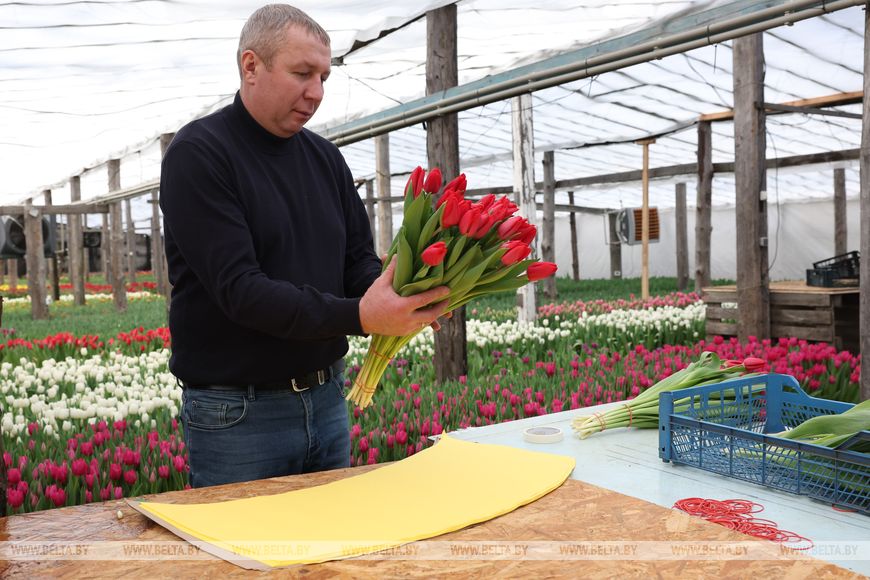
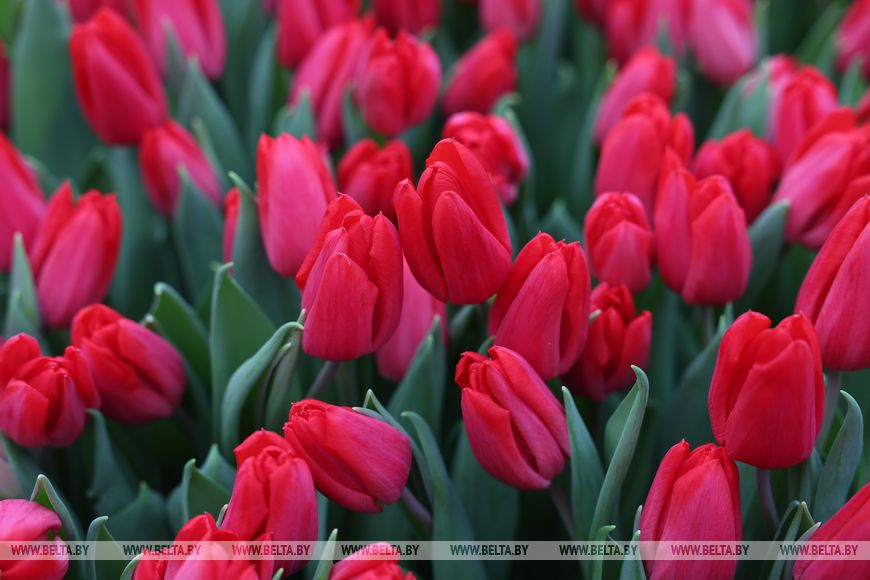
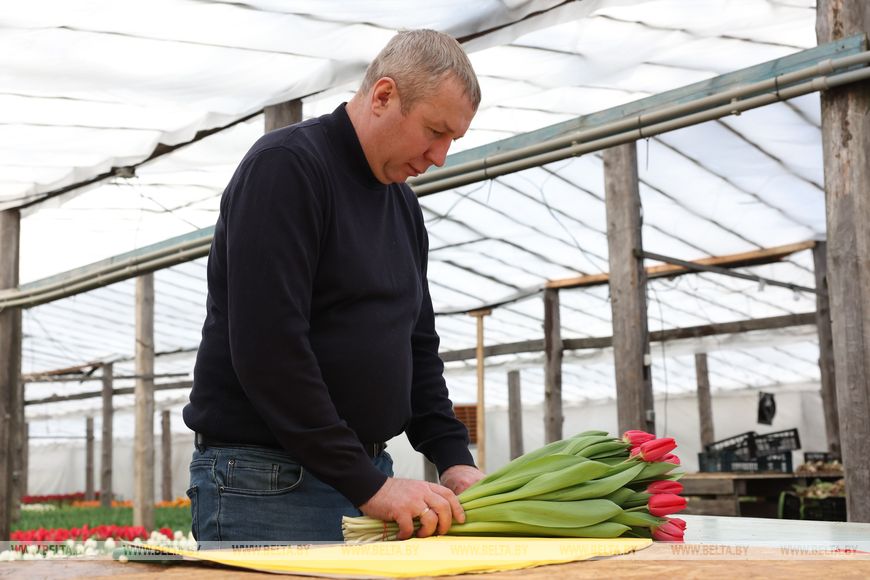
“Pre-orders for flowers usually start coming in even before New Year’s Eve. The main sales season begins on 1 March, a week before the holiday. By this time the tulips have already been cut and are waiting for their moment in the spotlight in the cold storage. People come from different regions. My bouquets are as bright as women’s smiles,” he notes, adding that tulips are sold wholesale in packs of 20. The largest order received over the years was 15,000 stems. “Only a few remain in the greenhouse, and after 8 March the flower season ends.”
After the holiday the greenhouse becomes empty: the soil is cultivated, tilled, fertilized, and left to rest until the next season. The same cannot be said for Pavel Mikhailovsky, who has a new venture: a strawberry and vegetable farm that requires considerable care.
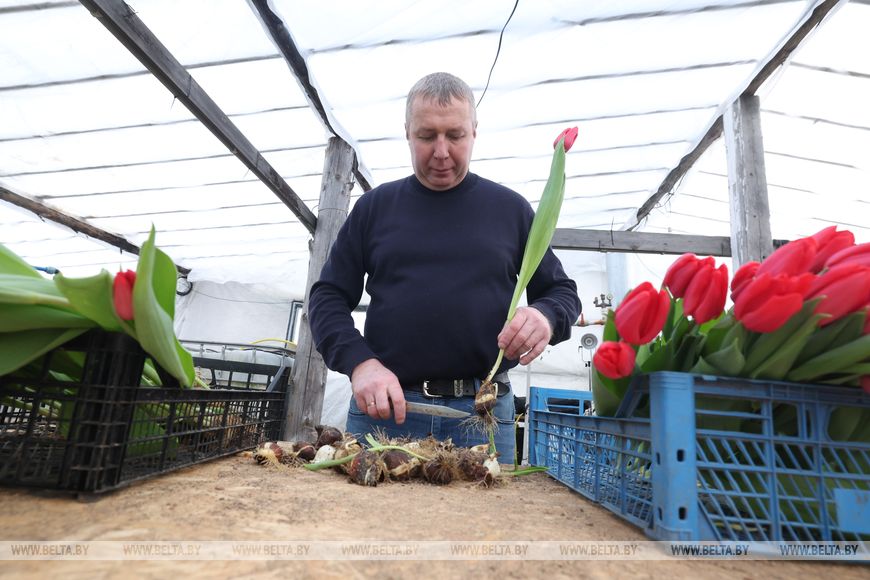
“I hire workers from the surrounding villages. It’s much easier to do this in winter than in summer. After all, in the countryside everyone has their own farm and vegetable garden. The work involves several tasks: pulling the tulip out of the ground along with the bulb, cutting off the stem, and arranging the bouquet. One day is enough to learn everything,” he says. “A good flower should be at least 43–45cm, ideally 48–50cm.”
All the colors of the rainbow
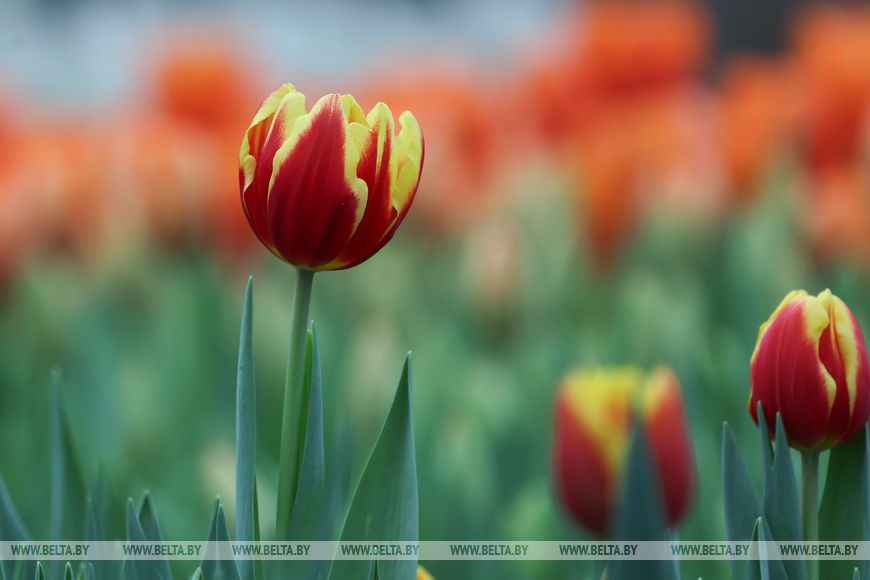
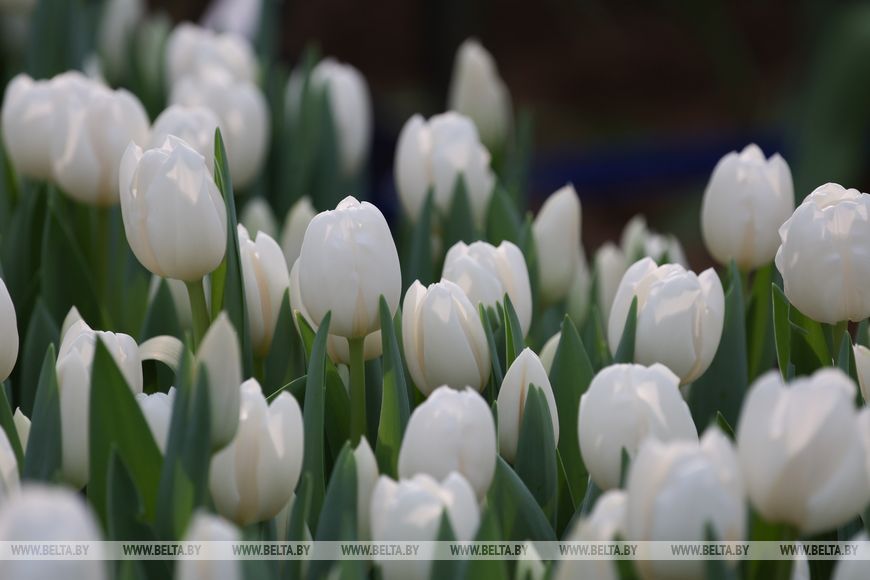
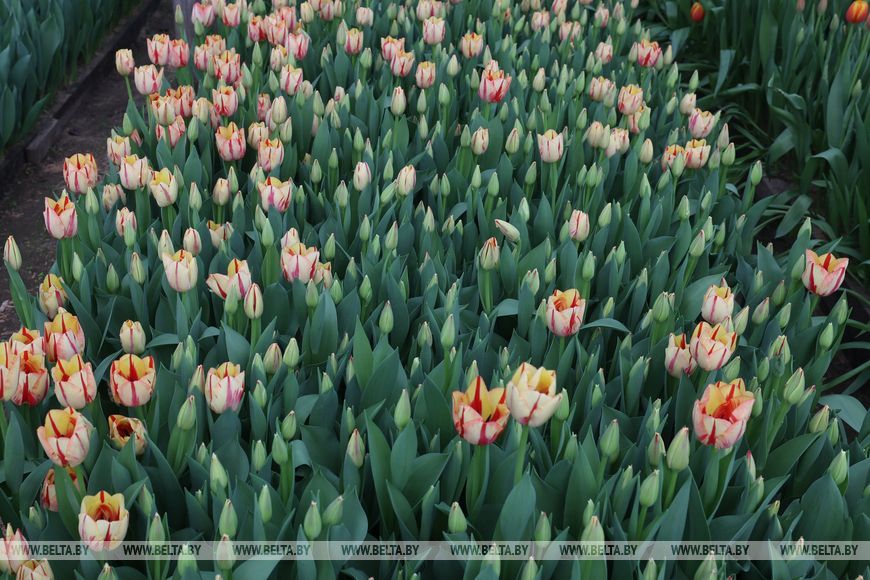
Rich orange “Triple A,” deep red “Strong Love,” snow-white “Albatross,” purple “Purple Lord”, white-and-pink “Beauty Trend”… Pavel expertly introduces us to the varieties as he guides us through his colorful plantation. The bright buds have formed well, and now the greenhouse resembles a vast field of flowers. The famous yellow tulips take up much more space.
“It’s only in that well-known song that the yellow tulip is a symbol of separation. In reality it’s the color of the sun and therefore of warmth and joy,” smiles Pavel Mikhailovsky, adding that over the years he has learned to gauge demand not only by variety but also by the color of the buds. “The most popular among Belarusians are red, pink, white, and, of course, yellow flowers. But the peony-shaped ones sell less well than the usual ones, and caring for them is more demanding. This year I've decided not to plant them.”
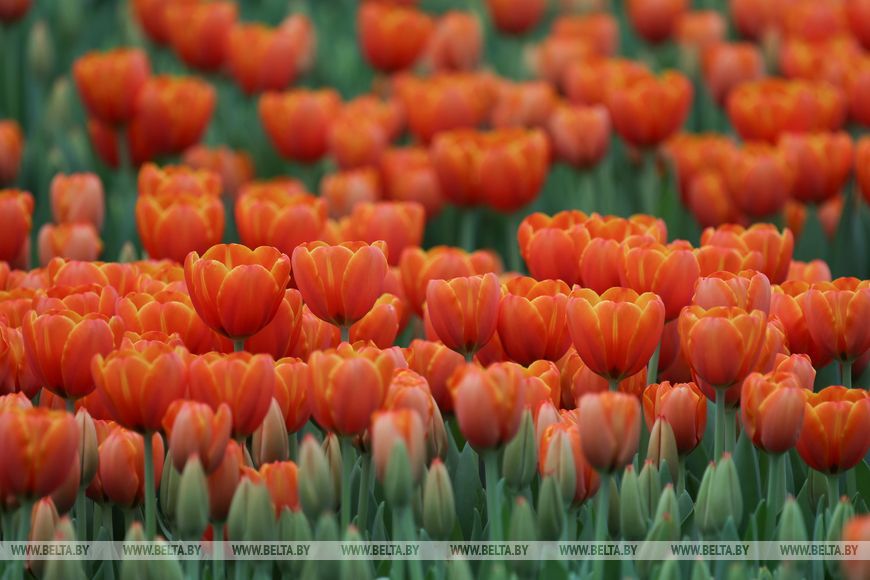
Pavel also has his own favorite: the “Triple A” tulip variety, which occupies a significant portion of the greenhouse.
“It’s a flower with an unusual orange hue, an apricot undertone, and a delicate yellow border. The bloom somewhat resembles a smoldering ember. Its stem can reach 60cm in height, and the flower head is 7-8cm across. When cut, it stays fresh for a very long time. It also has an incredibly long-lasting fragrance that quickly fills the entire apartment,” says Pavel, promoting his favorite variety. “This variety accounts for about 10% of the total volume in the greenhouse.”
According to our protagonist, another tulip variety that is just as popular among Belarusians is “Strong Love.” It reaches a height of 60-65 cm. This flower stands out from the rest thanks to its deep, rich shade of ripe pomegranate.
“This season I’ve bought ‘Polar Bear’ bulbs for the first time. I got 10,000 seeds. I’m very pleased with the result: look how graceful and elegant the flower has grown, stretching up to 50cm,” Pavel points to the snow-white greenhouse flowerbed. “By the way, white flowers are among the most popular. People order them for the holidays just as much as red and yellow ones.”
As we part, Pavel gives us a huge bouquet of freshly cut tulips and shares some important tips to help them last as long as possible in a vase. The first thing you need to do before putting the flowers in a vase is to trim the stems; otherwise, the vessels get clogged, preventing the stem from “drinking”. The water should be as cold as possible.
By the way, not many people know that tulips continue to grow in a vase. It turns out that under the right conditions, cut stems can grow up to 3cm longer!
“Flowers love cool temperatures, so leaving them on a table near a heating radiator isn’t the best idea. You won’t be able to enjoy the bouquet for long: the buds will open quickly and the petals will fall off,” concludes Pavel Mikhailovsky. “Change the water every other day. At night it’s best to take them out onto the balcony or into a cool hallway. At a temperature of 3–5C, they can last up to a month, delighting you with their beauty and the scent of spring.”
“We almost always have tulips in vases in our home. In any case I always congratulate my wife on 8 March and give her a huge bouquet. She won’t accept any other ones! She has no color preferences. I always pick them myself, as I see fit. Fresh, just cut, they immediately fill the house with fragrance and a springtime mood.”
By Marina VALAKH,
photo by Tatiana MATUSEVICH.