MINSK, 20 March (BelTA) – Plans have been made to increase milk production in Belarus to 11.5 million tonnes by 2035, BelTA learned from Natalia Sonich, Head of the Central Office for the Intensification of Animal Husbandry and Commercial Fishing of the Belarusian Agriculture and Food Ministry, on the sidelines of the “Dairy business 360°: Agribusiness, processing, market” forum.
“In 2025 the country produced a total of nearly 9.2 million tonnes of milk. The indicators are very good. According to our strategy, we aim to produce 9.285 million tonnes this year, 10.5 million tonnes by 2030, and 11.5 million tonnes by 2035. All of this will be achieved by modernizing our dairy industry and building new, modern, technologically advanced facilities. At present we have about 1,700 commercial dairy complexes, which account for nearly 77-80% of the total milk production. As for Brest Oblast, 93% of their dairy cows are already kept in modern complexes. This year and the next one the modern complexes will fulfill the president’s instructions completely and will move the entire herd to modern facilities. Certainly, it will be a bit more complicated for Vitebsk Oblast because they have a low transfer rate. They need to build 63 complexes by 2030,” said Natalia Sonich.
She noted an increase in milk production per cow. “According to refined data, milk yield per cow reached 6,566kg in 2025. The head of state wants the country’s average at 6 tonnes and milk production in dairy complexes at 7 tonnes. We have already hit the nationwide target. Of course, there are still complexes and agricultural enterprises that are underperforming. But we are working on it. It is encouraging to note that we have key production regions and enterprises. In 2025 as many as 22 districts secured an average milk yield per cow of over 8 tonnes. Pruzhany is a key production region for us. It accounts for 3.3% of the country’s total output. The figures speak for themselves,” noted the Agriculture and Food Ministry representative.
A strategy for the development of meat livestock farming is also being implemented. “Most of our complexes were built 30-40 years ago. Of course, it’s simply impossible to observe all the necessary technologies over there. This is why we are building new beef complexes for the future. One will house a herd of 2,000 head or more. Matters concerning specialized beef cattle breeding are also under consideration. We are currently selecting sites and looking for enterprises that will be directly involved in this business. There are already several candidates planning to build fattening facilities in Vitebsk Oblast. As for our breeding enterprises, they already have 4,400 head of specialized beef breeding stock. We aim to increase this to 10,000 head by 2030,” Natalia Sonich said.
There are also plans to build more than 500 calf nurseries this year. “All of them will be commissioned by 1 October. The facilities have already been selected, the sites have been determined, and agricultural enterprises are working with manufacturers to procure the equipment,” noted the representative of the Agriculture and Food Ministry.
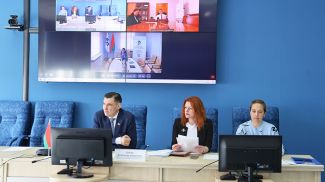
The forum “Dairy business 360°: Agribusiness, processing, market” is dedicated to topical matters in the development of the dairy industry. It brought together heads of agricultural enterprises, processing companies, representatives of relevant ministries and government agencies, the scientific community, industry experts, and companies supplying technologies for the agribusiness sector. The discussion focuses on the efficiency of dairy farming, the economics of milk production and processing, raw material quality, modern feeding and veterinary technologies as well as the development of domestic and export markets for dairy products. The forum’s business program includes a plenary session and panel sessions dedicated to production costs, risk management in the agribusiness sector, the quality of raw milk, processing, and the creation of added product value.