MINSK, 2 April (BelTA) - Developing international transport corridors is among Belarus' main economic priorities, Belarusian Transport and Communications Minister Aleksei Lyakhnovich said at the plenary session of the CIS Coordinating Transport Meeting, BelTA learned from the press service of the Transport and Communications Ministry.
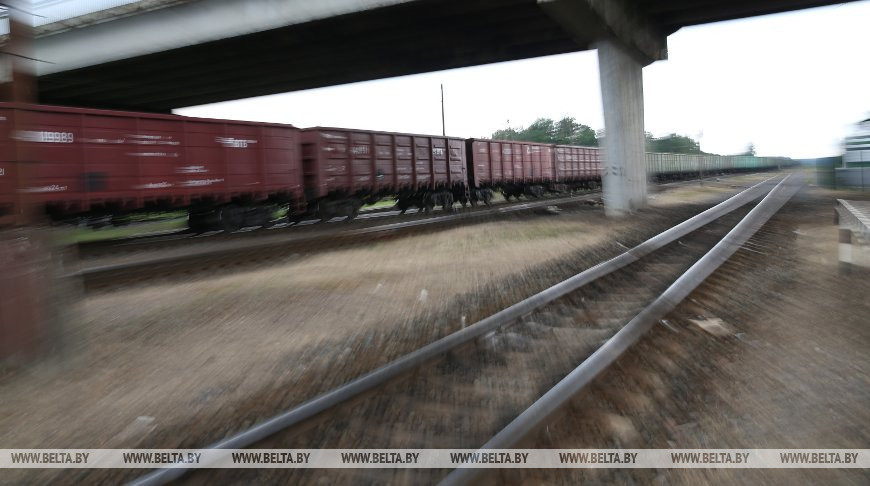
The available infrastructure makes it possible to handle more than 200 million tonnes of cargo per year, including approximately 70 million tonnes in transit.
The speed of container trains traveling through the country reaches 1,200 kilometers per day. The Eurasian Railway Gateway in the Great Stone Industrial Park will create new opportunities for business and increase the efficiency of freight transportation. The minister noted that Belarusian Railways uses the automated system “Electronic Transportation” for all commercial rail freight transportation within the country. Electronic filing is gaining momentum, and transit technologies are being improved. Much attention is being paid to expanding the capacity of road transport corridors.
“The CIS major transport corridors that pass through Belarus have a load capacity of 11.5 tonnes per single axle of a vehicle, which allows for the use of modern transport for the carriage of goods and passengers. Belarus is working on the digitalization of road infrastructure management and a single operator for the intelligent transport system (ITS). Machine vision and artificial intelligence technologies are being introduced into the processes of ensuring road safety and responding promptly to changes in road conditions,” Aleksei Lyakhnovich said.
He emphasized that Belarus advocates for the creation of a unified digital logistics ecosystem within the CIS.
“The large-scale application of electronic documents and digital corridors, ensuring the security of logistics supply chains for goods is the foundation for building our common Eurasian home. Digitalization makes borders transparent. We strive to create a single seamless space where the movement of goods will be as free as within a country. We are not just building transport routes. We are creating a new reality for millions of citizens of our countries,” the minister noted.
The available infrastructure makes it possible to handle more than 200 million tonnes of cargo per year, including approximately 70 million tonnes in transit.
The speed of container trains traveling through the country reaches 1,200 kilometers per day. The Eurasian Railway Gateway in the Great Stone Industrial Park will create new opportunities for business and increase the efficiency of freight transportation. The minister noted that Belarusian Railways uses the automated system “Electronic Transportation” for all commercial rail freight transportation within the country. Electronic filing is gaining momentum, and transit technologies are being improved. Much attention is being paid to expanding the capacity of road transport corridors.
“The CIS major transport corridors that pass through Belarus have a load capacity of 11.5 tonnes per single axle of a vehicle, which allows for the use of modern transport for the carriage of goods and passengers. Belarus is working on the digitalization of road infrastructure management and a single operator for the intelligent transport system (ITS). Machine vision and artificial intelligence technologies are being introduced into the processes of ensuring road safety and responding promptly to changes in road conditions,” Aleksei Lyakhnovich said.
He emphasized that Belarus advocates for the creation of a unified digital logistics ecosystem within the CIS.
“The large-scale application of electronic documents and digital corridors, ensuring the security of logistics supply chains for goods is the foundation for building our common Eurasian home. Digitalization makes borders transparent. We strive to create a single seamless space where the movement of goods will be as free as within a country. We are not just building transport routes. We are creating a new reality for millions of citizens of our countries,” the minister noted.