
Self-sacrifice and pushing the limits of human capability are hardly surprising among Olympic Games athletes. Unfortunately, this is often accompanied by injuries. In just a few days the Milan Olympics have seen not only brilliant victories but also unpleasant and even tragic incidents. On Saturday, during the super-G slalom competition, U.S. alpine skier Lindsey Vonn suffered a hard fall at the beginning of her downhill run. It is reported that Vonn started the race with a torn anterior cruciate ligament in her knee. Sadly, the athlete was airlifted directly from the slope by a medical helicopter.
Therefore, doctors at the Olympics are no less important than coaches and technical support staff. While their work may not be as visible to spectators or as interesting to journalists, it is indispensable. Irina Malevanaya, the head of the National Research and Treatment Center for Sports shared insights with a BelTA correspondent on how medical professionals operate at the Olympics.
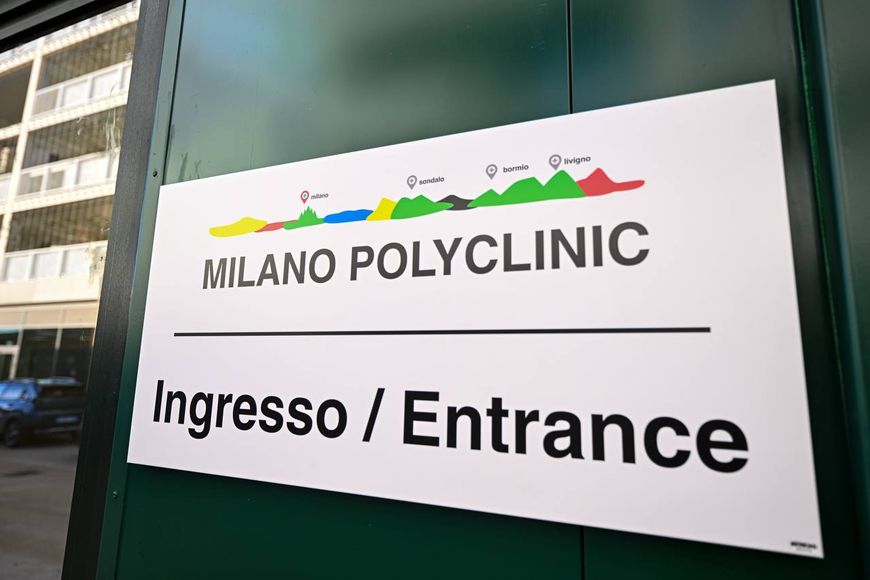
There is a polyclinic in the Milan Olympic Village. Medical stations have been set up at all sports venues. Italian specialists are working around the clock, and each delegation includes medical staff who are well-acquainted with their athletes, know how to help them recover, and are always ready to assist in case of injury.
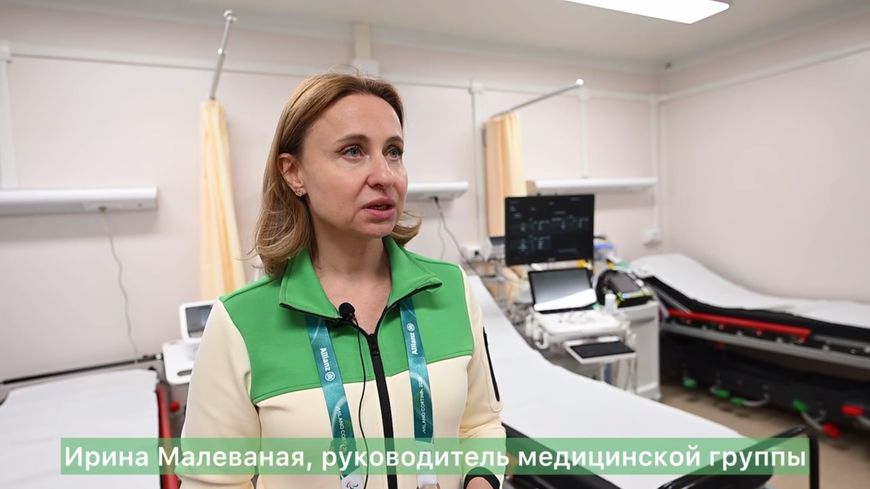


Therefore, doctors at the Olympics are no less important than coaches and technical support staff. While their work may not be as visible to spectators or as interesting to journalists, it is indispensable. Irina Malevanaya, the head of the National Research and Treatment Center for Sports shared insights with a BelTA correspondent on how medical professionals operate at the Olympics.
There is a polyclinic in the Milan Olympic Village. Medical stations have been set up at all sports venues. Italian specialists are working around the clock, and each delegation includes medical staff who are well-acquainted with their athletes, know how to help them recover, and are always ready to assist in case of injury.
Irina Malevanaya, who is working alongside fellow doctors to safeguard the health of Belarusian athletes, noted that the Olympic Games organizing committee has taken a very good care of the medical aspect of the event. According to her, the work of the medical team is both well organized and effectively managed.
“These Olympic Games are significantly different from previous ones in terms of the medical aspect – they’re better,” said Irina Malevanaya. “The medical guide is very well prepared, and the pharmacy has a sufficient supply of all necessary medications. Interestingly, medications are delivered from the polyclinic to any place in the city using drones. The polyclinic itself has everything necessary: X-ray machines, an MRI machine, and a laboratory with biochemical analyzers. There are two emergency rooms equipped with ventilators and ultrasound machines, and two resuscitation teams are on site. Specialists available include a gynecologist, a traumatologist, and others. Physiotherapy was a pleasant surprise as the polyclinic has everything an athlete could need, with both an osteopath and a physiotherapist present. Furthermore, there is a considerable amount of equipment dedicated to athlete rehabilitation,” she added.
According to the director of the National Research and Treatment Center of Sports, a multi-level system of medical care has been established at the polyclinic for the Olympic Games. “Coordinators, heads of major clinics and the medical team are in place. A friendly team and professional staff are the most important things for medical work at the Olympic Games. There are no issues with that either. From the very first days, we have found understanding with our colleagues. For now, we don’t need anything; we are managing on our own, but you can feel that they are always ready to help, and that is truly great,” Irina Malevanaya said.
The director of the center also noted that a separate focus at the Olympics is dedicated to psychologists and psychotherapists. In October 2025, the International Olympic Committee announced that comprehensive mental health support would be provided to participants of the 2026 Olympic Games. In the Olympic Village, rest zones have been created where athletes can relax, recover, and speak with a psychologist. Athletes can also utilize a confidential 24/7 telephone support line, available in more than 70 languages.
This material is published with the support of Belarusbank.
Valeria Stetsko,
photos by the NOC of Belarus,
BelTA