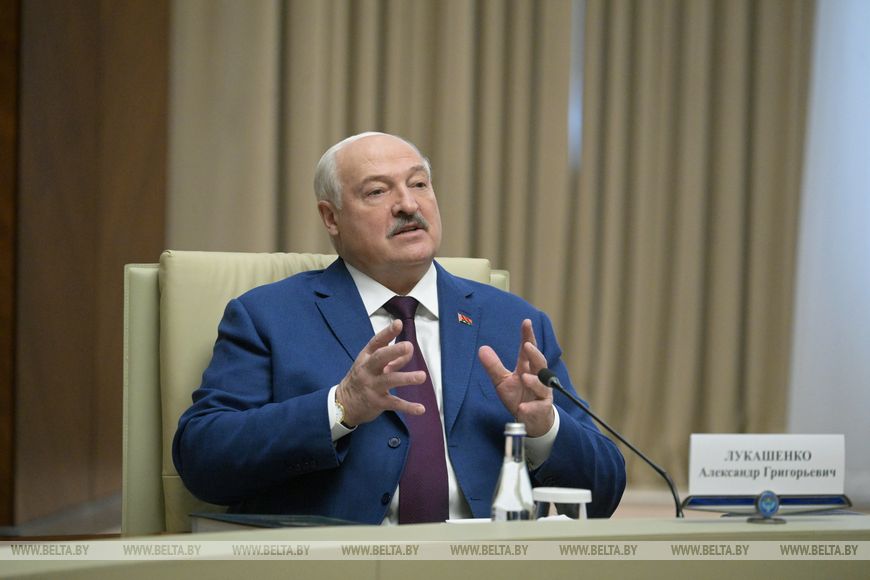
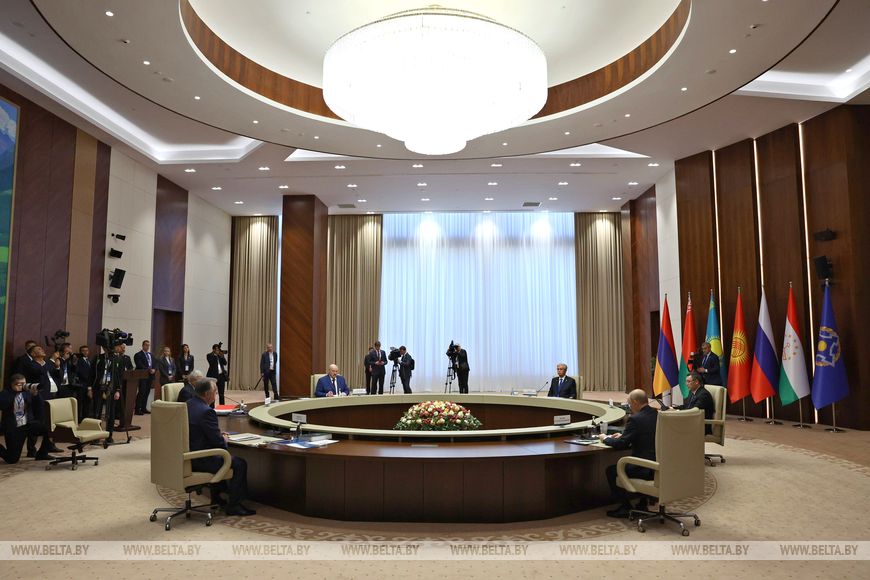
Belarusian President Aleksandr Lukashenko has been on a major foreign trip since 26 November. The first destination was Kyrgyzstan, where the president participated in a summit of the Collective Security Treaty Organization and also held a bilateral meeting with Russian President Vladimir Putin.
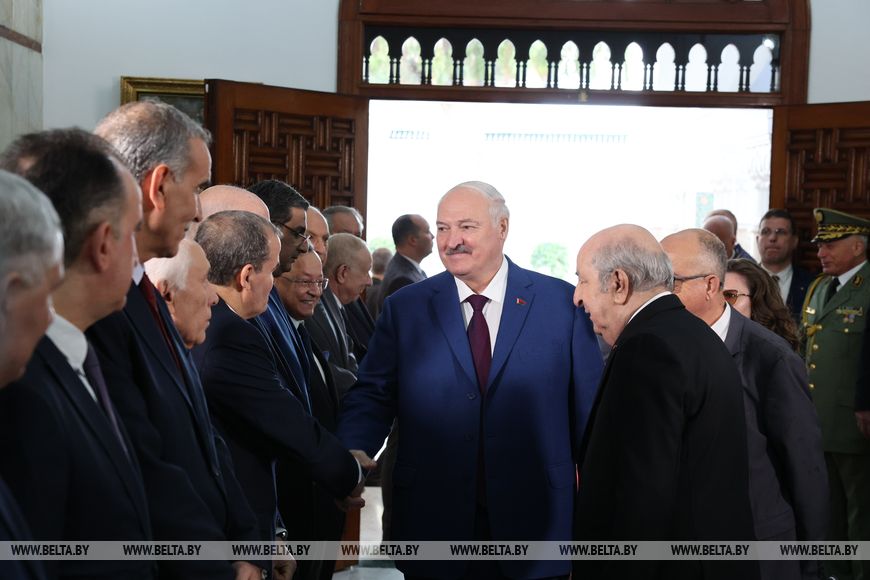
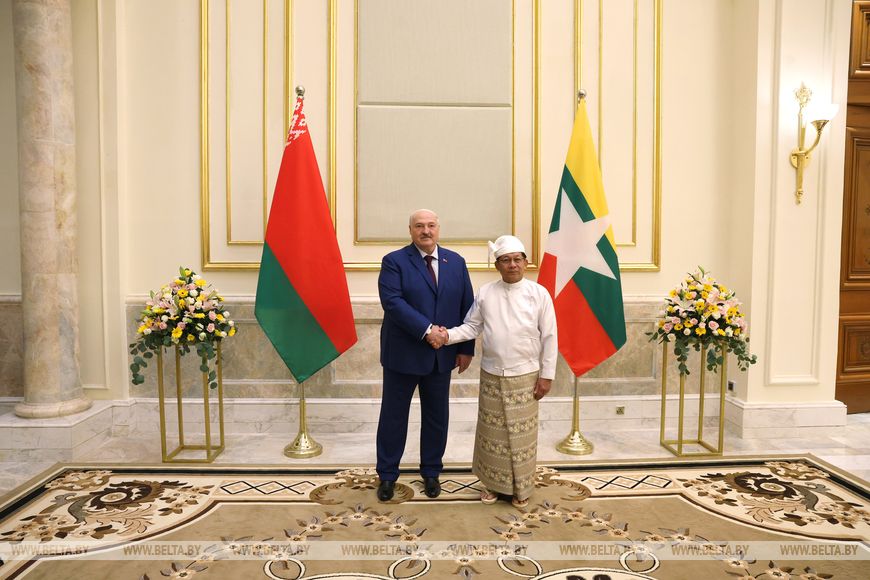
Subsequently, the head of state's schedule included a series of visits to geographically distant countries: an official visit to Myanmar (Southeast Asia), a summit-level meeting during a working visit to Oman (Middle East) and another official visit to Algeria (North Africa). And then back to Oman, where Aleksandr Lukashenko's working program will continue, with a number of meetings planned, including one with the Sultan of Oman.
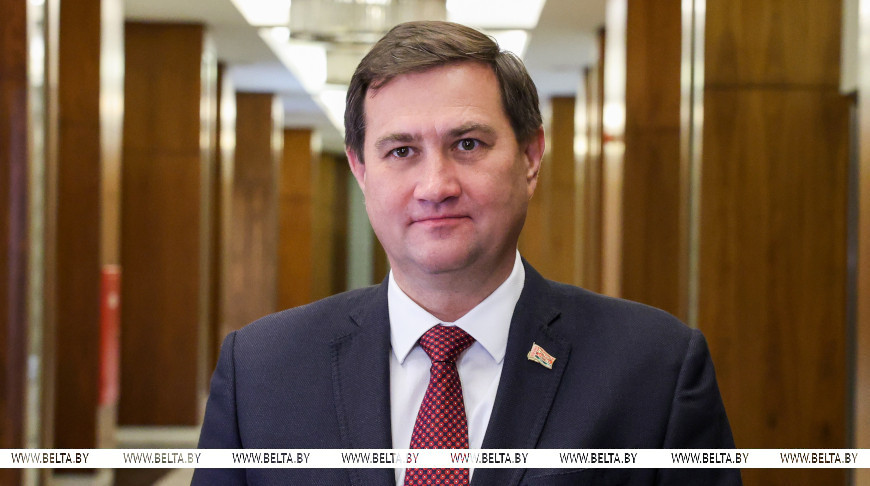
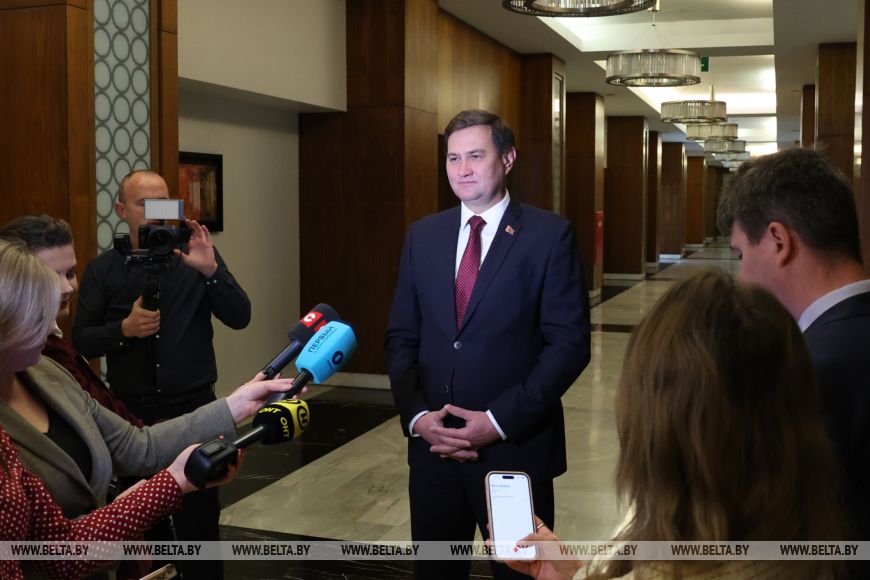
Belarusian Minister of Foreign Affairs Maxim Ryzhenkov, in an interview with journalists, talked about the preliminary results of the head of state's major foreign trip and explained the specific criteria and principles by which Belarus develops cooperation with partners in geographically distant regions.
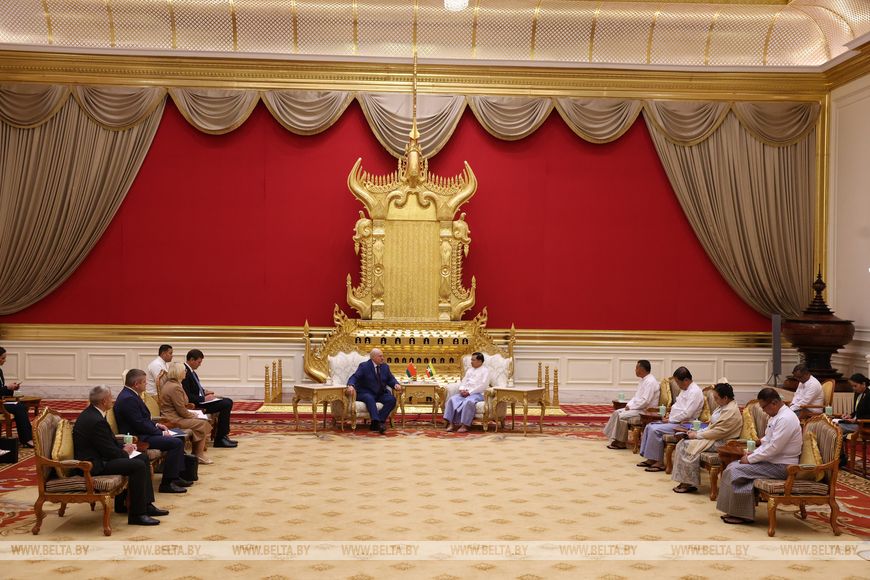
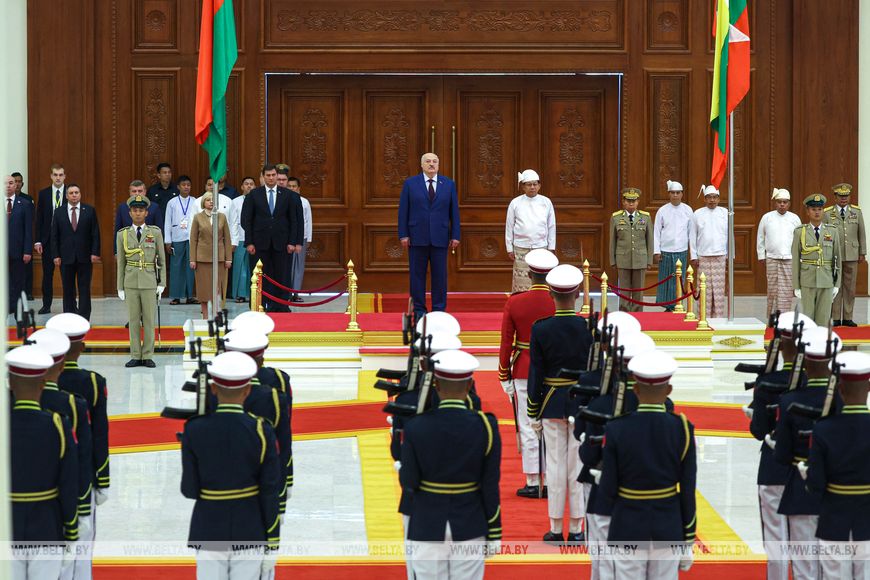
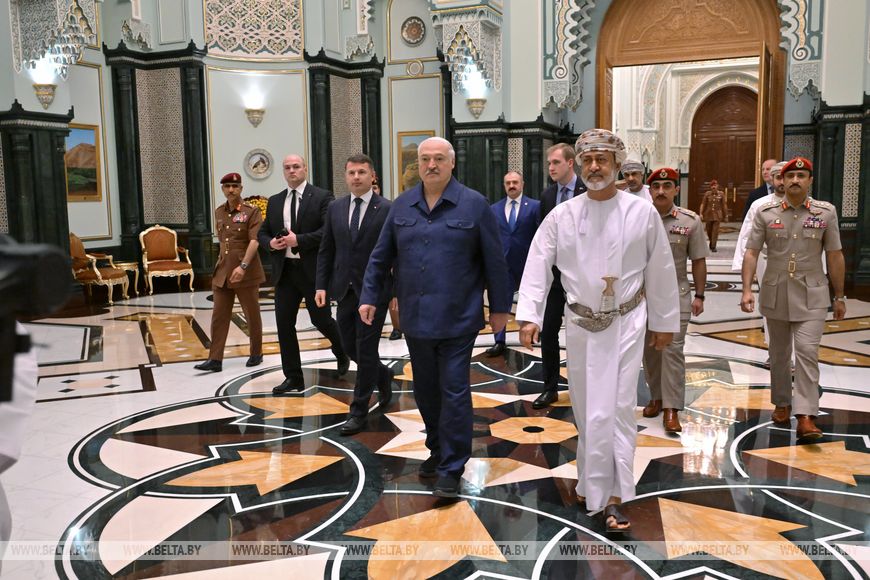
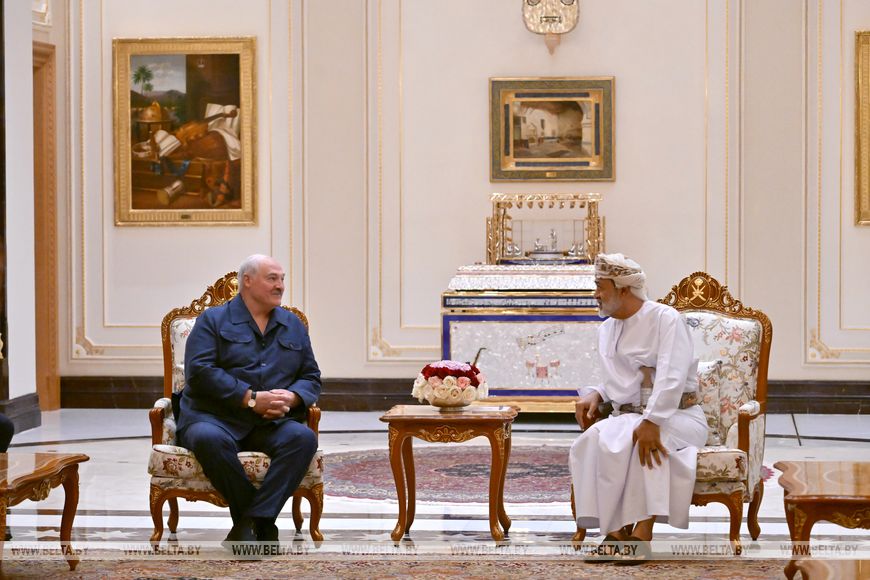
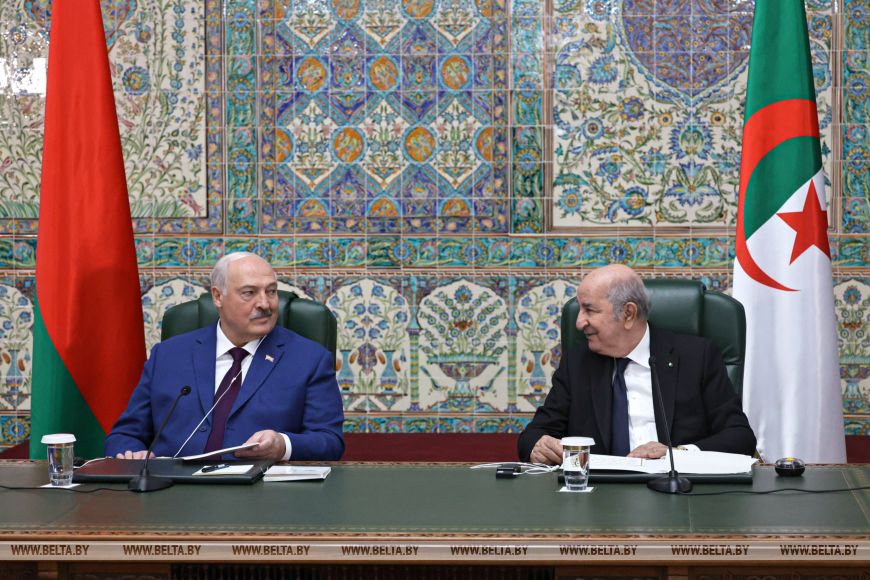
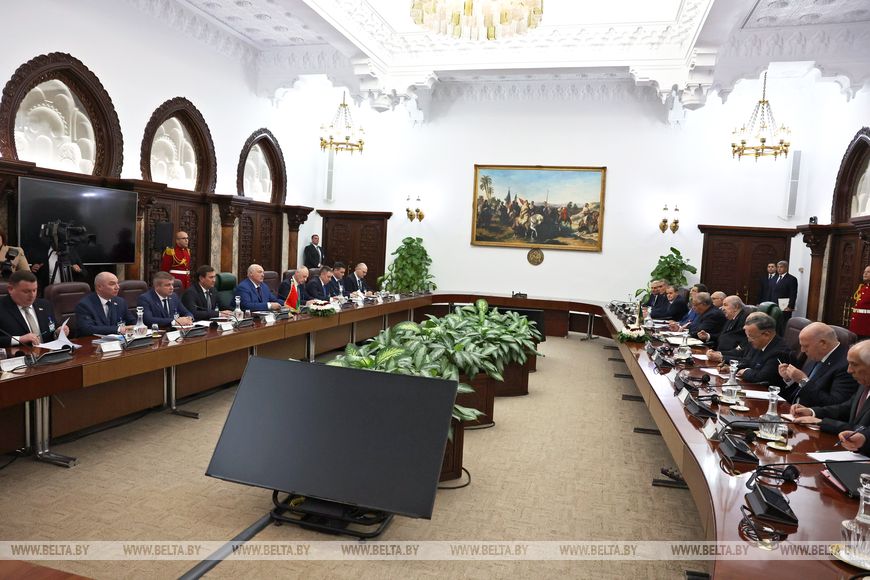
Subsequently, the head of state's schedule included a series of visits to geographically distant countries: an official visit to Myanmar (Southeast Asia), a summit-level meeting during a working visit to Oman (Middle East) and another official visit to Algeria (North Africa). And then back to Oman, where Aleksandr Lukashenko's working program will continue, with a number of meetings planned, including one with the Sultan of Oman.
Belarusian Minister of Foreign Affairs Maxim Ryzhenkov, in an interview with journalists, talked about the preliminary results of the head of state's major foreign trip and explained the specific criteria and principles by which Belarus develops cooperation with partners in geographically distant regions.
On the CSTO summit in Bishkek and collective security
Indeed, peace and security are currently most important matters for any state or any region. One only needs to look at the regional agenda and global processes to be convinced that today, this is the greatest value. Therefore, it is truly important to meet with our allies at such a serious summit (the Collective Security Council), compare our notes and define the main areas for the development of our organization.
In the run up to the CSTO summit, the president held a meeting with Russian leader Vladimir Putin to discuss a whole range of issues concerning our relations and our joint response to the challenges and threats emerging near our borders.
Naturally, the discussion continued at the meeting of the Collective Security Council, where we, together with our allies in a broader circle, addressed precisely the issues of moving our organization forward.
The president very timely put forward many initiatives, including those concerning our response to the trend of increasing use of artificial intelligence. Our response must ensure that it is not used by the collective West or a number of states, which perhaps due to certain circumstances have approached it financially faster, to promote their own interests while restraining the development of all other countries. Therefore, we must consider how to respond to this. How to respond to the greater involvement of artificial intelligence in systems of new modern weaponry and technologies.
Because we see today what is happening in Ukraine and how far the use of AI has advanced there. And we must provide an adequate joint response to this kind of development.
Indeed, peace and security are currently most important matters for any state or any region. One only needs to look at the regional agenda and global processes to be convinced that today, this is the greatest value. Therefore, it is truly important to meet with our allies at such a serious summit (the Collective Security Council), compare our notes and define the main areas for the development of our organization.
The president very timely put forward many initiatives, including those concerning our response to the trend of increasing use of artificial intelligence. Our response must ensure that it is not used by the collective West or a number of states, which perhaps due to certain circumstances have approached it financially faster, to promote their own interests while restraining the development of all other countries. Therefore, we must consider how to respond to this. How to respond to the greater involvement of artificial intelligence in systems of new modern weaponry and technologies.
Because we see today what is happening in Ukraine and how far the use of AI has advanced there. And we must provide an adequate joint response to this kind of development.
The agenda includes counter-terrorism, enhancing our collaborative mechanisms, and coordinated political and diplomatic measures.
This is especially relevant given the situation on the CSTO’s western flank – our border with European Union states. Our western neighbors are leveling accusations against us. In reality, they are instrumentalizing the border and all related issues to wage a hybrid campaign against the Republic of Belarus and the Russian Federation. Their actions, as we have stated, are often calibrated to secure the next tranche of European Union funding. The weekly corruption scandals erupting within EU structures involving former and current officials and similar issues in Ukraine, reveal the underlying motivations for this conduct.
This is what concerns the CSTO.
On the principles of finding far-arc partners
Identifying countries with which to build relationships is a complex undertaking. It requires more than our own intent. First, we must discern our potential partner’s genuine interests.
Second, we must identify mutual value, i.e. what we can offer each other, to ensure cooperation is respectful, mutually beneficial, and yields positive outcomes for both nations. Our president’s fundamental principle in organizing such engagements is that we must approach our partners as friends and kindred spirits. We reject the colonial and neo-colonial practices of those who extract resources while selling their goods at exorbitant prices, leaving ordinary citizens without tangible benefits from such partnerships.
As the president emphasizes, the people of both countries must understand the importance of cooperation and see concrete improvements in their wellbeing, national development, security, and stability. Ideally, we aim to create joint products. These ventures can generate employment in both countries and produce competitive goods that can be sold in third markets, creating shared revenue. That’s our overarching goal.
Therefore, we move beyond simple trade. We transfer technology and train local workers and engineers. This increases production localization, genuinely contributing to our partner’s economic growth and facilitating their development.
Of course, in this case, we naturally choose states that are kindred in spirit, with whom we see the world through the same eyes. With whom we are currently building excellent cooperation on the international track, within various multilateral organizations, where we defend the same values at different international forums. Primarily, these are the values upon which the entire work of the United Nations is built. These include sovereign respect for one another, non-interference in internal affairs, consideration of each other’s interests, and a partnership approach. This also means implementing all agreements in accordance with international law, without the use or threat of force, and without imposing any unilateral sanctions.
These are the principles that guide the selection of such states. And if we have already defined our immediate circle, who is our enemy, who is our friend, then, of course, the search the president mentioned, on the further arc, is very hard work. Because the countries are, as a rule, largely unfamiliar to us. Or, like Algeria, long forgotten. As the president said today, during the Soviet era we were very serious partners. Belarus, as part of the Soviet Union, also lent a shoulder to Algeria through our specialists who participated in developing the economy of this state, which, let me remind you, only shook off the yoke of French colonialism in 1962.
Therefore, what we are doing today is returning to what existed long before our state even came into being as a sovereign entity. But we remember that cooperation and are now simply trying to build upon it.
Myanmar, a state of the future
Myanmar, and the president stated this very clearly, is a state of the future. In truth, it is a state possessing significant human resources, serious resources within its subsoil (it has everything), and which is currently making every effort for the internal consolidation of its society. It is capable of becoming a very seriously developed country in the future, if all these elements come together.
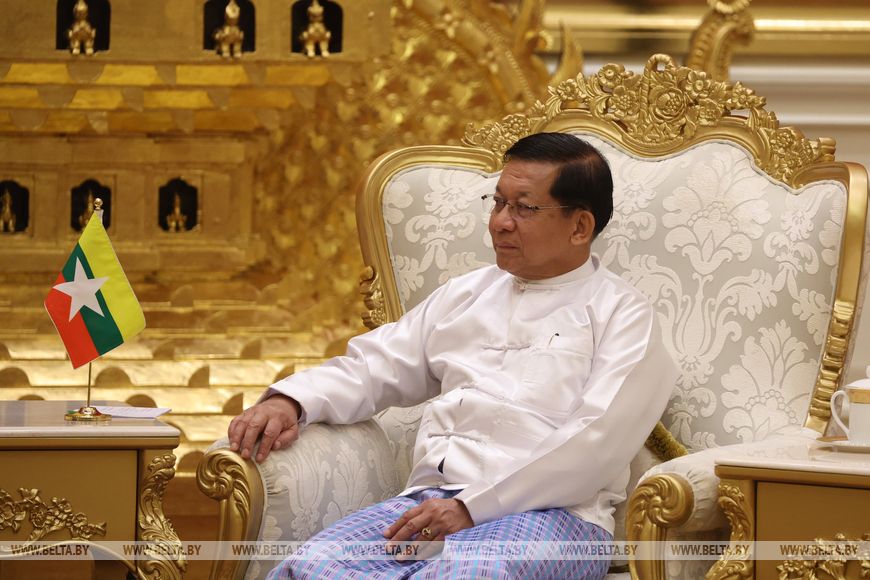
The first thing the president advised the leader of this country, Min Aung Hlaing, was that they must build systematic work to consolidate society, so that this consolidation enables the country to develop peacefully and provide a proper political response. An internal response to all external challenges and threats, of which this state has plenty. Because it is wealthy, and everyone wants to get in, everyone wants to lay a hand on its wealth.
First, the consolidation of society. Second, technological development. Here, the president said, we will help. This includes the mechanization of agriculture, assembly production of machinery, and addressing issues of food security, which is also a top priority.
Finally, expanding opportunities for contact between people and businesses. Precisely for this reason, a whole series of agreements signed during the visit (around three dozen of them) are aimed precisely at realizing closer cooperation in each of the areas I have named.
In my view, the key agreements are those that build up trade and economic cooperation. These include measures to protect investments, avoid double taxation, and deepen cooperation in the manufacturing, agricultural, educational, and other sectors between relevant ministries and agencies. Naturally, there is also a roadmap intended to outline concrete steps for the future, along which we will move together with our Myanmar colleagues to implement all the agreements reached by the presidents.
And certainly, the visa waiver agreement for citizens. I would say that with this we are practically approaching the point where the entire Southeast Asian region will be open to our citizens for visa-free travel. This is another step in that direction.
The West does not want to see us: Greece, Spain, Italy, Germany. Today it is much easier and more interesting for our citizens to travel to Southeast Asia, discover good beaches and fascinating infrastructure with roots stretching back thousands of years, long before [modern] Europe appeared on the world map – the Europe that we “admire” so much.
Reaching Southeast Asia today by plane takes 7-11 hours, whereas traveling to Europe can take much longer, taking into account the border situation. For example, it takes 24 hours to get to Switzerland.
That is why Myanmar is of particular interest.
On the focus on investment in cooperation with Oman
Meetings between the leaders of our countries have already become practically regular. There is a dialogue and strong friendship between them now.
Both the Sultan of Oman and our president understand each other well and value the spirit between our countries. This is a spirit of mutual respect that takes into account each other’s interests. All our projects with this country are also mutually beneficial in nature.
However, while our projects in other countries focus primarily on creating foundations for economic development or establishing certain sectors of the national economy, the situation in Oman is somewhat different. Our projects in Oman involve using the country's financial resources to implement initiatives in Belarus and other third countries as well as within Oman itself.
For Oman, this is an opportunity to earn some money and invest it safely in the future to later receive good profits.
For us, it is an opportunity to sell and further promote our goods, using Oman’s centuries-old trade connections in East Africa and the Asian region, to sell our products, produce some things together with them in Oman, and then jointly market them.
In terms of investment, we consider the creation of a pulp mill in Belarus to be a very good and important project, based on agreements reached by the leaders. This involves investments of about $1 billion. Both we and our Omani colleagues believe that this project is highly profitable with strong prospects for return and significant profit.
There are also a number of certain initiatives for tourism development, including the creation of our facilities [in Oman] and increasing tourist flows of our citizens to Oman and from Oman to Belarus. We also signed a visa waiver agreement with this country.
I believe the prospects are far greater, because even at the meeting between the Belarusian president and the Algerian president, the heads of state agreed to utilize Oman’s opportunities in trilateral trade. That is, a bridge is being extended from Oman to Algeria. This is a very positive development.
As the president noted, the complex fertilizer production project is financially supported by Oman. Given Algeria’s phosphates and nitrogen fertilizers and Belarus’ potash, this venture becomes not merely mutually beneficial, but assuredly cost-effective and certain to find a market. We now have three countries involved, each bringing its own network of partners. This guarantees a broader reach for the project’s implementation from the outset. This synergy will create a substantially larger impact.
Turning to concrete plans with Algeria
Guided by our foreign policy principles, we can prove ourselves to be dependable partners for Algeria in realizing concrete initiatives. Algeria is a promising developing country, achieving great results and growth rates overall on the African continent. A country possessing some of the world’s largest oil and gas deposits. A state that truly considers its internal development the key to independence and self-sufficiency.
At the same time, in some areas we can be useful to them. For instance, they might manufacture some tractors, but the powerful tractors required for their greening projects in the desert are our specialty, and we are eager to supply them.
Similarly, regarding the major bus fleet renewal they envision for public transport, we possess all the necessary capabilities.
As for issues of ensuring food security. They are largely self-sufficient in many food products. However, dairy and meat supply is still a pressing issue for them. This is another area where we can step in. And not just by selling large batches of dry milk, whey, or baby food here. But by creating local productions that will manufacture something from dry milk, that will package baby food, producing a new product with fruit and other additives. So that it all goes directly to stores and is provided to the local population.
And also so that the jointly created product can then go further to those African countries that border Algeria today. Their border with African countries stretches for seven thousand kilometers. These are, of course, enormous markets. And, of course, we can also supply there.