
MINSK, 28 January (BelTA) - Seeing the aggressive policy and militarization of the West, Belarus is relying on strategic deterrence, including the deployment of deterrence weapons on its territory, State Secretary of the Belarusian Security Council Aleksandr Volfovich told the media, BelTA has learned.
Currently, Western European countries, including those bordering Belarus, are actively militarizing, increasing military spending, building up their armed forces, and conducting large-scale exercises, including near the borders of the Union State. “We, of course, see the aggressive policy, militarization, and military presence on the territory of neighboring states. And, of course, we are monitoring all of this and taking appropriate steps,” he said.
"Belarus places emphasis on strategic deterrence and the deployment of weapons on its territory - deterrence weapons. This includes both tactical nuclear weapons and the short-range operational-tactical complex Oreshnik and other assets primarily aimed at preventing aggression,” Aleksandr Volfovich stated.
According to him, Western European countries have grand ambitions: they want to dominate Europe, elevate themselves above others, and dictate their terms. They attempt to justify their militarization plans with imaginary threats from the East, from Russia and Belarus, claiming that Russia will soon unleash military actions to seize one country or another. “This is complete absurdity, and they understand that perfectly well themselves. But they need to somehow justify their ambitious goals to their own people,” Aleksandr Volfovich noted.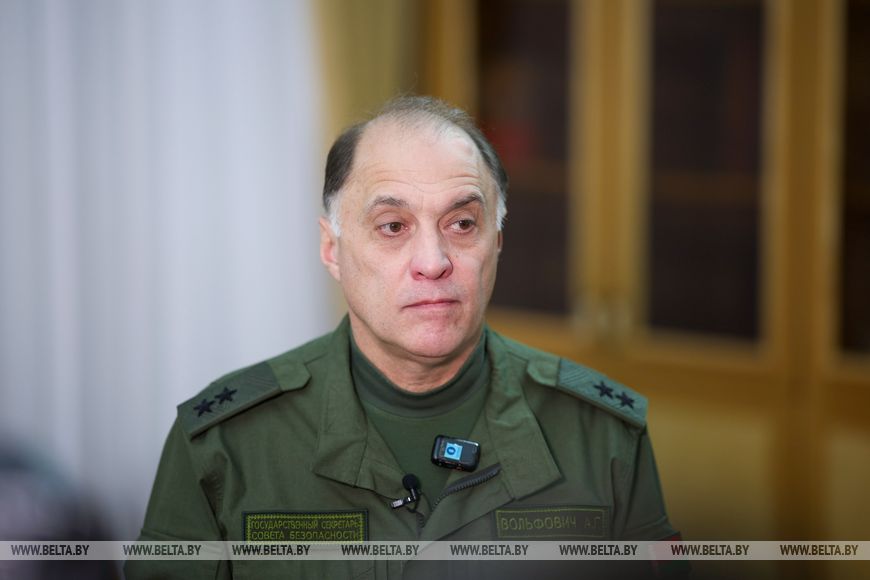
He acknowledged that there are, of course, politicians, experts, and analysts in those countries who assess the situation adequately and deny the existence of any real threats from Russia or Belarus. After all, it is obvious to everyone that Belarus, unlike Western countries, is not increasing the size of its armed forces or military spending, not conducting exercises near borders, and not relocating people from border areas to make way for engineering infrastructure.
“Indeed, the initiatives put forward by our country and our president, primarily in all international organizations, are truly of a friendly and peaceful nature. The president always emphasizes the need to build dialogue, to find compromise, to resolve issues at the negotiating table,” Aleksandr Volfovich noted. “We stand for peace, for dialogue, for good neighborly relations. Our policy, our documents, including the Constitution, the National Security Concept, and the Military Doctrine, are aimed at building constructive dialogue, good neighborliness, and mutual respect towards all states, both large and small.”
The state secretary emphasized that the Ministry of Foreign Affairs of Belarus and Belarusian diplomats have repeatedly offered opportunities for negotiations to both Poland and the Baltic countries. “There has been no response whatsoever, through any channels,” he noted.
Aleksandr Volfovich stated that Belarus knows its history well and draws lessons from both the past and the present. “We remember the immense damage our country suffered during the Great Patriotic War, how many people perished, the destruction that the war brought. We also see what is happening today on the territory of Ukraine, and how much will need to be rebuilt, how many Ukrainians have died. For what?” Aleksandr Volfovich said.
Currently, Western European countries, including those bordering Belarus, are actively militarizing, increasing military spending, building up their armed forces, and conducting large-scale exercises, including near the borders of the Union State. “We, of course, see the aggressive policy, militarization, and military presence on the territory of neighboring states. And, of course, we are monitoring all of this and taking appropriate steps,” he said.
"Belarus places emphasis on strategic deterrence and the deployment of weapons on its territory - deterrence weapons. This includes both tactical nuclear weapons and the short-range operational-tactical complex Oreshnik and other assets primarily aimed at preventing aggression,” Aleksandr Volfovich stated.
According to him, Western European countries have grand ambitions: they want to dominate Europe, elevate themselves above others, and dictate their terms. They attempt to justify their militarization plans with imaginary threats from the East, from Russia and Belarus, claiming that Russia will soon unleash military actions to seize one country or another. “This is complete absurdity, and they understand that perfectly well themselves. But they need to somehow justify their ambitious goals to their own people,” Aleksandr Volfovich noted.
He acknowledged that there are, of course, politicians, experts, and analysts in those countries who assess the situation adequately and deny the existence of any real threats from Russia or Belarus. After all, it is obvious to everyone that Belarus, unlike Western countries, is not increasing the size of its armed forces or military spending, not conducting exercises near borders, and not relocating people from border areas to make way for engineering infrastructure.
“Indeed, the initiatives put forward by our country and our president, primarily in all international organizations, are truly of a friendly and peaceful nature. The president always emphasizes the need to build dialogue, to find compromise, to resolve issues at the negotiating table,” Aleksandr Volfovich noted. “We stand for peace, for dialogue, for good neighborly relations. Our policy, our documents, including the Constitution, the National Security Concept, and the Military Doctrine, are aimed at building constructive dialogue, good neighborliness, and mutual respect towards all states, both large and small.”
The state secretary emphasized that the Ministry of Foreign Affairs of Belarus and Belarusian diplomats have repeatedly offered opportunities for negotiations to both Poland and the Baltic countries. “There has been no response whatsoever, through any channels,” he noted.
Aleksandr Volfovich stated that Belarus knows its history well and draws lessons from both the past and the present. “We remember the immense damage our country suffered during the Great Patriotic War, how many people perished, the destruction that the war brought. We also see what is happening today on the territory of Ukraine, and how much will need to be rebuilt, how many Ukrainians have died. For what?” Aleksandr Volfovich said.