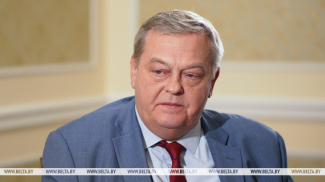

Oleg Rummo, director of the Minsk Research and Treatment Center for Surgery, Transplantology, and Hematology
The past year of 2025 was highly productive for the Minsk Research and Treatment Center for Surgery, Transplantology, and Hematology. It performed a record number of organ transplant operations: 363 kidney transplants, 110 liver transplants, 7 lung transplants, and 53 heart transplants. Thanks to the skilled hands and brilliant minds of the center’s staff and colleagues from leading institutions and regions across the country, 533 people with life-threatening illnesses were given a chance at a personal future. The year was also successful for the head of the center, Doctor of Medical Sciences, Professor, and Academician Oleg Rummo. His name once again resonated across the country. He was named Scientist of the Year by the National Academy of Sciences of Belarus. The reasoning behind this prestigious honor is as multifaceted just like the work carried out by this Honored Doctor of the Republic of Belarus. Oleg Rummo spoke with BelTA about the areas of his scientific interest, training of top-tier scientific personnel, and achievements that have attracted the attention of foreign partners.
What personal achievements in scientific research in 2025 do you believe are worth highlighting?
We presented a substantial body of work for the competition, accomplished by the large team at the center I lead. It is important to emphasize that the achievements of modern medicine and medical science are far from the work of a single individual. They are the result of serious, in-depth, and productive efforts by a large number of people. It is equally important to note that scientific discoveries today occur at the intersection of various disciplines.
Literally just before your arrival, I was discussing with one of my doctoral students his dissertation, which is being prepared for defense. This rather substantial joint research is dedicated to minimizing immunosuppressive therapy after liver transplantation. The problem is that the medications used for such patients not only suppress the immune system to prevent rejection of the transplanted organ but also cause side effects, negatively impacting the kidneys and cardiovascular system. Therefore, we have embarked on a search for alternative methods of immunosuppressive therapy that can preserve the quality of the transplanted organ, reduce the dosage of drugs, and thus avoid these side effects.
In our joint scientific work, we explored various options and methods for the administration of mesenchymal stem cells and regulatory T-lymphocytes. We tried numerous approaches until we secured a good outcome. The research outputs have been published in a significant number of reputable journals and, I hope, will be later explored more profoundly in a doctoral dissertation. I emphasize that this is a highly important endeavor of the highest international caliber.
Last year, I was awarded the Russian Government Prize in Science and Technology for developing and implementing a fundamentally new strategy and innovative surgical technologies for the treatment of liver alveococcosis. This parasitic disease is quite prevalent in Siberia and Central Asia. Population migration has led to its appearance in our country as well.
For several years, our center has been seeking new approaches to treating this complex disease. The methods we developed were integrated into a program proposed by an international team, which included scientists from various regions of the Russian Federation and Kyrgyzstan. Our collaborative efforts were ultimately recognized with the prestigious Russian Government Prize in Science and Technology.
Simultaneously, last year we invested a lot of effort in establishing a bank of stem cells, valves, and vascular allografts at our center. This work is now complete, and the bank is functioning effectively. My student, Andrei Chisty, Head of the Tissue Biografts Department, successfully defended his Candidate of Sciences dissertation.
My postgraduate student conducted substantial research focused on developing safe methods for the procurement, preservation, and clinical application of allografts across a wide spectrum of fields, primarily in vascular and general surgery, cardiac surgery, traumatology and orthopedics, dentistry, and combustiology. Incidentally, skin grafts obtained by our laboratory specialists were used in the treatment of Roman Kogodovsky, the boy whose heroism is known throughout the country.
Beyond these achievements, another significant study merits attention. Our center is conducting important research into methods of treating liver cancer. Our entire team is deeply engaged in this subject. Several staff members are working on their Candidate or Doctoral dissertations under the supervision of my deputy for surgery, Professor Aleksei Shcherba. These serious scientific works are published in highly rated medical journals, implemented into clinical practice, and undoubtedly yield positive outcomes for our patients.
Last November, you served as a consulting surgeon for a liver transplant and intestinal auto-transplant operation in China. This speaks to the high authority of Belarusian surgery, doesn’t it?
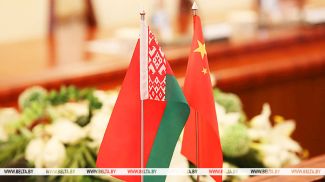
It’s not just that we are learning, though, believe me, there is much to learn from in China. Chinese medicine has made a tremendous leap forward in recent decades. Today it ranks among the top leading global practices, surpassing European and U.S. partners in many parameters. Why has this become possible? China trains personnel worldwide. Surgeons from China study in the best international clinics across various fields of modern medicine. The equipment in Chinese clinics is at the pinnacle of global medical technology. Finally, it is a vast country with an immense number of patients, allowing for the accumulation of colossal experience. They share this experience with us, while continuously adopting expertise from colleagues in other countries, including Belarus.
The term “consulting surgeon” in this case confirms that our center is not standing still. We are grateful to our Chinese partners for their openness to exchanging experience and demonstrating technology. This isn’t just about surgery, but also oncohematology and the application of CAR-T therapy. Simultaneously, we share our own technologies and invite Chinese partners as consulting specialists to discuss unique clinical cases.


While in China, I was present at the First Affiliated Hospital of Zhejiang University School of Medicine in Hangzhou, which possesses the world’s largest experience in performing such a unique operation as intestinal auto-transplantation for pancreatic cancer. To radically remove a tumor in the pancreas, they first remove the intestine and excise the tumor, and then re-implant the intestine. My colleague, the hospital director in Hangzhou, Professor Liang Tingbo, possesses unique competencies in this regard. I was interested to observe this because such skill is rarely seen elsewhere.
However, we also shared our developments when discussing issues related to pediatric split liver transplantation. Our center performs such operations on children weighing only 5-7 kg. It was gratifying to realize that we speak the same professional language with our Chinese colleagues, and the approaches we proposed sparked genuine interest.
Overall, speaking about the scientific and practical aspects, last year at the Minsk Research and Treatment Center for Surgery, Transplantology, and Hematology was marked by cooperation with Chinese partners.
Recently, our center performed its first operation using a robotic system that we purchased with our own funds. This is one of the most modern robots in the world. During our training sessions in China, we witnessed its effectiveness in oncourology, oncological surgery of the liver and pancreas, and other fields. To utilize the latest technologies, a new urology department opened at the center on 1 January 2026.
The Minsk Research and Treatment Center for Surgery, Transplantology, and Hematology attracts a huge number of foreign delegations. The feedback about your center expressed in comments to journalists is overwhelmingly positive. What surprises your foreign colleagues the most?
Obviously, every country follows its own path. Some countries such as China have accumulated vast experience and are willing to share it. Others need our help and come to learn.
Many foreign partners are interested in the organizational model, namely how, in such a small country Belarus is, we have been able to achieve a leading position in the world in a number of areas without having enormous financial and human resources. For example, our African colleagues and partners are surprised not even by how we save critically ill patients. They are interested in how such expensive high-tech surgeries can be performed for the country’s residents absolutely free of charge.

Foreign doctors are, of course, impressed by the complexity of the procedures performed at our center. Last year, for example, a lung transplant for a patient from Uzbekistan was truly spectacular. In addition to his primary disease he had severe immunodeficiency and a congenital heart defect, which greatly complicated the situation. At the same time our organizational model is no less impressive to our foreign partners. Belarus has not abandoned the principles proclaimed by President Aleksandr Lukashenko back in 1994.
It is important to understand that affordable medical care can be organized. Qualified medical care is provided throughout the civilized world. However, no one in the world has yet managed to fully find the optimal balance between accessibility and high qualifications, since usually one comes at the expense of the other. The Belarusian experience — how to balance the highest quality and very high accessibility with the available resources — is of interest to many.
You have also been awarded the title of Scientist of the Year of the National Academy of Sciences of Belarus - 2025 for training highly qualified scientific personnel. How many students do you have?
At present my fourth doctoral student is preparing for his public defense. The doctoral dissertation has been written and submitted to the council. In addition, four candidate dissertations have been prepared under my supervision. It is nothing to brag about. There are people who have trained many more doctors and candidates of medical sciences. I think I have time to focus on helping others.
In conclusion, I would like to note that our center is engaged in comprehensive intensive work in various areas. Fortunately, the results have not gone unnoticed by the Belarusian and global medical community. Everything we do is for the benefit of our patients.